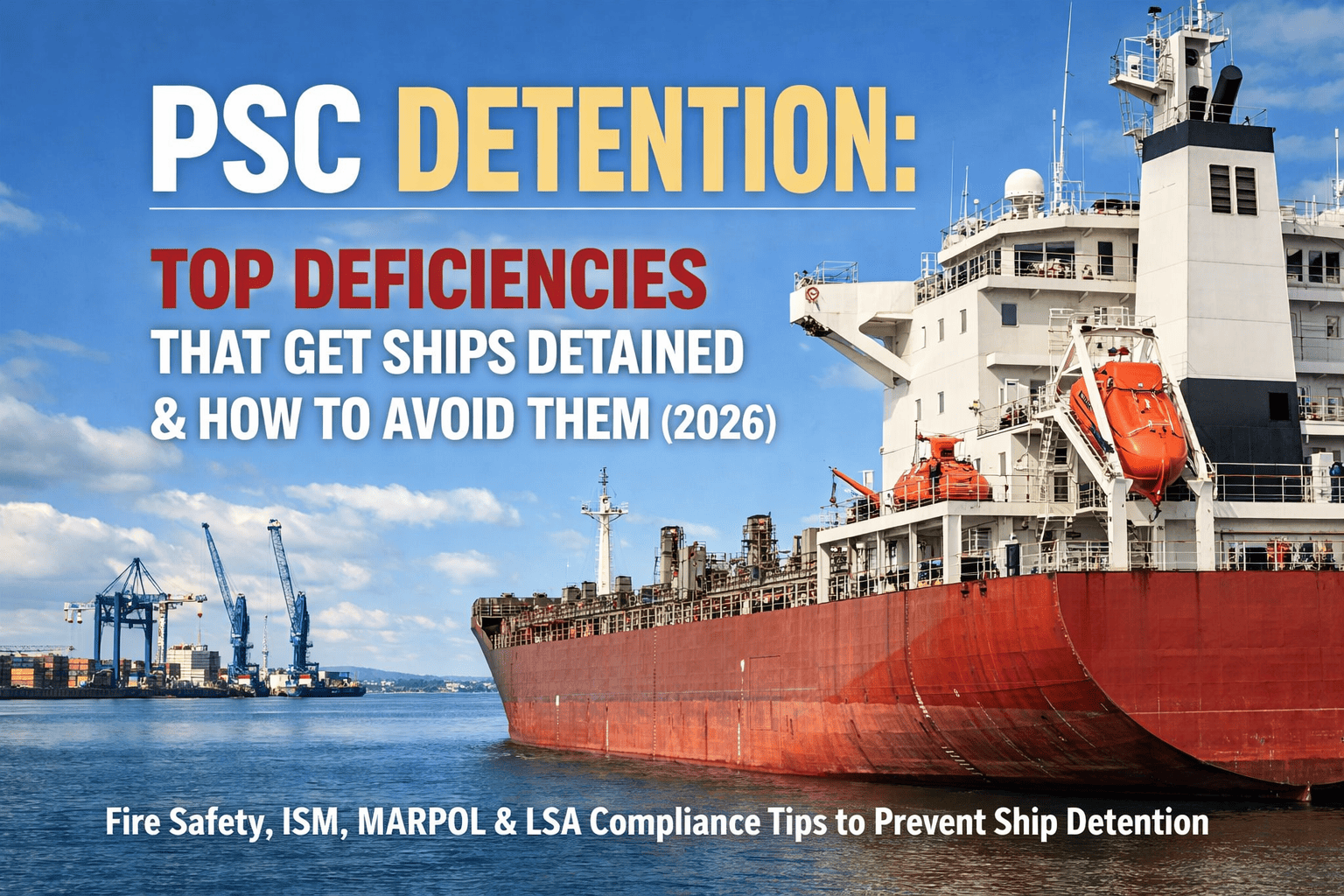
PSC Detention: Top Deficiencies That Get Ships Detained & How to Avoid Them
A PSC detention doesn't just delay your schedule — it damages your commercial reputation, elevates your risk profile for every future inspection, increases insurance premiums, and in the Paris MOU region, three detentions within 36 months can get your vessel banned entirely. The frustrating reality is that most detentions are caused by the same recurring deficiency categories — fire safety, life-saving appliances, ISM failures, and navigation equipment — that are entirely preventable with systematic preparation. In Q2 2025 alone, over 80% of all DNV-classed vessel detentions occurred in the Paris and Tokyo MOU regions, with 252 detainable deficiencies leading to 73 detentions. This guide ranks the deficiency categories that cause the most detentions, explains what inspectors are actually looking for, and gives you a prevention checklist for each. Operators serious about zero-detention performance can sign up for Marine Inspection's compliance platform to track deficiencies, corrective actions, and inspection readiness fleet-wide.
Multiple minor deficiencies can collectively = ISM detention
How Detentions Happen: The Escalation Path
Not every deficiency leads to detention — but understanding how inspectors escalate from initial boarding to a detention order helps you see where things go wrong and where prevention matters most.
Stage 1 — Initial Inspection
Certificates and documentation check — PSCO reviews statutory certificates (SOLAS, MARPOL, STCW, MLC, Load Lines, ISM DOC/SMC, ISPS). If everything is valid and no "clear grounds" exist, the inspection may stop here. This is the best outcome.
Stage 2 — "Clear Grounds" Trigger More Detailed Inspection
Deficiencies found or concerns raised — Missing certificates, expired documents, visible safety equipment deficiencies, or crew unable to answer basic questions about emergency procedures. The PSCO now has "clear grounds" for a more detailed examination of specific systems.
Stage 3 — Detainable Deficiency Identified
Serious deficiency = detention — If a deficiency is "clearly hazardous to safety, health, or the environment," the PSCO can detain the vessel until the deficiency is rectified. The vessel cannot sail until the port state authority is satisfied that the condition has been corrected or agrees to allow the vessel to proceed to a repair port under specific conditions.
The Top Deficiency Categories That Cause Detentions
Based on global PSC data from Paris MOU, Tokyo MOU, and DNV fleet analysis, these are the deficiency categories responsible for the most detentions — ranked by frequency and severity. Each section includes what inspectors check and how to prevent findings.
#1 — Fire Safety
The Most Frequent Detention Category Worldwide
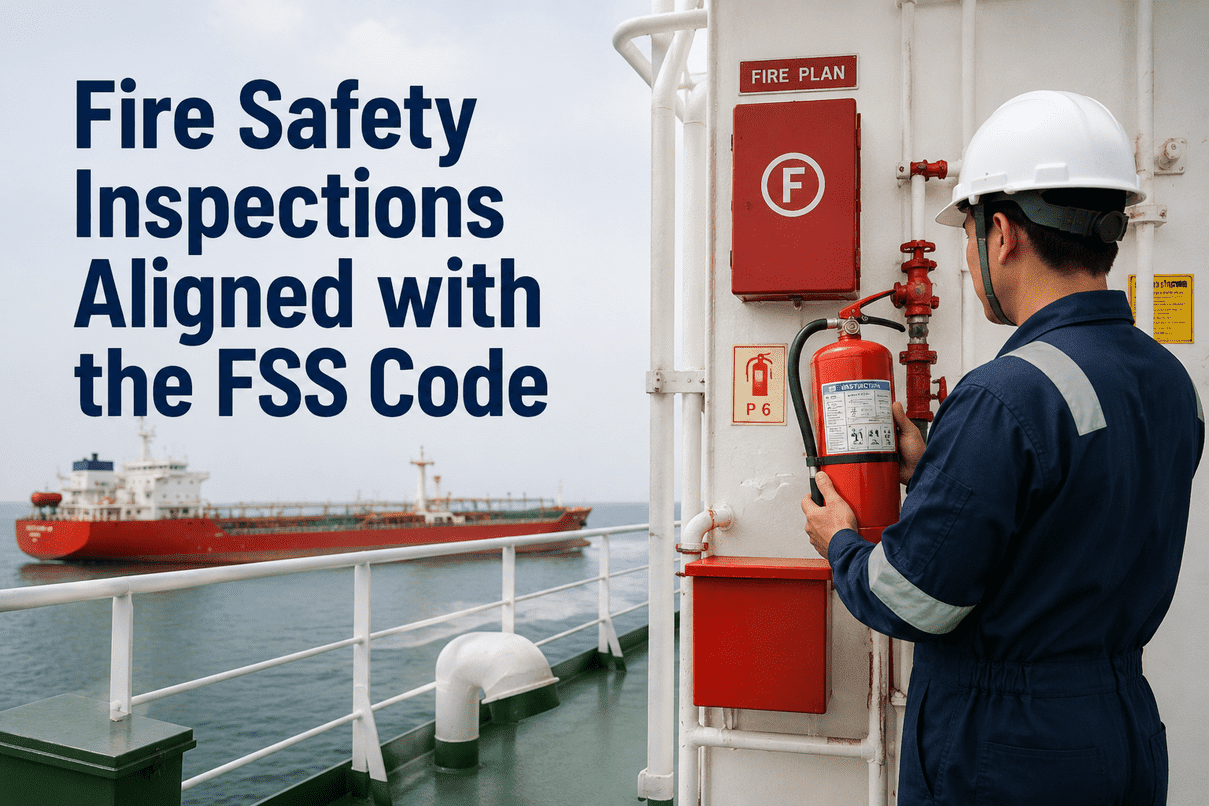
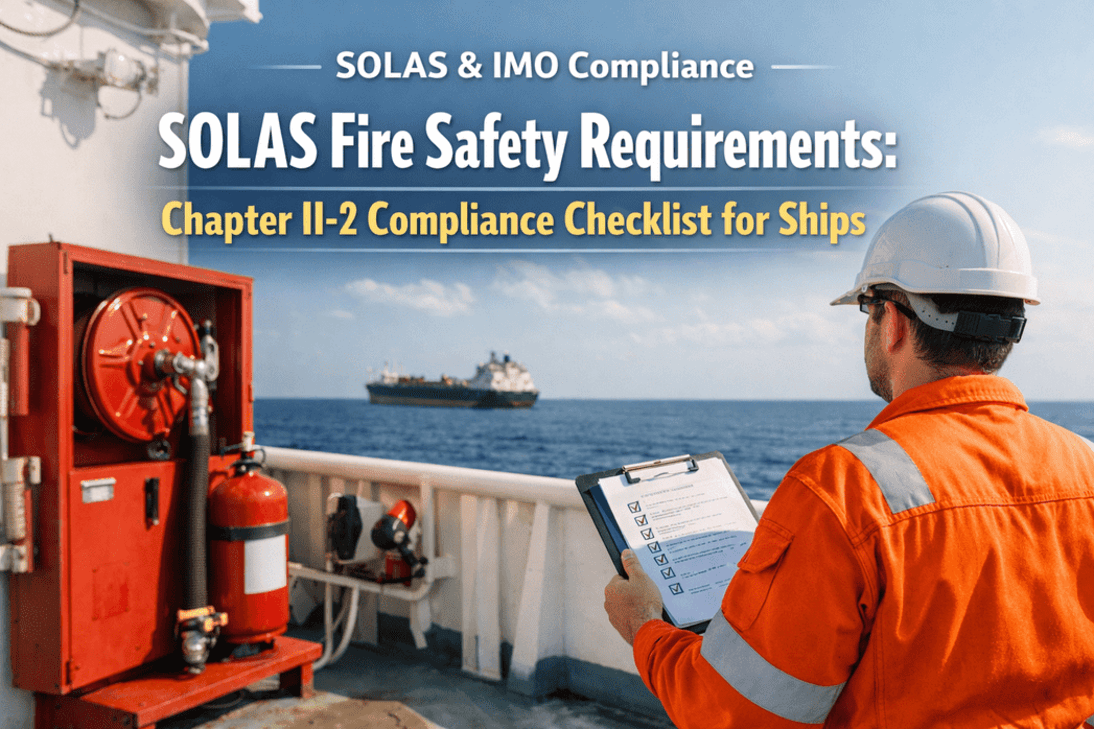
What PSCOs check: Fire detection panel functionality, fire extinguisher expiry dates and accessibility, fire hoses and hydrants operational, fire doors closing properly and latching, fire dampers operating freely, fire pump operation, fixed fire-fighting systems (CO₂, foam, water mist) inspection status, and fire escape routes unobstructed.
Common detainable findings: Inoperative fire detection system, expired/missing fire extinguishers, fire doors wedged open or unable to close, fire dampers seized, fire pump not starting, and fixed system not serviced per schedule.
#2 — Life-Saving Appliances
Missing, Expired, or Inoperable Safety Equipment
What PSCOs check: Lifeboat readiness (davits, falls, engine start, release mechanism), liferaft servicing dates and hydrostatic releases, immersion suits availability and condition, EPIRB registration and battery date, SART functionality, line-throwing apparatus, and crew familiarity with LSA deployment during drills.
Common detainable findings: Lifeboat engine won't start, davit wires corroded or overdue for replacement, liferafts past service date, EPIRB battery expired, and crew unable to demonstrate LSA launch procedures.
#3 — ISM Code (Safety Management)
The "Hidden Multiplier" Behind Many Detentions
What PSCOs check: ISM DOC and SMC validity, SMS implementation in practice (not just documentation), non-conformity tracking and close-out, drill records and crew familiarity, management of change procedures, and defect reporting system usage. Paris MOU explicitly states that ISM deficiency exists where there is a "failure, or lack of effectiveness, of the implementation of the ISM Code."
Critical point: Multiple individual non-detainable deficiencies across different categories can collectively demonstrate ISM system failure — converting what would have been minor findings into a detainable ISM deficiency. This is the mechanism that surprises operators most.
#4 — Emergency Systems
Systems That Must Work When Everything Else Fails
What PSCOs check: Emergency generator auto-start and load capacity, emergency lighting, emergency fire pump, bilge pumping arrangements, emergency steering, general alarm and PA system, and watertight door operation.
Common detainable findings: Emergency generator fails to auto-start within required time, emergency lighting not functioning, emergency fire pump inoperative, and watertight doors that don't close or indicate properly on the bridge.
#5 — Safety of Navigation
Bridge Equipment, Charts & Pilot Ladders
What PSCOs check: ECDIS with updated charts, paper chart corrections (if carried), passage planning, compass errors recorded, AIS operational, navigation lights, sound signalling, and pilot ladder rigging. Incorrectly rigged pilot ladders are a particular enforcement focus — PSCOs may conduct follow-up inspections specifically for this regardless of normal inspection windows.
Common detainable findings: No passage plan, charts not corrected, ECDIS not updated, AIS transmitting incorrect data, pilot ladder defective or improperly rigged.
#6 — MARPOL (Pollution Prevention)
Oil Record Books, Emissions & Environmental Compliance
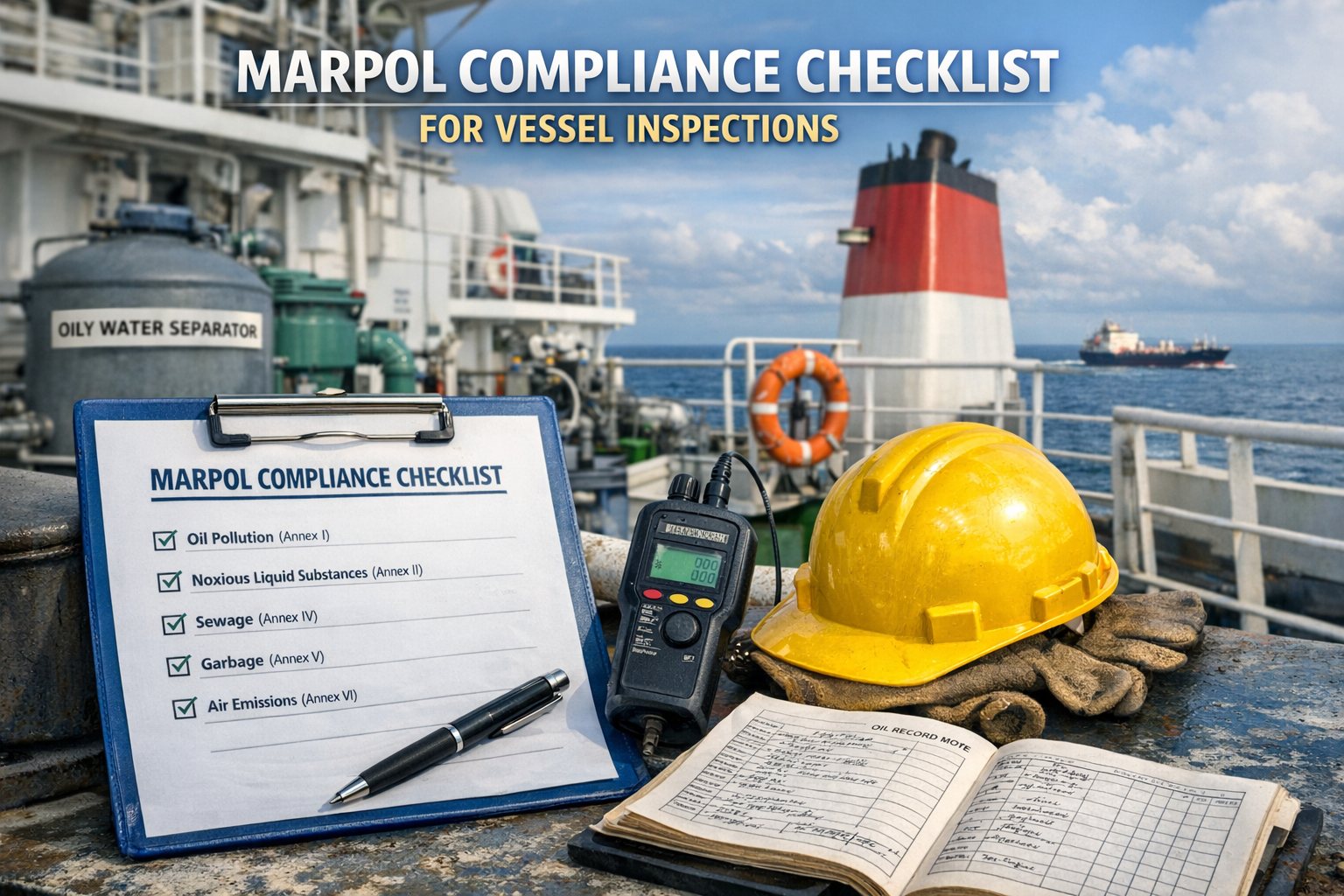
What PSCOs check: Oil Record Book entries (Part I and II), oily water separator operation and 15 ppm alarm, Garbage Record Book, sewage treatment plant, sulphur content of fuel in use (0.50% global cap / 0.10% in ECAs), IAPP certificate, and ballast water management compliance.
Common detainable findings: Oil Record Book irregularities or incomplete entries, OWS alarm bypassed or inoperative, fuel sulphur exceeding limits, BWMS not operational, and missing or incomplete ballast water records.
#7 — STCW (Crew Certification)
Manning, Certificates & Rest Hours
What PSCOs check: Crew certificates of competency and endorsements, minimum safe manning document compliance, work and rest hour records, familiarization training evidence, and STCW endorsement flag state recognition.
Common detainable findings: Crew serving in capacity without valid certificate, insufficient manning, falsified rest hour records, and missing flag state endorsements for certificates.
#8 — MLC (Crew Welfare)
Living Conditions, Wages & Contracts
What PSCOs check: Seafarer employment agreements, wage payment records, accommodation standards (cleanliness, ventilation, space), food and water quality, medical equipment and supplies, and complaint handling procedures.
Common detainable findings: No valid employment agreements, wages unpaid or significantly delayed, accommodation unsafe or unsanitary, insufficient food or drinking water, and expired medical supplies. Paris MOU places particular emphasis on MLC compliance.
Track Every Deficiency Before Inspectors Find Them
Marine Inspection maps your fleet against every major PSC deficiency category — fire safety, LSA, ISM, navigation, MARPOL, and crew compliance — so your preparation is systematic, not scrambled.
The ISM Multiplier Effect: How Minor Deficiencies Become a Detention
Critical Mechanism to Understand
This is the scenario that catches operators off guard: a vessel accumulates several individually non-detainable deficiencies across different categories — an expired fire extinguisher, an incomplete drill record, a missing chart correction, and a crew member unfamiliar with emergency procedures. Each alone would result in a deficiency code but not a detention. However, when the PSCO sees a pattern of non-compliance across multiple areas, it indicates a systemic failure — the ISM safety management system is not working effectively.
At that point, the PSCO records an ISM-related deficiency, which is detainable. The Paris MOU explicitly defines this path: an ISM deficiency exists where there is "a failure, or lack of effectiveness, of the implementation of the ISM Code." The lesson: preventing detention isn't just about avoiding big problems — it's about ensuring no accumulation of small ones that collectively reveal poor safety management.
All statutory certificates valid and onboard — SOLAS, Load Line, MARPOL (IOPP, IAPP), SMC, DOC, ISPS, MLC, class certificates. Check expiry dates and endorsements. One expired certificate = immediate "clear grounds."
Crew certificates current with flag state endorsements — Every officer and rating must have valid CoC, STCW endorsements, and flag state recognition. Verify before crew changes, not during inspection.
Fire Safety
Test fire detection panel — All zones active, no faults displayed, detectors tested per schedule. Walk through every fire door — they must self-close and latch from any position.
Verify all fire extinguishers and fixed systems — Check service dates, accessibility, signage. Ensure fire pump starts, fire hoses are pressurized, and fixed fire-fighting systems are within inspection dates.
Life-Saving & Emergency
Check all LSA service dates and functionality — Liferaft servicing, lifeboat engine start, davit wires, EPIRB battery/HRU, SART, immersion suits. Start the emergency generator and verify auto-start timing.
Navigation
Passage plan complete, charts updated, AIS correct — ECDIS charts corrected to latest NtMs. AIS data matches actual vessel details. Pilot ladder inspected and rigged per SOLAS requirements.
MARPOL & Environmental
Oil Record Book current and consistent — Entries complete with no gaps or irregularities. OWS functional with 15 ppm alarm. Confirm fuel sulphur compliance for destination port (0.50% global / 0.10% ECA). BWM records complete.
ISM / Crew Readiness
Drill records up to date, crew can demonstrate procedures — Recent fire, abandon ship, and pollution drills documented. Crew must articulate their emergency roles — PSCOs interview at various levels. Close all open non-conformities before arrival.
What Happens After a Detention
If your vessel is detained, understanding the process helps you respond correctly and minimize the operational and reputational impact.
1
Rectification Required
The detaining authority specifies which deficiencies must be corrected before the vessel can sail. Repairs must be completed to the satisfaction of the port state — often verified by a follow-up inspection before release.
Ship cannot sail until deficiencies are corrected
2
Risk Profile Elevated
The detention is recorded in the MOU database and shared globally via GISIS/Equasis. Your ship's risk profile increases — meaning more frequent inspections, wider scope, and higher scrutiny at every subsequent port call worldwide.
Follows the vessel globally — not just in that MOU
3
Flag State & Class Notified
The flag state and recognized organization (classification society) are notified of the detention. This may trigger additional flag state actions, class conditions, or company-level reviews of the ISM system.
May trigger class conditions or flag state action
4
Commercial Consequences
Detention records are visible to charterers, vetting teams, and insurers. Commercial vetting acceptance rates drop. Insurance premiums may increase. In Paris MOU, a third detention within 36 months triggers a ban from the entire region.
Reputation damage lasts far longer than the detention
Zero Detentions Starts with Systematic Preparation
Marine Inspection connects certificate tracking, deficiency management, drill records, and corrective action workflows — giving you fleet-wide visibility into PSC readiness before you enter any port.
Fire safety deficiencies are consistently the #1 or #2 detention category globally across both Paris and Tokyo MOU regions. Inoperative fire detection panels, expired extinguishers, fire doors unable to close, and fixed fire-fighting systems overdue for service are the most frequently cited detainable findings. Life-saving appliance deficiencies and ISM Code failures round out the top three.
Can minor deficiencies lead to detention?
Yes — through the ISM multiplier effect. Multiple individually non-detainable deficiencies across different categories can collectively demonstrate a systemic failure of the safety management system. Paris MOU explicitly defines this: if the PSCO concludes the deficiencies provide "objective evidence of a failure of the ISM system," an ISM-related detainable deficiency is recorded. This is the mechanism that surprises operators most.
How many deficiencies before a ship gets detained?
There is no fixed number, but research across 125,000+ Tokyo MOU inspections shows that vessels with 5 or more deficiencies face significantly higher detention probability. However, a single serious deficiency (e.g., inoperative fire detection, emergency generator failure) can trigger detention on its own if it is "clearly hazardous to safety, health, or the environment."
What happens if my vessel is detained three times?
In the Paris MOU region, a vessel detained three or more times within a 36-month period can be banned from the entire European/North Atlantic region. This banning mechanism is unique to Paris MOU — no other regional MOU has an equivalent. In Tokyo MOU, repeated detentions progressively elevate your risk profile, leading to more frequent and more detailed inspections at every subsequent port call.
Does a detention in one MOU region affect inspections in another?
Yes. Detention records are shared globally through GISIS and Equasis databases. A detention in Tokyo MOU is visible to Paris MOU inspectors and directly affects your ship's risk profile when entering European waters — and vice versa. Your inspection history follows the vessel globally across all MOU regions.