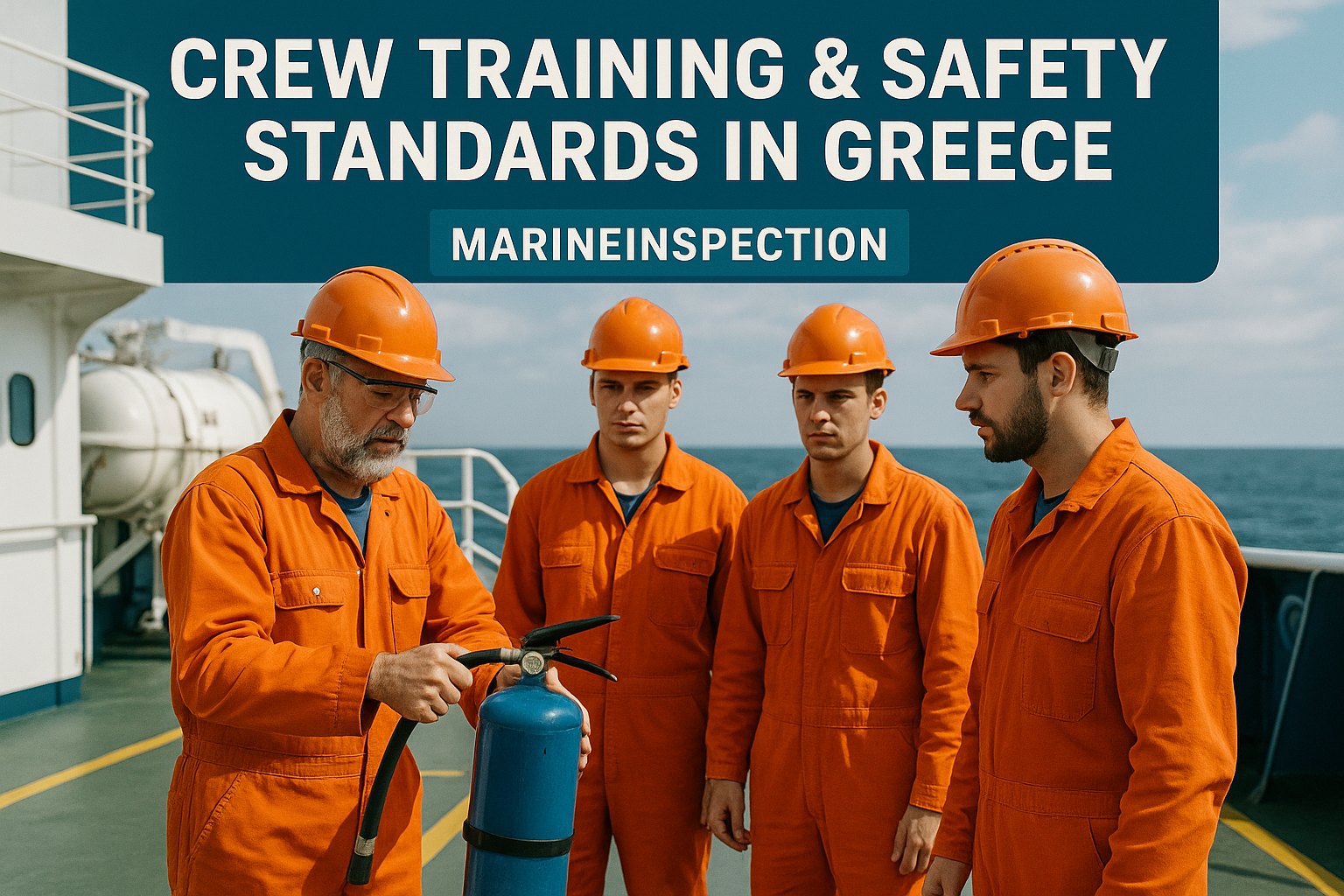
Greece's maritime industry depends on highly trained, certified crews who meet stringent international and national safety standards. As a leading shipping nation, Greek operators must ensure their crews maintain current certifications, participate in ongoing training, and uphold safety protocols that protect lives, vessels, and cargo.
Crew Training & Safety Standards in Greece: Certification, Compliance & Best Practices
Master Greece's crew training requirements and safety standards. Learn certification pathways, compliance strategies, and digital tools that ensure your crew meets international standards while optimizing performance.
Understanding Greece's Maritime Crew Training Requirements and Safety Standards
Greek maritime regulations align with STCW (Standards of Training, Certification and Watchkeeping) conventions while adding specific national requirements. The Hellenic Coast Guard and Ministry of Maritime Affairs oversee certification, training standards, and compliance enforcement for Greek-flagged vessels and seafarers.
Managing crew certifications, training records, and safety compliance across your fleet requires systematic tracking. MarineInspection's crew management module automates certification tracking, training scheduling, and compliance monitoring—ensuring zero gaps in crew qualifications.
Essential STCW Certifications for Greek Seafarers
Certificates of Competency (CoC)
Requirements: Mandatory for deck officers, engineer officers, and radio operators. Levels range from Management to Operational to Support.
Greek Process: Issued by Hellenic Coast Guard after examination and sea service verification. Includes endorsements for specific vessel types (tankers, passenger ships).
Validity: 5 years, renewable with proof of sea service and medical fitness.
STCW Chapter II, III, IVBasic Safety Training (BST)
Requirements: Mandatory for all seafarers before sea service. Covers personal survival, fire prevention/firefighting, elementary first aid, and personal safety.
Greek Training: 5-day course at approved maritime training centers. Practical demonstrations required.
Validity: Lifetime certification, but refresher training recommended every 5 years.
STCW A-VI/1Proficiency in Survival Craft (PSC)
Requirements: For crew assigned to survival craft duties. Advanced survival techniques and lifeboat operation.
Greek Training: 3-4 day course including practical drills in survival craft and rescue boats.
Validity: 5 years, renewal requires refresher course demonstrating continued proficiency.
STCW A-VI/2Medical First Aid / Medical Care
Requirements: Medical First Aid for designated crew members; Medical Care for ships without doctors on voyages >12 hours from advanced medical care.
Greek Training: 18 hours (First Aid) or 5 days (Medical Care) with practical assessments.
Validity: 5 years, renewal requires refresher course and competency demonstration.
STCW A-VI/4Advanced Firefighting
Requirements: For crew assigned to firefighting duties and officers. Covers advanced techniques, breathing apparatus, and command procedures.
Greek Training: 40 hours including live fire scenarios in approved training facilities.
Validity: 5 years with refresher training required for renewal.
STCW A-VI/3Ship Security Officer (SSO)
Requirements: ISPS Code mandate for designated security officers on all SOLAS vessels.
Greek Training: 5-day course covering threat assessment, security plans, and emergency response.
Validity: Continuous validity with recommended refresher every 3 years.
STCW A-VI/5Greek authorities require all certifications be valid with at least 30 days remaining before expiry when departing Greek ports. Vessels with expired crew certifications face immediate detention, fines up to $50,000, and crew replacement requirements before operations resume. Port State Control inspections have increased 40% in 2024—expired certificates are the #1 cause of PSC detentions for Greek vessels.
Tracking certification expiries across multiple crew members and vessels is challenging. Start your free trial to get automated expiry alerts 90, 60, and 30 days in advance, ensuring crew certifications never lapse and avoiding costly detentions.
Specialized Training Requirements by Vessel Type
| Vessel Type | Additional Certifications | Training Duration | Renewal Period |
|---|---|---|---|
| Oil/Chemical Tankers | Advanced Tanker Training, Cargo Operations (Oil/Chemical) | 5 days per specialization | 5 years |
| LNG/LPG Carriers | Specialized Gas Carrier Training, Emergency Procedures | 10 days (comprehensive) | 5 years |
| Passenger Ships | Crowd Management, Crisis Management, Passenger Safety | 3 days (combined) | 5 years |
| Ro-Ro Vessels | Ro-Ro Passenger Ship Safety, Vehicle Securing | 2 days | 5 years |
| High-Speed Craft | High-Speed Craft Operations, Emergency Procedures | 4 days | 5 years |
Greek Maritime Safety Regulations
Beyond STCW requirements, Greek-flagged vessels must comply with additional national safety standards:
- ISM Code Implementation: All Greek commercial vessels >500 GT must maintain Safety Management Systems with documented crew training programs, emergency procedures, and safety objectives. Annual internal audits and external certifications required.
- Hellenic Coast Guard Safety Inspections: Greek vessels subject to periodic safety inspections every 12-36 months depending on vessel type and age. Crew competency verification, safety equipment familiarity, and emergency drill effectiveness evaluated.
- Mandatory Safety Drills: Weekly drills required for fire, abandon ship, man overboard, and damage control. Monthly drills for enclosed space entry and cargo-specific emergencies. All drills documented with crew participation records.
- Language Proficiency: Working language onboard must be established. Greek vessels with multinational crews require English as common working language. Officers must demonstrate English proficiency per STCW standards (IMO Standard Marine Communication Phrases).
- Medical Fitness Standards: All seafarers require valid medical certificates from approved doctors. Comprehensive exams required every 2 years (under 18: annually). Stricter standards for deck and engineer officers including vision and hearing tests.
- Working/Rest Hour Compliance: Greek Maritime Labour Convention implementation requires documented rest hours (minimum 10 hours per 24-hour period, 77 hours per 7-day period). Electronic or manual logs required, subject to PSC inspection.
Digital Transformation in Safety Management: Greek shipping companies are rapidly adopting digital crew management systems to handle increasing regulatory complexity. Manual paper-based systems fail to track certification expiries, training completion, and drill schedules across dispersed fleets—leading to compliance gaps and PSC deficiencies.
Modern crew management platforms provide centralized databases accessible to shore staff and vessels, automated compliance alerts, and audit-ready documentation—reducing administrative burden by 65% while improving safety oversight.
Best Practices, Training Programs, and Digital Tools to Enhance Crew Safety and Performance
Implementing Effective Crew Training Programs
Structured Onboarding
Comprehensive orientation for new crew members covering vessel-specific safety procedures, equipment locations, emergency protocols, and familiarization periods before assuming watch duties.
Best Practice: 3-5 day vessel familiarization with checklist completion and officer sign-off before independent duties. Digital onboarding systems track completion and identify knowledge gaps.
Continuous Competency Development
Regular training beyond minimum STCW requirements. Bridge Resource Management (BRM), leadership skills, equipment-specific training, and soft skills development.
Best Practice: Quarterly training modules delivered via e-learning platforms. Officers complete 40+ hours annually beyond mandatory certifications. Measurable improvement in incident rates and PSC performance.
Realistic Emergency Drills
Scenario-based drills simulating actual emergencies rather than routine checklist exercises. Unannounced drills, multi-department coordination, and post-drill debriefings.
Best Practice: Monthly advanced scenarios (e.g., fire during cargo operations, medical emergency in heavy weather) with video recording and crew self-assessment. Dramatic improvement in emergency response effectiveness.
Near-Miss Reporting Culture
Encourage reporting of near-miss incidents without blame. Analyze trends, share lessons learned, and implement corrective actions fleet-wide.
Best Practice: Digital reporting systems with guaranteed no-penalty policy. Monthly fleet-wide bulletins sharing anonymized incidents and prevention measures. 75% reduction in serious incidents after implementation.
Mental Health & Fatigue Management
Recognize mental health importance in maritime safety. Training for officers on recognizing crew stress, depression, and fatigue. Access to mental health resources and shore support.
Best Practice: Mandatory mental health awareness training for senior officers. Confidential helplines, scheduled welfare calls, and crew rotation planning preventing excessive tour lengths. Measurable improvement in crew retention and safety.
Performance Monitoring & Feedback
Regular competency assessments beyond initial certification. Constructive feedback, career development planning, and recognition of excellence.
Best Practice: Quarterly performance reviews with documented competency assessments. Digital systems track skills development, training completion, and career progression. Improved crew engagement and reduced turnover.
Implementing comprehensive training programs manually overwhelms shore staff. Schedule a demo to see how MarineInspection automates training scheduling, tracks completion, manages drill records, and provides analytics—giving you complete visibility into crew competency across your fleet.
Leveraging Digital Tools for Crew Management
Comprehensive Crew Management Platform
Modern maritime operations require integrated systems managing certifications, training, safety, and compliance from single platform.
MarineInspection provides complete crew management solutions trusted by Greek operators:
- Certification Tracking: Automated database of all crew certificates with expiry alerts, renewal tracking, and verification status. Eliminates manual spreadsheets and missed renewals.
- Training Management: Schedule mandatory and voluntary training, track completion, manage training matrix by position, and generate compliance reports. Integrates with e-learning platforms.
- Drill Management: Schedule required drills, document participation, store photos/videos, track scenarios used, and ensure regulatory compliance. Mobile app for onboard documentation.
- Medical & Fitness Tracking: Monitor medical certificate validity, track vaccinations, manage fitness-for-duty assessments, and coordinate shore medical appointments.
- Rest Hour Compliance: Electronic recording of work/rest hours with automatic violation alerts, ECDIS integration for watchkeeping schedules, and PSC-ready reports.
- Competency Assessment: Digital forms for performance reviews, skills matrices, promotion readiness, and career development planning.
- Incident Reporting: Easy near-miss and incident reporting via mobile, automated investigation workflows, trend analysis, and corrective action tracking.
Greek shipping companies using integrated crew management platforms report: 95% reduction in certification compliance issues, 70% faster PSC inspection preparation, 60% decrease in training administration time, and 40% improvement in crew retention rates.
Transform your crew management today. Join 300+ maritime operators using MarineInspection for automated crew compliance, training management, and safety oversight—starting with a free 14-day trial with full feature access.
Building a Positive Safety Culture
Technical compliance alone doesn't create safe operations. Industry-leading Greek operators focus on cultural transformation:
Safety culture starts from top. Management must visibly prioritize safety over schedule or cost pressures. Regular fleet safety meetings, shore visits focused on safety, and resource allocation demonstrate genuine commitment.
Crew must feel safe reporting concerns without fear of retaliation. Anonymous reporting channels, guaranteed investigation follow-up, and transparency about corrective actions build trust.
View incidents as learning opportunities, not blame assignment. Share lessons learned fleet-wide, conduct root cause analysis, and implement systemic improvements rather than individual discipline.
Recognize and reward safe behaviors, safety suggestions, and exemplary performance. Simultaneously, hold all levels accountable for safety standards—no exceptions for convenience or expediency.
Greek Maritime Training Centers & Resources
Greece offers world-class maritime training facilities for initial certification and ongoing professional development:
- Merchant Marine Academies: Four state maritime academies (Aspropyrgos, Chios, Hydra, Syros) providing comprehensive officer training programs. 4-year degrees combining academic education with sea training. Graduates receive STCW certificates and university degrees.
- Private Training Centers: Multiple approved centers offering STCW courses, specialized certifications, and refresher training. Facilities in major ports (Piraeus, Thessaloniki, Patras) providing flexible scheduling for active seafarers.
- Simulator Training: Full-mission bridge and engine room simulators available at training centers and academies. Realistic scenario training for navigation, ship handling, and emergency response without operational risks.
- E-Learning Platforms: Growing availability of online training for theoretical components. Computer-based training (CBT) for non-practical elements saving time and costs while maintaining quality. Must be from approved providers for STCW credit.
Ensure Crew Compliance Excellence
Greek operators trust MarineInspection for comprehensive crew management. Never miss certification renewals, automate training scheduling, and maintain perfect PSC records.
Managing Multinational Crews
Greek vessels often employ multinational crews requiring additional management considerations:
Cultural Awareness Training
Officers receive training on cultural differences, communication styles, and managing diverse teams. Understanding cultural backgrounds prevents conflicts and improves collaboration.
Implementation: 2-day workshops for senior officers, online modules for all crew, culturally-sensitive safety communications.
Language Standardization
Establish English as working language with proficiency verification. Critical safety communications in standardized phrases (IMO SMCP). Translation of key documents when needed.
Implementation: English testing during recruitment, onboard language training, multilingual safety signage, verified comprehension during drills.
Equal Treatment Policies
Clear policies prohibiting discrimination based on nationality, religion, or ethnicity. Fair treatment in assignments, accommodations, and career opportunities.
Implementation: Written policies in multiple languages, grievance mechanisms, regular audits, shore HR oversight.
Social Integration Programs
Foster team cohesion through social activities, shared meals, and cultural celebration days. Reduce isolation and improve morale.
Implementation: Monthly social events, international food days, sports competitions, crew welfare budgets.
Crew Welfare & Mental Health Best Practices
Seafarer wellbeing directly impacts safety performance. Progressive Greek operators prioritize crew welfare:
- Communication Access: Reliable internet connectivity for crew personal use. Regular contact with family reduces stress and improves morale. Many operators now provide unlimited internet as standard benefit.
- Recreation Facilities: Well-equipped gyms, entertainment systems, library access, and comfortable common areas. Physical and mental health support through quality rest and recreation.
- Reasonable Tour Lengths: Limit contract durations to prevent excessive fatigue. Standard 4-6 months for most positions, shorter for high-stress positions. Honor repatriation schedules consistently.
- Shore Leave Optimization: Maximize port time for crew rest and shore leave. Coordinate with agents for shore passes, organize port activities, and provide transportation when feasible.
- Mental Health Resources: Access to counselors, stress management training, confidential helplines, and peer support programs. Proactive mental health support prevents crises.
Managing crew welfare programs requires coordination between vessels and shore offices. Digital crew management systems facilitate welfare tracking, grievance management, and shore communication—ensuring consistent welfare standards across your fleet.
Frequently Asked Questions
Have questions about crew training and safety compliance for your Greek fleet? We've compiled answers to common concerns. For personalized guidance, schedule a consultation with our maritime crew management experts.
Excel in Crew Training & Safety Compliance
MarineInspection provides complete crew management solutions designed for maritime operations—trusted by 300+ shipping companies worldwide.
14-day free trial • No credit card required • Full crew management features
MarineInspection — Complete Maritime Crew Management Solution
Certification Tracking • Training Management • Drill Scheduling • Compliance Monitoring