A CDI report has a shelf life, and managing chemical and gas carriers well means managing that clock as deliberately as the inspection itself. The report stays valid for thirteen months from the date of inspection and is archived afterwards, which means a vessel without a current report is commercially exposed even though nothing about the ship has changed — and since a satisfactory report is frequently a prerequisite for employment with major chemical companies, that exposure translates directly into lost cargo opportunities. For fleets running several chemical tankers or gas carriers, the clocks run independently, the scheduling has to be planned across ports and geographical zones, and preparation cannot begin the month before each one falls due. Meanwhile the inspection itself reaches further than equipment condition: a scored questionnaire weights statutory items most heavily, the cargo-systems chapter varies by vessel type, and inspectors interview officers and ratings directly on cargo properties and emergency procedures. This guide is about managing CDI as a continuous fleet process — the validity clock and its traps, where the score is actually won, aligning tank condition, cargo systems and documentation, and the work that happens between inspections. To hold that readiness across your chemical and gas fleet, book a demo or start a free trial.
MANAGEMENT GUIDE · CHEMICAL AND GAS CARRIERS
CDI Inspection Management for Chemical and Gas Carrier Fleets
Running CDI as a continuous fleet process rather than a recurring event — the thirteen-month validity clock, where the scored questionnaire rewards effort, and how to keep tank condition, cargo systems and documentation aligned between audits.
The Thirteen-Month Clock
The single most important scheduling fact about CDI is how its validity is measured, because it differs from the other vetting regimes in a way that catches operators out.
CDI
13 months
Measured from the inspection date. The report is archived once the period expires, so the clock starts the day the inspector attends rather than when paperwork completes.
SIRE 2.0
12 months
Measured from the publication date. An operator managing both schemes is therefore tracking two different clock conventions across the same fleet.
That distinction matters in planning. Because the CDI period runs from attendance, any delay between inspection and report finalisation eats into usable validity rather than extending it, so scheduling the next inspection off the report date quietly shortens coverage each cycle. Fleets that plan from the inspection date and build in a margin avoid drifting into gaps.
The management-transfer trap
If technical management of a vessel transfers during the report's validity period, the operator must notify CDI, and the report may be archived prematurely — subject to verification of ISM certification. This is a genuine commercial risk during fleet reorganisations, acquisitions or management changes, because a vessel can lose a report that still had months to run and find itself needing an inspection at short notice. Any change of technical management should therefore be treated as a CDI scheduling event, not merely an administrative one, with the inspection position reviewed as part of the transfer planning rather than discovered afterwards.
Where the Score Is Won and Lost
CDI produces a scored report, and the questionnaire deliberately weights its questions unevenly. Understanding the tiers lets a fleet direct preparation where it moves the score rather than spreading effort flat.
Statutory
Highest impact on score
Questions referenced to international regulations. These carry the greatest weight, which means a shortfall against a convention requirement damages the score more than anything else in the report — and they are also the items most likely to attract Port State Control attention separately.
Recommended
Moderate impact
Questions referenced to industry codes of practice. These reflect what good operators do rather than what regulation compels, and they are where a competent fleet distinguishes itself from a merely compliant one.
Desirable
Lower weight, still assessed
Items requested by CDI participants. They carry less weight individually, but they are scored, and neglecting them entirely leaves easy points on the table in a regime where the report is compared against peers.
The practical reading is that statutory items deserve the most rigorous verification, because they combine the highest scoring weight with the greatest regulatory exposure. But the recommended tier is where the meaningful separation happens — most vessels satisfy statutory requirements, so the score difference between an adequate report and a strong one is usually earned in industry-practice territory. To track readiness against the scored areas across your fleet, book a demo or start a free trial.
Aligning the Three Areas That Carry the Report
Preparation reduces to keeping three things aligned continuously, and misalignment between them is what produces findings even on well-run vessels.
01
Tank condition
Coating condition, structural integrity and cleanliness of cargo tanks, along with the inspection history behind them. Coating breakdown is progressive and visible in records long before it becomes a finding, so tank condition is best managed on a trend rather than assessed fresh each cycle. For chemical carriers, coating suitability against the cargo range carried is a persistent point of examination.
02
Cargo systems
Pumps, pipelines, valves, heating arrangements, venting, inert gas systems and cargo handling procedures. The cargo chapter is issued in separate versions for chemical tankers, LPG carriers, LNG carriers, product tankers and dry bulk, so the questions a vessel faces depend on its type and a fleet spanning several types is preparing against several question sets rather than one.
03
Documentation
Certificates, procedures, maintenance records and the evidence that operations were carried out as documented. This is the alignment that fails most often: the tank may be sound and the system serviced, but if the record does not demonstrate it at the moment of asking, the inspector records what can be shown rather than what is true.
The alignment point is worth stressing. These three are not independent workstreams but three views of the same operational reality, and the report tests whether they agree. A serviced cargo pump with no maintenance record, a coating survey never filed, a procedure updated but not acknowledged aboard — each is a gap between physical condition and demonstrable evidence, and each reads to an inspector as a management-system weakness rather than an isolated omission.
Keep condition, systems and records telling the same story
Most CDI findings on well-maintained vessels come from evidence that cannot be produced rather than work that was not done. Marine Inspection captures inspections and maintenance at the point of work — offline, timestamped and attributed — so tank condition trends, cargo-system servicing and the documentation behind them stay aligned across every vessel in the fleet.
Book a demo to see it mapped to your vessels, or
start a free trial.
The Human Factor CDI Examines
A distinguishing feature of the CDI audit is how heavily it weighs the people rather than the plant. Inspectors interview officers and ratings directly, assessing their understanding of the specific cargo properties the vessel carries, the emergency procedures that apply, and the safety management system as it governs their own work.
This is a demanding standard on a chemical or gas carrier, because the cargo range can be wide and the hazards cargo-specific. A crew member is not being asked to recite a generic procedure but to demonstrate understanding of the substances actually aboard and what to do when something goes wrong with them. Preparation that consists of rehearsing answers performs poorly against this; what works is genuine familiarity built through training, drills and competent supervision over time, with the training and competency records to evidence it. The practical implications are the same as for any interview-based assessment: ensure the people who actually perform each task are available rather than a nominated representative, and make sure officers can explain the reasoning behind procedures rather than just their existence. Since competency evidence is documentary as well as demonstrated, training records and drill histories need to be retrievable alongside the crew themselves. To keep competency and drill evidence current across the fleet, book a demo or start a free trial.
Managing CDI Across a Mixed Fleet
Few operators run chemical and gas carriers alone, and the management burden multiplies when a fleet spans vessel types, because the vetting regimes do not overlap.
CDI
Chemical tankers, gas carriers and parcel tankers. Thirteen months from inspection date.
SIRE 2.0
Oil and product tankers, with chemical and gas tankers also within its scope. Twelve months from publication date.
RightShip RISQ
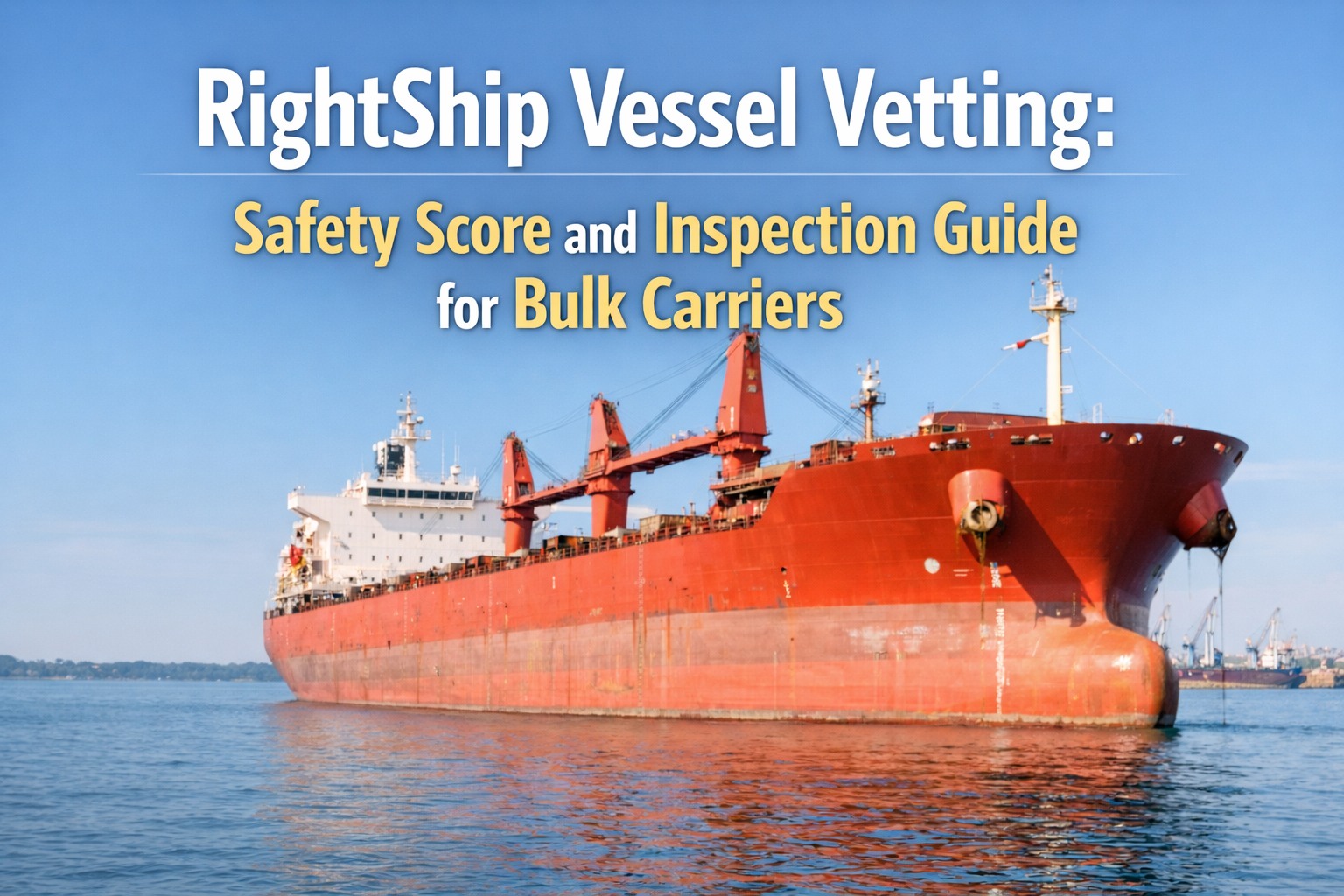
Dry bulk and general cargo vessels, with an age-based inspection requirement.
A chemical tanker operator may therefore be managing CDI and SIRE positions on the same vessels, against different questionnaires, different scoring logic and different validity conventions — while Port State Control runs independently across everything. The consolidating insight is that the underlying evidence is largely common. Maintenance completed and recorded, defects closed with root cause and proof, certificates current, drills conducted, crew competency documented: these feed every regime. What differs is the packaging and the emphasis, not the substance. Fleets that maintain one authoritative operational record and present it in whichever form a given scheme requires carry far less overhead than those running separate preparation exercises per regime, and they avoid the situation where evidence assembled for one audit cannot be found when another arrives.
The Work Between Inspections
Everything above points to the same conclusion: the score is largely determined before the inspector is scheduled. The period between inspections is where it is actually built.
That work is unglamorous and familiar. Findings from the previous report should be converted into tracked corrective actions with owners, deadlines and documented completion, since the next inspection revisits ground already covered and an unresolved item from last time is the easiest finding an inspector will record. Tank coating condition should be monitored as a trend with surveys filed as they happen, so deterioration is addressed while it is still maintenance rather than repair. Cargo-system maintenance should be completed and evidenced against plan rather than caught up before an audit. Certificates and surveys need enough forward visibility that nothing expires near an inspection window. Crew competency and drill records should accumulate continuously, because they cannot be manufactured retrospectively. And findings raised on one vessel should be checked across sister ships of the same type, since the cargo chapter and the systems it examines are common to them.
Run this way, a CDI inspection becomes a confirmation of a position the operator already knows rather than a discovery exercise, and the thirteen-month clock becomes a scheduling matter rather than a recurring emergency. To put your chemical and gas fleet on that footing, book a demo or start a free trial.
Frequently Asked Questions
QHow long is a CDI report valid?
A CDI report is valid for thirteen months from the date of inspection, after which it is archived. The measurement point matters: because validity runs from the inspection date rather than from publication, any delay between the inspector attending and the report being finalised consumes usable validity rather than extending it. This differs from SIRE 2.0, where reports run for twelve months from the publication date, so an operator managing both schemes is tracking two different conventions across the same fleet. The practical consequence is that inspections should be scheduled from the previous inspection date with a margin built in, since planning from the report date quietly shortens coverage a little each cycle and eventually produces a gap.
QWhat happens to our report if technical management changes?
If technical management of a vessel transfers during the validity period, the operator must notify CDI and the report may be archived prematurely, subject to verification of ISM certification. This is a real commercial risk during fleet reorganisations, acquisitions and management changes, because a vessel can lose a report that still had months of validity remaining and then need an inspection at short notice to remain commercially employable. The sensible response is to treat any change of technical management as a CDI scheduling event rather than a purely administrative one, reviewing the inspection position for each affected vessel as part of transfer planning. Discovering the issue after the transfer completes leaves far less room to arrange an inspection before cargo opportunities are affected.
QHow is the CDI questionnaire weighted?
Questions are categorised into three tiers that carry different weight in the vessel's score. Statutory questions are referenced to international regulations and have the highest impact, so shortfalls there damage the score most — and they tend to be the same items Port State Control examines separately. Recommended questions are referenced to industry codes of practice and carry moderate impact, representing what good operators do rather than what regulation compels. Desirable questions are those requested by CDI participants; they carry lower weight individually but are still assessed. Practically, statutory items warrant the most rigorous verification, while the recommended tier is usually where real separation occurs, since most vessels meet statutory requirements and the difference between an adequate report and a strong one is earned in industry-practice territory.
QDoes the inspection differ by vessel type?
Yes, particularly in the cargo-systems area. The cargo chapter is issued in separate versions for chemical tankers, LPG carriers, LNG carriers, product tankers and dry bulk, covering cargo systems, tank coatings, heating, venting, inert gas systems and cargo handling procedures as they apply to that type. A vessel therefore faces the question set matched to what it is, and an operator running several types across the fleet is preparing against several question sets rather than a single common one. This has a direct management implication: preparation material, checklists and internal verification should be type-specific rather than generic, and findings raised on one vessel are most usefully checked against sister ships of the same type, since they share the cargo systems the chapter examines.
QHow does CDI differ from SIRE and RightShip?
They cover different segments and are run by different bodies. CDI, established by the chemical industry, is specific to chemical tankers, gas carriers and parcel tankers. SIRE 2.0, run by OCIMF, covers oil and product tankers alongside chemical and gas tankers. RightShip's RISQ programme addresses the dry bulk and general cargo sector. All three are commercial rather than statutory requirements — driven by charterers and cargo interests rather than flag or class — and a satisfactory report is frequently a prerequisite for employment with major counterparties. For operators, the important insight is that while questionnaires, scoring logic and validity conventions differ, the underlying evidence is largely common: maintenance completed and recorded, defects closed with proof, certificates current, drills conducted and crew competency documented feed all of them.
QWhat should we focus on between inspections?
The score is largely determined before the inspector is scheduled, so the interval is where it is built. Convert findings from the previous report into tracked corrective actions with owners, deadlines and documented completion, because the next inspection revisits covered ground and an unresolved prior item is the easiest finding to record. Monitor tank coating condition as a trend with surveys filed as they happen, so deterioration is handled while it is still maintenance rather than repair. Complete and evidence cargo-system maintenance against plan rather than catching up before an audit. Keep enough forward visibility on certificates and surveys that nothing expires near an inspection window. Let crew competency and drill records accumulate continuously, since they cannot be produced retrospectively. And check findings from one vessel against sister ships of the same type.
Manage the Clock, Not Just the Inspection
CDI rewards fleets whose tank condition, cargo systems and documentation already agree with each other — and whose previous findings are demonstrably closed before the next inspector attends. Marine Inspection holds that record continuously across chemical and gas carriers, capturing inspections and maintenance offline at the point of work with corrective actions tracked to evidenced closure, so the thirteen-month clock is a scheduling matter rather than a recurring scramble.
Book a demo or
start a free trial.