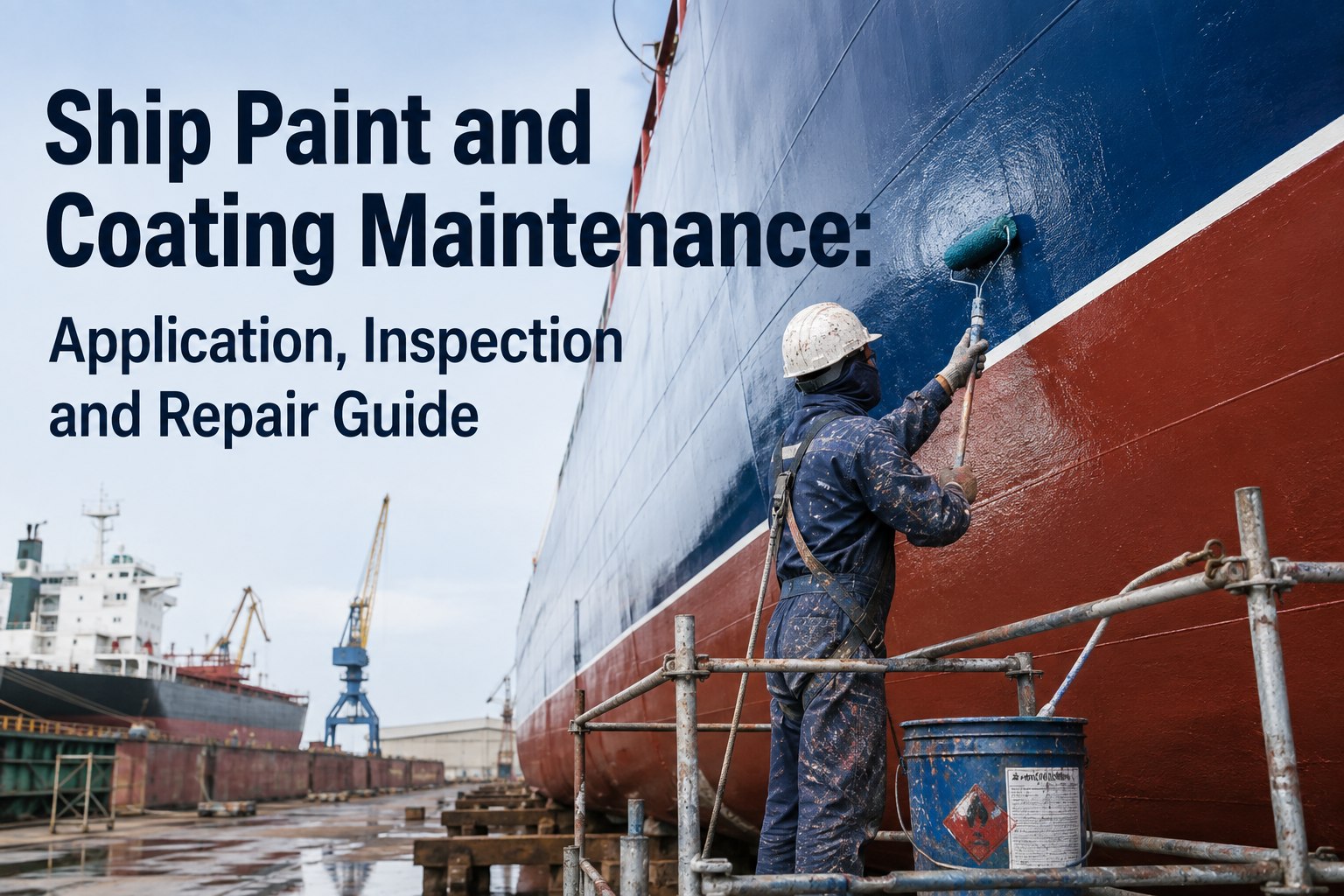
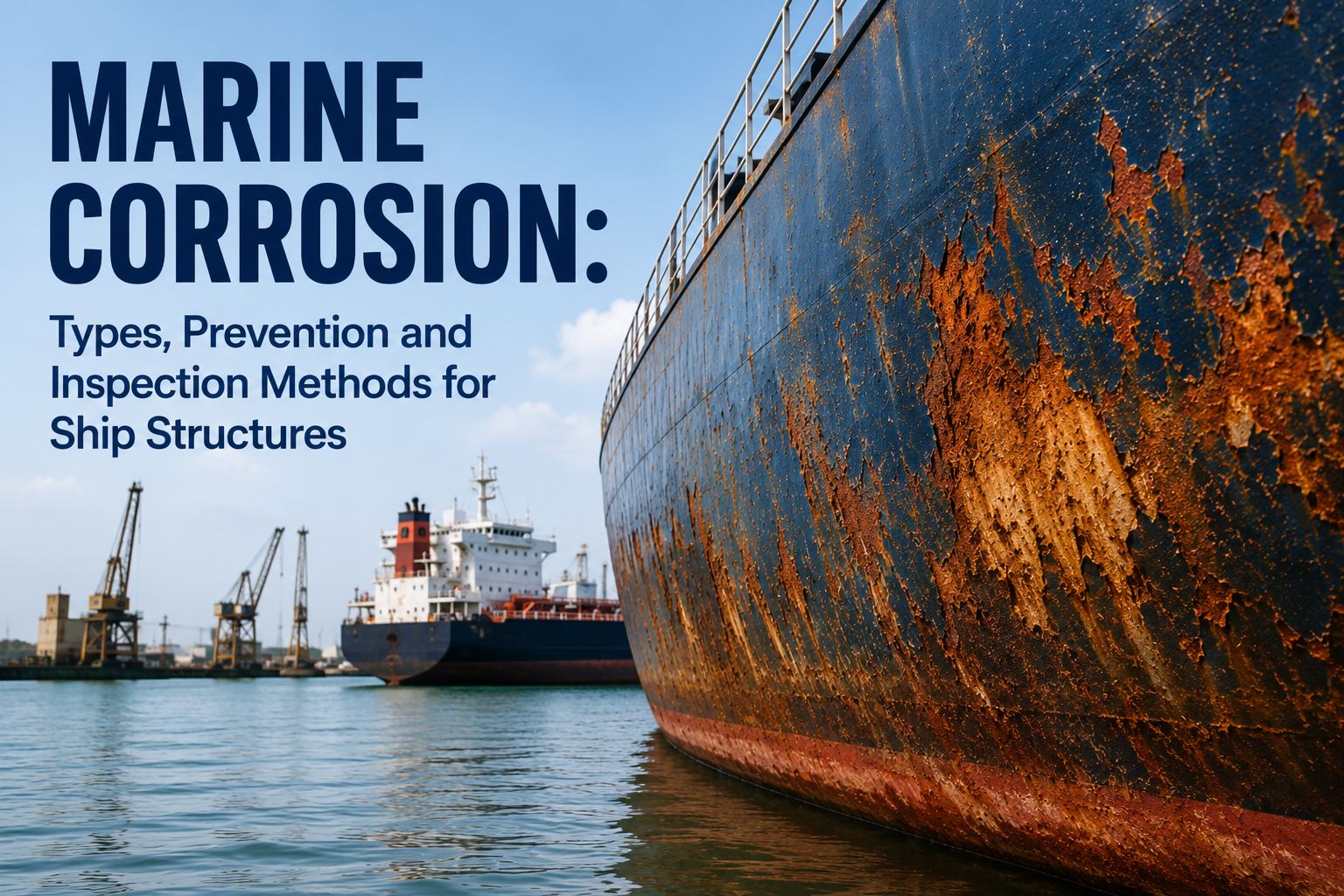
On a steel ship, paint is not decoration — it is the primary barrier standing between the structure and a corrosive environment engineered, it can feel, specifically to destroy it. A coating system applied and maintained well delivers fifteen years of protection in good condition; the same system applied over a poorly prepared surface, or in the wrong conditions, or without verified thickness, can break down in a fraction of that time and leave the steel it was meant to protect wasting away in a ballast tank no one sees until the survey. The difference between those two outcomes is almost never the paint itself. It is the discipline around it: the surface preparation beneath it, the conditions it was applied in, the stripe coats on the edges and welds where film thins, the measured dry film thickness that proves the barrier is actually there, and the maintenance that catches breakdown before it spreads. Marine coating is best understood not as a product but as a process with quality control built in at every step, and this guide walks through that whole process for the superintendents and surveyors who specify, apply, inspect and maintain it. It covers surface preparation and why it governs everything, the coating system and how it is applied, stripe coating and dry film thickness, the inspection that verifies the work, the PSPC framework for ballast tanks, and the maintenance and repair that extend coating life across a vessel's decades of service. To specify coating work, record DFT readings and inspection results, and keep the coating condition evidence class expects organised across your fleet, start a free trial or book a demo.
INDUSTRY GUIDE · COATINGS
Ship Paint and Coating Maintenance: Application, Inspection and Repair
A process guide for superintendents and surveyors to marine coating done right — surface preparation, application standards, stripe coating and dry film thickness, coating inspection, PSPC compliance, and the maintenance and repair that turn a coating system into fifteen years of protection.
15 yr
PSPC target coating life in GOOD condition
Sa 2.5
Near-white blast standard for ballast tanks
DFT
The measured proof the barrier is really there
Coating Is a Process, Not a Product
The most important idea in marine coating is that the paint is the least of it. A modern anticorrosive scheme performs only as well as the process that puts it on the steel, and the recurring cause of premature coating failure is almost never a bad product — it is a good product applied over inadequate preparation, in the wrong environment, or without verified thickness. Coating longevity is built in through a chain of controlled steps, each of which can undo the ones before it if skipped.
This is why the whole discipline is organised as a sequence with inspection hold-points between the stages, most rigorously in the IMO Performance Standard for Protective Coatings, where a ballast tank coating is not approved at the end but built with traceable controls at every step. Treating coating as a QA culture rather than a document is what turns a target service life into a measured result. The stages below are that sequence.
1
Surface preparation
The foundation everything rests on. Surfaces are cleaned of grease, oil, salts and old coating, then abrasive-blasted to the specified cleanliness — near-white metal, Sa 2.5, for ballast tanks — creating an anchor profile, the mechanical key, typically around 30 to 75 microns, that the coating flows into and grips. Soluble salt contamination is controlled and measured, because chlorides left on the steel draw water through the film and cause blistering later. It is almost impossible to produce a perfectly clean surface, so the standard defines how clean is clean enough.
2
Environmental control
Coating is applied only inside an environmental window — steel temperature safely above the dew point, relative humidity within limits — so condensation does not form on the surface during or after application. Apply outside that window and moisture is trapped under the film, undermining adhesion no matter how good the preparation. Conditions are checked and recorded before and during application, not assumed.
3
Stripe coating
Before each main coat, edges, welds, cut-outs and drain holes are painted by hand — the stripe coat — because these are exactly where the film tends to thin and fail first. An extra thickness, preferably around 30 microns, in a contrasting colour to confirm coverage, protects the geometry that spray application alone leaves vulnerable to rust jacking. PSPC requires at least two stripe coats, and adding stripe coats during onboard repair prolongs the life of a scheme built without them.
4
Coat application and build
The anticorrosive coats are applied to build the film, with wet film thickness checked during application as a real-time guide to whether the target dry thickness will be met, and the recoating window between coats strictly observed so each coat bonds to the last. Applying too soon or too late compromises intercoat adhesion, so the coating manufacturer's overcoating times govern the pace of the work.
5
Dry film thickness verification
Once cured, the dry film thickness defines the actual barrier, so it is measured with a calibrated gauge to a recognised method such as ISO 19840 or ISO 2808 — the tank divided into areas, DFT mapped, readings taken specifically on the difficult geometry of edges, welds and reinforcements. Areas below the specified DFT are repaired; excessive over-thickness, which can crack, is also flagged against clear criteria.
6
Final inspection and holiday detection
The finished coating is inspected for defects, and where the system and thickness call for it, holiday detection finds the pinholes, porosity and micro-channels that become localised corrosion sites in service. Substandard areas are identified, rectified and re-inspected, and any marking used to flag them is removed so it does not itself contaminate the film. Only then is the coating accepted.
Capture every coating hold-point as it happens
Surface prep sign-off, environmental readings, DFT maps and inspection results are the traceable controls that make a coating provable. Marine Inspection records them per tank and per vessel with photos and criteria, so the coating history is built as the work is done, not reconstructed later.
The Coating System and Where It Goes
Different parts of a ship face different enemies, so a coating system is matched to its location. Understanding the main environments explains why one scheme is not applied everywhere.
Ballast tanks
The most aggressive internal environment — cyclic immersion in seawater, wetting and drying, warmth and oxygen — and the space where coating discipline matters most. Hard epoxy anticorrosive systems over Sa 2.5 preparation are the norm, governed by IMO PSPC for dedicated seawater ballast tanks, aiming at fifteen years in good condition. This is where surface prep, stripe coating and DFT verification earn their keep.
Cargo holds and tanks
Coated to suit the cargo carried — abrasion-resistant systems in dry bulk holds that take grab and cargo impact, chemically resistant linings in tanks matched to the products. The coating both protects the steel and, in many trades, protects the cargo from contamination, so cargo compatibility shapes the specification alongside corrosion resistance.
Underwater hull
An anticorrosive scheme overlaid with antifouling to prevent the marine growth that increases drag and creates differential corrosion conditions. The hull coating works alongside cathodic protection, and its condition drives fuel efficiency as well as corrosion control, making it a commercial as well as a structural concern.
Decks and superstructure
Exposed to weather, UV, mechanical wear and standing water, protected by anticorrosive primers under weathering topcoats. These areas are accessible for routine touch-up, so shipboard maintenance coating keeps them ahead of breakdown between dry dockings, where the enclosed tanks cannot be reached so easily.
Inspecting Coating Condition
Once a coating is in service, the question shifts from applying it well to catching its decline in time. Coating inspection assesses condition against defined grades and looks for the specific ways coatings break down, so repair happens before corrosion takes hold.
Condition is graded against the familiar three-level scale of GOOD, FAIR and POOR used in class survey, with FAIR and POOR triggering closer attention and, under recent survey rules, re-examination at annual surveys. Beneath the grading, the inspector reads the mechanisms of failure: blistering, usually caused by ionic contamination or water-soluble salts left at the steel interface drawing water through the film; rust jacking, where corrosion creeps under the coating from unprotected edges and lifts it; cracking and flaking from over-thick or aged film; and mechanical damage exposing bare steel. Each tells a different story about what went wrong and what the repair must address. A blister from salt contamination is not fixed the same way as impact damage, so identifying the mechanism is part of specifying the repair, not just recording the symptom.
i
Why breakdown starts at edges and welds
Coating consistently fails first at cut edges, weld seams and sharp geometry, and the reason is physical: paint films thin over a sharp edge as they cure and surface tension pulls the wet film away from the corner, leaving too little coating exactly where protection is most needed. That is the entire rationale for stripe coating those areas by hand, and it is why an inspector examines edges and welds first — they are the leading indicator of a coating's real condition. A tank that looks sound across its flat plating can already be breaking down along every stiffener edge, which is where the DFT readings and the close look must concentrate.
Maintenance and Repair
No coating lasts forever, and the practical art is extending its life through timely, correct repair rather than waiting for a full recoat. The principles of good repair are the same as good application, scaled to the damaged area.
Prepare the damaged area
Repair begins with preparation, exactly as new work does — the breakdown and any corrosion product removed, the sound surrounding coating feathered back to a firm edge, and the bare steel cleaned to the required standard so the repair coat bonds to steel and to existing paint. A repair over poor preparation fails as surely as new work does.
Stripe and recoat
The prepared area is stripe-coated on any edges and welds and then recoated to the specified build and thickness, using a system compatible with the original coating. Adding stripe coats during onboard repair is one of the most effective ways to prolong a scheme, particularly on a vessel originally built without them.
Verify and record
The repair is checked for thickness and coverage and the work recorded, so the coating history stays complete and the repaired areas can be watched at the next inspection. A repair that is not recorded cannot be trended, and trending is what turns scattered touch-ups into managed coating life.
Behind the individual repairs sits a strategy: preserve the coating in good condition, because a coating kept good does the corrosion control and avoids the cascade of survey and commercial consequences that a downgrade to fair or poor now brings. Routine shipboard maintenance keeps the accessible areas ahead of breakdown between dockings; dry-dock campaigns address the tanks and hull that cannot be reached in service; and throughout, the condition is graded, the DFT is measured, and the results are trended so recoating is planned before corrosion forces it. The vessels whose steel lasts are the ones where the coating was treated as the asset it is — inspected, maintained and documented — rather than left until the rust showed. To keep coating condition grades, DFT maps, repair records and inspection evidence organised and trended across your fleet, start a free trial or book a demo.
Frequently Asked Questions
Why is surface preparation so important for ship coatings?
Because it governs everything that follows. A coating adheres and lasts only if the steel beneath it is clean, salt-free and given the right surface profile — the mechanical key the paint flows into and grips. The recurring cause of premature coating failure is not a bad product but a good product applied over inadequate preparation. Ballast tanks are typically prepared to Sa 2.5 near-white blast with a profile around 30 to 75 microns, with soluble salts controlled, because chlorides left on the steel draw water through the film and cause blistering. No coating outperforms the preparation beneath it.
What is dry film thickness (DFT) and how is it measured?
Dry film thickness is the thickness of the cured coating, and it defines the actual protective barrier — too little and the barrier is inadequate, too much and the film can crack. It is measured with a calibrated gauge to a recognised method such as ISO 19840 or ISO 2808, with the area divided into zones, readings mapped, and particular attention to the difficult geometry of edges, welds and reinforcements where film thins. Areas below the specified DFT are repaired and excessive over-thickness is flagged. DFT verification is what proves the barrier the specification called for is actually present.
What is stripe coating and why does it matter?
Stripe coating is the hand application of extra coating to edges, welds, cut-outs and drain holes before each main coat. It matters because paint films thin over sharp edges and weld seams as they cure, leaving too little coating exactly where protection is most needed, which is why breakdown starts there. An extra thickness of preferably around 30 microns, applied in a contrasting colour to confirm coverage, protects that vulnerable geometry. IMO PSPC requires at least two stripe coats, and adding stripe coats during onboard repair is one of the most effective ways to prolong a coating scheme.
What is PSPC and what does it require?
The IMO Performance Standard for Protective Coatings sets mandatory requirements for the coating system, its application and its inspection in dedicated seawater ballast tanks and certain other spaces, aiming at a target useful coating life of fifteen years in good condition. It works by building traceable quality controls into every stage — surface preparation to Sa 2.5, salt control, application within an environmental window, at least two stripe coats, and DFT verification against defined criteria — rather than approving the coating only at the end. Treating PSPC as a quality-control culture rather than a paperwork exercise is what turns the target life into a measured result.
What causes coating blistering?
Blistering is usually caused by ionic contamination or water-soluble salts left at the interface between the coating and the steel during application. Water is then drawn from the environment through the coating by osmosis toward those salts, forming blisters that lift the film from the steel. This is why controlling and measuring soluble salt contamination during surface preparation is a defined step in the coating process — chlorides left on the steel are a direct cause of later failure. It is also why surface preparation, not the paint, is so often the real determinant of how long a coating lasts.
How is coating condition graded during survey?
Coating condition is graded on a three-level scale of GOOD, FAIR and POOR used in class survey, where GOOD is only minor spot rusting, FAIR is local breakdown or light rusting over a defined proportion, and POOR is general breakdown or hard scale over defined thresholds. FAIR and POOR trigger closer survey attention, and under recent rules any condition below GOOD is recorded and re-examined at annual surveys. Beneath the grade, inspectors identify the failure mechanism — blistering, rust jacking, cracking, mechanical damage — because the repair depends on what caused the breakdown, not just its extent.
How should coating repairs be carried out?
A repair follows the same principles as new application, scaled to the damaged area. The breakdown and corrosion product are removed, the sound surrounding coating is feathered back to a firm edge, and the bare steel is cleaned to the required standard. Any edges and welds are stripe-coated, then the area is recoated to the specified thickness with a system compatible with the original, and the result is checked for thickness and coverage and recorded. Recording matters because a repair that is not documented cannot be trended, and trending repaired areas over time is what keeps coating life managed rather than reactive.
Treat the Coating as the Asset It Is
Marine Inspection records surface-prep sign-offs, environmental readings, DFT maps, condition grades and repair history per tank and per vessel, with photos, criteria and deadline alerts — so coating is built with traceable controls, breakdown is caught early, and recoating is planned before corrosion forces it. Turn coating from scattered dry-dock paperwork into a managed, trended, provable programme across the fleet.