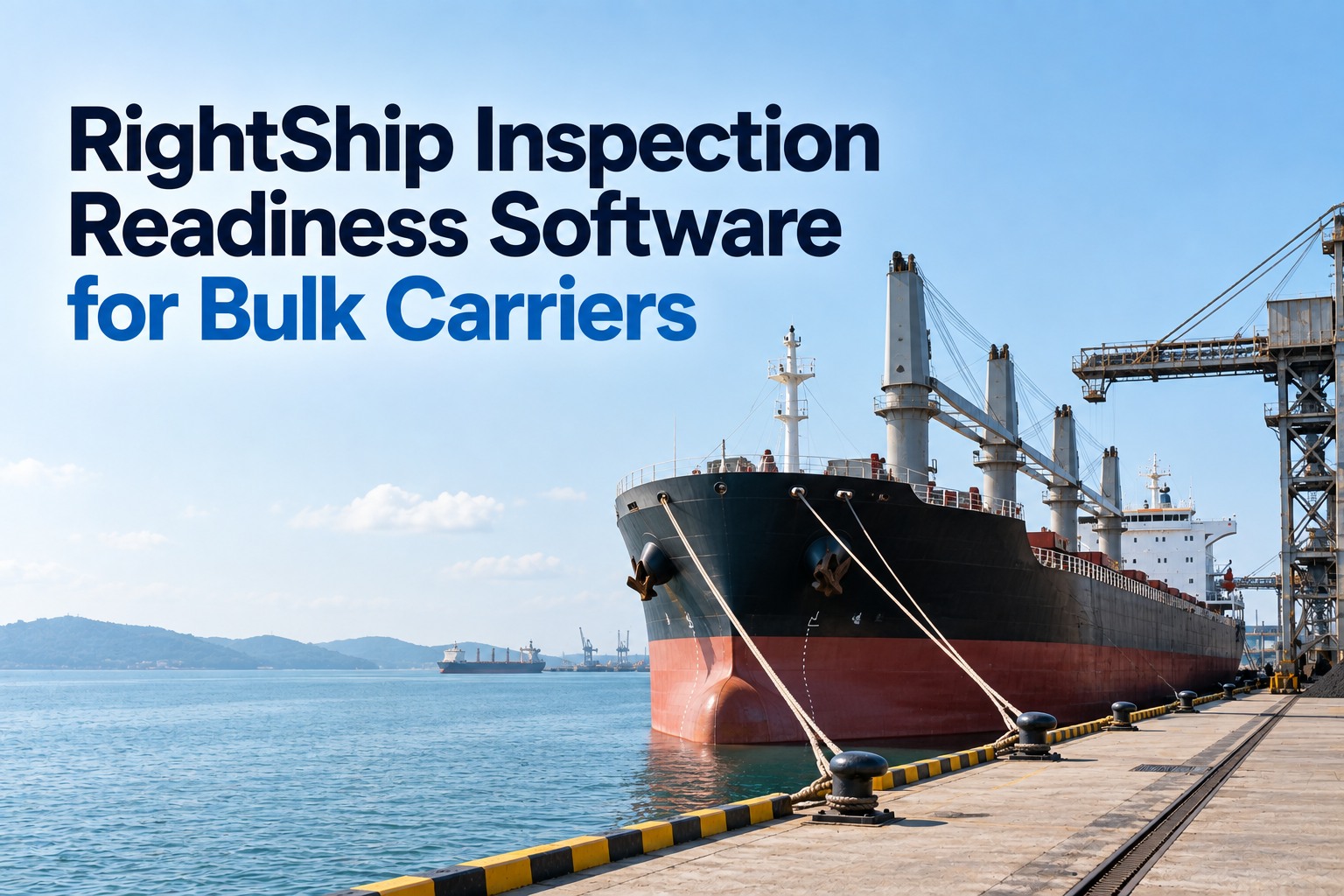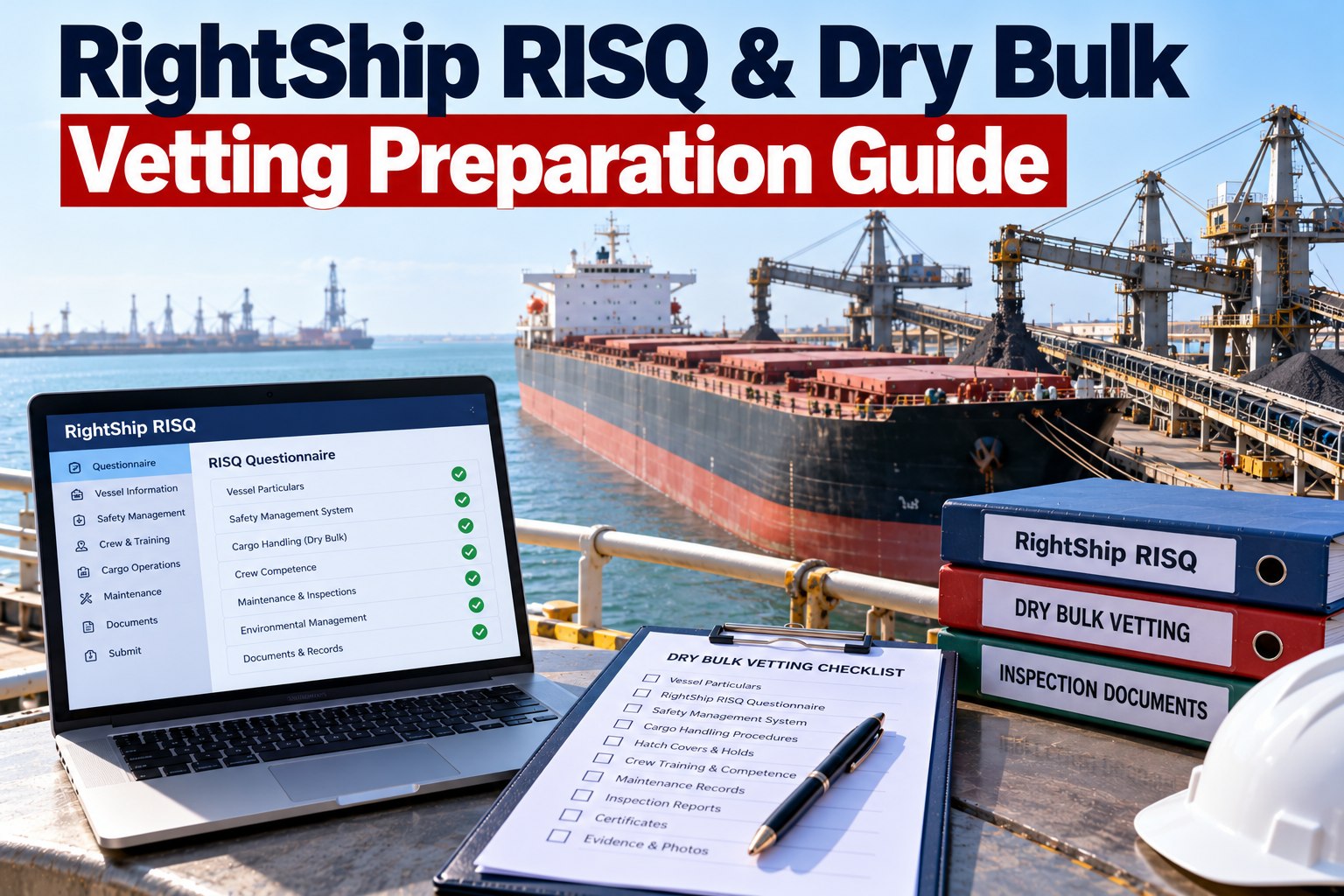
For dry bulk owners, a RightShip inspection now affects more than one fixture. Since the age trigger phases began, an older bulk carrier without a valid inspection can have its Safety Score downgraded to 2. The findings and the quality of the close-out then decide how long the inspection stays valid. This guide covers the RISQ 3.2 questionnaire scope, what inspectors look for, and how close-out and validity feed the Safety Score. Book a demo to see RISQ preparation tracked.
RightShip RISQ inspection: from findings to validity to Safety Score
Fewer high-risk findings plus a strong close-out means a longer validity. Too many means the inspection is not acceptable.
RISQ 3.2 questionnaire scope: the chapters inspectors cover
The RightShip Inspection Ship Questionnaire (RISQ) is free to download. It covers statutory, recommended and desirable items, with reference to IMO, ILO, ISO, OCIMF, ICS and P&I guidance. Chapters 7 and 8 apply according to fuel and cargo type. Chapter titles below are from a published RISQ 3.2 walkthrough; check the current RISQ document.
What changed in RISQ 3.2
RightShip revised the questionnaire with industry input to improve clarity and reduce time on board. Figures from RightShip’s RISQ 3.2 revision.
RightShip inspector expectations on board
Inspectors spend less time on paperwork and more on verifying that the ship runs the way the records say. For the readiness side, see our RightShip inspection readiness guide. Try the platform free.
Answers are cross-checked
A permit-to-work answer in the ISM chapter can be tested against what engineers say in the machinery space. Records, crew accounts and condition must agree.
Documents arrive first
RightShip says an inspection uses 86 documents: 63 reusable ones can be uploaded months ahead, and 23 are needed for each inspection.
Hybrid and dual options
Hybrid inspections averaged 11.5 hours on board against 14.1 for standard. Two inspectors working together can cut this to about 6–7 hours.
Crew familiarity matters
RightShip notes that frequent findings relate to crew familiarity with procedures, so drills and walkthroughs pay off.
Dry bulk safety: the high-risk findings inspectors keep raising
RightShip lists these as the most frequent high-risk findings. Each high-risk finding counts directly against validity.
Find the high-risk items before the inspector
Run RISQ-based self-inspections with photos and owners on every finding, starting with hatch covers, enclosed spaces and lifesaving gear.
RightShip close-out: 15 days to prove each fix
After the inspection, operators have 15 days from receiving the findings to submit a close-out for each one. Extensions are considered only for genuine difficulty.
RightShip inspection validity matrix explained
RightShip grades each close-out submission as good, average or poor. Validity then depends on the close-out grade, the number of high-risk findings, and whether there are more than 23 low and medium findings. The good close-out case is shown below.
| Validity | Up to 23 low/medium findings | More than 23 low/medium findings |
|---|---|---|
| 12 months | Up to 1 high-risk | 0 high-risk |
| 9 months | 2 high-risk | 1 high-risk |
| 6 months | 3 high-risk | 2 high-risk |
| 3 months | 4 to 6 high-risk | 3 to 6 high-risk |
| Not acceptable | More than 6 high-risk | More than 6 high-risk |
From RightShip’s Inspection Validity Matrix help article. Check the current version before relying on it.
Safety Score impact: the RightShip age trigger
For dry bulk and general cargo ships, a ship at or above the age threshold without a valid RightShip inspection is downgraded to Safety Score 2 out of 5. Ships scoring 1 or 2 face added checks before a vetting recommendation, which can include a valid RightShip inspection. More on scoring in our RightShip Safety Score guide.
Revised timeline from RightShip. Age is measured from delivery. Confirm Phase 4 timing with RightShip, as earlier announcements gave different dates.
Dry bulk vetting best practice
RightShip RISQ preparation checklist
Use this in the weeks before a RightShip inspection.
How Marine Inspection supports RightShip RISQ preparation
Marine Inspection runs RISQ-based self-inspections, tracks findings by risk level, keeps the document pack current and times the 15-day close-out. The forecaster below is illustrative.
Low and medium findings
High-risk findings
Chapter 3 and 13 clusters
If found on the day, good close-out
RightShip RISQ FAQs
What is RISQ?
The RightShip Inspection Ship Questionnaire, used for RightShip inspections of bulk carriers, general cargo and container ships. Version 3.2 is current and free to download.
How long is a RightShip inspection valid?
From 3 to 12 months, or not acceptable, depending on high-risk findings, total low and medium findings, and close-out quality.
How long do I have to close out findings?
15 days from receiving the findings. Each close-out should show root cause, correction and prevention with evidence.
How does an inspection affect the Safety Score?
Ships at or above the age trigger without a valid inspection are downgraded to Safety Score 2. A valid inspection avoids that downgrade.
What are the most common high-risk findings?
Enclosed space entry, lifesaving and firefighting equipment, hatch covers, machinery space readiness and pilot ladders.
Can Marine Inspection help with RISQ?
Yes. Book a demo to see RISQ self-inspections and close-out tracking.
Earn the full 12 months
Find high-risk items early, close every finding with evidence, and keep the Safety Score where charterers want it.