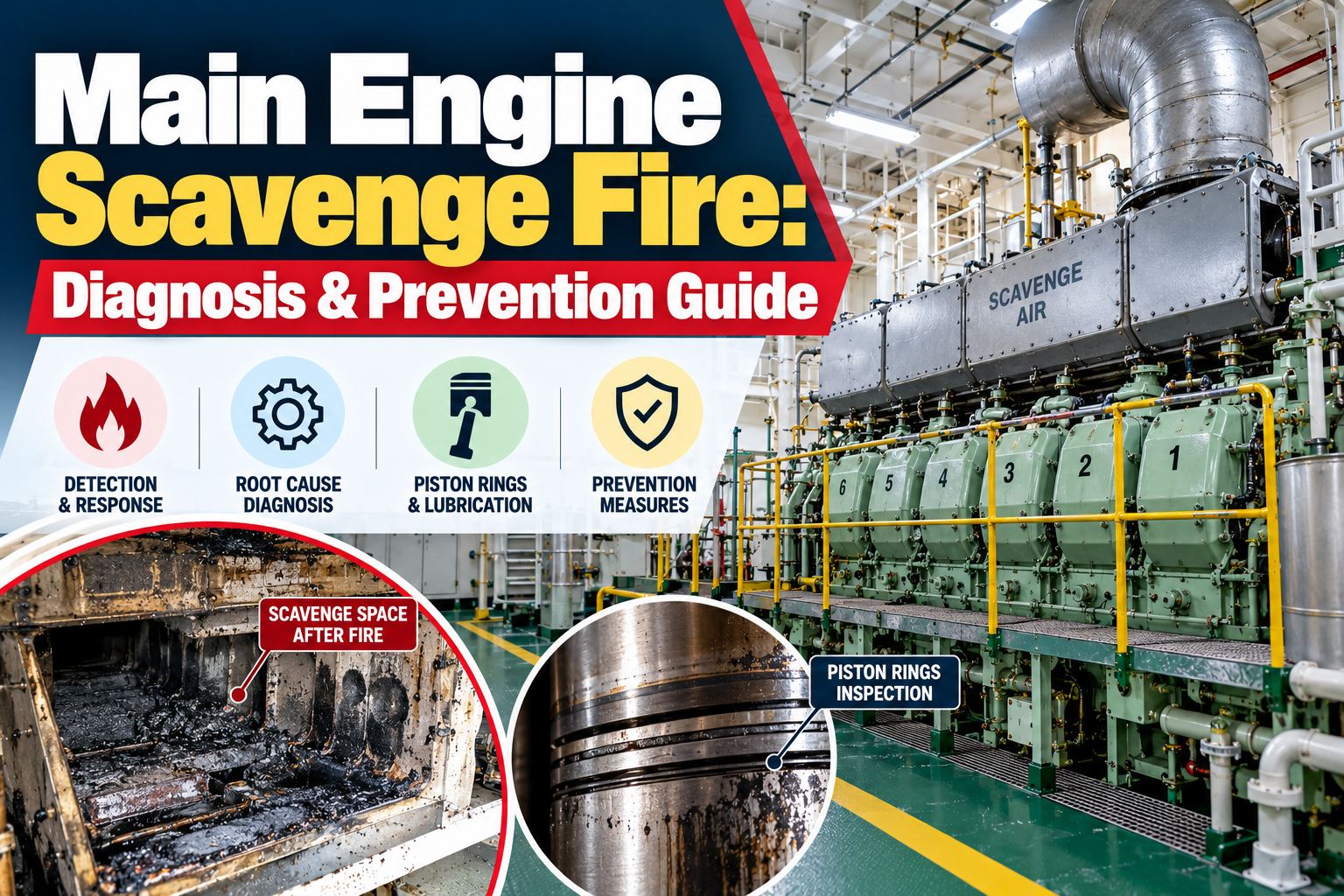
A scavenge fire is rarely the real problem. It is the symptom: worn piston rings, a dirty scavenge space, poor combustion or the wrong amount of cylinder oil. A small fire that is caught early may burn out in minutes with the right actions, while a missed one can end in a damaged piston, liner and a ship that cannot sail. For the Chief Engineer the work is in three parts: spot the signs, run the response in the right order, and remove the conditions that let it start. This guide covers all three, with a post-fire inspection list. Start a free trial of Marine Inspection to schedule and record scavenge inspections per engine.
FIRE EQUATION
Take Away One Side and the Fire Cannot Start
A scavenge fire needs all three. Prevention removes fuel and heat. Response removes heat and air.
FUEL
Cylinder oil, sludge and carbon in the scavenge space
+
AIR
Oxygen from the scavenge air
+
HEAT
Blow-by, afterburning or high back pressure
=
SCAVENGE FIRE
Damage to the piston, liner and ring pack
Free trial available. Or book a walkthrough built around your own engine room.
SAFETY FIRST
Do not open the scavenge doors while the fire may still be burning. Fresh air can feed the fire, and an opened space can vent flame onto the crew. Let the space cool, confirm the temperatures have fallen, and then open the doors carefully, with portable extinguishers at hand.
Reading the Signs: Watch, Act, Emergency
WATCH
Early drift
Scavenge temperature rising on one unit
Exhaust temperature high on one unit
Smoky or sooty exhaust
ACT
Fire is likely
Turbocharger surging
Loss of power or falling rpm
Sparks or smoke from the scavenge drains
EMERGENCY
Severe fire
Blistering paint or discolouration on scavenge doors
Rapid temperature rise across the space
Fire not responding to the first actions
The signs come from marine engineering references. The grouping into three levels is our own suggestion, so use your engine maker's alarm and trend guidance.
Response Tracks: Small Fire and Large Fire
SMALL FIRE
Contain and cool
1Inform the bridge and Chief Engineer, call the engineers
2Reduce speed to dead slow
3Cut off fuel to the affected unit
4Increase cylinder lubrication to that unit
5Keep the scavenge drains shut
6Watch scavenge and exhaust temperatures
7Bring speed up only after the fire is out, and watch for re-ignition
LARGE FIRE
Stop and smother
1Stop the engine and engage the turning gear
2Keep the cooling water and lubricating oil pumps running
3Stop the auxiliary blowers
4Keep turning the engine with the cylinder lubrication on
5Cover the turbocharger air intake to limit air
6Use the fixed fire-fighting system if fitted
7Stand by with portable extinguishers at the scavenge doors
Steps are drawn from common marine references and the ICS emergency checklist for a scavenge space fire. Always follow the engine maker's instruction book and the ship's emergency procedures.
A response only works if it has been rehearsed. See how Marine Inspection tracks drills and engine checks across the fleet.
Root Cause Map: What Feeds a Scavenge Fire
| Condition | Why it feeds a fire | Prevention check |
|---|
| Worn liner or piston rings | Blow-by of hot gas and oil into the scavenge space | Ring and liner condition checks, scavenge port inspection |
| Dirty scavenge space and drains | Oil, sludge and carbon provide the fuel | Cleaning of trunking, drain pockets and ports |
| Poor combustion | Leaky fuel valves or bad timing cause afterburning | Fuel valve condition, balanced fuel injection across units |
| Cylinder lubrication off | Too little risks ring seizure. Too much adds oil to the space | Feed rate review against load and condition |
| High exhaust back pressure | Adds heat and blow-by tendency | Check turbocharger and exhaust fouling |
| Piston rod gland | Worn packing rings let oil into the scavenge space | Regular inspection of gland and packing rings |
From marine engineering references. The mix of causes differs by engine, so use the maker's guidance and your own history.
Catch the Conditions Before the Fire Does
Schedule scavenge cleaning, ring inspections and cylinder oil reviews, and keep the results with photos for every unit.
Free trial available. Or book a walkthrough built around your own engine room.
Prevention Routine
| When | Check | Record |
|---|
| Every watch | Scavenge and exhaust temperatures by unit, drains for oil, smoke or sparks | Engine log, trend notes |
| Weekly | Scavenge drain pockets, drain line flow and condition | Condition and quantity |
| By running hours | Scavenge space cleaning and port inspection of rings and liner | Findings with photos |
| Planned maintenance | Fuel valves, piston rod gland packing and ring condition | Overhaul records |
| Regular drill | Scavenge fire scenario for the engine room team | Drill report |
This is our own suggested routine. Set the intervals from the maker's manual, the planned maintenance system and the engine's condition.
After the Fire: Inspection Before Restart
1Scavenge trunking and drain pockets
2Cylinder liner and water seals
3Piston and piston rings
4Piston rod and gland
5Tie bolt tightness
6Piston rod movement in the stuffing box
Also find the cause before restart. A fire that burned out without a diagnosis is likely to return.
What are the first actions for a scavenge fire?
Inform the bridge and Chief Engineer, slow the engine to dead slow, cut fuel to the affected unit, increase its cylinder lubrication and keep the scavenge drains shut.
When do I stop the engine?
For a large fire, stop the engine, engage the turning gear and use the fixed extinguishing system if fitted. Keep the cooling water and lubricating oil pumps running.
Why shut the scavenge drains?
An open drain lets fire and hot gas reach the engine room, and gives the fire air. Shutting it contains the fire in the space.
What causes most scavenge fires?
When can I open the scavenge doors?
Only after the fire is out and the space has cooled. Open them carefully with portable extinguishers ready, and check for damage.
Make Every Scavenge Inspection Count
One trail for scavenge inspections, ring and liner findings, drills and engine checks across every vessel in the fleet.
Free trial available. Or book a walkthrough built around your own engine room.