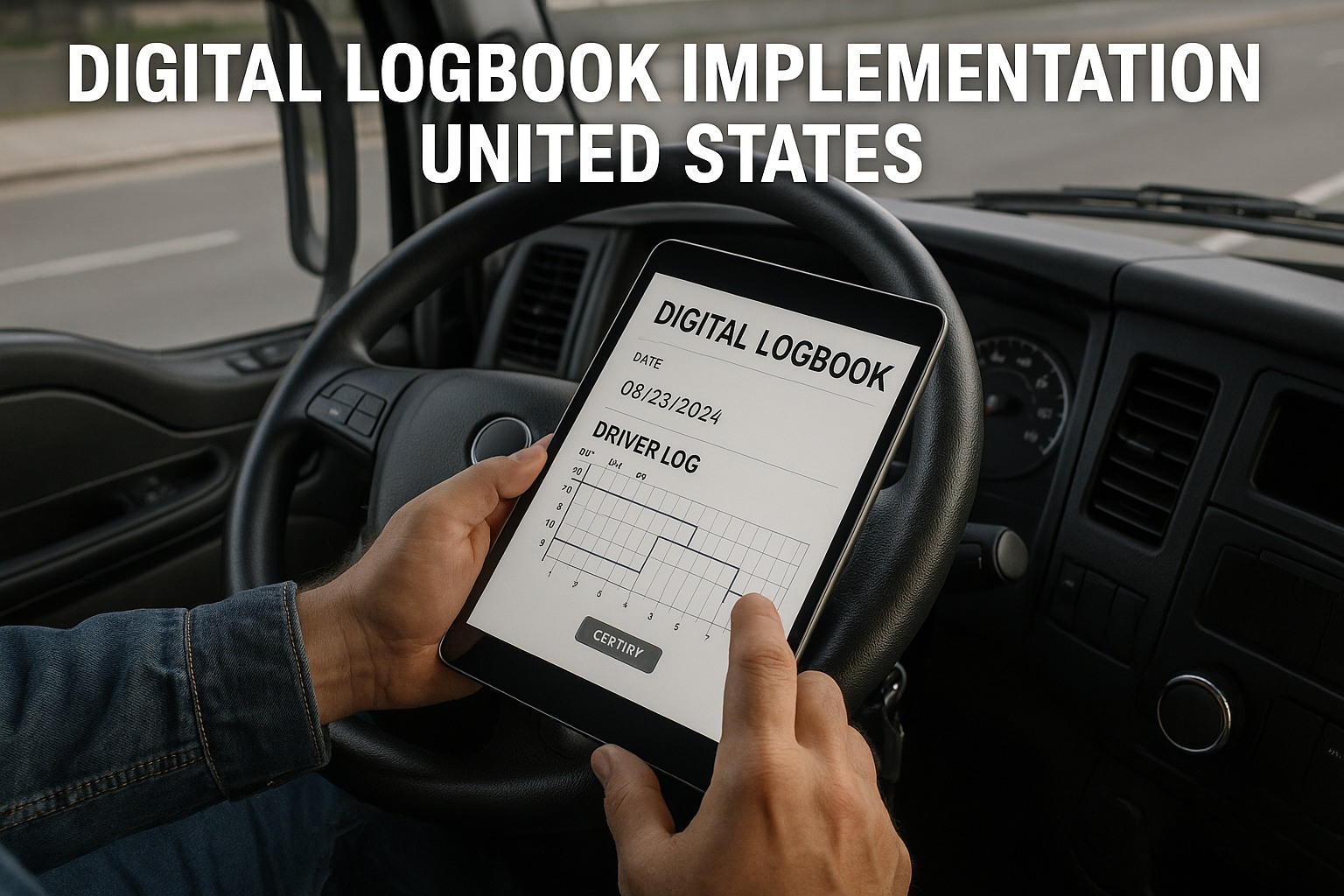
Your bulk carrier arrives in Houston. The USCG port state control officer requests the Oil Record Book Part I, garbage record, and NOx documentation. The chief engineer produces three paper volumes — one has an unsigned entry, the garbage log shows a sequence gap where someone tore out a page, and the NOx records don't match engine operating hours. The PSCO hasn't inspected equipment yet, but documentation has already triggered an expanded examination. In 2024, the USCG conducted 8,710 PSC exams, detaining 82 vessels for safety, environmental, and security deficiencies. SMS-related deficiencies accounted for 65 detainable findings. Vessels that pass efficiently are running marine inspection and maintenance software that digitizes logbook entries and connects them to inspection checklists and equipment records. With NVIC 01-23 providing a Coast Guard framework for electronic MARPOL record books, U.S.-flagged operators now have an official pathway to go digital.
Digital Logbook Compliance: United States Maritime Landscape 2026
USCG PSC Exams in 2024
8,710
Across 11,273 vessels from 79 flag administrations
Vessels Detained
82
Detention rate decreased to 0.94% from 1.22%
Key USCG Guidance
NVIC 01-23
Voluntary MARPOL electronic record books on U.S.-flagged vessels
QualShip 21 Enrolled
5,141
Vessels in USCG's quality shipping incentive program
NVIC 01-23: The USCG Framework for Electronic Record Books
NVIC 01-23 is the Coast Guard's governing guidance for electronic MARPOL record books on U.S.-flagged vessels. It establishes how ERB manufacturers get assessed, how vessels obtain authorization, and what onboard procedures must be in place. The MARPOL amendments it implements entered into force on October 1, 2020. NVIC 01-23 defines two distinct approval pathways. Marine Inspection's marine inspection and maintenance platform supports the SMS integration requirements that both pathways demand.
NVIC 01-23: Two Pathways to ERB Authorization
Path A
Through an Authorized Classification Society (ACS)
1
ERB manufacturer submits documentation to an ACS authorized to issue the relevant MARPOL certificate
2
ACS reviews compliance with ISO/IEC standards referenced in MEPC.312(74)
3
ACS issues a "Declaration of MARPOL Electronic Record Book" on behalf of the U.S. Government
4
Declaration kept onboard for USCG PSCO inspection
Best for: Vessels classed by a USCG-authorized ACS
Path B
Through the Local OCMI (Officer in Charge, Marine Inspection)
1
Owner/operator applies to the local OCMI for a Declaration
2
ERB product must be listed on the CG-ENG accepted ERB list
3
OCMI may survey the vessel to verify SMS integration
4
OCMI issues Declaration certificate — kept onboard for inspection
Best for: Vessels not serviced by an ACS, including towing vessels under Subchapter M
Which MARPOL Records Can Go Digital?
NVIC 01-23 covers electronic record books for MARPOL Annexes I, II, V, VI, and the NOx Technical Code. The Official Logbook (CG-706B/C) required under 46 U.S.C. § 11301 remains paper-only. Operators can digitize vessel inspection and maintenance workflows alongside MARPOL records while clearly flagging which documentation must stay on paper.
MARPOL Electronic Record Book Coverage
MARPOL Annex
Record Type
ERB Permitted?
Key Requirements
Annex I
Oil Record Book Part I
Yes
Oil discharge monitoring, ballast operations, tank cleaning
Annex I
Oil Record Book Part II (Tankers)
Yes
Cargo loading/unloading, tank washing, ballast operations
Annex II
Cargo Record Book (NLS)
Yes
NLS cargo operations, tank stripping, prewash procedures
Vessels not requiring CG-706 may use electronic per 46 CFR 35.07-5(b)
USCG PSC 2024: Top Deficiency Categories
In 2024, the Coast Guard completed 8,710 exams — up 5% over 2023. Detention decisions escalate when PSCOs find documentation gaps alongside material deficiencies. Marine inspection and maintenance software eliminates these triggers by connecting every logbook entry to corresponding inspection findings and equipment condition reports.
USCG 2024: Top Detainable Deficiency Categories
1
Fire Safety
Leading category for 4th consecutive year. Oil accumulation in engine rooms topped the list (18 deficiencies, down from 31).
2
Safety Management Systems
65 detainable deficiencies (down from 85). Maintenance of ship and equipment led all SMS subcategories.
3
Lifesaving Appliances
20 deficiencies. Rescue boat stowage/deployment and liferaft servicing issues dominated.
4
Propulsion & Auxiliary Machinery
17 deficiencies. Exhaust leaks from generator manifolds and turbocharger deterioration.
5
ISPS Security
16 deficiencies. Access control failures and security officer competency issues.
Reduce USCG Deficiency Risk Across Your Fleet
Marine Inspection connects equipment monitoring, maintenance work orders, and compliance documentation into one platform — reducing detention risk and cutting inspection prep time by 60-70%.
NVIC 01-23 creates a structured implementation path requiring coordination between the ERB provider, classification society or OCMI, and the vessel's SMS. Fleet operators working with Marine Inspection receive structured support covering each phase of the digital transition.
U.S.-Flagged Vessel Digital Logbook Pipeline
Phase 1
Regulatory Assessment & Product Selection
Identify applicable MARPOL records. Verify ERB product on CG-ENG accepted list. Determine Path A (ACS) or Path B (OCMI) authorization route.
Phase 2
SMS Integration
Update SMS with ERB operating procedures, backup policies, contingency plans, and crew familiarization requirements. OCMI may survey to verify before issuing Declaration.
Phase 3
Crew Training & Parallel Operations
Train crew on authentication, entry procedures, and backup operations. Run parallel paper and digital entries for 30-60 days. Document training in SMS.
Phase 4
Declaration & Go-Live
Obtain Declaration from ACS or OCMI covering all applicable MARPOL Annexes. Keep onboard for PSC exams. Begin full digital operation with paper backups available.
Phase 5
Ongoing Verification
Incorporate ERB verification into ISM internal audits. Monitor audit trail integrity. Ensure software updates maintain MEPC.312(74) compliance.
Expert Review: Digital Vessel Inspections in U.S. Maritime
Industry Perspective
"NVIC 01-23 creates a formal product assessment pathway — manufacturers must get their ERB listed on the CG-ENG accepted list before any vessel can use it. For U.S.-flagged operators, integrated marine inspection and maintenance software goes beyond MARPOL compliance. When Oil Record Book entries connect to engine room inspection findings and maintenance work orders, you create documentation that tells a coherent story during any USCG examination. The 2024 PSC data confirms SMS maintenance deficiencies remain a leading detention driver. Digital platforms that connect maintenance actions to logbook entries directly address this."
— Maritime Compliance Advisory, based on U.S. fleet operator feedback and USCG PSC analysis
Paper vs. Digital: What USCG Inspectors See
During a USCG Port State Control Examination
Paper Records
Multiple logbooks in different locations require crew to physically retrieve each one
Illegible handwriting, unsigned entries, and sequence gaps discovered only during inspection
No cross-reference between Oil Record Book and engine room maintenance records
Torn pages and correction fluid raise immediate PSCO suspicion
Digital Records
All records accessible from a single interface with instant retrieval
System validation prevents unsigned entries and sequence gaps before saving
Logbook entries link to inspection checklists and maintenance work orders
Tamper-proof audit trail with ISO/IEC-compliant cryptography
Transition Your U.S. Fleet to Digital Inspections & Logbooks
Marine Inspection integrates MARPOL-compliant digital record books, vessel inspection checklists, deficiency tracking, and maintenance workflows into a single platform for U.S.-flagged operators.
What is NVIC 01-23 and how does it affect U.S.-flagged vessels?
NVIC 01-23 is the Coast Guard's guidance for voluntary use of MARPOL electronic record books on U.S.-flagged vessels. It covers Annexes I, II, V, VI, and the NOx Technical Code. Two authorization pathways exist — through an Authorized Classification Society (ACS) or through the local OCMI. ERB manufacturers must receive acknowledgment from CG-ENG, and each vessel needs a "Declaration of MARPOL Electronic Record Book" before digital records have regulatory standing.
Can the Official Logbook (CG-706) be maintained electronically?
No. The Official Logbook under 46 U.S.C. § 11301 must remain on Form CG-706B/C and be filed with the OCMI upon voyage completion. This applies to vessels on foreign voyages and vessels 100+ GT on coast-to-coast voyages. However, vessels not requiring CG-706 may use "any form desired" per 46 CFR 35.07-5(b), which includes electronic formats.
How many ERB products has the USCG accepted?
The CG-ENG maintains an accepted ERB list updated periodically. A small but growing number of products have received acknowledgment, including ABS Wavesight. Being listed means general compliance with MEPC.312(74), but each vessel still needs its own Declaration from an ACS or OCMI after SMS integration verification.
How does digital logbook software help with QualShip 21?
QualShip 21 vessels receive reduced PSC examination frequency. Eligibility depends on detention and deficiency history. Since SMS maintenance documentation deficiencies are a leading detention driver, digital systems that prevent documentation gaps directly support QS21 enrollment and retention. At end of 2024, 5,141 vessels were enrolled.
What happens if the electronic record book system fails during a USCG exam?
NVIC 01-23 requires robust backup and data recovery capabilities. The SMS must document contingency procedures including paper backup maintenance. A PSCO finding a failed system with no paper backup and no documented contingency plan would treat this as a potentially detainable SMS deficiency. Marine Inspection includes automated backup protocols designed for this scenario.