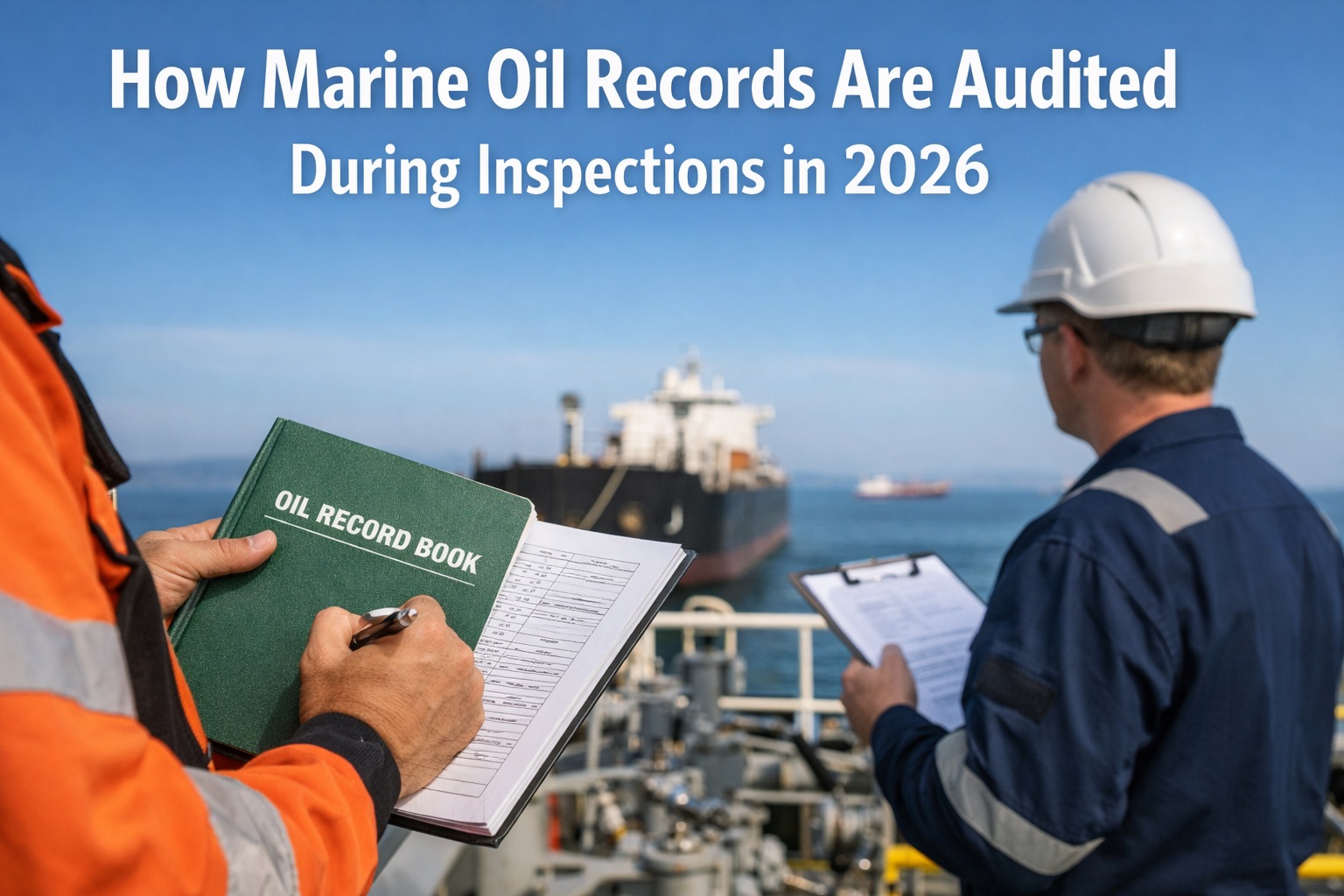
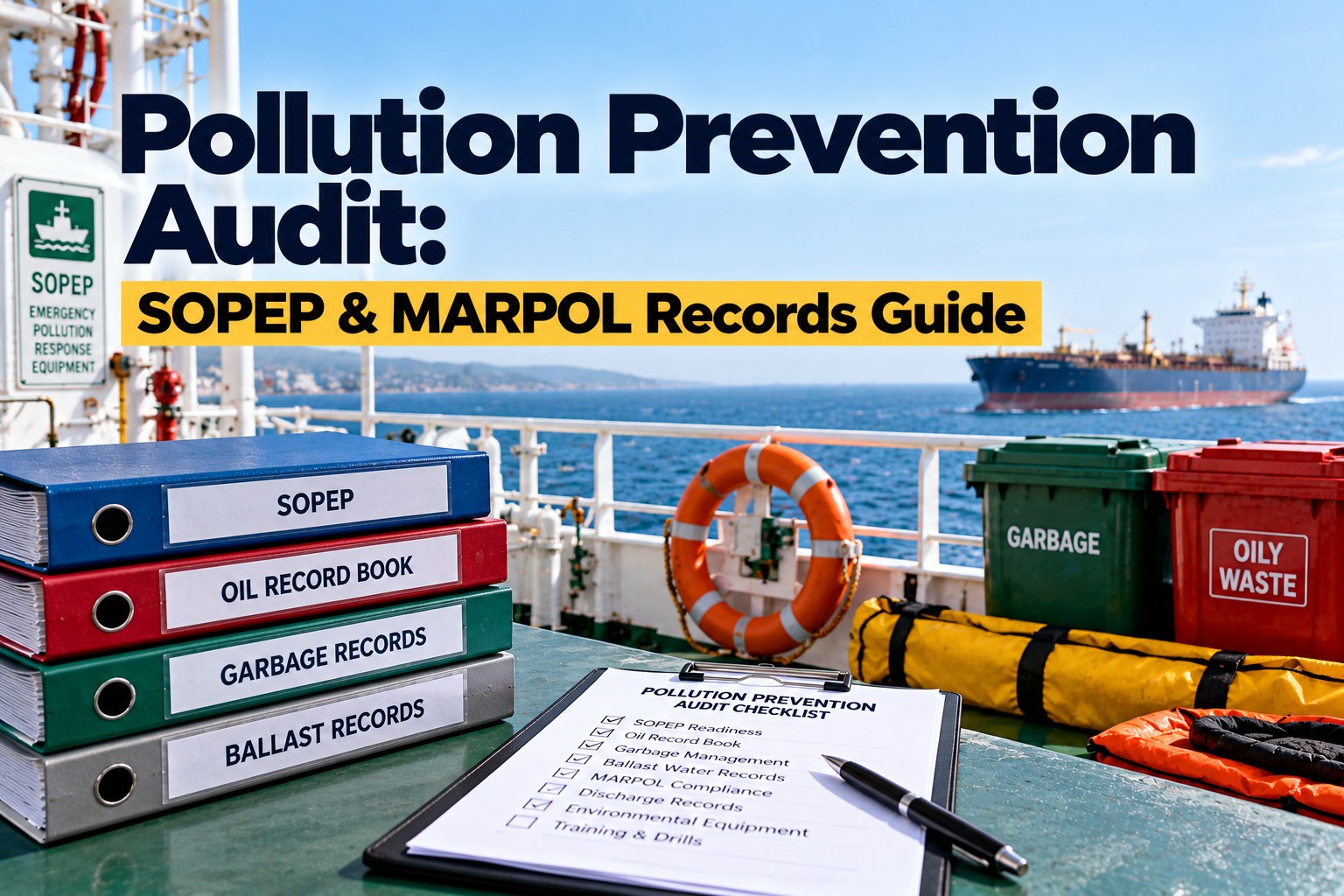
Your vessel's Oil Record Book shows 847 liters of oily bilge water processed through the 15 ppm separator last month. But the separator's hour meter indicates only 14.3 operating hours—which at the equipment's rated capacity of 1.2 m³/hour should process maximum 1,030 liters. The discrepancy is minor, well within estimation tolerances. Except port state control inspectors in 2026 don't estimate. They calculate. And when digital audit tools cross-reference your Oil Record Book entries against separator operating hours, fuel oil transfer volumes, sludge tank capacity changes, and lubricating oil consumption rates—all pulled automatically from vessel monitoring systems—that 18% volume inconsistency triggers expanded investigation of all oil records across the past 12 months. Commercial fleet operators face new audit reality: inspectors verify oil record accuracy through automated cross-checking of multiple independent data sources, detecting discrepancies that manual review never caught. Vessel operators ready to implement prepare for 2026 oil record audits can start with Marine Inspection's automated oil record verification software that validates entries against equipment operation data, tank measurements, and consumption patterns—identifying audit failures before inspections occur.
Oil Record Violations
42%
Of all MARPOL Annex I detentions involve Oil Record Book discrepancies
Audit Detection Rate
96%
Accuracy of 2026 digital audit tools in identifying oil record inconsistencies
Average Violation Penalty
$125K-$280K
Per incident for falsified oil records plus detention costs
The Six Oil Record Systems Inspectors Cross-Reference
Port state control inspectors in 2026 audit oil records by cross-referencing six interconnected systems that must mathematically align. A discrepancy in any single system—bilge water processing volumes that exceed separator capacity, fuel transfers that don't match bunker delivery notes, sludge accumulation inconsistent with fuel consumption—triggers examination of all six systems to identify systematic record-keeping failures. Understanding how these systems interconnect allows operators to validate internal consistency before inspections. Fleet operators who schedule oil record audit demonstrations can see exactly how Marine Inspection's software performs the same six-way cross-verification inspectors use, flagging inconsistencies requiring correction months before actual PSC examinations.
1. Oil Record Book (ORB) Entries
Primary Data Captured:
• Bilge water processing operations & volumes
• Fuel oil transfers between tanks
• Sludge tank discharges to reception facilities
• Oily residue generation & accumulation
Verified Against: Separator hour meters, tank ullage records, bunker delivery notes, sludge discharge receipts
2. Equipment Operation Logs
Primary Data Captured:
• 15 ppm separator running hours & performance
• Oily water monitoring system operation
• Incinerator operation & sludge consumption
• Fuel oil purifier throughput volumes
Verified Against: Equipment hour meters, alarm logs, maintenance records, power consumption data
3. Tank Ullage & Sounding Records
Primary Data Captured:
• Daily fuel oil tank soundings & calculations
• Sludge tank level changes & capacity tracking
• Bilge well accumulation rates
• Waste oil storage tank inventories
Verified Against: Tank capacity tables, transfer operation timings, consumption rates, discharge receipts
4. Fuel & Lubricant Consumption Logs
Primary Data Captured:
• Daily fuel oil consumption by main engines
• Auxiliary engine & boiler fuel usage
• Lubricating oil consumption & makeup rates
• Expected sludge generation from fuel quality
Verified Against: Engine running hours, fuel quality test results, bunker delivery specifications, sludge accumulation rates
5. Transfer & Discharge Documentation
Primary Data Captured:
• Bunker delivery notes with quantities & dates
• Sludge discharge receipts from port facilities
• Waste oil transfer records to reception facilities
• Inter-tank transfer operations & volumes
Verified Against: Port arrival/departure times, AIS position data, tank soundings before/after operations, ORB entries
6. Voyage & Position Records
Primary Data Captured:
• AIS position tracking throughout voyage
• Port arrival & departure timestamps
• Distance traveled & steaming hours
• Weather conditions affecting operations
Verified Against: ORB operation locations, discharge timing legitimacy, fuel consumption vs. distance, bilge generation patterns
Critical Audit Calculations Inspectors Perform
Inspectors validate oil record accuracy through mathematical calculations that cross-reference the six interconnected systems. These calculations detect impossible scenarios: bilge processing volumes exceeding separator capacity, sludge generation rates inconsistent with fuel consumption, discharge operations occurring in prohibited locations. The 2026 audit tools perform these calculations automatically, flagging any result outside acceptable parameters for expanded investigation. Marine operators wanting to implement pre-audit validation checks can access Marine Inspection's calculation engine that performs identical mathematics inspectors use—identifying problematic entries requiring correction before inspections occur.
| Audit Calculation |
Formula & Data Sources |
Acceptable Range |
Common Violations Detected |
| Bilge Processing Capacity |
ORB recorded volume ÷ (separator flow rate × operating hours) = capacity utilization % |
65-95% of rated capacity |
Volumes exceeding physical separator capacity, operating hours not matching hour meters, impossible processing rates |
| Sludge Generation Rate |
(Fuel consumption × fuel density × sediment %) + (lube oil consumption × 0.3) = expected sludge |
Actual sludge within ±15% of calculated |
Sludge accumulation far below expected generation, missing discharge receipts for excess sludge, impossible low generation rates |
| Fuel Transfer Balance |
Opening stock + bunkers received - consumption - transfers = closing stock (must match soundings) |
Within ±2% accounting for temperature/density |
Missing fuel volumes unaccounted by consumption or transfers, bunker quantities not matching delivery notes, impossible tank levels |
| Discharge Location Validity |
ORB discharge position vs. AIS location at recorded time vs. distance to nearest land |
Position matches AIS ±0.5 nm, >12 nm from land |
Discharges in port areas, position data not matching AIS records, operations in prohibited zones, impossible timing sequences |
| Incinerator Sludge Consumption |
Incinerator operating hours × burn rate = consumed volume (must match sludge tank reduction) |
Within ±10% of tank level changes |
Sludge "consumed" exceeding incinerator capacity, operating hours not matching equipment logs, tank levels not decreasing appropriately |
Validate Oil Records Before Inspections
Marine Inspection's oil record audit software performs the same capacity calculations, generation rate verifications, and transfer balance checks that port state control inspectors use in 2026—flagging mathematical inconsistencies and impossible scenarios before vessels face PSC examinations. Operators reduce oil record violations 80-92% through automated pre-audit validation.
The Audit Process: What Happens During 2026 Oil Record Inspections
Port state control oil record audits in 2026 follow systematic four-phase procedures designed to identify inconsistencies through automated cross-verification. Understanding each phase allows operators to prepare appropriate documentation and ensure internal record consistency before inspections begin. The entire audit process—from initial ORB review through final validation—typically completes within 45-90 minutes for vessels with accurate, consistent records, but extends to 4-8 hours when inspectors identify discrepancies requiring expanded investigation across all six oil record systems.
Initial ORB Data Entry
Inspector inputs last 30 days of Oil Record Book entries into digital audit system: bilge processing operations with dates/times/volumes, fuel transfers between tanks, sludge discharges to facilities, and oily residue generation records. System creates baseline dataset for cross-verification against other record systems.
Red Flags at This Stage:
• Missing or incomplete ORB entries for recent operations
• Unusual patterns (e.g., identical volumes recorded daily)
• Backdated or out-of-sequence entries
Equipment & Tank Data Collection
Inspector records separator hour meter readings, incinerator operation logs, tank ullage soundings, and equipment maintenance records. This independent data provides verification baseline for checking ORB accuracy—operations can only occur when equipment was actually running, volumes can't exceed tank capacities.
Red Flags at This Stage:
• Hour meter readings inconsistent with ORB operation claims
• Tank levels not matching transfer/discharge records
• Equipment in maintenance but ORB shows operations
Automated Cross-Verification
Audit system automatically performs capacity calculations, generation rate validations, transfer balance checks, and position verifications—comparing ORB entries against equipment capabilities, consumption patterns, and AIS location data. System flags any calculation outside acceptable parameters for inspector review.
Red Flags at This Stage:
• Bilge volumes exceeding separator capacity by >5%
• Sludge generation rates 20%+ below calculated expectations
• Discharge positions not matching AIS records
Phase 4
5-10 min (no issues)
2-6 hrs (violations found)
Discrepancy Investigation & Determination
If no significant discrepancies flagged, inspector completes audit with no findings. If system flags inconsistencies, inspector conducts expanded investigation: examining supporting documentation, interviewing crew, physically inspecting equipment and tanks, and analyzing patterns across 6-12 months of historical records to determine if violations are systematic or isolated errors.
Potential Outcomes:
✓ No findings: Records consistent, vessel cleared
⚠ Observations: Minor inconsistencies noted, correction required
⛔ Detention: Significant violations, falsification suspected
Common Oil Record Audit Failures and How to Prevent Them
Oil record audits fail for predictable reasons that operators can prevent through systematic validation before inspections. The five most common audit failures account for 78% of all oil record violations detected during 2026 inspections. Marine operators looking to identify their audit risk areas can schedule assessment demonstrations showing how Marine Inspection software detects these five failure patterns in existing records—allowing correction before inspections rather than defending violations after detection.
Impossible Processing Volumes
ORB entries show bilge processing volumes that exceed physical separator capacity given recorded operating hours. Example: 950 liters processed in 12 hours through separator rated at 1.2 m³/hour (maximum possible: 860 liters at 95% efficiency).
Prevention:
Marine Inspection software calculates maximum possible processing volume based on separator specifications and actual operating hours—flagging any ORB entry exceeding capacity before inspections occur.
Abnormally Low Sludge Generation
Sludge accumulation rates far below calculated expectations based on fuel consumption and quality. Example: 45 liters sludge accumulated over 30 days consuming 180 MT of 380 CST fuel (expected generation: 140-180 liters based on typical 2.5% sediment content).
Prevention:
Software calculates expected sludge generation from fuel consumption data and bunker delivery specifications—alerting when actual accumulation falls 20%+ below calculations, indicating unreported discharges or missing sludge receipts.
Position Data Inconsistencies
ORB discharge operations recorded at positions that don't match AIS location data or occur in prohibited areas. Example: Discharge recorded at 18°N, 65°W at 14:30 but AIS shows vessel at 17.2°N, 64.1°W—over 60 nautical miles from claimed position.
Prevention:
Platform integrates AIS/GPS data to auto-populate discharge positions in ORB entries—eliminating manual position recording errors and ensuring discharge locations always match actual vessel position at operation time.
Fuel Transfer Imbalances
Fuel inventory calculations don't balance when accounting for bunkers received, consumption, and inter-tank transfers. Example: Opening stock 285 MT + bunkers 150 MT - consumption 198 MT = expected closing 237 MT, but actual soundings show 218 MT (19 MT unaccounted).
Prevention:
Automated fuel balance calculations run continuously, comparing bunker receipts + tank soundings against consumption logs—immediately flagging imbalances exceeding 2% tolerance before they accumulate over multiple operations.
Equipment Operation Timing Conflicts
ORB entries claim equipment operation during periods when maintenance records, alarm logs, or hour meters prove equipment was offline. Example: Bilge separator "operated" for 6 hours on March 15th but maintenance log shows separator disassembled for bearing replacement March 14-16.
Prevention:
Digital integration between maintenance scheduling and ORB entry systems prevents recording operations during documented equipment downtime—blocking impossible entries at data input rather than explaining contradictions during inspections.
Expert Perspective: MARPOL Compliance Specialist
"The fundamental change in 2026 oil record audits is mathematical objectivity replacing subjective judgment. Previously, inspectors reviewed ORB entries and made experience-based assessments about whether records seemed reasonable. Now the audit software performs precise capacity calculations—it knows exactly how much bilge water your separator can process in the recorded operating hours, exactly how much sludge should accumulate given your fuel consumption and bunker specifications, exactly where your vessel was located when discharges were recorded. There's no room for 'close enough' estimates anymore. When the calculation shows you processed 18% more bilge water than your separator's physical capacity allows, that's not an approximation issue—it's proof of inaccurate records. Operators who continue manual, estimation-based record-keeping will fail 2026 audits at alarming rates. The only reliable approach is automated record-keeping that captures actual operational data from equipment sensors and monitoring systems, ensuring mathematical consistency across all six oil record systems before inspections occur."
MARPOL Compliance & Audit Specialist
International Maritime Consultancy | Advising on 2026 Digital Verification Standards
Prepare Your Oil Records for 2026 Digital Audits
Marine Inspection's oil record verification platform performs the same capacity calculations, generation rate validations, transfer balances, and position cross-checks that port state control inspectors use in 2026 audits—identifying mathematical inconsistencies and impossible scenarios before vessels face PSC examinations. Fleet operators implementing automated oil record validation reduce violations 80-92% through continuous pre-audit verification that ensures records pass digital scrutiny.
Frequently Asked Questions
How far back do inspectors audit oil records during 2026 inspections?
Standard 2026 oil record audits examine the most recent 30-60 days of operations through automated digital verification. However, if the audit system flags significant inconsistencies during this period, inspectors expand examination to 6-12 months of historical records to determine if violations are systematic or isolated errors. For vessels with clean recent records, inspectors rarely examine beyond 60 days. But a single major discrepancy—such as impossible processing volumes or missing sludge discharge receipts—triggers expanded historical review that can extend back to the last port state control inspection or classification survey, potentially covering 12-18 months depending on vessel inspection history.
What tolerance do inspectors allow for calculation differences in oil record audits?
The 2026 audit protocols establish specific tolerance thresholds: bilge processing volumes within ±5% of separator capacity are acceptable, sludge generation rates within ±15% of calculated expectations pass verification, fuel transfer balances within ±2% accounting for temperature/density variations are tolerated, and position data within ±0.5 nautical miles of AIS records is acceptable. However, these tolerances apply to individual operations—systematic patterns showing entries consistently at tolerance limits trigger expanded investigations even when each individual entry falls within acceptable ranges. Inspectors look for statistical patterns suggesting deliberate record manipulation rather than normal operational variation.
Can we correct oil record errors if inspectors identify them during audits?
Minor calculation errors or transcription mistakes discovered during audits can sometimes be corrected on-site if the crew can produce supporting documentation proving the error was unintentional and the actual operation was compliant. For example, if an ORB entry shows incorrect volume due to unit conversion error but tank soundings and separator hour meters support the corrected figure, inspectors may allow amendment with proper notation. However, systematic discrepancies, missing discharge receipts, or evidence of deliberate falsification cannot be corrected during inspections—these violations result in detention regardless of attempted corrections. The key distinction: honest record-keeping errors with documentary support may be amendable, while patterns suggesting intentional inaccuracy result in enforcement actions.
What happens if our separator hour meter is broken but we have accurate ORB entries?
Non-functional hour meters create significant audit problems even when actual operations are compliant, because inspectors have no independent verification of ORB accuracy. The 2026 audit protocols require functional hour meters on all oil processing equipment—broken meters themselves constitute deficiencies requiring correction. If the meter is broken during inspection, the vessel must prove: (1) the malfunction was recent and reported through proper channels, (2) alternative verification methods were used (engine room log entries, watch keeper observations, maintenance records), and (3) a repair plan with timeline exists. Even with this documentation, inspectors typically issue deficiency findings requiring meter repair before departure. Marine Inspection software can provide alternative verification through integrated monitoring—logging equipment operation through electrical consumption data or automated sensors when hour meters fail.
How does Marine Inspection software prevent the five common oil record audit failures?
Marine Inspection's oil record verification platform prevents audit failures through automated validation at data entry: (1) Impossible processing volumes: Software calculates maximum capacity based on separator specifications and actual operating hours, blocking any ORB entry exceeding physical limits, (2) Abnormally low sludge generation: System calculates expected sludge from fuel consumption data and bunker specifications, alerting when accumulation falls below thresholds, (3) Position data inconsistencies: AIS/GPS integration auto-populates discharge positions, eliminating manual entry errors, (4) Fuel transfer imbalances: Continuous fuel balance calculations flag imbalances exceeding 2% tolerance immediately, (5) Equipment timing conflicts: Maintenance scheduling integration prevents recording operations during documented equipment downtime. The platform performs the same six-way cross-verification inspectors use in 2026 audits—but continuously rather than during inspections—identifying and preventing inconsistencies before they accumulate into audit failures.