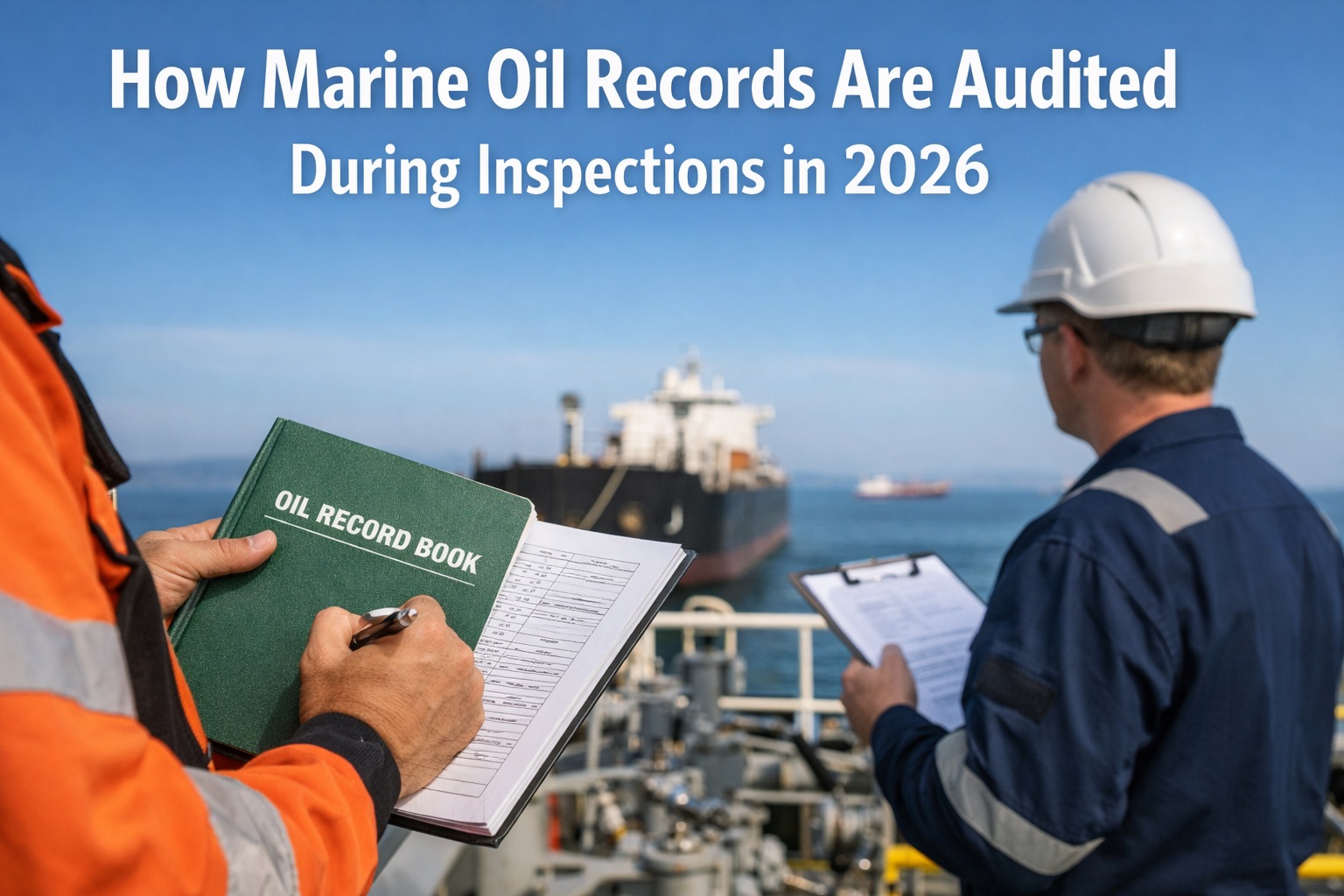
Your fleet's Oil Record Books passed every inspection in 2024. But starting January 2026, new International Maritime Organization digital reporting requirements fundamentally change how inspectors verify logbook accuracy. What previously required manual cross-referencing of paper records now happens through automated data validation comparing logbook entries against vessel monitoring systems, fuel consumption patterns, and port state databases. A single inconsistency—discharge timing that doesn't match AIS position data, fuel consumption figures contradicting engine monitoring logs, or maintenance entries misaligned with actual operating hours—triggers expanded inspections across all documentation systems. Commercial fleet operators managing multiple vessels face new compliance risk: inspectors will no longer accept logbook entries at face value when digital verification tools reveal discrepancies within seconds. Vessel operators ready to signup 2026 logbook compliance can start with Marine Inspection's automated logbook verification software that cross-checks entries against operational data in real-time, eliminating inconsistencies before inspections occur.
Logbook Deficiency Increase
340%
Expected rise in detection rate with digital verification (IMO projections)
Automated Cross-Check Time
45 sec
For inspectors to verify logbook accuracy against digital systems
Average Detention Cost
$62K-$95K
Per incident for falsified or inaccurate logbook entries
The 2026 Digital Verification Revolution
New IMO regulations effective January 2026 require port state control inspectors to use digital verification tools that automatically cross-reference logbook entries against multiple independent data sources. This represents the largest change to maritime inspection procedures in 40 years—transforming inspections from manual document review to automated data validation. Inspectors will compare Oil Record Book discharge entries against AIS position logs, verify fuel consumption figures against engine monitoring data, and validate maintenance timing through equipment sensor histories. Fleet operators who schedule a 2026 compliance assessment can see exactly how Marine Inspection's software pre-validates logbook entries using the same cross-checking algorithms inspectors will deploy, reducing deficiency risk 75-85% through proactive inconsistency detection.
Oil Record Book Validation
→ Discharge entries vs. AIS position data
→ Timing consistency with port arrival/departure
→ Volume calculations vs. tank capacity records
→ 15 ppm equipment operation timestamps
Detection Rate: 95% of inaccurate entries identified automatically
Engine Room Log Cross-Check
→ Operating hours vs. fuel consumption patterns
→ Maintenance timing vs. equipment sensor data
→ Parameter readings vs. acceptable ranges
→ Event timing vs. crew watch schedules
Detection Rate: 88% of inconsistent entries flagged immediately
Fuel & Cargo Documentation
→ Bunker delivery notes vs. consumption logs
→ Fuel switchover timing in ECA zones
→ Cargo operations vs. ballast movements
→ Tank ullage records vs. transfer volumes
Detection Rate: 92% of calculation errors identified instantly
Maintenance Record Validation
→ Completed work vs. planned maintenance system
→ Parts usage vs. inventory management records
→ Equipment running hours vs. service intervals
→ Certification renewals vs. expiration tracking
Detection Rate: 83% of maintenance discrepancies caught during validation
The Five Critical Logbook Areas Under Enhanced Scrutiny
Port state control inspectors will focus digital verification on five logbook areas that historically contain the highest rates of inaccuracies or deliberate falsifications. Understanding which entries face automated cross-checking allows operators to implement preventive controls before 2026 enforcement begins. Marine operators looking to implement pre-2026 logbook verification can access Marine Inspection's validation software that applies the same scrutiny inspectors will use, identifying problematic entries requiring correction months before actual inspections.
| Logbook Area |
What Inspectors Verify |
Common Inconsistencies Detected |
Detention Risk Level |
| Oil Discharge Operations |
Discharge timing vs. vessel position (AIS), volume calculations vs. tank capacity, 15 ppm equipment operation logs |
Discharges recorded in port areas, impossible volumes given tank sizes, equipment "operation" during maintenance downtime |
CRITICAL |
| Fuel Consumption Entries |
Daily consumption vs. engine load data, fuel quality test timing, ECA zone fuel switchover compliance |
Consumption figures 20%+ below/above engine monitoring data, missing switchover documentation in ECA transits |
HIGH |
| Maintenance Timing |
Completed maintenance vs. equipment running hours, parts replacement vs. inventory records, critical system overhauls vs. class requirements |
Maintenance claimed during periods equipment was operating, missing parts consumption for claimed repairs |
MODERATE |
| Ballast Operations |
Ballast/deballast timing vs. cargo operations, treatment system operation during exchange, discharge locations vs. regulations |
Simultaneous cargo loading and ballast discharge recorded, treatment system "operating" while offline |
MODERATE |
| Crew Watch Logs |
Officer signatures vs. certification validity, watch timing vs. rest hour compliance, emergency drill participation vs. crew onboard records |
Officers signing logs while on leave, insufficient rest periods between watches, drill participation by crew not onboard |
LOW-MODERATE |
Prepare Your Logbooks for 2026 Digital Verification
Marine Inspection's logbook verification software uses the same automated cross-checking algorithms port state control will deploy in 2026—identifying inconsistencies between logbook entries and operational data before inspections occur. Fleet operators implementing pre-verification reduce logbook-related deficiencies 75-85% through proactive inconsistency detection and correction.
Why Traditional Logbook Practices Fail Digital Verification
Manual logbook entries created through traditional practices—estimating values, backdating entries, rounding figures for convenience—survive visual inspection but fail automated digital verification. Inspectors previously lacked tools to validate entries against independent data sources, creating tolerance for approximations. The 2026 digital verification system eliminates this tolerance by comparing every entry against objective operational data. What seemed like acceptable record-keeping practices for decades now triggers detention-level findings when digital tools reveal discrepancies.
✗ Fuel consumption estimated from previous voyages
✗ Maintenance entries backdated to match schedules
✗ Oil discharge volumes rounded to convenient numbers
✗ Position data approximated from chart plotting
✗ Equipment operation times estimated by crew memory
2026 Result: Automated verification flags 85-95% of estimated entries as inconsistent with actual data
✓ Fuel consumption pulled from engine monitoring systems
✓ Maintenance entries auto-timestamped when work completed
✓ Oil discharge volumes calculated from actual tank measurements
✓ Position data synchronized with AIS/GPS automatically
✓ Equipment operation logged by sensor data in real-time
2026 Result: Automated verification confirms 100% accuracy—logbook entries match all independent data sources
Implementation Timeline: Preparing Before January 2026
Fleet operators have limited time to transition from manual logbook practices to digital verification-ready processes before enforcement begins. The transition requires not just software implementation but fundamental changes to crew procedures, data collection workflows, and documentation habits developed over decades. Marine operators ready to begin their 2026 preparation plan should schedule implementation assessments now—vessels starting transition in early 2025 achieve full compliance by enforcement deadlines, while those delaying until late 2025 face rushed implementations and higher deficiency risk during initial inspections.
Q1 2025 (Now)
Assessment & Planning Phase
→ Audit current logbook practices for 2026 compatibility
→ Identify data sources requiring integration (AIS, engine monitoring, tank systems)
→ Select digital verification software provider
→ Develop fleet-wide implementation schedule
Critical Window: Starting now allows full implementation before enforcement
Q2-Q3 2025
System Implementation Phase
→ Install digital verification software across fleet
→ Integrate vessel monitoring systems with logbook platforms
→ Train crew on automated data capture procedures
→ Run parallel manual/digital logging to verify accuracy
Implementation Window: 6-8 months needed for full fleet deployment
Q4 2025
Validation & Adjustment Phase
→ Review digital verification results for inconsistency patterns
→ Correct crew procedural gaps identified through validation
→ Conduct mock inspections using 2026 verification protocols
→ Finalize documentation workflows before enforcement begins
Final Preparation: Last opportunity to address issues before January 2026
January 2026
Enforcement Begins
→ Port state control deploys digital verification tools globally
→ Automated cross-checking becomes standard inspection procedure
→ Inconsistencies result in immediate detention and penalties
→ No tolerance period—full compliance required from day one
Enforcement Reality: Vessels unprepared face immediate compliance findings
Expert Perspective: Port State Control Inspector
"The 2026 digital verification tools fundamentally change how we assess logbook accuracy. Previously, I manually spot-checked entries against available records—maybe comparing a few Oil Record Book entries to port departure times if something seemed suspicious. Now the system automatically validates every single entry against multiple independent data sources in under a minute. When I see a red flag—fuel consumption that doesn't match engine load data, discharge timing inconsistent with AIS position, maintenance claimed when equipment was operating—I know it's not an estimation error, it's a documented discrepancy. Operators need to understand: we're not judging whether entries are 'close enough' anymore. The digital system either confirms accuracy or flags inconsistencies, and those inconsistencies trigger detentions."
Port State Control Lead Inspector
Paris MOU Authority | 2026 Digital Verification Pilot Program Participant
Get Your Fleet Ready for 2026 Logbook Verification
Marine Inspection's logbook verification software integrates with vessel monitoring systems to auto-validate entries against operational data—using the same algorithms port state control will deploy in 2026. Fleet operators implementing now achieve full compliance before enforcement begins, while avoiding the rushed implementations and higher deficiency risk of late adopters. Start your 2026 preparation today.
Frequently Asked Questions
What exactly changes about logbook inspections in January 2026?
Starting January 2026, port state control inspectors will use mandatory digital verification tools that automatically cross-check logbook entries against independent data sources including AIS position tracking, engine monitoring systems, fuel consumption sensors, and port state databases. Instead of manually reviewing entries and spot-checking suspicious items, inspectors input logbook data into verification software that flags inconsistencies within 45 seconds. This represents a shift from subjective document review to objective automated validation—entries either match independent data or trigger deficiency findings. There's no tolerance period or gradual implementation; digital verification becomes standard procedure globally from day one of 2026.
Can we continue using paper logbooks after 2026, or must we switch to electronic systems?
Paper logbooks remain legally acceptable after 2026—the regulations don't mandate electronic record-keeping. However, paper logbook entries must still withstand digital verification. Inspectors will manually input paper logbook data into verification systems and flag any inconsistencies just as they would for electronic records. The practical challenge: maintaining paper logbooks with accuracy sufficient to pass automated verification requires real-time data capture from vessel monitoring systems, making hybrid paper/digital approaches extremely difficult. Most operators find fully integrated electronic logbook systems far more practical for ensuring 2026 compliance, as they automatically capture data from source systems eliminating manual transcription errors.
How will inspectors handle normal variations between logbook entries and monitoring data?
The 2026 verification protocols include tolerance thresholds for expected variations: fuel consumption within ±5% of engine monitoring data is acceptable, position data within GPS accuracy limits passes verification, timing variations under 15 minutes for most operations are tolerated. However, systematic discrepancies—entries consistently at tolerance limits, patterns suggesting backdating or estimation, or any single entry exceeding thresholds—trigger expanded investigations. The verification software differentiates between normal operational variation and deliberate inaccuracies by analyzing patterns across multiple entries. Marine Inspection's pre-verification software uses identical tolerance thresholds, allowing operators to identify problematic patterns before inspections.
What happens if digital verification flags entries as inconsistent during an inspection?
Flagged inconsistencies trigger immediate expanded inspection of the relevant logbook system and related documentation. For critical areas (Oil Record Book, fuel documentation), a single confirmed discrepancy typically results in detention until the vessel demonstrates all records are accurate and any falsification is corrected. For less critical systems (routine maintenance logs), minor inconsistencies may result in observations or conditions of class requiring correction within specified timeframes. The severity depends on whether inspectors believe discrepancies represent honest errors versus deliberate falsification—but the digital verification system makes this determination largely objective by revealing systematic patterns that indicate intentional inaccuracies.
How does Marine Inspection software help prepare for 2026 logbook verification requirements?
Marine Inspection's logbook verification platform integrates with vessel monitoring systems to automatically validate entries using the same cross-checking algorithms port state control will deploy in 2026: (1) AIS integration confirms position data matches discharge locations and operational areas, (2) Engine monitoring systems validate fuel consumption and operating hours against logbook entries, (3) Equipment sensors verify maintenance timing and system operation claims, (4) Tank measurement systems confirm oil discharge and fuel volumes. The software flags inconsistencies in real-time as entries are created—not weeks later during inspections—allowing crews to correct issues immediately. Fleet operators using pre-verification reduce logbook-related deficiencies 75-85% by identifying and eliminating problematic entries before inspectors arrive, ensuring full 2026 compliance from enforcement day one.