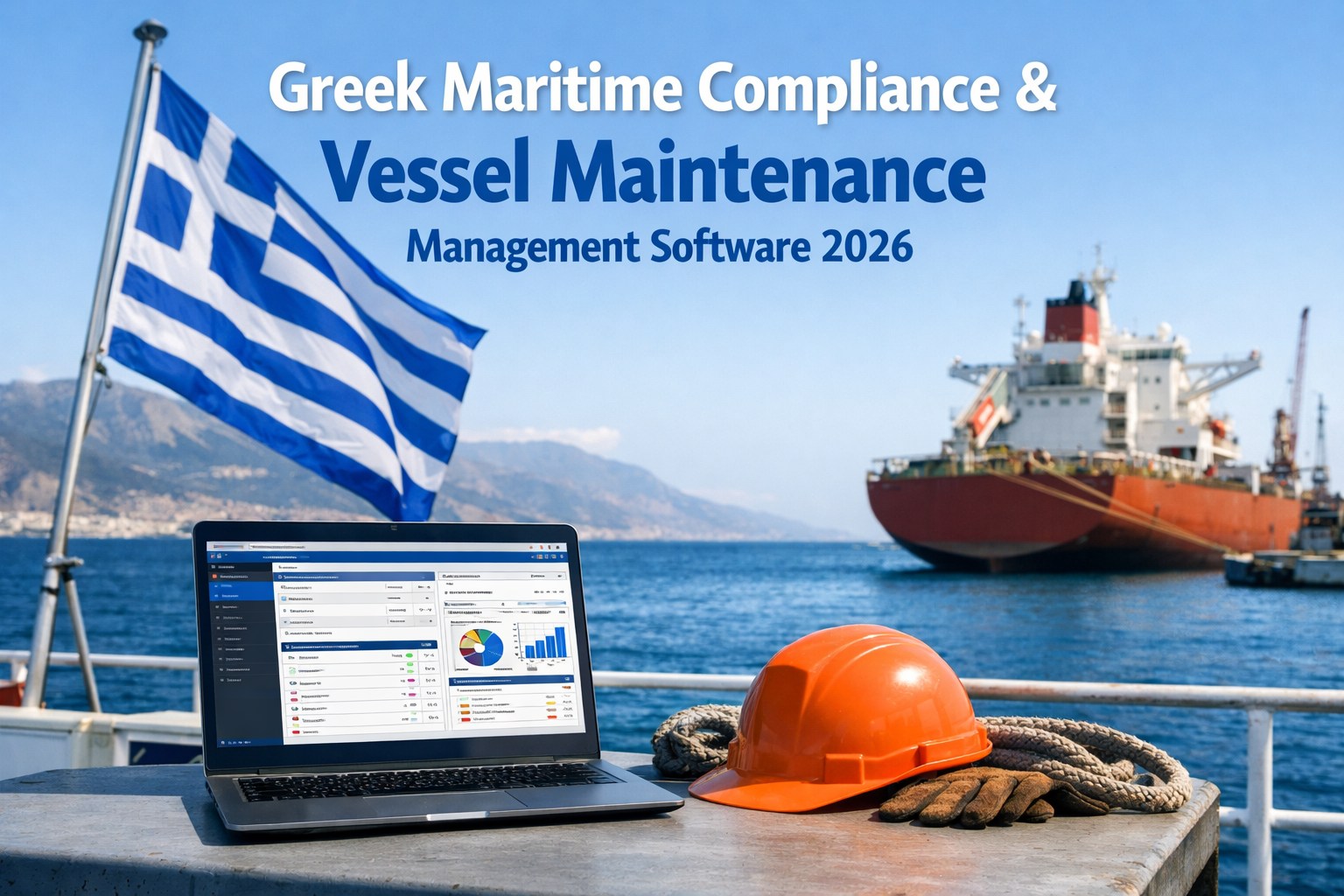
Greek shipowners control 5,691 vessels representing 20% of global deadweight tonnage and 61% of the EU fleet — making Greece the world's undisputed shipping leader. But 2026 brings a convergence of regulatory pressures that directly impact how those vessels are maintained: EU ETS scaling to 70% surrender obligations with CH4 and N2O now included, the Mediterranean SOx ECA enforcing 0.1% sulphur limits since May 2025, SIRE 2.0 shifting tanker vetting from fixed checklists to dynamic risk-based audits, and Paris MoU inspections targeting Greek port calls with increasing scrutiny on equipment condition. For a fleet with an average vessel age of 10 years, maintenance strategy is no longer just about keeping machinery running — it's about managing emissions compliance, vetting readiness, and operational costs simultaneously. Fleet operators that sign up for Marine Inspection's maintenance platform can unify planned maintenance scheduling, regulatory tracking, and deficiency management into a single system purpose-built for the compliance complexity that Greek-managed fleets face in 2026.
5,691
Greek-Owned Vessels
World's largest shipowning fleet (UGS 2025)
20%
Global DWT Share
61% of EU fleet by deadweight tonnage
10 yrs
Average Fleet Age
Below global average of 10.28 years
70%
EU ETS 2026 Surrender
Now includes CH4 and N2O emissions
The 2026 Regulatory Landscape Impacting Greek Fleet Maintenance
Greek-managed vessels operate under overlapping regulatory frameworks that each impose specific maintenance obligations. Understanding which regulations affect which vessel types — and which maintenance actions satisfy multiple requirements simultaneously — is the difference between efficient compliance and duplicated effort across your fleet. Schedule a platform walkthrough to see how Marine Inspection maps these overlapping requirements into unified maintenance workflows.
2026 Regulations Affecting Greek Fleet Maintenance
| Regulation |
Effective |
Maintenance Impact |
Applies To |
| EU ETS — 70% + CH4/N2O |
1 Jan 2026 |
Engine efficiency maintenance directly affects allowance costs; methane slip from LNG engines now priced under ETS; fuel system calibration and monitoring critical |
Cargo & passenger ships ≥5,000 GT on EU voyages |
| Med SOx ECA — 0.1% Sulphur |
1 May 2025 |
Scrubber maintenance and calibration essential for vessels using EGCS; fuel changeover procedures and tank management; fuel oil sampling and documentation |
All vessels operating in Mediterranean Sea |
| SIRE 2.0 |
2 Sep 2024 |
Dynamic risk-based inspections assess hardware, processes, and human factors; maintenance records, equipment condition, and crew competence all evaluated |
Tankers, gas carriers, chemical carriers ≥150 GRT |
| FuelEU Maritime |
1 Jan 2025 |
Well-to-wake GHG intensity benchmarks require fuel system maintenance aligned with alternative fuel specifications; compliance pooling documentation |
Ships ≥5,000 GT calling EU ports |
| Paris MoU / HCG PSC |
Ongoing |
Equipment condition deficiencies remain top detention cause; Hellenic Coast Guard conducts flag and port state inspections at Greek ports |
All vessels calling Greek ports |
| SOLAS Container Reporting |
1 Jan 2026 |
SMS updates required; bridge equipment maintenance for GMDSS communication capability; container securing equipment inspection procedures |
All vessels carrying containers |
Five Maintenance Best Practices for Greek-Managed Fleets
The following practices address the specific challenges facing Greek commercial fleets in 2026 — from managing maintenance across geographically dispersed vessels to satisfying multiple regulatory frameworks with a single maintenance programme.
Shift from Calendar-Based to Condition-Based Maintenance
Greek fleets operating across global trade routes cannot afford to base maintenance purely on fixed time intervals. Condition-based maintenance (CBM) uses equipment monitoring data — vibration analysis, oil analysis trends, thermographic surveys — to trigger maintenance when equipment condition actually demands it. This approach reduces unnecessary maintenance interventions by 20-30% while catching degradation that calendar-based schedules miss. For EU ETS compliance, CBM on main engines and auxiliaries directly supports the fuel efficiency that reduces allowance costs.
Unify Regulatory Compliance into a Single PMS
Greek-managed fleets face simultaneous compliance obligations from classification societies, flag state (Hellenic Coast Guard for Greek-flagged vessels), EU environmental regulations, and vetting bodies like OCIMF. A unified Planned Maintenance System links class survey requirements, ISM Code obligations, Med SOx ECA fuel management, and SIRE 2.0 readiness into one maintenance schedule. This eliminates the duplication that occurs when maintenance, safety, and environmental teams operate separate tracking systems.
Prepare Maintenance Records for SIRE 2.0 Scrutiny
SIRE 2.0 replaced fixed VIQ7 checklists with dynamic, risk-based inspections that evaluate hardware condition, operational processes, and human factors. Every tanker inspection is now bespoke to the vessel's risk profile. This means maintenance records must demonstrate not just that work was completed, but that the maintenance programme is effective — equipment is in the condition the PMS says it should be. Photographic evidence (updated within 6 months per OCIMF requirements), completed work orders, and crew competence in describing maintenance procedures are all evaluated.
Track Maintenance-to-Emissions Connections
With EU ETS now pricing CH4 and N2O alongside CO2, engine maintenance has direct financial consequences in allowance costs. Methane slip from LNG-powered vessels, cylinder condition affecting combustion efficiency, turbocharger fouling reducing power output, and hull fouling increasing fuel consumption all translate to higher ETS exposure. Greek fleets investing in alternative fuels (the Greek-owned fleet is the world's largest alternative-fuel-capable fleet) must track maintenance activities that affect emissions performance and document the connection for MRV reporting.
Digitise Maintenance for Shore-to-Ship Visibility
Greek shipping companies manage vessels that call at 176 countries annually, with over 98% of fleet capacity engaged in cross-trading. Shore-based technical management teams in Piraeus, London, and other centres need real-time visibility into maintenance status across the fleet. Digital PMS platforms replace paper-based logbooks and spreadsheet tracking with live dashboards showing overdue jobs, spare parts inventory, deficiency status, and upcoming class survey requirements — enabling fleet superintendents to prioritise interventions across dozens or hundreds of vessels simultaneously.
Unify Your Fleet's Maintenance and Compliance
Marine Inspection connects planned maintenance, regulatory tracking, deficiency management, and crew documentation into a single platform — purpose-built for the multi-regulation environment that Greek-managed fleets operate in.
Med SOx ECA and EU ETS: The Maintenance Connection
For Greek fleets operating extensively in the Mediterranean, the SOx ECA and EU ETS create interconnected maintenance demands. Scrubber-fitted vessels (Greece has the world's largest scrubber-fitted fleet) require rigorous EGCS maintenance to remain compliant, while engine efficiency maintenance directly affects the EU ETS allowance costs that scale to 70% of 2025 emissions in 2026. The two systems are not independent — a poorly maintained scrubber that forces a switch to low-sulphur fuel changes both your SOx compliance method and your EU ETS cost profile. Operators managing both compliance paths can sign up for Marine Inspection to track scrubber maintenance schedules, fuel changeover documentation, and emissions reporting requirements from a unified maintenance platform.
Maintenance Requirements: Med SOx ECA vs EU ETS
Scrubber washwater monitoring system calibration and sensor maintenance
Exhaust gas cleaning system component inspection per manufacturer intervals
Fuel changeover valve and tank switching procedure testing before ECA entry
Fuel oil sampling equipment maintenance and BDN documentation
SOx emission monitoring record-keeping aligned with MARPOL Annex VI
Main engine and auxiliary engine combustion efficiency maintenance
Fuel flow meter calibration per MRV monitoring plan requirements
LNG engine methane slip reduction — spark plug, prechamber, and valve maintenance
Turbocharger and intercooler maintenance affecting specific fuel consumption
Hull and propeller fouling management to reduce power demand and emissions
Expert Review: The Greek Fleet's Maintenance Evolution
Greek shipping has always invested heavily in fleet renewal — the average age of the Greek-owned fleet is below the global average, and newbuilding orders have nearly doubled year-over-year. But fleet renewal alone does not solve the 2026 maintenance challenge. Even newly delivered vessels face the full weight of EU ETS, Med SOx ECA, FuelEU Maritime, and SIRE 2.0 compliance from day one.
The real shift is that maintenance has moved from a purely technical function to a commercial and regulatory one. A turbocharger overhaul is no longer just an engineering decision — it affects your CII rating, your EU ETS allowance costs, your SIRE 2.0 hardware assessment, and your charter party compliance. Technical superintendents need systems that surface these connections, not just track job completion dates.
For Greek SME shipowners, who make up the majority of the industry, the challenge is particularly acute. Family-owned companies managing 5-20 vessels cannot afford dedicated teams for each regulatory framework. They need a single platform that integrates PMS with compliance tracking. Book a platform demonstration to see how Marine Inspection delivers this integration for fleets of every size.
Conclusion
Greek commercial shipping in 2026 requires maintenance strategies that address regulatory compliance, emissions management, and vetting readiness as interconnected objectives rather than separate workstreams. The convergence of EU ETS full scope, Med SOx ECA enforcement, SIRE 2.0 dynamic inspections, and Paris MoU scrutiny means that every maintenance decision carries compliance implications. Fleet operators that treat maintenance as a unified compliance and commercial function — rather than just keeping machinery operational — will protect their vessels' trading ability, control OPEX, and maintain the competitive position that has kept Greek shipping at the top of global rankings for decades. Marine Inspection's platform provides the digital infrastructure to manage this complexity: start your free trial and bring planned maintenance, regulatory tracking, and fleet-wide visibility into a single system.
Built for Greek Fleet Maintenance Complexity
From Piraeus-based technical management to vessels trading worldwide, Marine Inspection unifies PMS, compliance, and deficiency tracking into one platform that scales from 5 vessels to 500.
Frequently Asked Questions
How does the Hellenic Coast Guard inspect Greek-flagged vessels for maintenance compliance?
The Hellenic Coast Guard (HCG), under the Ministry of Shipping and Island Policy, conducts both flag state inspections on Greek-registered vessels and port state control on foreign-flagged ships at Greek ports. For Greek-flagged vessels, technical supervision is carried out jointly by the HCG Ships' Inspection General Directorate and Recognised Organisations (classification societies). Inspections verify ISM Code compliance, SOLAS equipment condition, MARPOL environmental requirements, and MLC crew welfare standards. The HCG also verifies safety management systems through its Directorate for Verification of Safety and Security Management.
How does EU ETS including methane and N2O in 2026 affect vessel maintenance?
From 2026, shipping companies must surrender allowances covering CH4 and N2O emissions in addition to CO2, measured in CO2 equivalent. Methane has a global warming potential 28 times higher than CO2, while N2O is approximately 265 times more potent. For LNG-powered vessels, this makes methane slip reduction a direct financial imperative — engine maintenance that reduces uncombusted methane in exhaust (prechamber, injector, and valve maintenance) directly lowers ETS costs. For vessels burning conventional fuels, N2O emissions from combustion must now be accounted for, making combustion efficiency maintenance financially relevant to ETS compliance.
What does SIRE 2.0 mean for tanker maintenance record-keeping?
SIRE 2.0 uses dynamic, risk-based questionnaires rather than the fixed VIQ7 checklist. Inspections now evaluate hardware, processes, and human factors together, meaning inspectors assess not just whether maintenance was done but whether the maintenance programme is effective. Vessels must maintain updated photographic evidence (within 6 months), complete work order records, and crew members must demonstrate competence in describing maintenance procedures. The Focused Inspection Campaign on Maritime Security, running since October 2025, adds security equipment maintenance to the vetting assessment.
What scrubber maintenance is required for Med SOx ECA compliance?
Vessels using exhaust gas cleaning systems (scrubbers) in the Mediterranean must maintain EGCS calibration, washwater monitoring sensors, and discharge systems to the standards required by MARPOL Annex VI. Regular maintenance includes pump overhauls, filter cleaning, pH and PAH sensor calibration, and sludge handling system servicing. If the EGCS fails, the vessel must switch to 0.1% sulphur fuel — making fuel changeover system maintenance equally critical. All maintenance and any EGCS downtime must be documented in the EGCS record book.
How can Greek SME shipowners manage multiple regulatory maintenance requirements cost-effectively?
The majority of Greek shipping companies are family-owned SMEs managing relatively small fleets. The most cost-effective approach is a unified digital maintenance platform that integrates planned maintenance scheduling with class survey tracking, environmental compliance documentation, and vetting readiness. This replaces multiple spreadsheets and paper systems with a single source of truth. Marine Inspection's platform is designed for this exact use case — operators managing 5-50 vessels who need enterprise-level compliance tracking without enterprise-level complexity or cost.