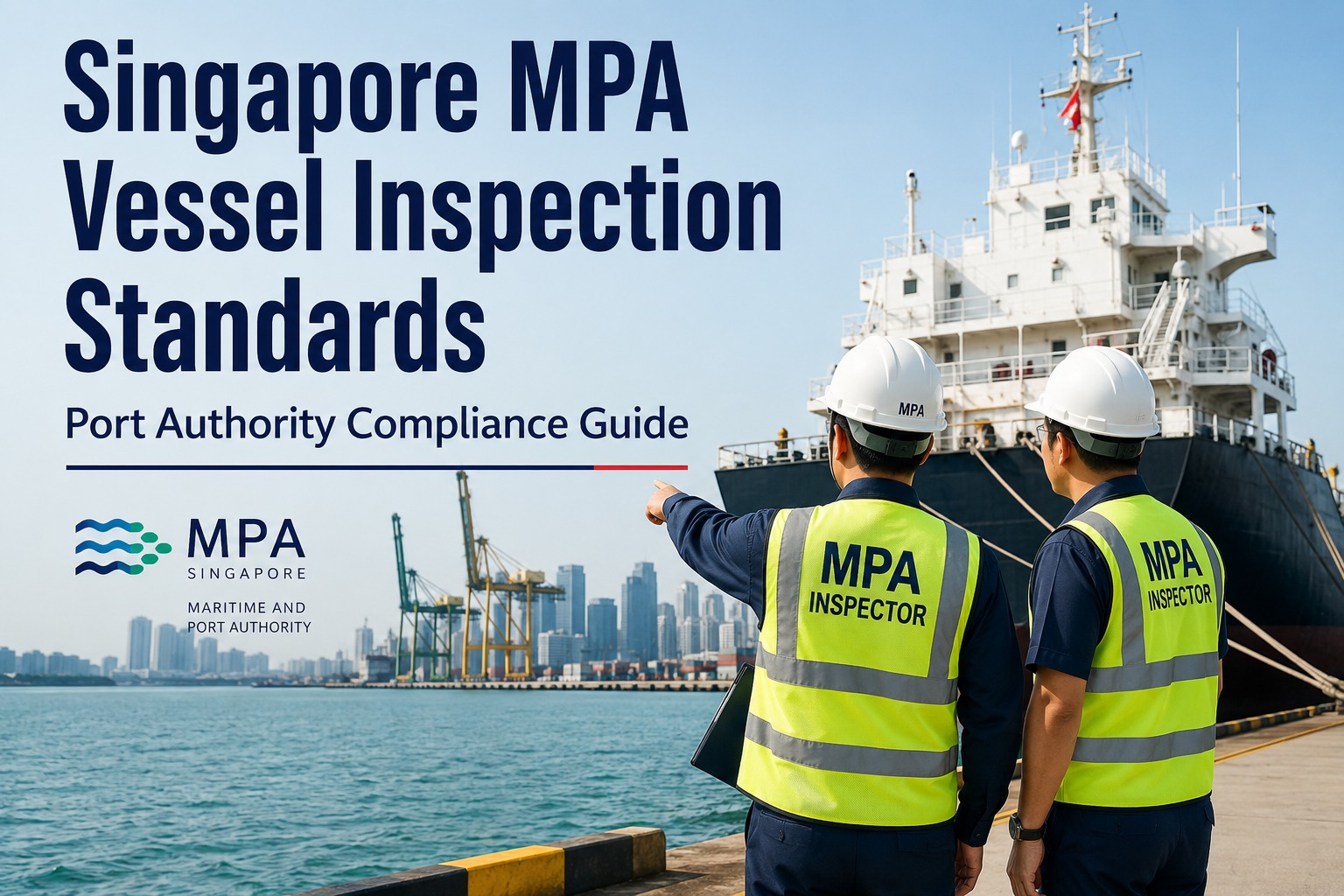
Marine Inspection Readiness Without Emergency Fixes
Two days before arriving at port, the scramble begins. The chief engineer runs through overdue maintenance items. The captain reviews logbooks for gaps. Crew members stage drills they haven't practiced in months. Everyone knows the routine—because it happens before every inspection. And every time, something gets missed. This reactive cycle doesn't just create stress—it creates the exact deficiency patterns inspectors are trained to spot. Backdated entries, clustered maintenance completions, and drills with no prior practice history are all red flags that signal a vessel preparing for an inspection rather than operating in continuous compliance. The USCG's 2025 inspection protocols now emphasize actual performance over box-checking, and AI-driven risk targeting means inspectors can identify reactive compliance patterns before they even board. Marine Inspection software replaces the pre-arrival scramble with a system where readiness is built into daily operations. Sign up free and make your vessel inspection-ready every day—not just two days before port.
Reactive vs. Continuous Compliance: The Real Cost
Reactive Approach
Pre-arrival scramble every port call
Backdated log entries inspectors flag
Drills staged only before inspections
Maintenance clustered before surveys
Expanded inspections and higher detention risk
Continuous Compliance
Inspection-ready status maintained daily
Real-time records with auto-timestamps
Regular drills documented throughout year
Maintenance spread across planned intervals
Routine inspections, faster port clearance
What Inspectors Actually Look For: Patterns, Not Perfection
Modern PSC inspectors aren't checking whether every item is flawless—they're looking for patterns that reveal how your vessel actually operates between inspections. A single overdue maintenance item is an observation. Eight maintenance items all completed the day before arrival is a systemic concern. Inspectors in 2025 are trained to distinguish between genuine continuous compliance and last-minute preparation, and the USCG's Enhanced Exam Program uses data analytics to identify reactive compliance patterns before boarding even begins.
Red Flags vs. Green Signals: What Patterns Tell Inspectors
Red Flag
Multiple maintenance tasks completed within 48 hours of port arrival
Green Signal
Maintenance distributed evenly across planned intervals with consistent completion dates
Red Flag
Drill records showing all drills conducted in the same week, with no prior history
Green Signal
Monthly drill records with rotating crew roles, debrief notes, and improvement actions
Red Flag
Log entries with identical timestamps suggesting batch recording, not real-time entry
Green Signal
Records with varied timestamps matching watch schedules and operational activity
Red Flag
Corrective actions from last audit still open or closed without verification evidence
Green Signal
Closed corrective actions with photo evidence, sign-off, and verified resolution dates
Marine Inspection creates the green-signal patterns automatically. Every maintenance task, drill record, and compliance entry carries a real-time timestamp and is distributed across your operational calendar—so your records tell the story of a vessel that operates in continuous compliance, not one that scrambles before inspection. Schedule a demo and see how your records would look to a PSC inspector—our team will walk through a mock inspection scenario using your vessel type.
5 Daily Habits That Eliminate Emergency Fixes
Inspection readiness isn't a project—it's a set of daily operational habits embedded in how your vessel runs. Marine Inspection software enforces these habits at the system level so they happen consistently without relying on individual discipline during busy watch schedules.
The Daily Readiness Framework
1
Log at the Time of Action
Record every maintenance task, operational event, and compliance entry when it happens—not at shift end. Marine Inspection's mobile interface with auto-timestamps makes this the default, not the exception.
2
Close What You Open
Every deficiency, work order, and corrective action gets a deadline and a closure verification step. Marine Inspection escalates overdue items automatically—nothing stays open and forgotten.
3
Drill on Schedule, Not on Demand
Monthly drills with rotating roles and documented debriefs. Marine Inspection schedules these automatically and tracks participation—so drill history shows genuine practice, not staged events.
4
Verify Certificates Before They Expire
Track every certificate, survey, and endorsement expiration in one system. Marine Inspection sends alerts 90, 60, and 30 days before expiry—so renewals happen proactively, not in a last-minute rush.
5
Run a Pre-Arrival Self-Check
Before every port call, run Marine Inspection's readiness check that mirrors PSC verification methods. It flags gaps your crew can address underway—not gaps an inspector discovers dockside.
Replace the Pre-Arrival Scramble With Daily Readiness
Marine Inspection builds compliance into every watch, every shift, every day—with automated scheduling, real-time logging, certificate tracking, and pre-arrival readiness checks that keep your vessel inspection-ready at all times.
Expert Review: Why the Industry Is Shifting to Continuous Compliance
Industry Analysis
The maritime inspection landscape is moving decisively away from periodic compliance checks toward continuous monitoring. Singapore Maritime Authority piloted AI-powered remote inspections in late 2025, reviewing 30 days of continuous sensor data and maintenance patterns through machine learning algorithms—completing assessments in 90 minutes rather than 8 hours. Vessels with strong digital compliance infrastructure cleared with zero deficiencies.
The USCG's Enhanced Exam Program uses data analytics to identify risk patterns, and continuous compliance scores based on operational data streams are becoming standard across major PSC regimes. High-scoring vessels get reduced oversight and faster port clearance. Declining scores trigger intervention before deficiencies develop. The message is clear: inspection readiness is no longer about preparation—it's about how you operate every single day.
Companies that sign up for Marine Inspection and adopt continuous compliance workflows are positioning their fleets for this reality—where digital audit trails, automated maintenance scheduling, and real-time compliance dashboards aren't competitive advantages but operational requirements.
Conclusion
Emergency fixes don't fix anything. They patch over the symptoms of a compliance system that isn't built for continuous readiness. And inspectors are getting better—faster—at distinguishing between vessels that genuinely maintain standards and vessels that stage compliance before port calls. Marine Inspection eliminates the need for emergency fixes by making readiness automatic: real-time logging, scheduled maintenance, certificate tracking, drill management, corrective action workflows, and pre-arrival readiness checks all built into one platform your crew uses every day. The result isn't just fewer deficiencies—it's faster port clearance, reduced inspection scope, and a fleet that operates at a higher standard without the stress of pre-arrival scrambles. Schedule a walkthrough with our team and see what continuous compliance looks like for your fleet—before your next inspector sees it first.
Make Every Day Inspection Day
Marine Inspection turns daily operations into continuous compliance—automated scheduling, real-time records, certificate alerts, and pre-arrival readiness checks that keep your fleet inspection-ready 365 days a year.
What does "continuous compliance" mean for vessel operations?
Continuous compliance means your vessel maintains inspection-ready status through daily operational habits rather than periodic preparation. Instead of scrambling to complete overdue maintenance, update logs, and stage drills before port calls, continuous compliance integrates these activities into regular watch routines. Marine Inspection enables this by automating maintenance scheduling, enforcing real-time record entry, tracking certificate expirations, and running pre-arrival readiness checks—so your vessel is always ready, not just when you know an inspector is coming.
How do inspectors detect last-minute preparation?
Inspectors look for clustering patterns: multiple maintenance tasks completed within 48 hours of arrival, drill records with no prior history, log entries with identical timestamps suggesting batch recording, and corrective actions closed without evidence. The USCG's Enhanced Exam Program now uses data analytics to identify these reactive patterns before boarding. Marine Inspection prevents these red flags by distributing tasks across planned intervals with auto-timestamps that prove continuous activity.
Can Marine Inspection help manage certificate and survey expirations?
Yes. Marine Inspection tracks every certificate, statutory survey, classification survey, and endorsement expiration across your fleet. The system sends automated alerts at 90, 60, and 30 days before expiry to both shipboard and shore-based personnel. This eliminates the common scenario where expired certificates are discovered during pre-arrival checks—or worse, by an inspector during examination.
How does pre-arrival readiness checking work in Marine Inspection?
Marine Inspection's readiness check mirrors the verification methods PSC inspectors use. Before each port call, the system reviews open maintenance items, certificate validity, drill completion status, corrective action closure, and record consistency. It flags any gaps your crew can address while still underway—so by the time you arrive at port, your vessel has already passed the same checks an inspector would run. This shifts inspection preparation from a stressful event into a routine confirmation.
How quickly can a vessel move from reactive to continuous compliance?
Most vessels see the shift within 4-6 weeks of adopting Marine Inspection. Week 1-2 covers digitizing core records with automated timestamps and maintenance scheduling. Week 3-4 activates certificate tracking, drill management, and corrective action workflows. By week 6, pre-arrival readiness checks and shore-to-ship dashboards are operational. The key transition happens when crews start logging entries in real time as habit rather than batch-recording at shift end—Marine Inspection's mobile interface and auto-timestamp enforcement makes this transition natural.