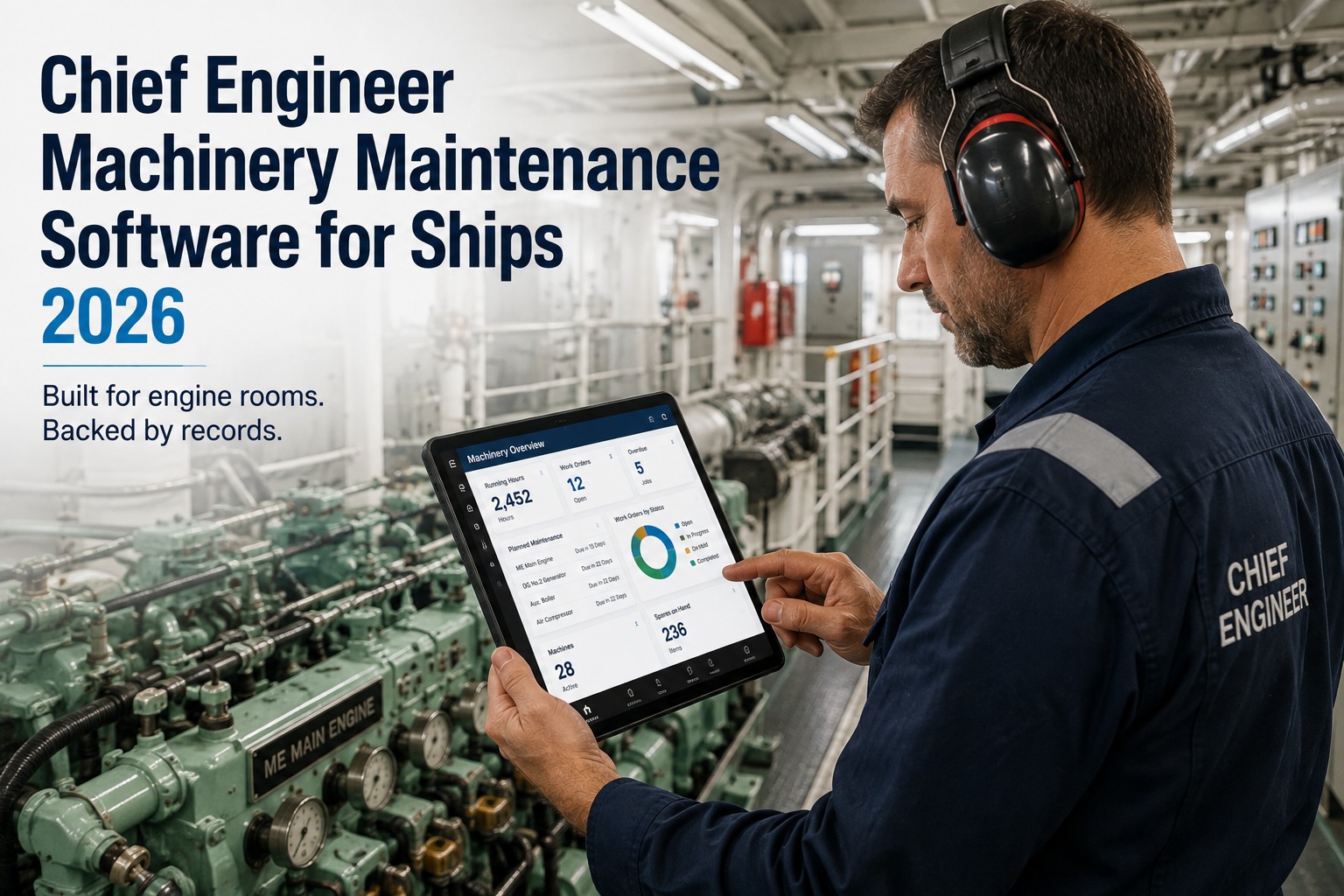
Your vessel's engine room passed recent port state control inspection with zero deficiencies. But three sister ships in your fleet received detentions for oil system violations, inadequate housekeeping, and undocumented maintenance records—all discovered during identical inspections by different PSC regimes. The difference wasn't equipment quality or crew capability. It was systematic preparation across the twelve engine room focus areas that inspectors prioritize during examinations. Commercial fleet operators managing multiple vessels face a challenge: inspections aren't consistent procedures following fixed checklists. Inspectors apply experience-based judgment focusing on risk indicators that reveal underlying maintenance culture, operational discipline, and compliance commitment. Vessel operators ready to start their free compliance trial can begin with Marine Inspection's engine room monitoring software that systematically tracks all twelve focus areas inspectors examine, reducing detention risk while improving operational reliability across entire fleets.
PSC Detention Rate
18-24%
Of all detentions trace to engine room deficiencies
Oil System Violations
35%
Most common engine room detention cause globally
Average Detention Cost
$45K-$85K
Per day including charter losses and repair expenses
The Twelve Engine Room Focus Areas Inspectors Examine
Port state control and classification society inspectors don't conduct random engine room walkthroughs. They systematically assess twelve specific areas that historically reveal maintenance deficiencies, operational violations, and safety risks. Understanding what inspectors examine—and why—allows operators to address root causes rather than surface-level cosmetic fixes that fail under scrutiny. Fleet operators ready to schedule a personalized inspection software walkthrough can see how Marine Inspection reduces PSC deficiencies 65-80% by digitally tracking inspection focus areas proactively rather than reactively responding to findings.
Oil Pollution Prevention
Inspectors Examine:
• 15 ppm equipment operation & maintenance records
• Oil discharge monitoring equipment calibration
• Bilge system integrity & oil content monitoring
• Oil Record Book entries vs. actual operations
High Detention Risk: MARPOL Annex I violations result in immediate operational restrictions
Machinery Maintenance Records
Inspectors Examine:
• Planned maintenance system implementation
• Critical equipment overhaul documentation
• Spare parts inventory for essential systems
• Maintenance intervals vs. manufacturer recommendations
Moderate Detention Risk: Inadequate records indicate systemic maintenance failures
Fuel Oil Systems
Inspectors Examine:
• Fuel changeover procedures for ECA compliance
• Fuel quality testing & treatment records
• Overflow prevention & leak containment
• Fuel delivery & transfer documentation
High Detention Risk: ECA violations and fuel quality issues cause immediate operational impact
Bilge & Ballast Systems
Inspectors Examine:
• Bilge pump capacity & emergency operation capability
• Oil-water separator functionality & bypass prevention
• Bilge alarm system operation & testing records
• Ballast water treatment compliance (where applicable)
Moderate Detention Risk: Non-functional bilge systems indicate poor maintenance culture
Engine Room Housekeeping
Inspectors Examine:
• Oil leak identification & containment measures
• Floor plate integrity & accessibility to equipment
• Waste oil storage & disposal documentation
• General cleanliness indicating operational discipline
Low-Moderate Detention Risk: Poor housekeeping triggers expanded inspection scope
Emergency Systems
Inspectors Examine:
• Emergency generator starting capability & fuel supply
• Fire suppression system functionality & testing
• Emergency shutdown procedures & drills
• Emergency equipment accessibility & labeling
High Detention Risk: Non-functional emergency systems pose immediate safety threats
Oil System Inspection: The Primary Detention Driver
Oil pollution prevention equipment failures account for 35% of engine room-related detentions globally—more than all other engine room deficiencies combined. Inspectors focus intensely on 15 ppm equipment operation, oil discharge monitoring equipment calibration, bilge system integrity, and Oil Record Book consistency because these systems directly prevent marine pollution. A single deficiency in any component triggers expanded inspection of entire oil management systems. Marine operators who activate automated oil compliance monitoring reduce MARPOL Annex I violations 70-85% through continuous digital tracking that identifies issues before inspectors arrive.
1
Initial Visual Assessment
Inspector examines bilge areas for oil accumulation, leak sources, and general cleanliness. Visible oil triggers immediate expanded inspection.
↓
2
Equipment Operational Test
15 ppm equipment demonstrated under actual operating conditions. Alarm functionality, automatic shutdown, and bypass prevention verified.
↓
3
Documentation Review
Oil Record Book entries compared to actual operations. Calibration certificates, maintenance records, and discharge monitoring data examined for consistency.
↓
4
System Integrity Verification
Bilge piping, valves, and pumps inspected for leaks, unauthorized modifications, or bypass capability. Any irregularity results in detention.
Eliminate Oil System Inspection Risks
Marine Inspection's oil system monitoring software digitally tracks 15 ppm equipment performance, maintenance compliance schedules, and operational documentation continuously—identifying potential violations before PSC inspections occur. Operators reduce oil-related detentions 70-85% through automated compliance verification built specifically for marine vessels.
Maintenance Record Scrutiny: What Inspectors Look For
Inspectors examine maintenance records to assess operational discipline and safety culture—not just equipment condition. They look for patterns: Are intervals manufacturer-recommended or arbitrary? Are critical systems prioritized? Do records match actual equipment condition? Inconsistencies between documented maintenance and observed equipment state trigger expanded inspections across all systems. Marine operators looking to see how digital maintenance tracking works can schedule a demonstration showing how the software automatically aligns with manufacturer specifications, ensuring inspection-ready documentation accessible instantly during PSC examinations.
Maintenance Record Assessment Matrix
| Record Aspect |
Acceptable to Inspectors |
Triggers Deficiency |
| Maintenance Intervals |
Aligned with manufacturer recommendations, adjusted for actual operating hours |
Generic schedules not matching equipment specifications or usage patterns |
| Documentation Completeness |
All critical equipment has maintenance history, including corrective actions |
Missing records for essential systems, incomplete work descriptions |
| Physical Evidence |
Equipment condition matches documented maintenance (clean filters, proper oil levels) |
Visible neglect contradicting recent maintenance claims |
| Spare Parts Availability |
Critical spares onboard matching planned maintenance requirements |
No spares for essential systems or expired/degraded spare parts inventory |
| Crew Familiarity |
Engineers can explain maintenance procedures and locate documentation quickly |
Crew unable to explain maintenance history or find relevant records |
Housekeeping as Inspection Trigger: The Cleanliness Factor
Poor engine room housekeeping doesn't directly cause detentions—but it triggers expanded inspection scope that reveals detainable deficiencies. Inspectors use cleanliness as operational culture indicator: vessels with oil-soaked floors, disorganized equipment, and accumulated waste typically have underlying maintenance and compliance issues. Marine operators wanting to implement systematic housekeeping workflows can access Marine Inspection's digital checklist software that helps crews maintain engine room cleanliness standards minimizing inspector scrutiny while documenting cleanup activities.
Good Housekeeping Practices
✓ No oil accumulation in bilges or floor plates
✓ Leak sources identified and temporarily contained
✓ Equipment accessible for inspection and operation
✓ Waste oil properly stored in labeled containers
✓ Tools and spare parts organized with inventory control
Inspection Outcome: Minimal scrutiny, focused examination, faster completion
Poor Housekeeping Indicators
✗ Oil-soaked floor plates and bilge accumulation
✗ Active leaks with no containment attempts
✗ Equipment obscured by debris or stored materials
✗ Unlabeled containers with unknown contents
✗ Tools scattered with no organization system
Inspection Outcome: Expanded scope, all systems examined, likely deficiencies found
Expert Perspective: Classification Society Inspector
"The engine room tells the vessel's story in fifteen minutes. I don't need to check every system—housekeeping, maintenance records, and crew familiarity with equipment reveal operational culture immediately. Clean spaces with organized digital documentation rarely hide serious deficiencies. Dirty engine rooms with incomplete records almost always have underlying compliance issues that surface under scrutiny. Operators who use systematic inspection software to address the twelve focus areas before inspections consistently pass with minimal findings."
Senior Marine Surveyor
International Classification Society | 22 Years Engine Room Inspection Experience
Prepare for Engine Room Inspections Systematically
Marine Inspection's engine room inspection software addresses all twelve inspector focus areas through automated monitoring, digital maintenance tracking, and documentation management. Fleet operators reduce PSC deficiencies 65-80% while improving operational reliability across all vessels through systematic compliance preparation software built specifically for marine vessel operations.
Frequently Asked Questions
How long does a typical port state control engine room inspection take?
Standard PSC engine room inspections take 45-90 minutes for vessels with good housekeeping and organized digital documentation. Poor initial impressions trigger expanded inspections lasting 3-6 hours covering all twelve focus areas in detail. Inspectors spend minimal time on clean, well-maintained spaces with readily accessible digital records but extensively examine dirty engine rooms with incomplete documentation. Vessels using Marine Inspection software to maintain systematic maintenance culture through organized digital documentation and clean spaces typically complete inspections in under one hour with few or no deficiencies.
What's the most common engine room deficiency that causes detentions?
Oil pollution prevention equipment failures cause 35% of engine room detentions—specifically non-functional 15 ppm equipment, missing calibration certificates, bypassed oil-water separators, or Oil Record Book discrepancies. These violations fall under MARPOL Annex I and result in immediate operational restrictions until corrected and re-inspected. The second most common detention cause is inoperable emergency equipment (generators, fire suppression) at 22% of cases. Marine Inspection's monitoring software tracks both deficiency types through automated alerts and digital maintenance schedules, preventing systemic failures before they cause detentions.
Can good housekeeping alone prevent engine room detentions?
No—housekeeping influences inspection scope but doesn't substitute for actual compliance. Clean engine rooms with organized equipment reduce inspector scrutiny, but underlying deficiencies (non-functional emergency systems, MARPOL violations, inadequate maintenance records) still cause detentions regardless of cleanliness. However, good housekeeping combined with systematic digital maintenance documentation significantly reduces detention risk because inspectors spend less time examining systems in detail. Marine Inspection software addresses both: housekeeping checklists maintain clean spaces AND digital tracking ensures all twelve focus areas meet regulatory requirements.
How do inspectors verify maintenance records match actual equipment condition?
Inspectors use physical evidence to validate documentation: they check oil filter cleanliness against recent filter change records, examine fuel quality test results versus documented testing intervals, verify emergency generator fuel levels match consumption logs, and compare bilge cleanliness to oily bilge discharge records. Discrepancies between documented maintenance and observed equipment condition trigger expanded investigations. Marine Inspection software prevents these discrepancies by automatically linking maintenance activities to equipment condition monitoring—ensuring digital records always reflect actual vessel operations with timestamp verification and photo documentation capabilities.
How does Marine Inspection software help prepare vessels for engine room inspections?
Marine Inspection provides systematic inspection preparation software across all twelve focus areas: (1) Oil system monitoring digitally tracks 15 ppm equipment performance and automatic ORB entry verification, (2) Maintenance tracking software ensures documented intervals match manufacturer recommendations with digital records accessible during inspections, (3) Housekeeping checklists identify leak sources and cleanliness issues before inspector arrival, (4) Emergency system testing schedules prevent non-functional equipment discoveries during PSC examinations. The platform generates inspection-ready documentation bundles containing all certificates, maintenance records, and compliance evidence inspectors request—reducing inspection time 40-60% while eliminating common deficiency causes through proactive digital compliance management.