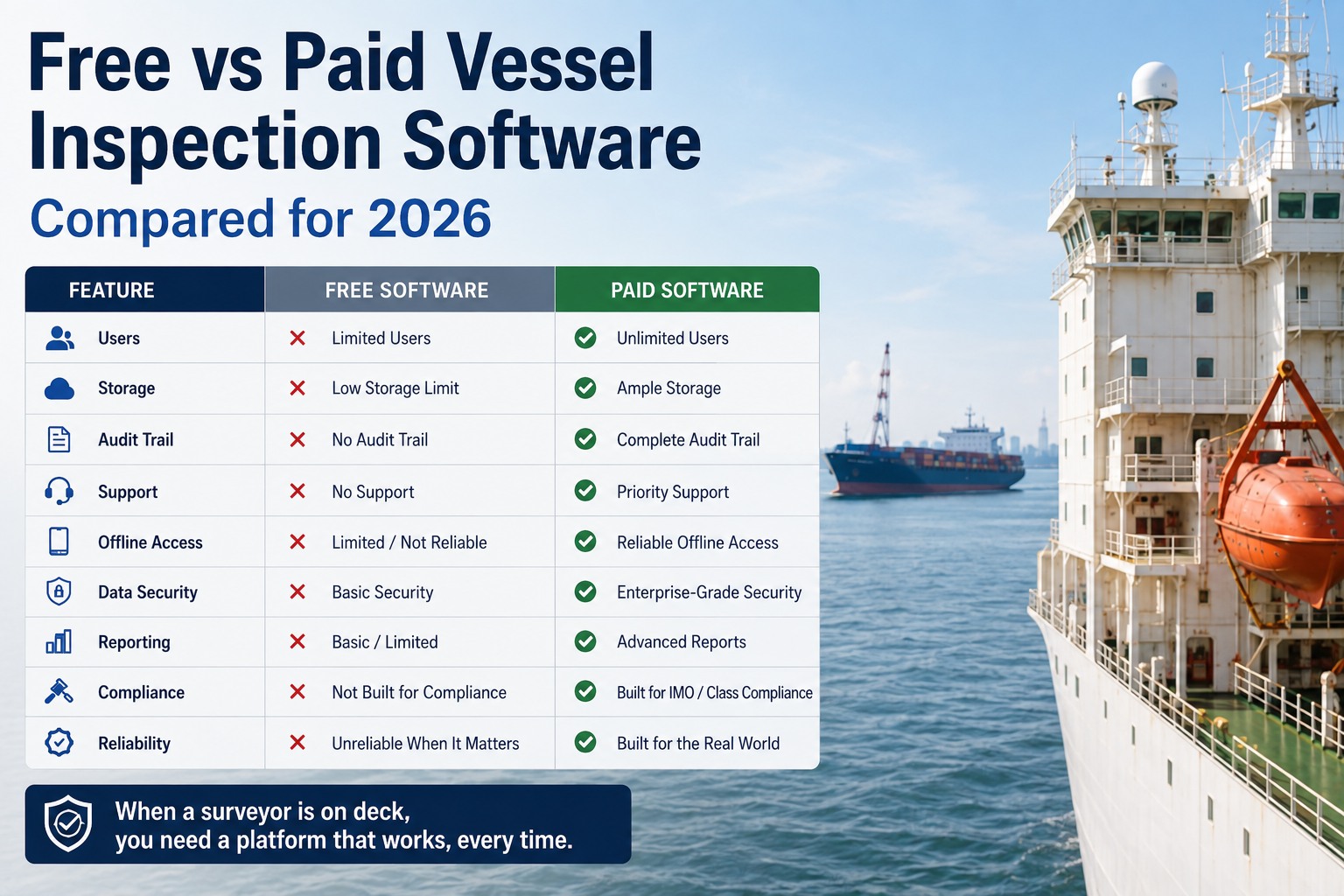
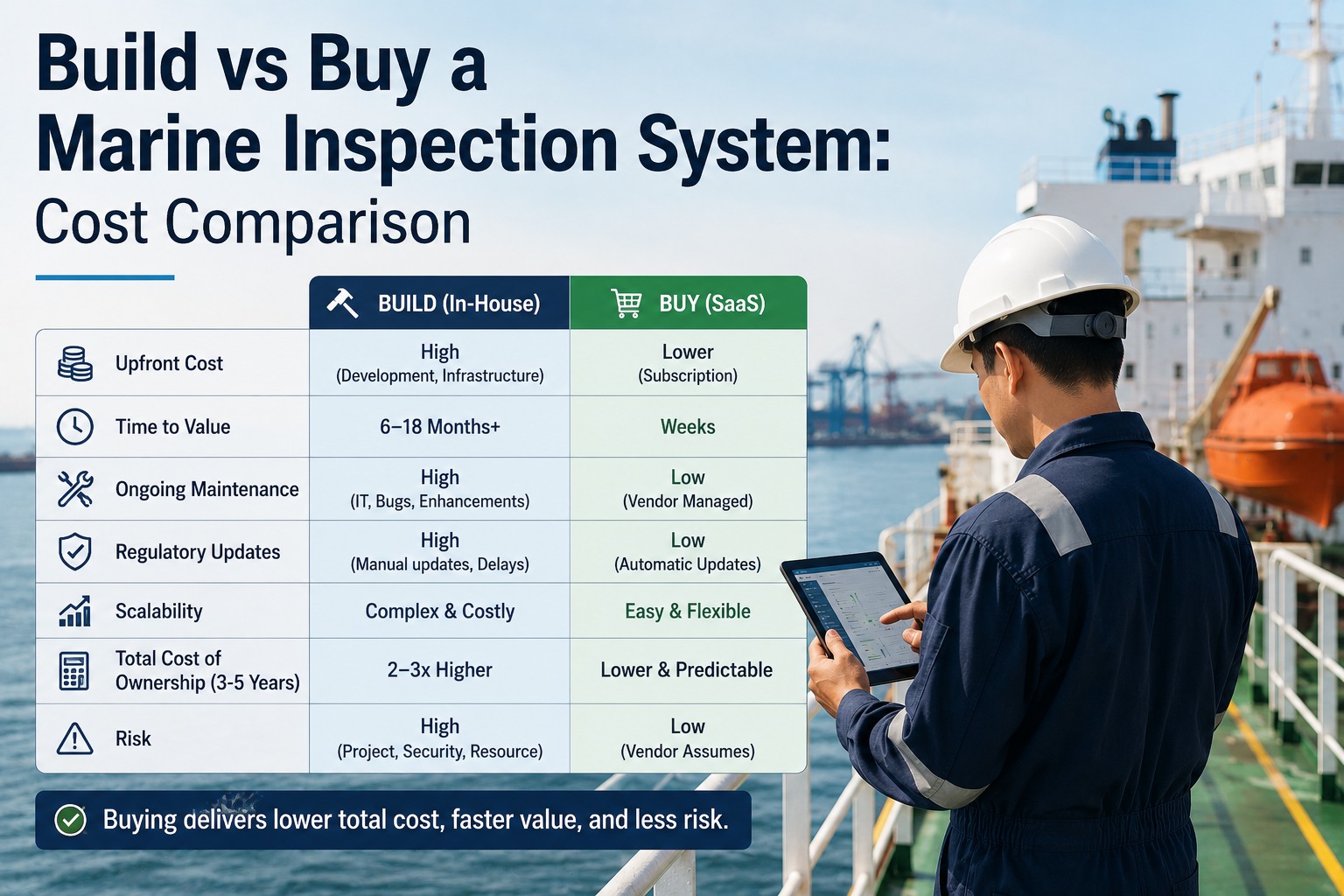
The free-versus-paid question in most industries is about capacity — how many users, how many assets, how many work orders. In maritime it is about whether the record is admissible, and that changes which limits matter. Published analysis of free maintenance platforms is consistent on the shape of the constraint: forever-free plans typically cover one to three users and twenty-five to a hundred assets, with individual platforms capping at two users with no preventive maintenance, or limiting preventive tasks to twenty-five. Some restrict storage. Some add their own branding to work orders and reports, described as a minor issue internally and problematic for client-facing or audit documentation. Some include everything and charge you to export your own data. And the feature set that consistently sits behind the paid tier is the compliance one — audit trails, compliance reports, certification tracking and regulatory documentation tools. That last point is the whole issue for a fleet. In facilities maintenance those are advanced features you grow into. In shipping they are the reason you bought the software, which means the line free platforms draw between free and paid falls directly across the maritime use case rather than beside it. Start a free trial of Marine Inspection and test where your own requirements sit against it.
The moment that settles the question
A Port State Control officer is standing in your ship's office asking for the maintenance history on a specific item of equipment, going back through the last survey cycle.
Is the history there?
Regulated industries requiring documentation and historical records extending beyond one year are reported to be unable to meet compliance obligations within free plan limitations. A class survey cycle is five years.
Can you show who recorded it?
Audit trails, compliance reports and regulatory documentation tools generally sit behind paid tiers. Without attribution and edit history, the record is an assertion rather than evidence.
Does the document look like yours?
Some free platforms brand the reports they generate. Internally that is cosmetic. Handed to an inspector, it is a document with somebody else's name on it.
Who do you call if it will not load?
Dedicated support is among the features consistently absent from free tiers, and the moment you need it is precisely the moment somebody is waiting for an answer.
What Free Tiers Typically Include and Exclude
The pattern across the market is consistent enough to be useful, though individual platforms vary considerably and the good ones are genuinely generous. Book a Marine Inspection demo and check any free tier you are considering against this list before committing data to it.
Commonly included
Work order creation and management
Basic asset registers within a cap
Preventive maintenance scheduling, sometimes limited by task count
A mobile application, in the better tiers with offline capability
Enough to run a small operation genuinely well
Commonly excluded
Audit trails and regulatory documentation tools
Certification tracking and compliance reporting
Historical retention beyond a limited window
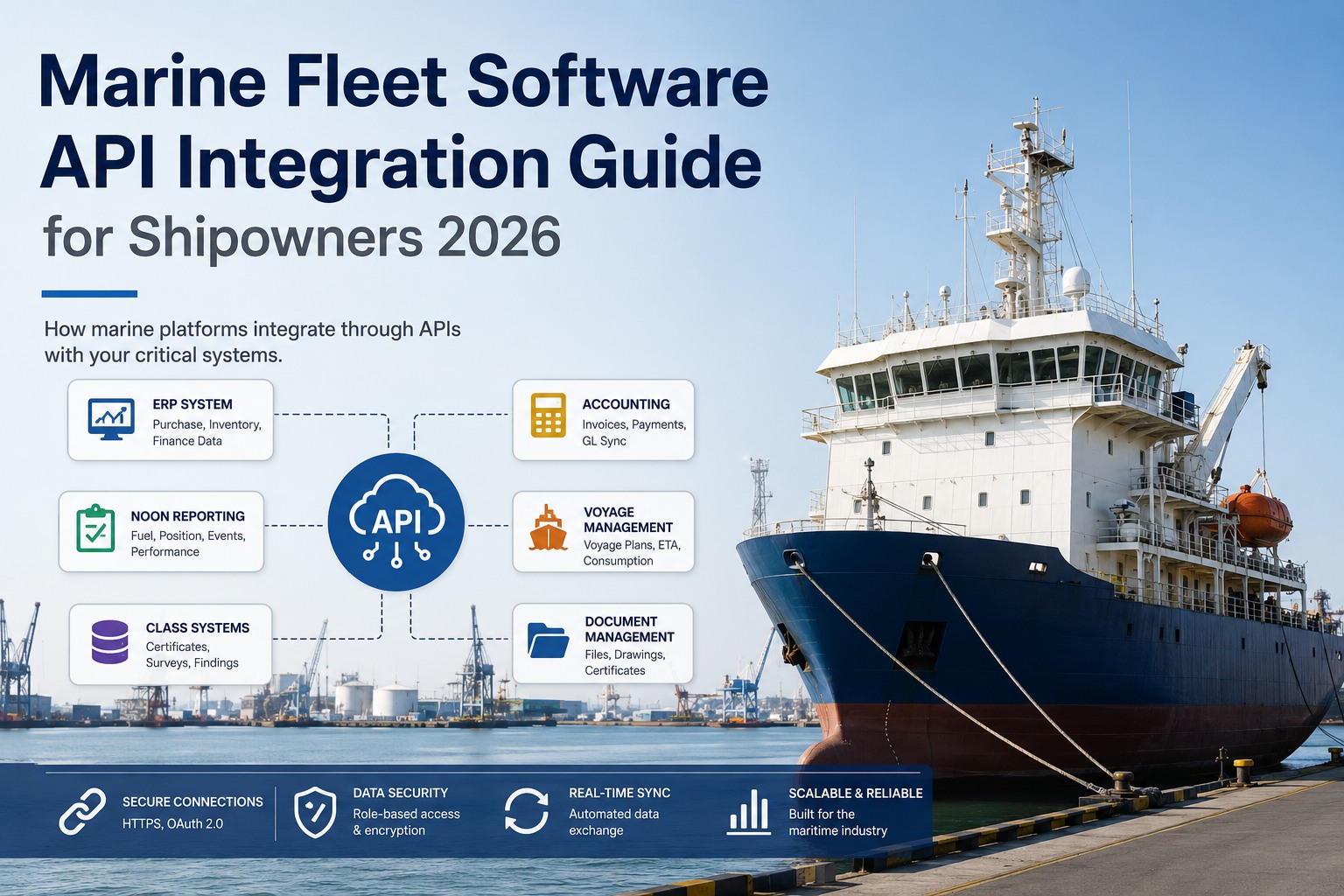
API access and integrations, frequently reserved for enterprise tiers
Dedicated support, dynamic forms, and attachment volume
Typical caps reported across the market: one to three users on forever-free plans, twenty-five to a hundred assets, one platform capping at two users with no preventive maintenance and another limiting free preventive tasks to twenty-five. Upgrade pricing where it exists runs from around eight dollars per user monthly at the low end to forty-five or fifty-five at the higher, with some platforms offering no permanent free tier at all — only a time-limited trial.
Five Places Free Breaks in Maritime Specifically
These are not general criticisms of free software. They are the specific points where limits designed around a facilities team meet a requirement designed around a convention. Sign up for Marine Inspection and check each against your own fleet.
01
The user cap versus the crew list
Free tiers commonly permit one to three users, with at least one capping at two. A single vessel has a master, a chief engineer, a chief officer, a second engineer and an electro-technical officer before you reach the ratings. One ship exceeds most free tiers, and a fleet exceeds all of them.
Worse: the entire argument for digital capture is that records get made at the point of work by whoever did it. A two-user cap structurally prevents the thing that makes the data true.
02
The asset cap versus the equipment register
Twenty-five to a hundred assets is a reasonable allowance for a small facility. An engine room alone exceeds it comfortably once main engines, auxiliaries, pumps, compressors, purifiers, boilers, steering gear and auxiliary systems are held at component level rather than as headings.
And component-level tracking is not a refinement in shipping. It is what makes overhaul history retrievable and survey scope defensible.
03
Retention versus the survey cycle
Analysis of free plans states directly that regulated industries requiring comprehensive documentation, audit trails and historical records extending beyond one year cannot meet compliance obligations within free plan limitations. A class special survey cycle is five years. Cargo gear registers and certificates are required to be retained for at least five years.
A one-year history in a five-year regime is not a limitation to grow out of. It is a mismatch on day one.
04
The audit trail sits on the wrong side of the line
Compliance features — audit trails, compliance reports, certification tracking, regulatory documentation tools — are consistently reported as paid-tier capabilities. In facilities maintenance that is a sensible commercial split, because those features become valuable as an operation matures.
In shipping the audit trail is not a maturity feature. It is the difference between a record that evidences compliance and a record that describes it.
05
Branding on a document handed to an inspector
Some free platforms add their own branding to work orders and reports, characterised in published comparisons as a minor issue for internal use and problematic for client-facing or audit documentation. Maritime documentation is almost entirely client-facing in that sense — it goes to Port State Control officers, class surveyors, vetting inspectors, charterers and underwriters.
A watermarked report is not a compliance failure. It is a credibility signal, delivered at the worst possible moment.
Every one of those five is a boundary condition rather than a growth ceiling
A facilities team on a free tier hits its limits gradually and upgrades when the operation outgrows them. A fleet hits four of the five on the first vessel, on the first day, because the requirements come from conventions rather than from scale. That is the structural reason the free-versus-paid answer differs in this sector, and it has nothing to do with whether free software is good.
What an Audit Trail Actually Has to Do
The term appears on every feature list and is rarely specified. Here is what it means when the record is being examined rather than merely stored. Schedule a walkthrough and test each of these on any platform you evaluate.
Attribution
Which named individual made this entry, not which rank or department. A surveyor assessing whether competent people did the work needs a person, and a record attributed to a job title cannot answer that.
Capture time
When the observation was made, distinct from when it reached the server. The two differ on every vessel with intermittent connectivity, and it is the first that carries evidential weight.
Edit history
What was changed, by whom, and when. A record that can be silently altered proves nothing about what was found at the time, which is the only thing anyone is asking.
Retention
Available for the full period the applicable regime requires — five years for cargo gear registers and certificates, a full survey cycle for class-related history, and longer where a claim or investigation may reach back.
Retrievability
Findable in the time an inspector will wait, which is minutes rather than days. Retention satisfied by storage is not the same standard as records being available for inspection, and only one of those two is what the regulations ask for.
The Honest Case for Starting Free
Free tiers have a genuine and specific use in this decision, and the strongest argument for them is not cost. Start a free trial and use it for exactly this purpose.
Free tiers do real work
For a small operation, published examples are substantial rather than token — one four-person facilities team running eighteen buildings on a free platform reported preventive maintenance compliance rising from forty-one percent to eighty-six, emergency callouts falling sixty-three percent, and forty-eight thousand dollars in avoided downtime, at zero software cost. Dismissing free software as inadequate would be wrong.
Free removes the approval barrier
The most useful published advice on free tiers is to build thirty to sixty days of real data on one, then use that data — work order counts, compliance rates, response times — to justify the paid upgrade to management. The free tier becomes a proof of concept that requires no budget approval to begin, which sidesteps the single hardest step in most software purchases.
Which is exactly the right sequence
It matches what works in a business case generally: reduce the size of the first decision, generate observed evidence from your own operation rather than projections from somebody else's, and bring measured results to the approval conversation. A free tier or full-function trial is the cheapest possible version of that first step.
The distinction that matters
Free is an excellent way to start and a poor place to stay when your record has to survive an inspection. Use it to prove the workflow, generate the evidence and convert the sceptic — then move before the retention window, the user cap or the missing audit trail becomes the thing standing between you and a surveyor's question.
Two Traps Worth Checking Before You Commit Data
Both are avoidable entirely by asking two questions at signup, and both are expensive to discover later. Book a walkthrough and ask them of every platform including this one.
Trap one
Paying to leave with your own data
Published comparisons note that some platforms include everything on the free tier and then charge you to export your own data. In maritime that is more serious than in most sectors, because the record has to outlive the software — it supports asset value, survives manager changes, and may be requested years after a vessel is sold.
Ask at signup: what does full export cost, in what format, and is that stated in writing?
Trap two
The trial that is not a free tier
Some platforms advertise free access and offer only a time-limited trial, with no permanent free plan behind it and paid tiers starting at forty-five dollars per user monthly. That is a legitimate model, but it changes the plan entirely — a trial is an evaluation window rather than a place to run an operation while you build a business case.
Ask at signup: is this permanently free or time-limited, and what happens to the data at the end?
Full functionality, free trial, no credit card, published pricing when you move on — and your data exportable whether you stay or not.
Where Each Option Fits
The honest answer depends on what the record has to survive, not on fleet size alone. Start a free trial and place your own operation on this table.
Table 1: Matching the Tier to the Requirement
Questions to Ask Before Signing Up for Anything
Free or paid, these determine whether the platform will still be serving you in three years. Schedule a demo and ask them of every option on your list.
Table 2: Questions for Free and Paid Tiers Alike
2026 FREE TIER REALITY
Free tier limits vary enormously between platforms and change frequently. The caps described here — one to three users, twenty-five to a hundred assets, task-count limits on preventive maintenance — are patterns drawn from published 2026 comparisons rather than a description of any specific product. Some platforms offer genuinely unlimited free tiers and others offer no free plan at all, so verify the current position directly with any vendor before making a decision on it. This page is published by a software vendor with a commercial interest in the answer. The case for free tiers in the section above is genuine and the published evidence for their effectiveness in small operations is real. The maritime-specific limits are the substantive point. Retention beyond one year, audit trails, certification tracking and compliance documentation being paid-tier features is a general observation about the category; whether it disqualifies a free tier for your operation depends on your own regulatory obligations, which you should confirm rather than assume. Nothing here removes a statutory requirement. ISM, class and flag record obligations apply regardless of which tier holds them.
Frequently Asked Questions
Can a free tier actually run vessel maintenance?
For a very small operation and within its caps, frequently yes — the published evidence for free platforms in small operations is genuine rather than token. Where it breaks in maritime is at boundaries that arrive immediately rather than gradually: user limits of one to three against a crew list, asset caps of twenty-five to a hundred against a component-level engine room register, retention that published analysis says cannot meet compliance obligations for regulated industries requiring records beyond one year, and audit trails and certification tracking sitting behind the paid tier. A fleet meets four of those on the first vessel on the first day.
Why does the audit trail matter so much?
Because it is the difference between a record that evidences compliance and one that merely describes it. In practical terms an audit trail has to carry attribution to a named individual rather than a rank, the capture time as distinct from the upload time, a history of what was edited and by whom, retention for the full period the applicable regime requires, and retrievability in the minutes an inspector will actually wait. Compliance features including audit trails, compliance reports and regulatory documentation tools are consistently reported as paid-tier capabilities across the maintenance software market — which in facilities work is a reasonable split and in shipping falls directly across the core requirement.
What are the typical free tier limits?
Published 2026 comparisons describe forever-free plans typically covering one to three users and twenty-five to a hundred assets, with specific platforms capping at two users with no preventive maintenance and another limiting free preventive tasks to twenty-five. Some restrict data storage, some add their own branding to generated work orders and reports, and some include everything but charge for data export. Integrations are typically absent with API access reserved for higher tiers, and dedicated support is among the features consistently excluded. Upgrade pricing where a free tier exists ranges from around eight dollars per user monthly to forty-five or fifty-five.
Is there a good way to use a free tier?
Yes, and it is the strongest argument for them. The published recommendation is to build thirty to sixty days of real data on a free tier and then use that data — work order counts, compliance rates, response times — to justify the paid upgrade to management, making the free tier a proof of concept that requires no budget approval to begin. That sequence matches what works in software business cases generally: shrink the first decision, generate observed evidence from your own operation rather than projections from somebody else's, and bring measured results to the approval conversation. Free is an excellent way to start and a poor place to stay once the record has to survive an inspection.
What should I check before putting data into any free platform?
Two things, both answerable at signup and both expensive later. First, what full export costs, in what format, and whether that is stated in writing — some platforms include everything on the free tier and then charge to retrieve your own data, which matters more in maritime than most sectors because the record has to outlive the software, the manager and sometimes the vessel. Second, whether the free tier is permanent or a time-limited trial, since some platforms advertise free access with no permanent plan behind it. A trial is an evaluation window; it is not somewhere to run an operation while building a business case.
Does report branding really matter?
More in shipping than in most industries. Published comparisons describe free-tier branding on generated work orders and reports as a minor issue for internal use and problematic for client-facing or audit documentation — and maritime documentation is almost entirely of the second kind. Reports go to Port State Control officers, class surveyors, vetting inspectors, charterers and underwriters as a matter of routine. A watermarked document is not a compliance failure and nobody will detain a vessel over it, but it signals something about the operation to a person forming an impression, at a moment when impressions are being formed deliberately.
Start Free. Do Not Stay Free Past the First Inspection.
Use free for
Proving the workflow on one vessel, generating thirty to sixty days of real data, converting the sceptic, and building a business case from your own numbers rather than a vendor's — all without needing budget approval to begin.
Move before
The retention window closes on a five-year survey cycle, the user cap prevents crew capture, or a surveyor asks for an audit trail that sits on the other side of the paywall. Those three arrive together and sooner than the caps suggest.