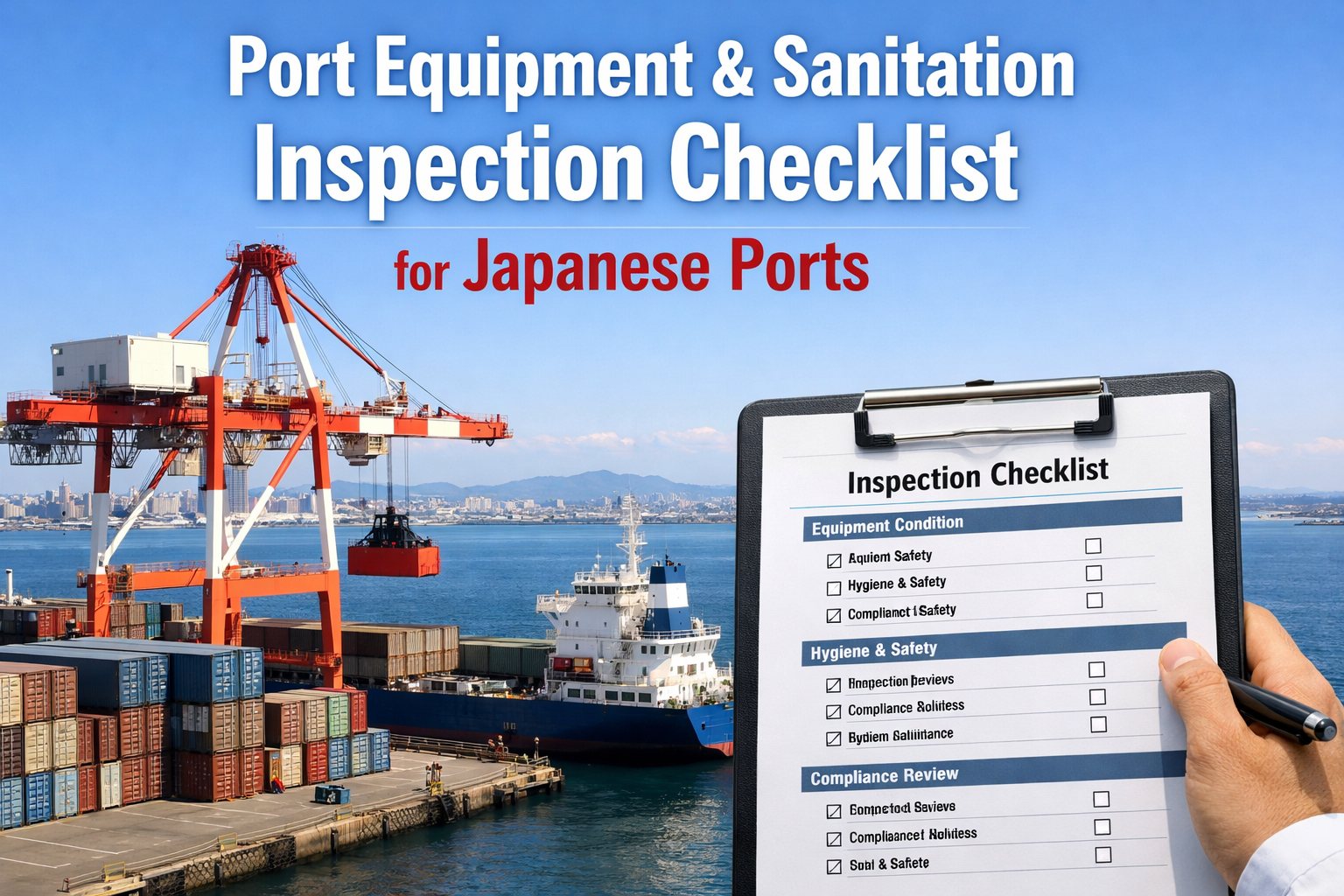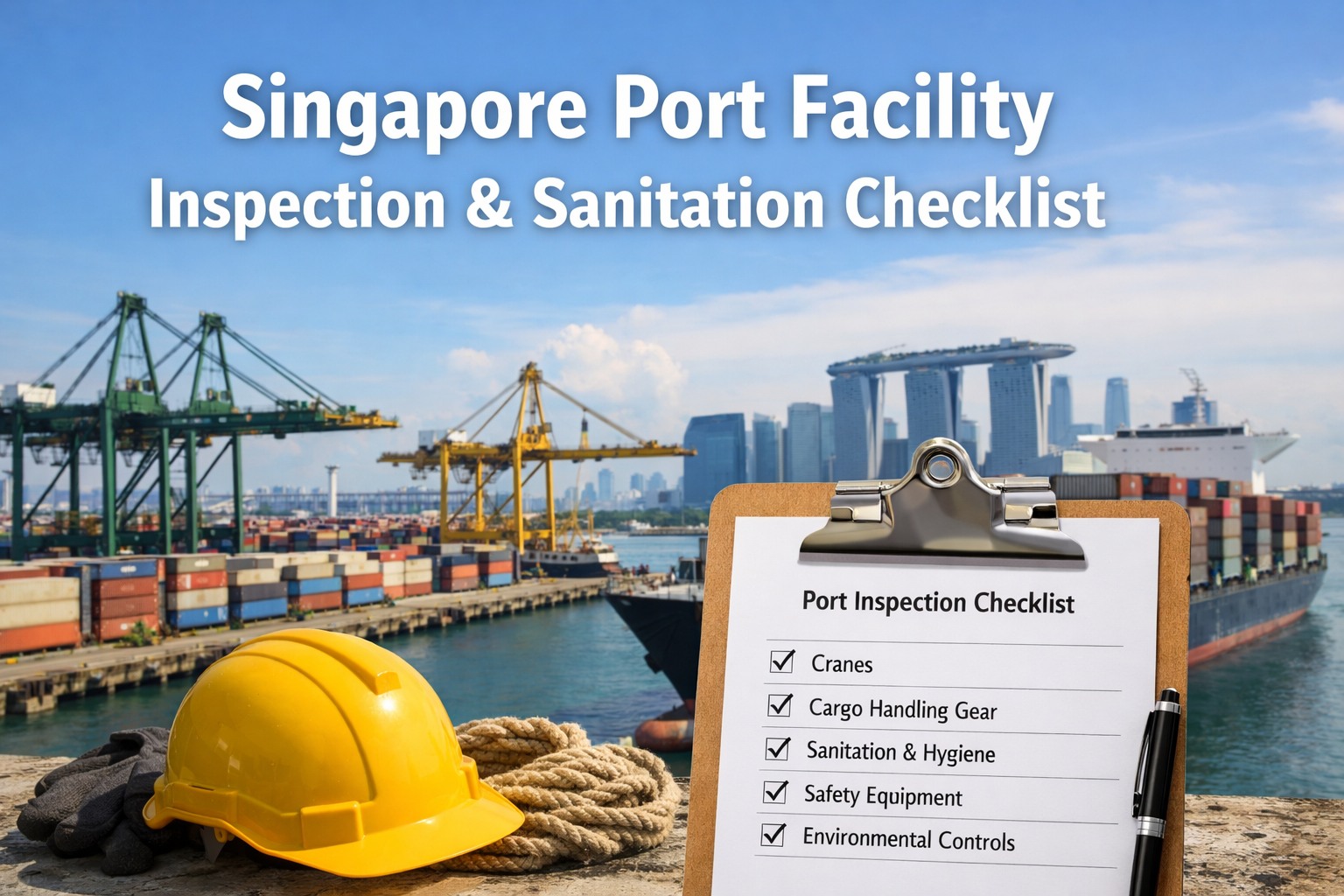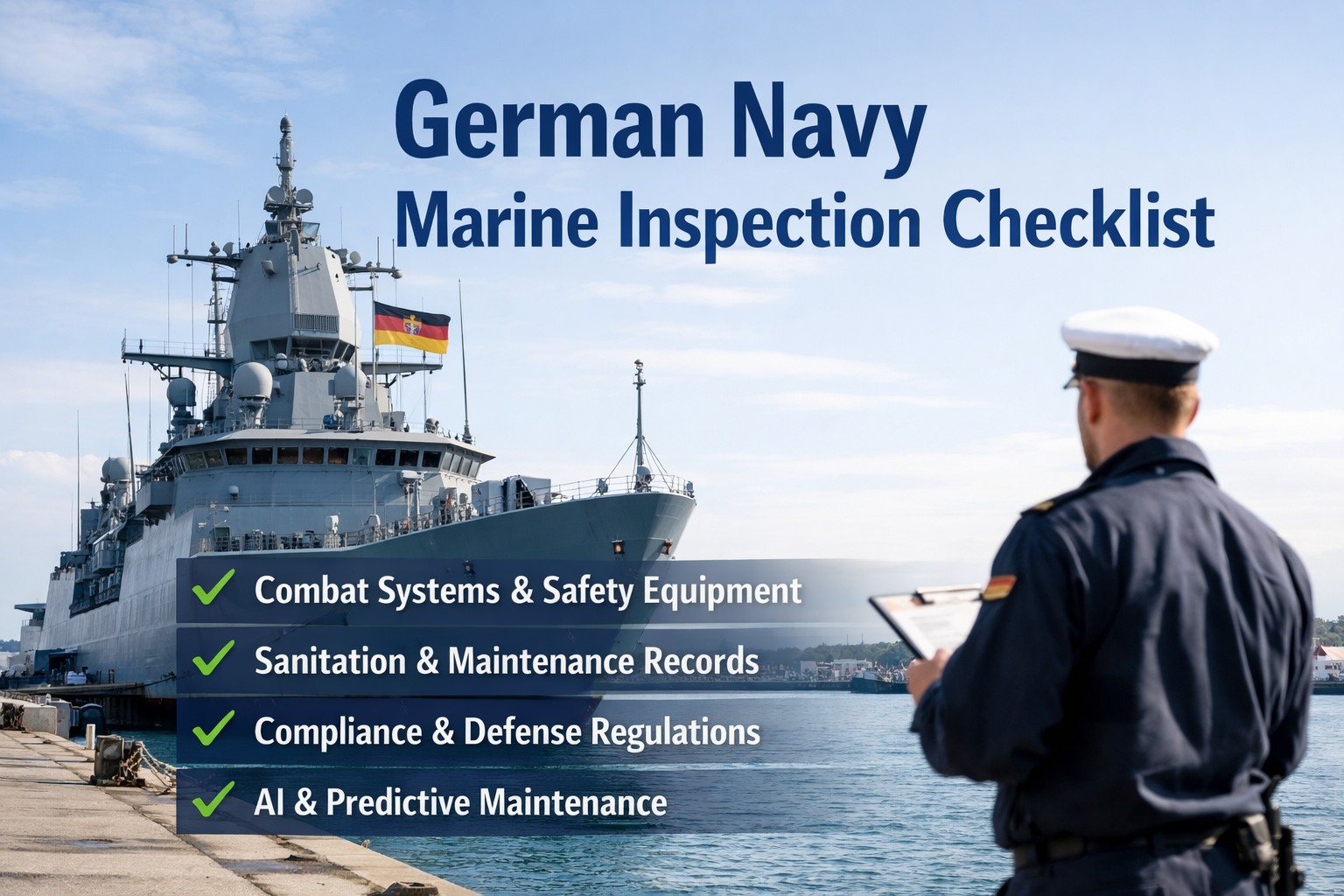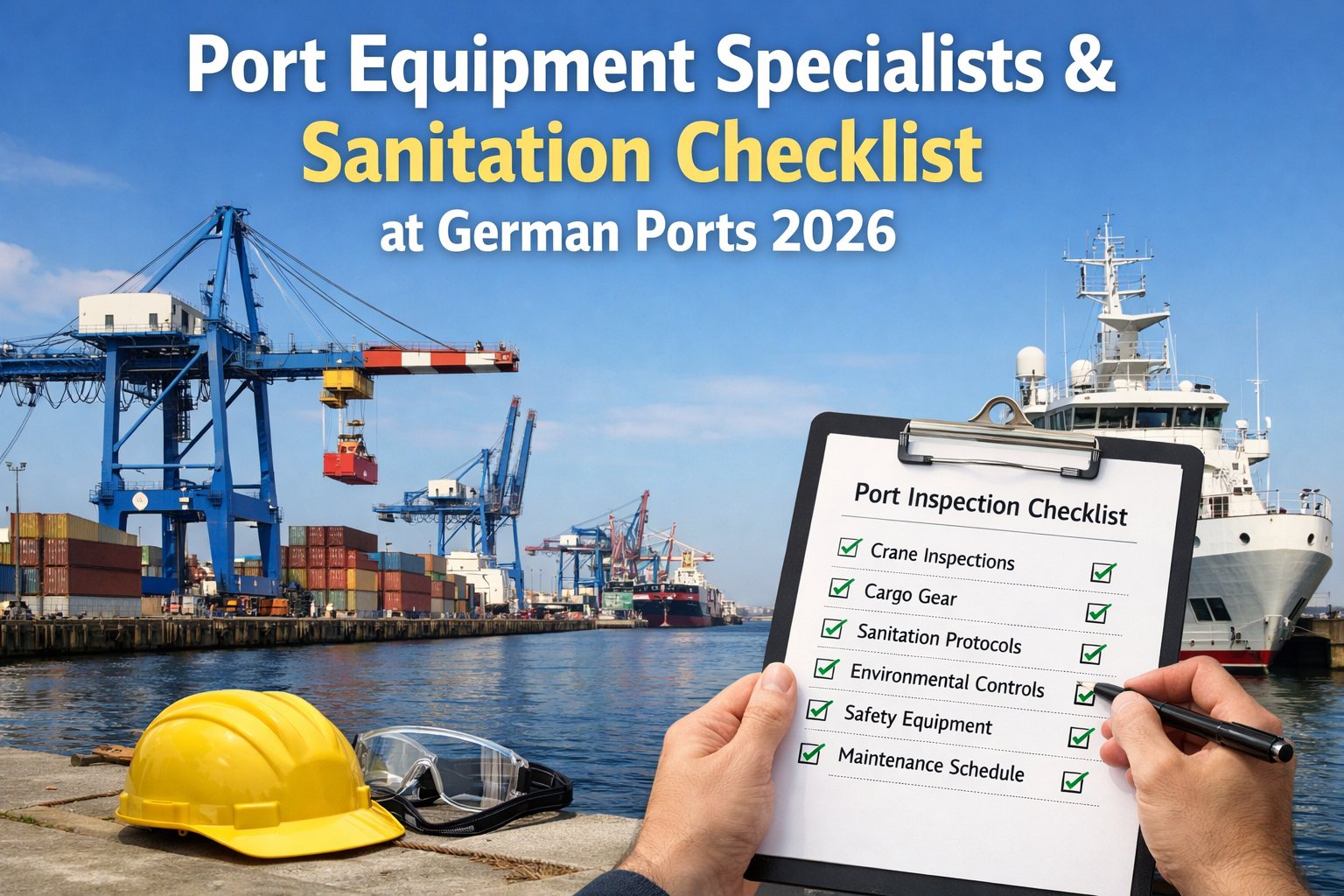
Ensuring comprehensive German port equipment inspection readiness is essential for terminal safety, operational efficiency, and regulatory compliance across German maritime operations. Systematic verification of electrical and power infrastructure, fueling stations and maintenance bays, port sanitation and hygiene facilities, quay cranes and STS equipment, RTG, RMG and yard handling equipment, regulatory compliance and inspection records, stormwater and environmental protection, terminal trucks and mobile equipment, waste management and hazardous disposal, and worker safety and PPE compliance helps maintain port equipment standards and supports effective German port operations management. Start your free German port equipment inspection trial
German Port Equipment Marine Inspection Checklist Software
Comprehensive Port Equipment & Sanitation Compliance Checklist
Importance of German Port Equipment Inspections for Port Operations
Equipment Safety Readiness
- Regular inspections of cranes, cargo handling equipment, electrical systems, and mobile equipment identify deficiencies before they compromise port safety or violate German regulations, ensuring effective terminal operations throughout German maritime facilities.
Sanitation & Environmental Standards
- Systematic inspections verify hygiene facilities, waste management systems, environmental protection measures, and worker safety protocols, ensuring ports maintain adequate sanitation standards and environmental compliance during German port operations.
Regulatory Documentation
- Proper documentation of inspection results, equipment certifications, maintenance records, and compliance audits demonstrates adherence to German port authority requirements, national maritime regulations, and international safety standards across German jurisdictions.
Operational Efficiency & Risk Management
- Systematic verification of power infrastructure, fueling stations, cargo handling equipment, and regulatory compliance ensures ports maintain complete equipment documentation and operators can optimize maintenance scheduling, reduce downtime, and improve operational safety during German port operations.
Ready to enhance German port equipment compliance for terminal operations? Schedule a personalized demo to see automated port equipment inspection tracking, or start your free trial today.
1. Electrical & Power Infrastructure
Electrical & Power Infrastructure inspection requirements:
2. Fueling Stations & Maintenance Bays
Fueling Stations & Maintenance Bays inspection requirements:
3. Port Sanitation & Hygiene Facilities
Port Sanitation & Hygiene Facilities inspection requirements:
4. Quay Cranes & STS Equipment
Quay Cranes & STS Equipment inspection requirements:
5. RTG, RMG & Yard Handling Equipment
RTG, RMG & Yard Handling Equipment inspection requirements:
✓ Transform German Port Equipment Compliance for Terminal Operations: With 50 comprehensive verification points across 10 critical inspection areas—maintaining port equipment readiness requires systematic tracking and documentation. Schedule your demo now to discover automated port equipment inspection tracking and maintenance planning.
6. Regulatory Compliance & Inspection Records
Regulatory Compliance & Inspection Records inspection requirements:
7. Stormwater & Environmental Protection
Stormwater & Environmental Protection inspection requirements:
8. Terminal Trucks & Mobile Equipment
Terminal Trucks & Mobile Equipment inspection requirements:
9. Waste Management & Hazardous Disposal
Waste Management & Hazardous Disposal inspection requirements:
10. Worker Safety & PPE Compliance
Worker Safety & PPE Compliance inspection requirements:
Why Use Digital Port Management for German Port Equipment Inspections?
Marine Inspection App Benefits for German Port Equipment Inspection Management:
- ✓ Automate port equipment inspections with mobile checklists for crane, cargo handling, and terminal safety
- ✓ Maintain complete digital records for equipment certifications, maintenance logs, and compliance documentation
- ✓ Track inspection schedules, equipment maintenance, and certification expiry dates
- ✓ Monitor deficiencies, corrective actions, and equipment downtime with photo evidence
- ✓ Generate comprehensive port compliance reports for authorities and regulatory inspections
- ✓ Enable predictive maintenance, automated scheduling, and instant incident reporting
Join leading German port operators who trust digital port equipment inspection management for terminal compliance. Schedule your demo or sign up for free to experience automated port equipment inspection tracking.
Frequently Asked Questions About German Port Equipment Inspections
1. What areas are covered in German port equipment inspections?
German port equipment inspections cover ten critical areas: Electrical & Power Infrastructure, Fueling Stations & Maintenance Bays, Port Sanitation & Hygiene Facilities, Quay Cranes & STS Equipment, RTG, RMG & Yard Handling Equipment, Regulatory Compliance & Inspection Records, Stormwater & Environmental Protection, Terminal Trucks & Mobile Equipment, Waste Management & Hazardous Disposal, and Worker Safety & PPE Compliance—totaling 50 verification points ensuring complete port equipment readiness.
2. How often should German port equipment inspections be conducted?
Conduct port equipment inspections daily for critical cargo handling systems, weekly for mobile equipment and safety systems, monthly for comprehensive facility assessments, quarterly for environmental compliance verification, and annually for regulatory audits. Additional inspections are required after any incident, equipment failure, or regulatory change. Sign up for automated inspection scheduling to maintain consistent port equipment verification.
3. What are the most critical items to verify?
Critical items include STS cranes structural components free from damage, backup generators tested and functional, RTG/RMG gantry structures serviceable, terminal tractors mechanically sound, port authority inspection records up to date, restrooms and facilities clean, waste segregation procedures implemented, workers equipped with required PPE, emission systems compliant with 2026 standards, and anti-collision systems operational—these directly impact port safety and regulatory compliance.
4. What documentation is required for German port equipment compliance?
Required documentation includes port authority inspection records, equipment certification records, maintenance logs, third-party audit reports, regulatory audit reports, fuel storage inspection logs, sanitation inspection records, crane defect records, environmental audit findings, waste disposal logs, safety training records, and daily operator inspection records. Schedule a demo to see how digital documentation simplifies port equipment compliance reporting.
5. How can digital management improve German port equipment inspection processes?
Digital management provides mobile inspection checklists, automated scheduling, real-time deficiency reporting with photo evidence, equipment maintenance tracking with predictive analytics, complete inspection history, and comprehensive compliance reports for German port authorities and regulatory inspections. Start your free trial to experience automated German port equipment management.
Take Action: Implement Comprehensive German Port Equipment Management
Download our FREE German Port Equipment Marine Inspection Checklist and start implementing systematic port equipment compliance verification. Integrating digital port management ensures consistent equipment standards, comprehensive documentation, and proactive safety management for German port operations.
Get Started Today: Start your free trial for instant access to automated port equipment inspection tracking and maintenance tools, or schedule a personalized demo to see how we help German port operators, terminal authorities, and maritime organizations maintain port equipment excellence and ensure compliance during terminal operations.
Master German Port Equipment Compliance & Terminal Safety Excellence
Complete port equipment coverage: electrical and power infrastructure, fueling stations and maintenance bays, port sanitation and hygiene facilities, quay cranes and STS equipment, RTG/RMG and yard handling equipment, regulatory compliance and inspection records, stormwater and environmental protection, terminal trucks and mobile equipment, waste management and hazardous disposal, and worker safety and PPE compliance—all tracked automatically for port equipment safety and operational efficiency.