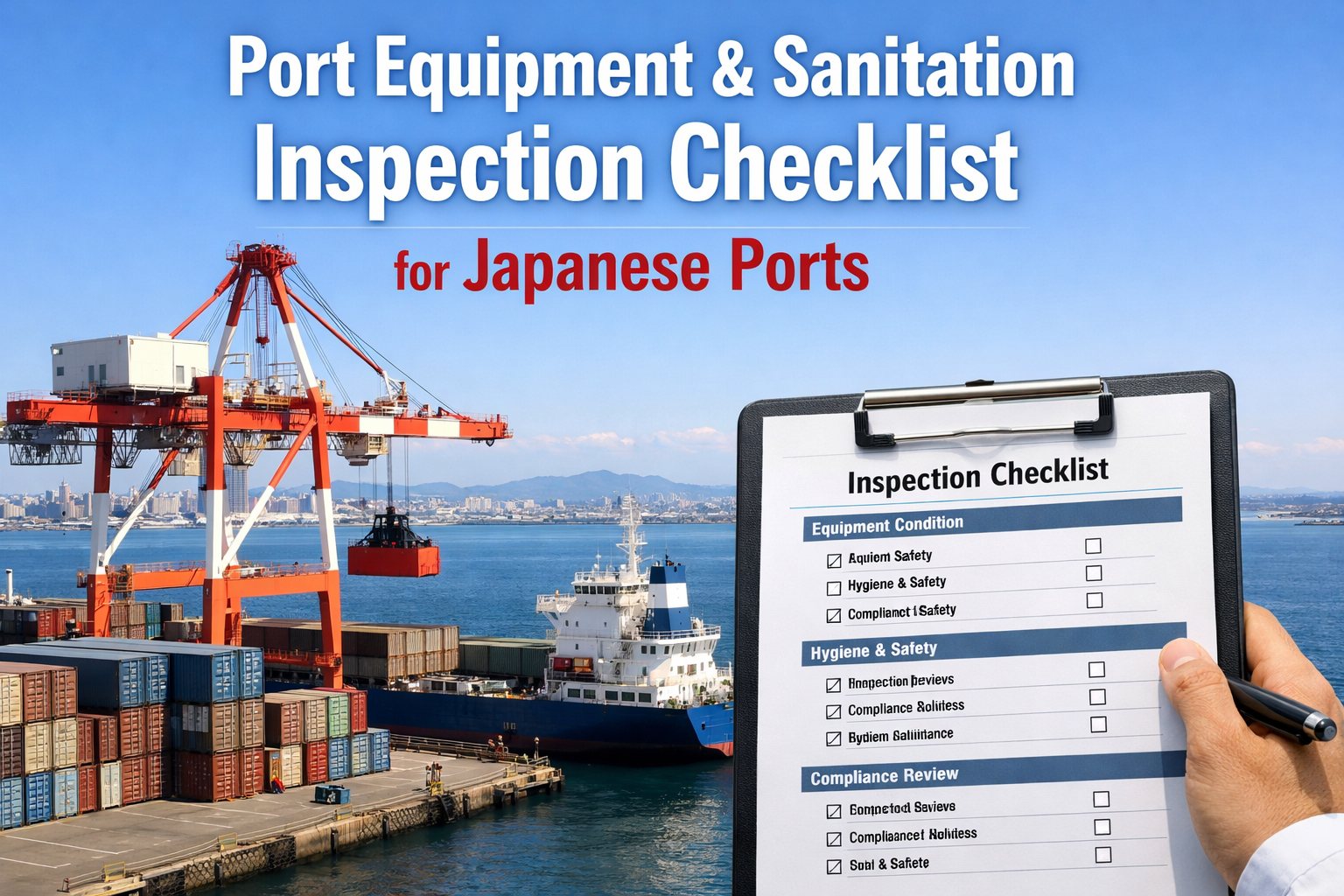
Japan's major ports—Tokyo, Yokohama, Kobe, Osaka, Nagoya, and Hakata—operate under some of the world's strictest sanitation, quarantine, and equipment safety standards enforced by the Japan Coast Guard, Ministry of Land Infrastructure Transport and Tourism (MLIT), Ministry of Health Labour and Welfare (MHLW), and ClassNK. Managing 180 inspection checkpoints across 18 critical areas through paper checklists creates compliance gaps that lead to failed quarantine inspections, Tokyo MoU PSC deficiencies, port authority penalties, and operational delays. Marine Inspection software replaces paper-based workflows with a centralized digital platform for port equipment and sanitation inspection management—enabling port engineers, HSE managers, PFSO officers, and terminal operations teams to conduct, document, and track every inspection digitally with automated scheduling, deficiency tracking, incident reporting, and instant audit-ready compliance reports. Start your free port inspection trial
Port Equipment Specialists & Sanitation Checklist Software — Japanese Ports
Digital Port Equipment & Sanitation Inspection Platform for Japanese Port Compliance
Why Japanese Port Operations Need Digital Inspection Software
Meet Japanese Regulatory Standards Digitally
- Japanese ports enforce strict sanitation under the Quarantine Act, MHLW food safety requirements, MLIT maritime bureau reporting, and ISPS port security protocols. Marine Inspection software digitizes every checklist into a single searchable platform—so port teams produce any record in seconds during Japan Coast Guard inspections, quarantine boardings, or Tokyo MoU PSC checks.
Automate Equipment & Facility Scheduling
- Port equipment inspection cycles span daily crane checks, fender assessments, OPS system testing, and annual load certifications. Marine Inspection software automates recurring schedules with automated alerts, ensuring no inspection window or certification renewal is missed across berth infrastructure, cargo handling equipment, and sanitation facilities.
Track Deficiencies & Incident Reports Digitally
- When inspections reveal deficiencies, Marine Inspection software logs each finding with photo evidence, assigns corrective actions with deadlines, generates incident reports, and tracks resolution—building auditable trails that satisfy MLIT port authority inspectors, MHLW quarantine officers, and ClassNK surveyors.
Ready to digitize Japanese port inspections? Schedule a demo to see Marine Inspection software in action, or start your free trial today.
1. Berth & Quay Structure Condition Assessment
Berth & Quay Structure Condition Assessment inspection requirements:
2. Ship-to-Shore Crane & Cargo Handling Equipment Inspection
Ship-to-Shore Crane & Cargo Handling Equipment Inspection requirements:
3. Fender System Condition & Performance Assessment
Fender System Condition & Performance Assessment inspection requirements:
4. Mooring Hardware Bollard & Quick Release Hook Inspection
Mooring Hardware Bollard & Quick Release Hook Inspection requirements:
5. Gangway Shore Ramp & Vessel Access Equipment Inspection
Gangway Shore Ramp & Vessel Access Equipment Inspection requirements:
6. Onshore Power Supply (OPS Cold Ironing) Connection Assessment
Onshore Power Supply (OPS Cold Ironing) Connection Assessment requirements:
7. Potable Water Supply Connection & Quality Verification
Potable Water Supply Connection & Quality Verification requirements:
8. Japanese Quarantine Act Vessel Sanitation & Pratique Procedures
Japanese Quarantine Act Vessel Sanitation & Pratique Procedures requirements:
9. MARPOL Garbage Reception & Japanese Waste Sorting Compliance
MARPOL Garbage Reception & Japanese Waste Sorting Compliance requirements:
✓ Digitize Your Japanese Port Inspection Workflow: 180 verification points across 18 critical areas—managed through Marine Inspection software with mobile checklists, automated scheduling, photo-documented deficiency tracking, incident reporting, NACCS documentation support, and exportable compliance reports for MLIT, MHLW, Japan Coast Guard, and ClassNK audits. Schedule your demo now
10. Sewage & Blackwater Discharge Restrictions at Japanese Ports
Sewage & Blackwater Discharge Restrictions at Japanese Ports requirements:
11. Pest & Rodent Control Deratting Inspection (MHLW Requirements)
Pest & Rodent Control Deratting Inspection (MHLW Requirements) requirements:
12. Food Safety & Provisions Hygiene Inspection
Food Safety & Provisions Hygiene Inspection requirements:
13. Vessel Sanitation Accommodation & Galley Cleanliness Inspection
Vessel Sanitation Accommodation & Galley Cleanliness Inspection requirements:
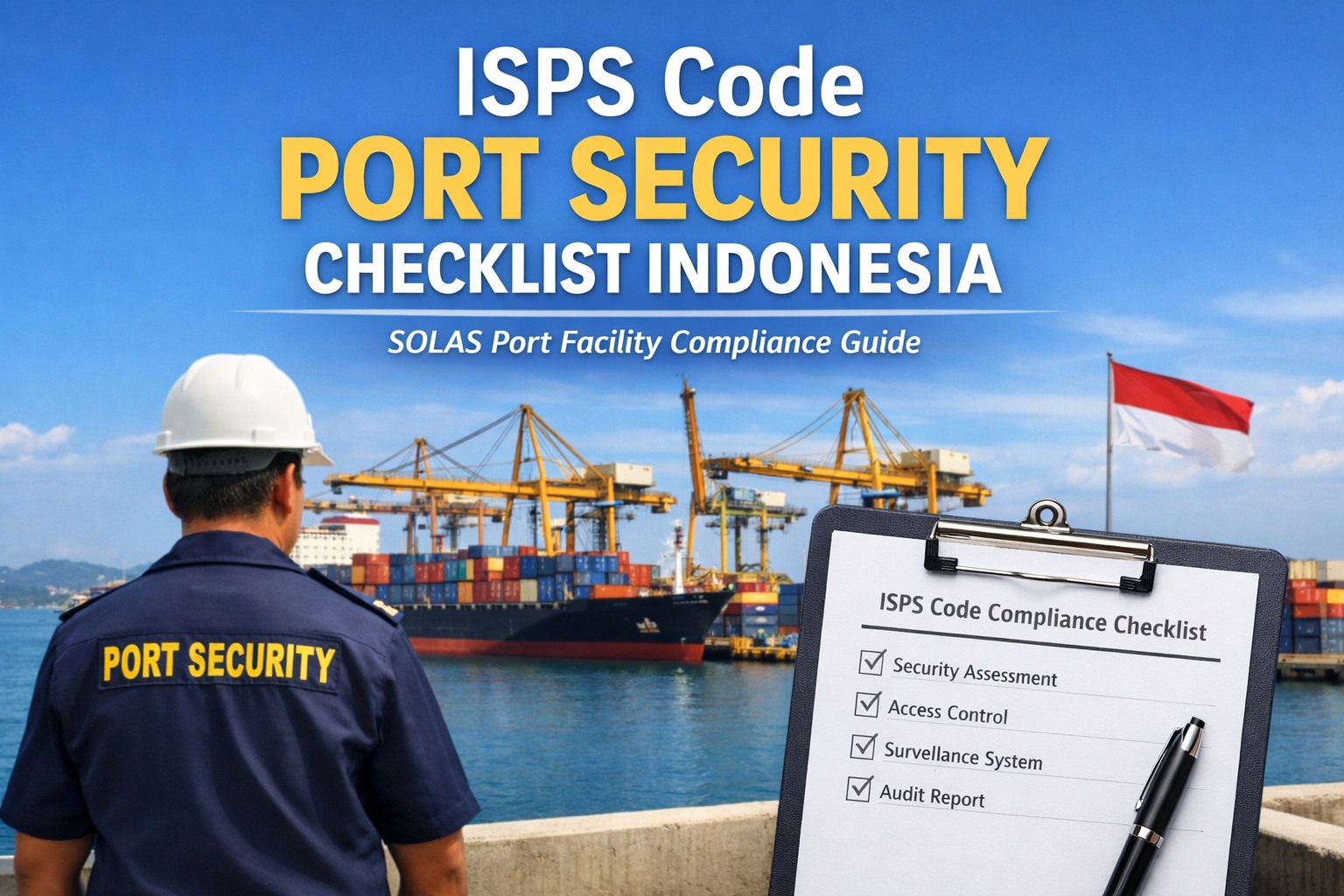
14. Port Security ISPS & Port and Harbour Act Compliance
Port Security ISPS & Port and Harbour Act Compliance requirements:
15. Oil Spill Response & MARPOL Reception Facility Readiness
Oil Spill Response & MARPOL Reception Facility Readiness requirements:
16. Berth Lighting Navigation Aid & Signage Inspection
Berth Lighting Navigation Aid & Signage Inspection requirements:
17. Port Fire Fighting & Emergency Response Equipment at Berth
Port Fire Fighting & Emergency Response Equipment at Berth requirements:
18. Port Health & Worker Welfare Facility Inspection
Port Health & Worker Welfare Facility Inspection requirements:
19. ClassNK JG Marine Equipment Compliance at Japanese Ports
ClassNK JG Marine Equipment Compliance at Japanese Ports requirements:
20. Post-Call Documentation & NACCS Port EDI Reporting
Post-Call Documentation & NACCS Port EDI Reporting requirements:
How Marine Inspection Software Powers Digital Japanese Port Management
Marine Inspection App — Built for Port Equipment & Sanitation Inspection:
- ✓ Mobile Digital Checklists: Complete inspections on any device—at the quay crane, berth face, gangway, or galley—with offline capability for terminal-wide coverage
- ✓ Automated Scheduling: Configure recurring inspection cycles for cranes, fenders, mooring hardware, OPS systems, and sanitation facilities with automated alerts and certification renewal tracking
- ✓ Photo-Documented Inspections: Capture and attach photos to every finding with timestamps and annotations for clear deficiency and incident documentation
- ✓ NACCS Documentation Support: Organize all port call documentation—quarantine records, MARPOL receipts, customs declarations, and port clearance files—in a single digital platform
- ✓ Deficiency & Incident Reporting: Log findings with photos, assign corrective actions with deadlines, and track resolution to documented sign-off
- ✓ Compliance Dashboards: Real-time visibility into equipment status, sanitation compliance, overdue inspections, and regulatory readiness with exportable reports for MLIT, MHLW, and ClassNK audits
Join port operators using Marine Inspection software for Japanese port compliance. Schedule your demo or sign up for free
Frequently Asked Questions About Digital Japanese Port Inspection Software
1. How many inspection areas does this Japanese port checklist cover?
This checklist covers 20 critical inspection areas with 180 verification points—from berth and quay structure assessment, STS crane inspection, and fender systems through Japanese Quarantine Act procedures, MARPOL waste sorting, sewage restrictions, pest control, food safety, ISPS security, oil spill response, ClassNK compliance, and NACCS port EDI reporting.
2. Does the software handle Japanese-specific sanitation and quarantine requirements?
Yes. The checklist includes Japanese Quarantine Act procedures, MHLW food safety requirements, Maritime Declaration of Health submission, Ship Sanitation Control Certificate verification, deratting inspections, Japanese waste sorting categories, and NACCS port clearance documentation. Sign up for free to access Japanese port-specific checklists.
3. Can the software manage both equipment and sanitation inspections in one platform?
Yes. Marine Inspection software manages STS crane structural inspections, fender assessments, mooring hardware checks, OPS cold ironing systems, and berth infrastructure alongside quarantine procedures, galley cleanliness, pest control, food safety, and waste management—all in a single platform with unified dashboards and reporting. Schedule a demo to see integrated port management.
4. How does the software support NACCS and post-call documentation?
Marine Inspection software organizes all port call documentation digitally—MLIT arrival reports, NACCS port clearance applications, customs declarations, garbage discharge receipts, MARPOL waste receipts, quarantine completion certificates, and pilotage records—creating a complete digital port call file for each vessel visit. Start your free trial today.
Take Action: Digitize Japanese Port Equipment & Sanitation Inspections
Download our FREE Port Equipment Specialists & Sanitation Checklist at Japanese Ports and switch from paper to a purpose-built digital platform. Marine Inspection software transforms how port operators handle equipment inspections, sanitation compliance, quarantine procedures, and regulatory reporting at Japanese ports.
Get Started Today: Start your free trial for instant access to digital Japanese port inspection checklists and compliance management, or schedule a personalized demo to see how we help port operators maintain inspection excellence across Japanese port operations.
Digital Japanese Port Equipment & Sanitation Inspection Software
Complete digital coverage across 20 inspection areas and 180 verification points—berth structures, STS cranes, fender systems, mooring hardware, gangways, OPS cold ironing, potable water, quarantine procedures, MARPOL waste sorting, sewage management, pest control, food safety, vessel sanitation, ISPS security, oil spill response, berth lighting, fire fighting, worker welfare, ClassNK compliance, and NACCS port reporting.