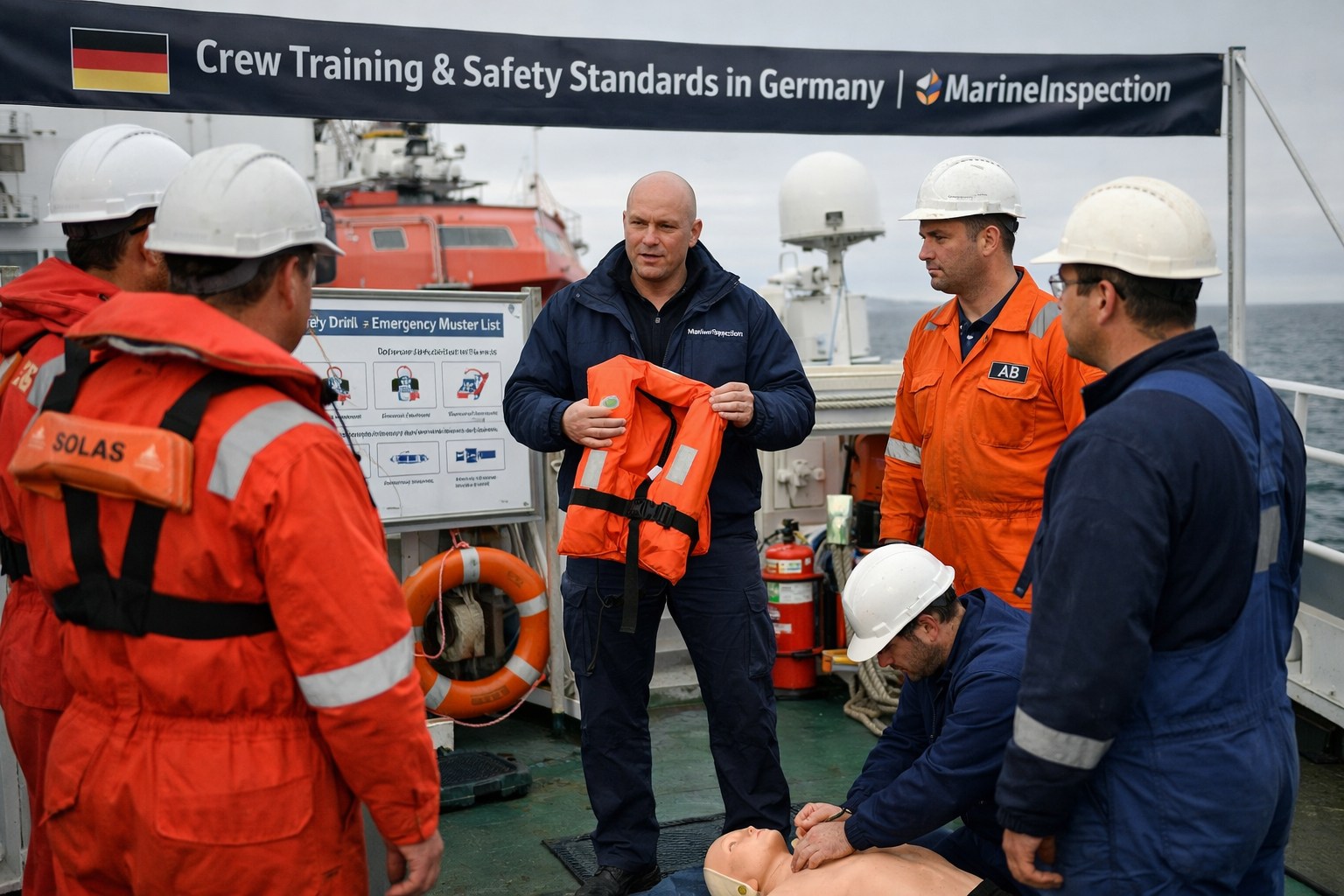
On 1 January 2026, a small change to a training table made seafarer wellbeing a matter of international law. Resolution MSC.560(108) replaced Table A-VI/1-4 of the STCW Code, adding a new mandatory competence to Personal Safety and Social Responsibilities training: contribute to the prevention of and response to violence and harassment, including sexual harassment, bullying, and sexual assault. Every seafarer taking or revalidating PSSR after that date must be trained in it. This is a minimum international standard, not a company initiative. And it did not arrive out of nowhere. The most authoritative study of seafarer mental health to date, conducted by Yale for the ITF Seafarers' Trust across more than 1,500 seafarers, found that within the previous two weeks a quarter had experienced depression, seventeen percent anxiety, and twenty percent had contemplated suicide or self-harm. Critically, the same study drew a line the industry could not ignore: it linked poor mental health to a greater likelihood of injury and illness on board, and it identified violence and bullying as contributing causes. Mental health at sea is not only a welfare question. It is a safety question, a retention question, and now a compliance question. This guide, written for crew managers and designated persons ashore, covers what the evidence shows, what the new training requires, what drives distress at sea, what a company can actually do, and where crew can turn for help. To track certification, training records, and crew welfare compliance across a fleet, book a Marine Inspection demo.
If you or a seafarer you know is struggling, ISWAN's SeafarerHelp is a free, confidential, multilingual helpline open 24 hours a day, 365 days a year, for seafarers and their families. Support is available.
Crew & training · seafarer wellbeing
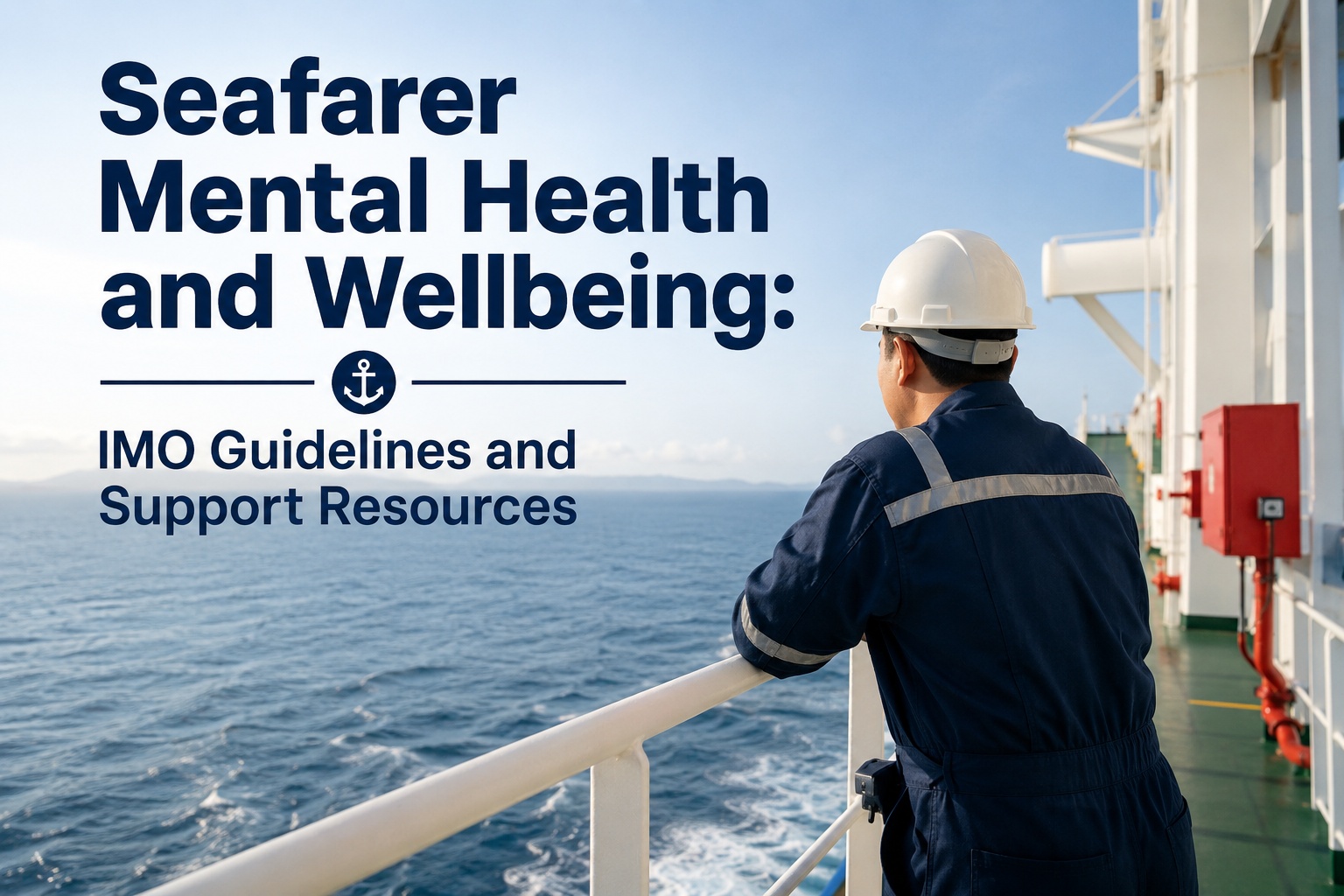
Seafarer Mental Health and Wellbeing: Guidelines & Support
A guide for crew managers and DPAs — the evidence on mental health at sea, the new 2026 STCW harassment-prevention requirement, what drives distress on board, and the policies, training, and support resources that make a difference.
New standard
STCW PSSR harassment-prevention training, mandatory from 1 January 2026
The evidence
Poor mental health is linked to higher injury and illness rates on board
The lever
Culture, connectivity, and open reporting change outcomes
What the Evidence Shows
For a long time, seafarer mental health was discussed anecdotally. It is now measured. The picture that research has assembled is serious, and it makes the case for action on grounds that a safety-management system can recognise.
Prevalence
The Yale study for the ITF Seafarers' Trust found that, in the two weeks before surveying, 25% of seafarers had experienced depression, 17% anxiety, and 20% had contemplated suicide or self-harm.
The safety link
The same study revealed, for the first time, a link between depression, anxiety, and suicidal thoughts and a greater likelihood of injury and illness on board.
Higher than ashore
The analysis suggests seafarers have higher rates of depression than many other working populations, with a wide review finding depressive symptoms reported across a broad range of studies.
Who is most affected
Women seafarers and younger seafarers showed higher prevalences of depression; suicidal ideation was higher among officers and ratings than among masters.
Bullying as a cause
The study explicitly linked violence and bullying on board to poor mental health — the finding that underpins the new STCW training requirement.
The operational consequence is direct. A crew member sleeping and eating poorly, distracted, low in energy, or struggling to take in information and make timely decisions is a safety risk to themselves and to the ship. Poor mental health degrades concentration and decision-making, and the industry's own analysis attributes a large majority of accidents to human factors including fatigue, stress, and interpersonal conflict. Wellbeing sits upstream of safety performance, not beside it.
The New 2026 STCW Requirement
Approved by the IMO in May 2024 and in force from 1 January 2026, the amended STCW Code makes harassment-prevention training a mandatory minimum competence. Crew managers need to know precisely what changed and who it affects. See certification tracking in a demo.
The instrument
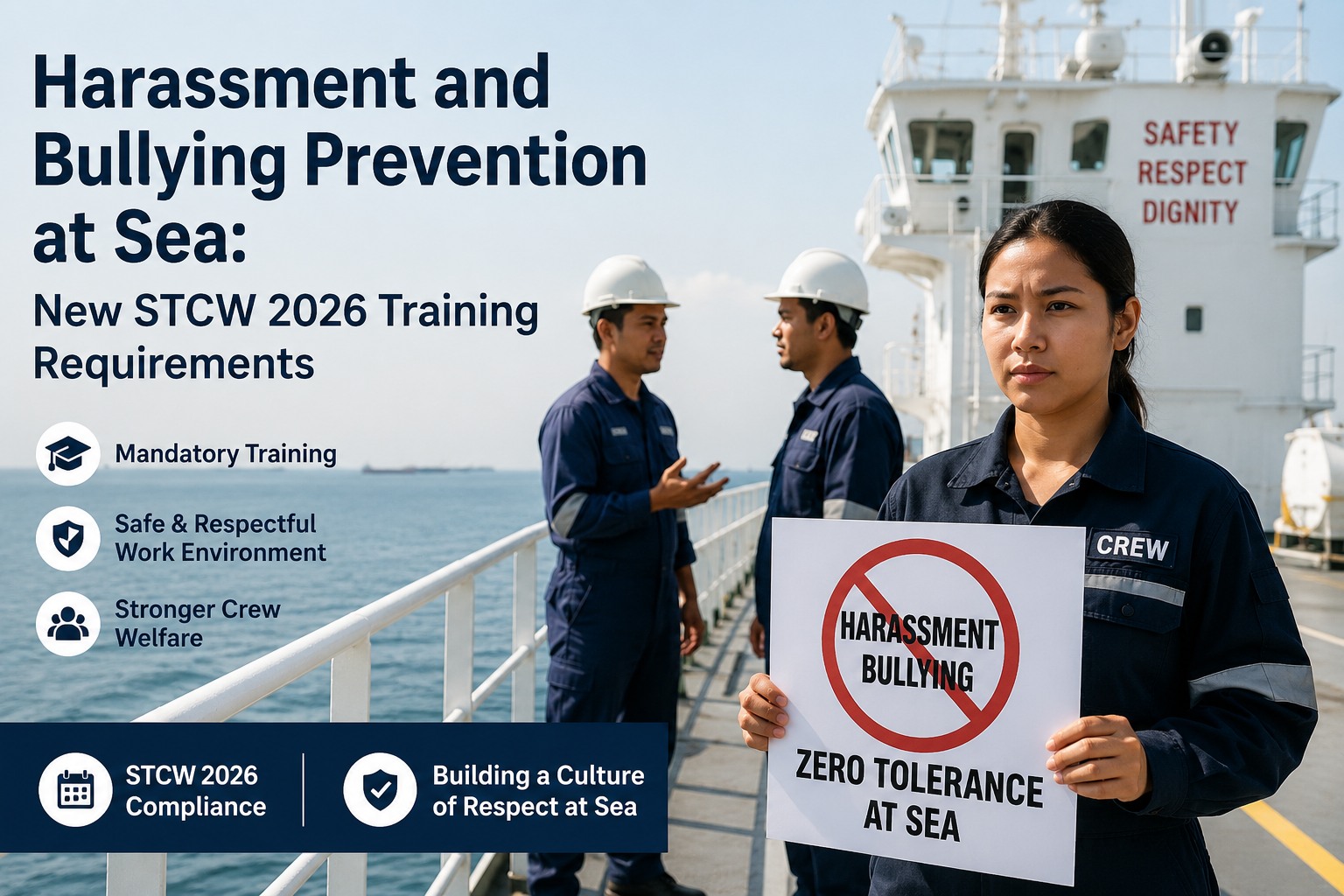
Resolution MSC.560(108) amended Part A of the STCW Code, fully replacing Table A-VI/1-4 on personal safety and social responsibilities. It applies in its revised form to all approved training courses from 1 January 2026.
The new competence
"Contribute to the prevention of and response to violence and harassment" — expressly including sexual harassment, bullying, and sexual assault. This is a minimum international standard, not optional corporate training.
Who is affected
Every seafarer obtaining or revalidating a PSSR certificate after 1 January 2026, across Basic Safety Training and refresher courses. Existing certificates remain valid until their expiry.
Why now
Growing evidence of harassment and violence at sea, disproportionately affecting women seafarers and junior ranks, combined with the recognised safety cost of stress, isolation, and interpersonal conflict.
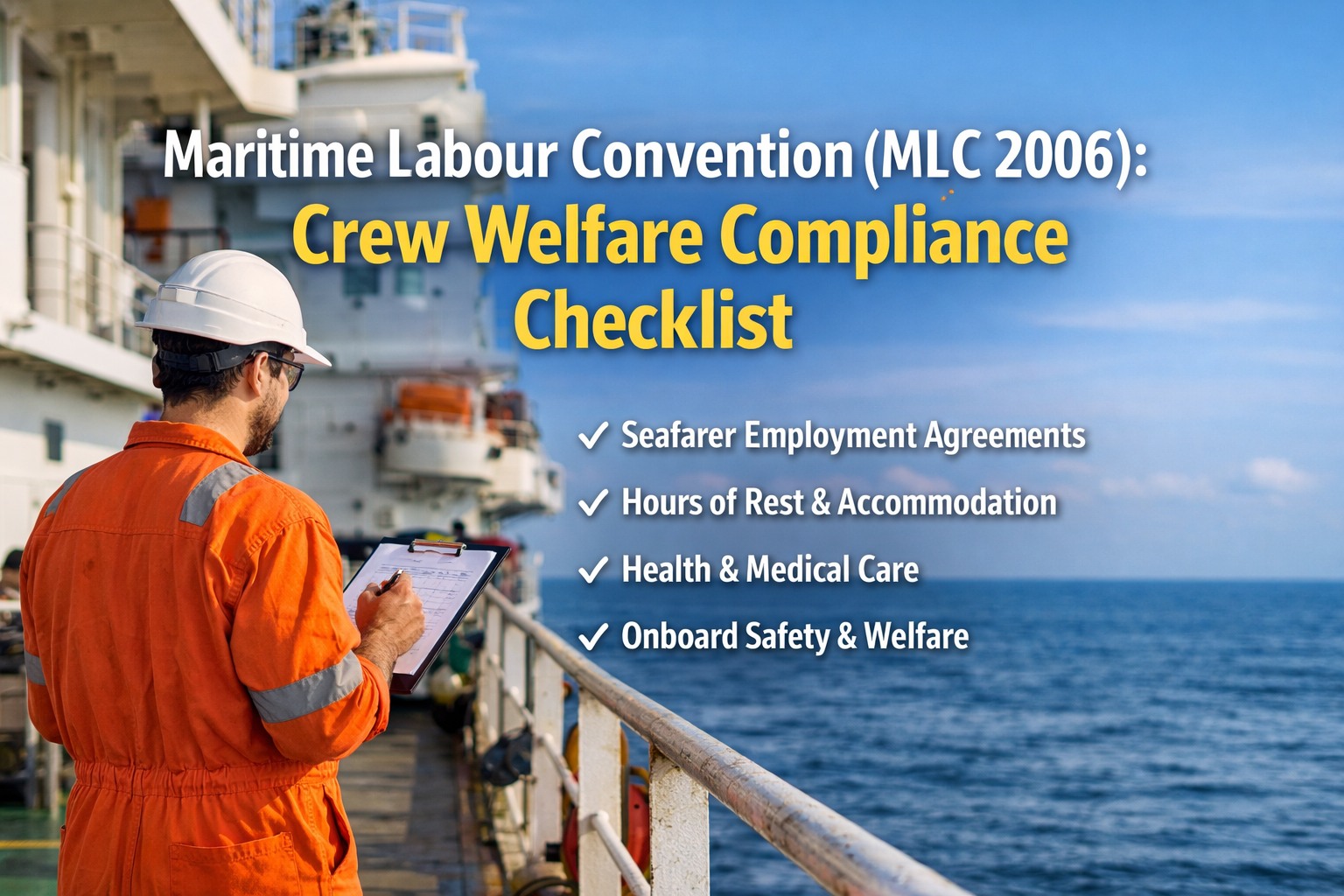
The training content is specific. A seafarer completing the revised PSSR must be able to demonstrate what constitutes violence and harassment on board; the consequences of such conduct for ship safety, crew welfare, and mental health; the risk factors — power imbalance, isolation, fatigue, stress, and alcohol; the ability to identify unacceptable behaviour at an early stage; knowledge of reporting and intervention procedures; and basic trauma-informed response principles. It also addresses cultural awareness and the role of the bystander. The amendments deliberately align STCW with the Maritime Labour Convention's expectations of a harassment-free workplace.
Compliance from 1 January 2026
Track PSSR Revalidation Across the Fleet
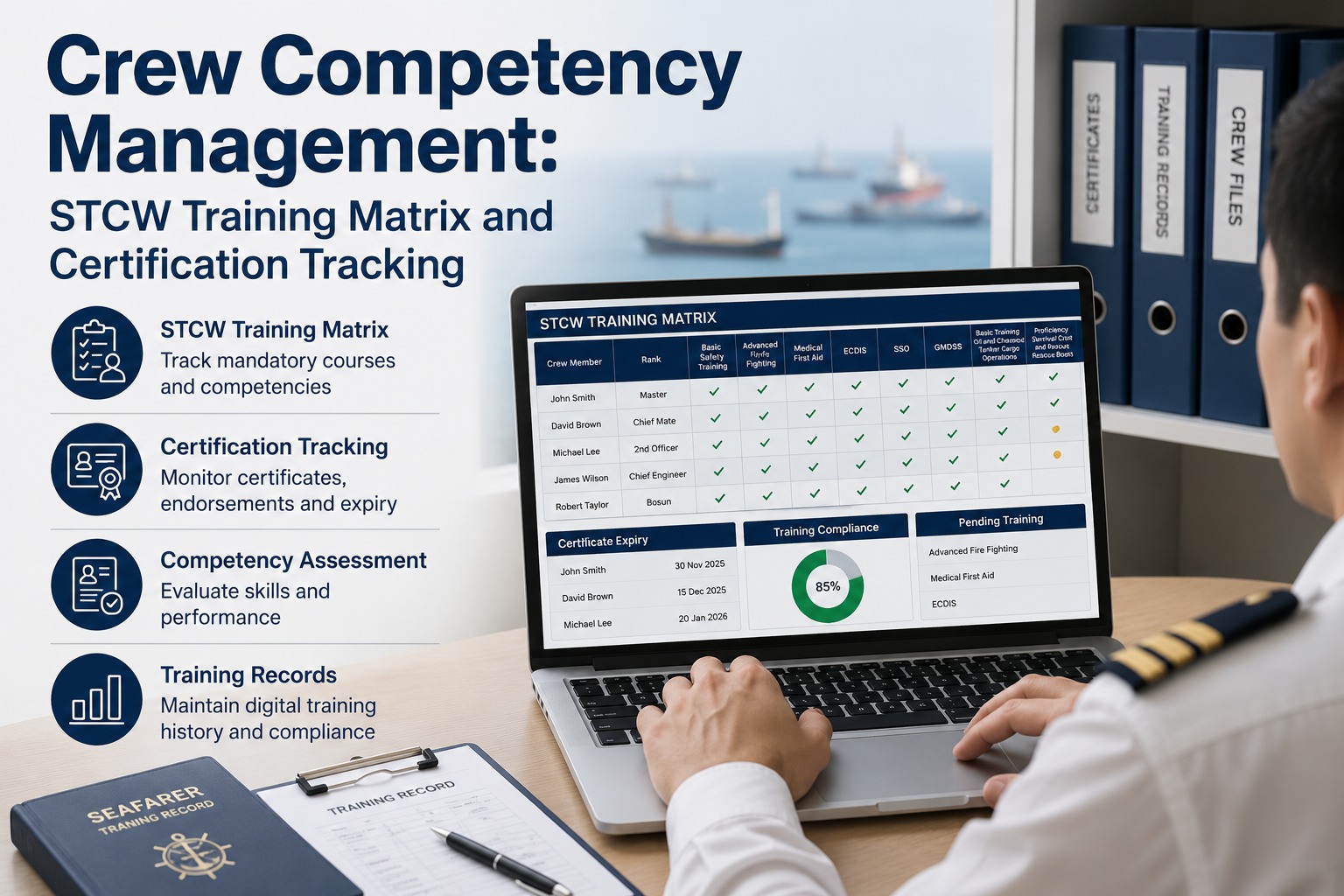
Every PSSR certificate issued or revalidated from 1 January 2026 must carry the new harassment-prevention competence, and existing certificates expire on rolling dates across your crew pool. Marine Inspection tracks certification and training records per seafarer, flags upcoming revalidations, and keeps evidence of policy acknowledgement — so nobody sails uncertified. Book a 30-minute demo to see crew certification tracking, or start a free trial today.
What Drives Distress at Sea
Understanding the drivers matters, because they are the things a company can change. Life on board differs from shore work in ways that concentrate psychological risk, and research has identified the specific factors that predict poor outcomes.
Isolation and distance
Months away from family and social support, with limited contact. Seafarers report being significantly lonelier at sea than at home, and loneliness compounds over a long contract.
Contract length
Research has found the odds of depression increasing with each additional month on board — time aboard is itself a measurable risk factor, not merely a backdrop.
Fatigue and workload
Long hours, night watches, and emergency duties erode sleep and recovery. Fatigue is both a cause and a symptom of poor mental health, and a recognised risk factor for harassment.
An uncaring environment
Low job satisfaction, lack of managerial support, and an uncaring work environment were identified as predictors of depression — culture is not a soft variable here.
Inadequate training
Seafarers with depression were more likely to report performing tasks for which they needed more training. Competence and confidence protect wellbeing.
Violence and bullying
Exposure to threats or violence at work was associated with depression. Harassment is not only a conduct problem; it is a clinical risk factor.
Restricted shore leave
Denied shore leave removes the primary release valve of seafaring life, and port experiences are closely linked to stress levels on board.
Stigma
Fear of being judged, or of losing a berth, stops seafarers disclosing distress — which is why reducing stigma is itself a substantive intervention.
What Companies Can Actually Do
The research is unusually practical about interventions. Seafarers themselves, asked what would help, named concrete things — and the measures that recur across studies are within most operators' control. See policy and training records in a demo.
1
Provide connectivity
Free, unlimited internet access is the single most consistently requested measure. Contact with family is not a perk; it is the primary protective factor against isolation at sea.
2
Write a real anti-harassment policy
Clear, effective anti-bullying and anti-harassment procedures, with open reporting policies covering both onboard and shore personnel, and support mechanisms that crew trust enough to use.
3
Protect sleep and rest
Comfortable cabins and mattresses, realistic watch patterns, and respect for rest hours. Improving sleep quality and duration was a direct recommendation of the research.
4
Facilitate shore leave
Actively enable shore leave rather than treating it as an operational inconvenience, and support access to port-based welfare centres and chaplaincy.
5
Limit contract length
Because risk rises with time aboard, keeping contracts within reasonable bounds and honouring relief dates is a clinical intervention, not just a contractual courtesy.
6
Appoint mental health champions
Trained crew members who can hold open conversations and reduce stigma. Companies running wellness-champion programmes report reduced stress complaints and improved morale.
7
Provide confidential counselling
A confidential helpline or employee assistance service, well publicised so crew know it exists and trust it. For a seafarer with suicidal thoughts, access to support can be decisive.
8
Support food, exercise, recreation
Good quality food, gym access, and both group and solitary recreation. Frequent exercise was among the specific recommendations arising from the mental health survey.
Two points give crew managers leverage. First, the measures are cheap relative to the cost of a complex repatriation, an injury, or the loss of an experienced seafarer. Second, the research on onboard atmosphere is encouraging: most seafarers report that crew members support one another and that the workplace atmosphere is positive. The foundation is usually there. The company's job is to remove the pressures that erode it and to make asking for help safe.
Support Resources for Seafarers
A crew manager should know these by name, and crew should know they exist before they need them. Publicising support is part of providing it. See crew welfare tracking in a demo.
ISWAN SeafarerHelp
A free, confidential, multilingual helpline for seafarers and their families, available 24 hours a day, 365 days a year, reachable across voice and text platforms. ISWAN also publishes self-help resources and the guide Psychological Wellbeing at Sea, translated into multiple languages.
Mission to Seafarers
Port-based chaplaincy, counselling, and welfare support across global ports, plus a digital chaplain chat service. Its WeCare programme offers e-learning on social wellbeing, long-distance relationships, and financial wellbeing.
Sailors' Society
Wellness at Sea training and app, helplines, and wellness-champion programmes, alongside large-scale cadet-focused mental health education aimed at building awareness early in a career.
Mental health first aid
Certification courses covering depression, anxiety, stress, and suicide awareness, available in half-day, full-day, and two-day formats for crew and shore staff alike.
ISWAN training packages
Mental health awareness training adaptable for all ranks and for shore staff who support seafarers, plus the Mentally Healthy Ships guide for developing onboard mental health policy.
Industry crisis guidance
Industry guidance exists on handling a mental health crisis and recognising suicidal behaviour in seafarers, developed with the ICS and welfare organisations for use on board.
Responding to a Crew Member in Crisis
Every DPA and master should understand the basic principles of response. The published industry guidance is clear that the role of the person on the spot is not to diagnose or advise, but to keep the seafarer safe and encourage them toward help.
Listen, do not lecture
People approach personal difficulty differently; some welcome suggestions, others resist being advised. The aim is to keep the person safe and encourage them to seek support, not to instruct them.
Take it seriously
Someone feeling suicidal may feel alone, frightened, and unable to see any alternative, and may be so overwhelmed that other options are hard to identify. Do not leave them without support.
Use the channels
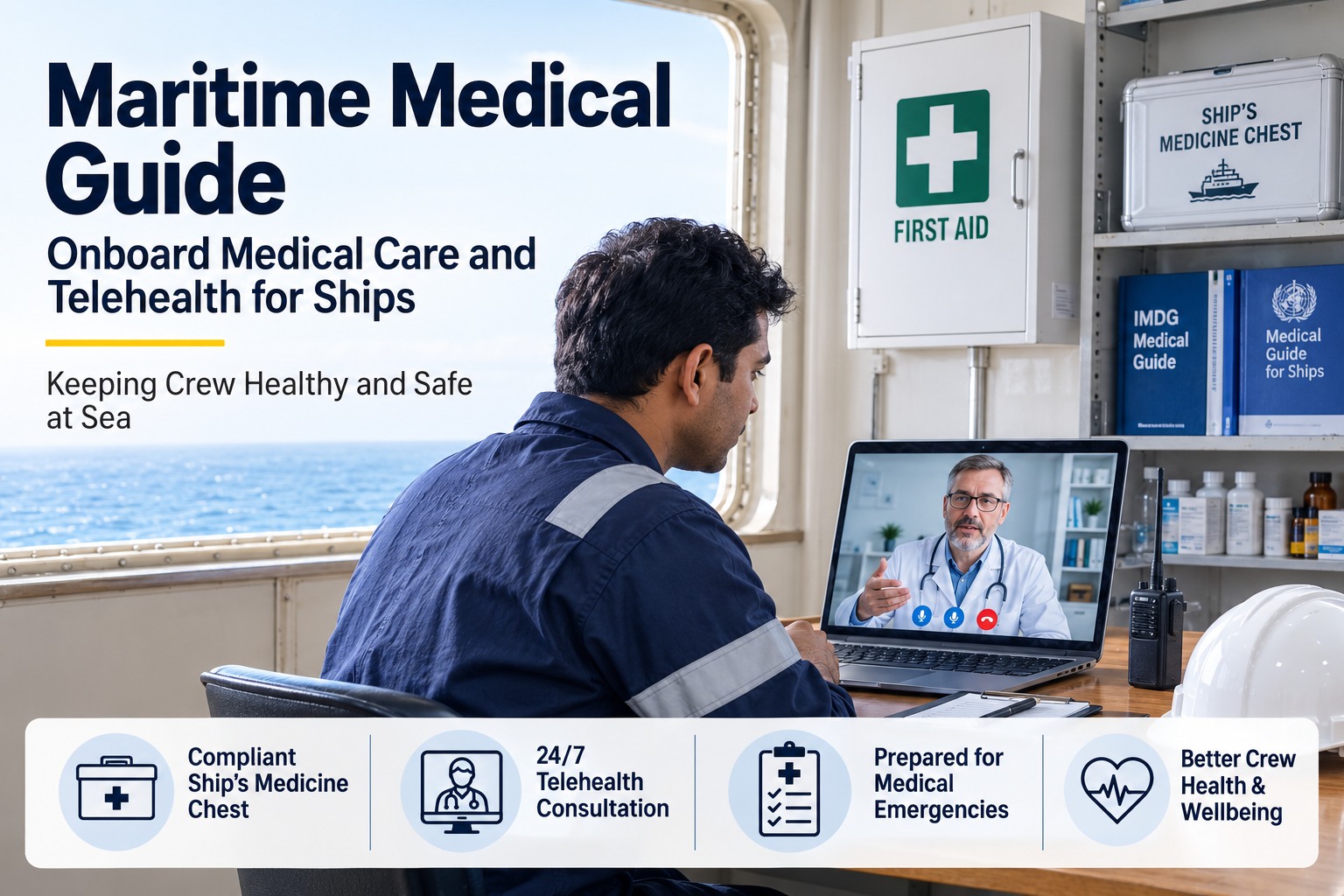
Contact telemedical assistance, or in port seek emergency medical care. Shore-side welfare services and, where appropriate, an ITF inspector can provide further support.
Respect confidentiality carefully
A seafarer may resist their situation being shared, fearing judgement. Handle disclosure sensitively while ensuring their immediate safety is not compromised.
Signpost help
SeafarerHelp is free, confidential, multilingual, and open 24 hours a day, every day of the year, for seafarers and their families.
Guidance also cautions against using smoking, alcohol, or other substances to manage emotions, and encourages crew to talk to a colleague or contact a helpline when overwhelmed. Companies are advised to build a caring onboard culture specifically to reduce the stigma seafarers fear when raising mental health, and to publicise support channels well enough that crew feel confident using them.
Building the Programme: a Crew Manager's Approach
Pulling this together, the work for a crew manager or DPA divides into compliance, prevention, and response — and each leaves a record that the company should be able to produce.
Get certification right
Audit the crew pool for PSSR expiry dates, ensure revalidation after 1 January 2026 includes the new competence, and keep records that demonstrate it.
Update onboard policy
Bring anti-harassment and open-reporting policies into line with the new standard, cover shore staff too, and document crew acknowledgement.
Reduce the drivers
Address connectivity, contract length, rest, shore leave, and food — the risk factors the evidence identifies, and the ones within company control.
Build response capability
Train mental health champions, publicise the helpline, and ensure masters and DPAs know the crisis-response principles before they are needed.
Measure quietly
Track retention, incident and injury data, and welfare indicators over time. The safety link means wellbeing improvements should show up in your numbers.
Reduce stigma deliberately
Talking about mental health openly is itself the intervention that makes every other measure usable. Leaders set that tone.
The 2026 STCW amendment changes what a company must be able to prove: that every seafarer holds a valid certificate carrying the new competence, that onboard policy reflects it, and that reporting channels exist and are known. That is a records discipline. The deeper work — the culture that makes a junior rating comfortable raising a concern, the connectivity that keeps a crew connected to home, the relief that arrives on the promised date — is what actually moves the numbers the Yale study measured. Both matter, and both are within reach. Book a demo to see crew certification and training management.
Frequently Asked Questions
What is the new 2026 STCW training requirement?
From 1 January 2026, Resolution MSC.560(108) requires Personal Safety and Social Responsibilities (PSSR) training to include a new mandatory competence: contributing to the prevention of and response to violence and harassment, including sexual harassment, bullying, and sexual assault. It applies to every seafarer obtaining or revalidating a PSSR certificate after that date.
Do existing PSSR certificates remain valid?
Yes. Existing certificates remain valid until their expiry date, typically running a five-year period. However, any new certification or revalidation taken from 1 January 2026 must include the updated competences, so crew managers should audit expiry dates across the crew pool and plan revalidation accordingly.
How common are mental health problems among seafarers?
The Yale study for the ITF Seafarers' Trust, surveying more than 1,500 seafarers, found that in the previous two weeks 25% had experienced depression, 17% anxiety, and 20% had contemplated suicide or self-harm. The analysis suggests rates of depression higher than in many other working populations, with women and younger seafarers particularly affected.
Why is seafarer mental health a safety issue?
Research linked depression, anxiety, and suicidal thoughts to a greater likelihood of injury and illness on board. Poor mental health degrades sleep, concentration, and decision-making, and the industry attributes most accidents to human factors including fatigue, stress, and interpersonal conflict. Wellbeing sits upstream of safety performance.
What can a shipping company do to support crew mental health?
Provide free internet access, effective anti-harassment and open-reporting policies, good rest and cabin conditions, facilitated shore leave, reasonable contract lengths honoured on time, trained mental health champions, a well-publicised confidential helpline, good food, and recreation. These recur across the research as the measures seafarers themselves identify.
Where can a seafarer get confidential help?
ISWAN's SeafarerHelp is a free, confidential, multilingual helpline for seafarers and their families, available 24 hours a day, 365 days a year. Mission to Seafarers offers port chaplaincy and counselling, Sailors' Society runs Wellness at Sea support, and many companies provide their own confidential counselling services.
How should a master respond to a crew member in crisis?
Industry guidance is clear that the role is not to diagnose or advise, but to keep the seafarer safe and encourage them toward help. Listen without lecturing, take the situation seriously, contact telemedical assistance or arrange emergency care in port, handle confidentiality sensitively, and signpost the seafarer to a confidential helpline.
Built for crew compliance and care
Certification You Can Prove, Culture You Can Build
Track PSSR and STCW certification per seafarer, flag revalidations before they lapse, record policy acknowledgement and training completion, and maintain the crew welfare evidence a modern safety management system expects — so the compliance side runs itself and your attention goes where it matters. Book a tailored walkthrough or start a free trial today.