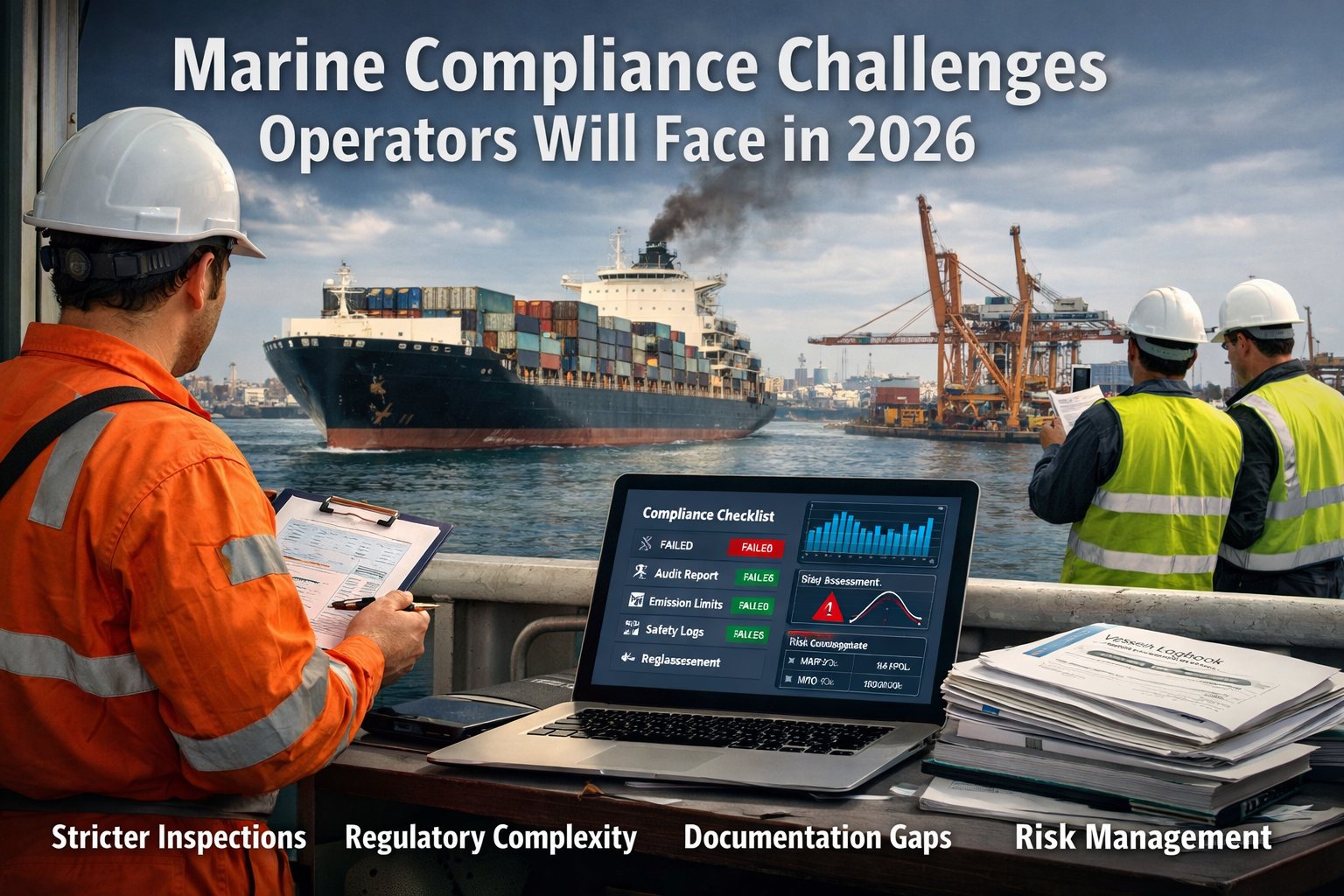
A Greek shipping company managing 12 bulk carriers discovered that 2026 compliance challenges aren't about understanding regulations—they're about implementing them simultaneously across fragmented operations. When the fleet faced overlapping deadlines for CII corrective action plans, EU ETS reporting, cyber security documentation, and SIRE 2.0 preparation, the three-person shore compliance team couldn't scale. Six vessels missed CII submission deadlines resulting in $420,000 collective fines. Four received elevated PSC targeting due to incomplete cyber risk assessments. Two lost charter opportunities when vetting reports revealed documentation gaps. The problem wasn't willful non-compliance—it was operational overwhelm. When regulatory obligations multiply faster than resources, even well-intentioned operators struggle to maintain compliance across competing priorities.
2026 Compliance Challenge Landscape
The complexity crisis facing maritime operators
43
regulatory changes
Average number of maritime regulations updated or introduced annually affecting vessel operations
$2.8M
compliance cost
Average annual compliance expenses for mid-size vessel operator (10-15 ships)
280%
documentation increase
Growth in required documentation volume comparing 2026 to 2020 baseline
67%
feel overwhelmed
Percentage of maritime compliance managers reporting inability to track all obligations effectively
Marine compliance in 2026 represents convergence of multiple regulatory streams—environmental, safety, cyber security, labor, transparency—each with distinct requirements, reporting timelines, and enforcement mechanisms. The challenge isn't any single regulation; it's managing overlapping obligations simultaneously with limited resources while maintaining profitable operations.
Challenge 1: Regulatory Complexity & Fragmentation
The most significant 2026 challenge: regulations come from multiple authorities (IMO, EU, national governments, port states, industry bodies) with different implementation timelines, enforcement approaches, and documentation requirements. Operators struggle to track which rules apply when, where, and how.
The Fragmentation Problem
Environmental Regulations
Global: IMO 2023 GHG Strategy, CII ratings, EEXI requirements. Regional: EU ETS (carbon pricing), FuelEU Maritime (fuel intensity limits), California CARB (air quality). National: Singapore Biofuel Mandates, Japanese Ship Recycling Act. Each has different reporting formats, verification requirements, and compliance deadlines—often quarterly rather than annual cycles.
Safety & Security
Traditional: SOLAS, MARPOL, MLC, STCW with regular amendments. Emerging: Cyber security (IMO Resolution MSC.428), autonomous vessel guidelines, alternative fuel safety protocols. Vetting: SIRE 2.0, CDI, OVMSA each with unique inspection frameworks and observation categorization systems.
Operational Transparency
Position reporting: AIS, LRIT, continuous monitoring systems. Performance reporting: EU MRV, IMO DCS, port state pre-arrival notifications. Financial transparency: Beneficial ownership registries, sanctions compliance verification, trade documentation for dual-use goods. Missing any single report triggers cascading compliance issues.
Operators tracking regulatory obligations manually across multiple vessels face impossible workload. When one person tries monitoring 43+ annual regulatory changes, interpreting applicability to specific vessel types, and implementing updates fleet-wide, critical obligations slip through. Companies experiencing missed deadlines or surprise regulatory requirements should schedule a regulatory tracking consultation to establish automated monitoring systems that flag applicable changes and deadline obligations specific to your fleet profile—preventing costly surprises when regulations you didn't know existed suddenly trigger enforcement.
Challenge 2: Resource Constraints vs. Growing Requirements
Compliance obligations multiply while operational budgets remain flat or decline. The resource gap—between what regulations require and what operators can reasonably deliver—widens continuously.
The Compliance Resource Crisis
Shore Staff Limitations
Average 10-vessel fleet employs 2-4 shore compliance staff managing safety, environmental, crew, vetting, and regulatory reporting obligations. When new regulations add 15-20 hours monthly workload per vessel, existing staff can't absorb additional burden without either working excessive overtime or deprioritizing existing obligations. Hiring additional compliance staff increases operating costs $120,000-$180,000 annually per position—expense many operators can't justify.
Crew Workload Pressure
Crew already working maximum regulatory hours under MLC rest requirements can't absorb additional documentation tasks. Each new compliance requirement (cyber security logs, environmental monitoring, digital system data entry) adds 30-90 minutes daily. Crew perceive compliance as administrative burden diverting attention from operational duties and safety. Poor implementation leads to incomplete records that trigger PSC deficiencies despite crew working within hour limitations.
Technology Investment Gap
Digital compliance systems reduce manual workload but require upfront investment ($30,000-$90,000 per vessel for comprehensive digital transformation). Smaller operators—those most squeezed by resource constraints—lack capital for technology investment. They remain trapped in manual compliance consuming excessive staff time while competitors implementing digital systems achieve efficiency gains and reduced compliance costs over 18-24 month periods.
Resource constraint challenge requires strategic prioritization and efficiency gains. Operators can't hire unlimited compliance staff, but they can implement digital systems that automate routine compliance tasks—certificate tracking, maintenance scheduling, drill documentation, report generation—freeing existing staff to focus on complex regulatory interpretation and strategic compliance planning. Starting with free platforms establishes automation foundation without immediate capital commitment.
Challenge 3: Documentation Overload & Quality Issues
2026 compliance demands exponentially more documentation than previous years, but volume overwhelms quality assurance. Inspectors increasingly find documentation quantity adequate but quality insufficient—forms completed but information inaccurate, inconsistent, or clearly not reflecting actual operations.
Documentation Volume Growth 2020 → 2026
Environmental Reporting
2020: Annual fuel consumption (IMO DCS)
→
2026: Quarterly emissions (EU MRV), annual CII report, fuel changeover logs, scrubber operation logs, FuelEU compliance plans
+380% documentation volume
Cyber Security
2020: Minimal requirements
→
2026: Cyber risk assessment, system inventories, patch management logs, incident response procedures, crew training records, network diagrams
New compliance category
Vetting Inspections
2020: SIRE VIQ7 standard reports
→
2026: SIRE 2.0 expanded questioning, detailed corrective action plans, observation trend analysis, continuous improvement documentation
+140% documentation depth
Crew Compliance
2020: Certificates, rest hours, drills
→
2026: Above plus cyber training, mental health assessments, enhanced familiarization, competency verification, COVID/health protocols
+220% crew documentation
Documentation quality issues stem from rushed completion under time pressure. Crew fills forms to satisfy inspectors rather than accurately reflect operations. Quality deteriorates as quantity increases. The solution isn't working harder—it's working smarter through systems that capture data once at source and auto-populate multiple reporting requirements. Fleet operators struggling with documentation backlogs should schedule a documentation workflow review to identify automation opportunities that reduce duplicate data entry by 60-80% while improving accuracy through elimination of manual transcription errors.
Stop Drowning in Compliance Documentation
Transform documentation from time-consuming burden to automated workflow. Digital systems capture operational data once and auto-generate all required compliance reports.
Challenge 4: Multi-Vessel Consistency & Standardization
Fleet operators face unique challenge: maintaining consistent compliance standards across multiple vessels with different crews, operating in different regions, facing different inspection regimes. What works on one vessel doesn't automatically transfer to fleet-wide implementation.
Why Fleet-Wide Consistency Fails
1
Individual Vessel Culture: Each vessel develops unique practices based on master's preferences, crew experience, and operational history. Shore office issues standard procedures but implementation varies significantly. High-performing vessels maintain excellent compliance; poor-performing vessels accumulate deficiencies. Fleet PSC performance ranges from 2 observations (best vessel) to 38 observations (worst vessel) despite identical SMS documentation and shore support.
2
Crew Rotation Disruption: Crew changes every 4-6 months break institutional knowledge. New crew unfamiliar with vessel-specific systems, documentation locations, or operational procedures. Compliance quality drops immediately post-crew change until new officers learn vessel's systems. Critical compliance information exists in departing crew's memory rather than documented systems—knowledge walks off vessel with every rotation.
3
Shore-Sea Communication Gap: Shore office issues circulars, updates, and instructions but can't verify actual implementation. Vessels acknowledge receipt but practical application varies. Shore believes fleet complies with updated cyber security procedures; physical inspection reveals only 60% implementation rate. Gap between policy issuance and operational reality creates systematic compliance failures invisible until inspectors highlight them.
4
Resource Allocation Inequality: Fleet compliance support concentrates on problem vessels demanding immediate attention—those facing detention, major vetting issues, or serious deficiencies. Well-performing vessels receive minimal oversight creating complacency. Over time, neglected vessels' compliance deteriorates while shore focuses elsewhere. Fleet compliance quality stratifies: 20% excellent, 50% adequate, 30% problematic—despite theoretically identical management systems.
Achieving fleet-wide compliance consistency requires centralized visibility into each vessel's actual performance—not just reported performance. When shore office sees real-time compliance status across all vessels through dashboards showing certificate expiry, maintenance completion rates, drill frequency, and training currency, they can proactively address issues before inspections reveal them. Multi-vessel operators should implement fleet management platforms providing consolidated compliance dashboards that reveal which vessels need attention and which compliance areas are systematically weak across the fleet, enabling targeted intervention rather than reactive crisis management.
Challenge 5: Cost Pressures vs. Compliance Investment
Maritime profitability remains under pressure from overcapacity, volatile freight rates, and rising operational costs. Compliance represents growing expense category that doesn't directly generate revenue—creating tension between doing what's right and maintaining financial viability.
2026 Compliance Cost Breakdown (Typical Mid-Size Operator)
Environmental Compliance
EU ETS allowances (5,000 TEU vessel)
$1,200,000/year
FuelEU Maritime penalties (non-optimal fuels)
$180,000/year
Environmental monitoring equipment
$35,000/vessel
Verification/reporting services
$12,000/vessel/year
Annual Environmental: $1.4M+ per vessel
Safety & Vetting
Enhanced vetting preparation
$8,000/inspection
Class surveys & statutory certificates
$45,000/vessel/year
Crew training & certification
$28,000/vessel/year
Deficiency rectification (average)
$15,000/vessel/year
Annual Safety/Vetting: $95,000+ per vessel
Operational & Administrative
Shore compliance staff (2.5 FTE for 10 vessels)
$320,000/year
Digital compliance systems
$12,000/vessel/year
Cyber security implementation
$18,000/vessel
Regulatory monitoring/consulting
$45,000/year
Annual Admin: $500,000+ for fleet
Total 2026 compliance costs for mid-size operator (10-15 vessels): $2.5M-$3.5M annually excluding detention penalties, charter loss from poor vetting, or emergency repairs to correct deficiencies. Operators facing these escalating costs must choose: invest in preventive compliance (digital systems, training, proactive maintenance) or accept reactive costs (fines, detentions, charter rejections, emergency corrections). Preventive investment pays back within 18-24 months through avoided penalties and operational efficiency gains.
Challenge 6: Implementation Speed vs. Understanding Depth
Regulations implement faster than operators can fully understand implications. Surface compliance—implementing minimum requirements without understanding underlying purpose—creates vulnerability when inspectors probe deeper or circumstances change.
Common Scenario
Cyber security regulation requires "cyber risk assessment." Operator downloads template, fills blanks, files document. Box checked. But crew doesn't understand cyber risks specific to their vessel. When inspector asks "what happens if someone plugs infected USB into ECDIS?" crew can't answer. Assessment exists but understanding doesn't. Inspector issues deficiency for inadequate cyber security implementation despite completed paperwork.
Root Problem
Regulations implement on fixed dates regardless of operator readiness. CII implementation: 18 months from concept to enforcement. Operators scramble implementing systems without truly understanding methodology, data quality requirements, or operational implications. Results: widespread confusion, inconsistent application, poor data quality, regulatory revisions acknowledging implementation problems. Cycle repeats with next regulation.
Better Approach
Implement regulations through training-first methodology: educate crew on WHY requirements exist and WHAT problems they solve before implementing HOW procedures. When crew understands sulfur emission impacts on air quality and human health, they take fuel compliance seriously. When they understand cyber attacks can disable steering, they follow USB restrictions rigorously. Understanding drives compliance; procedures without understanding breed shortcuts and poor implementation.
Navigate 2026 Compliance Complexity
Stop reacting to compliance crises. Build proactive systems that prevent challenges before they escalate into deficiencies, fines, or charter loss.
Practical Solutions: Addressing 2026 Challenges
While challenges are significant, practical solutions exist. Success requires strategic approach combining technology adoption, process optimization, and cultural transformation.
Automate Routine Compliance
Implement digital systems handling routine compliance tasks automatically: certificate tracking with expiry alerts, maintenance scheduling based on running hours/calendar days, drill reminders ensuring weekly execution, MARPOL record books preventing entry gaps. Automation eliminates 60-70% of manual compliance workload, freeing staff for complex regulatory interpretation and strategic planning that can't be automated.
Centralize Fleet Visibility
Deploy fleet management dashboards showing compliance status across all vessels in real-time. Shore office identifies issues proactively: Vessel A's drill completion dropping, Vessel B has 3 certificates expiring next month, Vessel C maintenance completion rate 78% vs. 92% fleet average. Proactive intervention prevents issues becoming deficiencies. Single pane of glass view eliminates information gaps causing surprises.
Invest in Understanding
Allocate training budget teaching crew WHY regulations exist, not just HOW to comply. Send officers to industry seminars on CII, cyber security, alternative fuels. Understanding creates compliance culture where crew self-correct because they comprehend importance, not because procedures mandate actions. Culture change takes 12-18 months but delivers sustained compliance improvement that procedure updates alone can't achieve.
Standardize Through Systems
Achieve fleet-wide consistency through digital standardization. When all vessels use same CMMS platform with identical workflows, procedures standardize automatically. Shore configures system once; all vessels follow identical processes. Crew changes don't disrupt compliance—new officers find same systems, same procedures, same documentation locations. Technology enforces standardization that policy issuance alone can't deliver.
Prioritize Strategically
Not all compliance obligations carry equal risk. Prioritize based on: enforcement likelihood (EU ETS heavily enforced, some regulations less so), financial exposure (environmental penalties exceed $1M; some deficiencies result in $5K fines), commercial impact (poor SIRE scores lose charters; minor PSC deficiencies don't). Allocate limited resources to highest-impact areas first. Perfect compliance everywhere is impossible; strategic compliance on critical matters is achievable.
Frequently Asked Questions
What's the biggest compliance challenge facing operators in 2026?
Resource constraints versus growing requirements represents the fundamental challenge. Compliance obligations multiply—environmental reporting, cyber security, enhanced vetting, transparency requirements—while operational budgets remain flat or decline. Average mid-size operator faces 43+ annual regulatory changes requiring interpretation and implementation across fleet. Small compliance teams (2-4 shore staff for 10-15 vessels) can't scale to meet demand without either technology investment enabling automation or accepting systematic compliance gaps that eventually manifest as deficiencies, fines, and charter restrictions.
How can smaller operators compete with major shipping lines on compliance?
Smaller operators can't match major lines' compliance departments but can achieve comparable results through strategic technology adoption. Digital compliance platforms democratize capabilities—cloud-based CMMS, automated reporting, fleet dashboards—previously requiring dedicated IT departments. Start with free or low-cost platforms establishing digital foundation. Focus spending on highest-impact areas: environmental compliance (where penalties are largest), vetting preparation (where charter opportunities are won/lost), and PSC readiness (where detentions kill profitability). Accept you can't be perfect everywhere; be excellent in areas that matter commercially.
What compliance investments pay back fastest?
Digital documentation systems deliver fastest ROI—typically 12-18 months. Certificate tracking alone prevents expensive emergency renewals and detention-level expired certificate deficiencies. Automated maintenance scheduling reduces equipment failures and associated repair costs. Digital MARPOL record books eliminate 85-90% of documentation deficiencies. Environmental monitoring systems required for EU ETS/CII compliance provide data supporting operational optimization reducing fuel costs 3-5%. Crew training on new regulations prevents implementation errors that trigger fines. Cyber security baseline ($8K-$25K investment) prevents catastrophic incidents that could cost millions in recovery, legal liability, and reputational damage.
How do I prevent compliance from overwhelming operations?
Integrate compliance into operations rather than treating it as separate burden. When maintenance system automatically logs SOLAS equipment tests as they're performed, compliance documentation becomes byproduct of operations, not additional task. When environmental monitoring captures fuel consumption data automatically, reporting becomes data export, not manual compilation. When drill app guides crew through proper procedures while capturing participation evidence, training and documentation happen simultaneously. Integration principle: capture data once at source; auto-populate all downstream requirements. This transforms compliance from time-consuming parallel process to integrated operational workflow.
What happens to operators who can't keep up with 2026 compliance demands?
Operators unable to maintain 2026 compliance face progressive commercial marginalization: (1) Increased PSC targeting—vessels with poor compliance records face inspection rates of 60-80% port calls versus 15-25% for high performers, (2) Vetting restrictions—major oil companies and charterers implement digital compliance requirements; paper-based operators lose access to premium cargoes, (3) Environmental penalties—EU ETS, FuelEU Maritime, regional schemes impose substantial fines for non-compliance ($150K-$1M+ annually per vessel), (4) Insurance issues—P&I clubs increase premiums or decline coverage for systematically non-compliant operators, (5) Flag state pressure—repeated deficiencies trigger enhanced flag state oversight, potential certificate withdrawal. The compliance gap between digital leaders and traditional laggards will widen dramatically through 2026-2028; catching up becomes progressively more difficult.