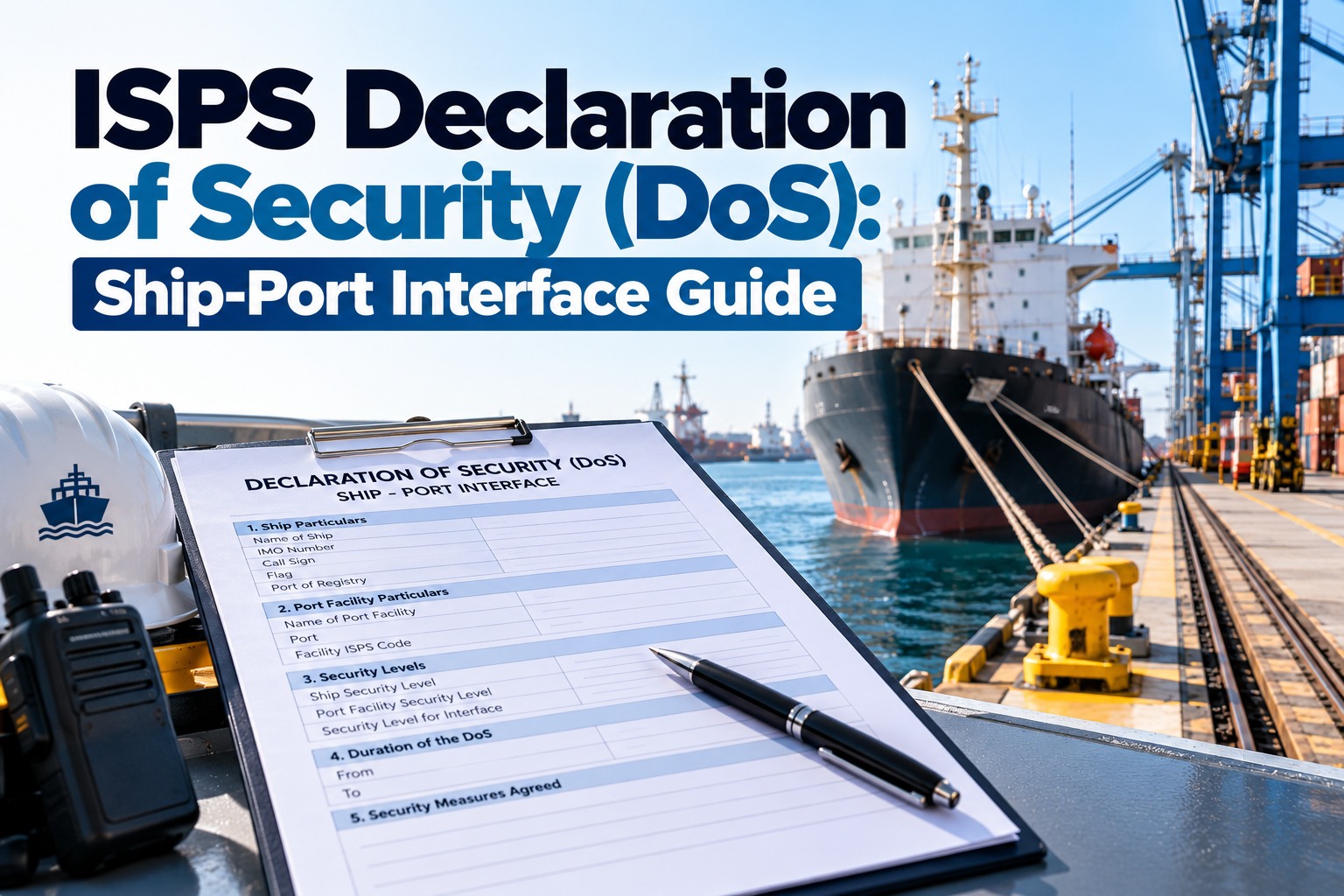
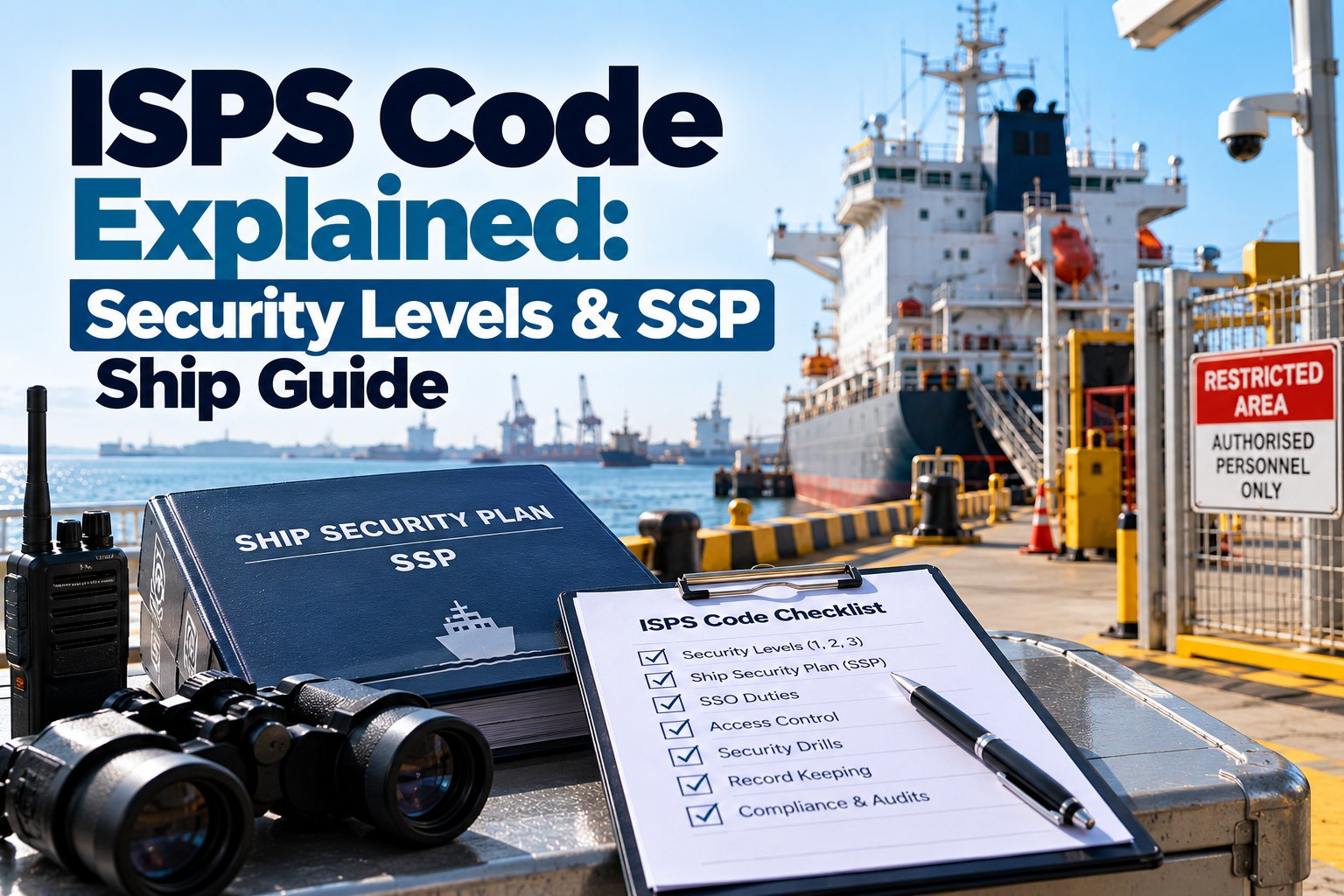
A Declaration of Security (DoS) is a short signed agreement between a ship and a port facility, or between two ships, that says who will do what to keep both sides secure while they interface. For the Ship Security Officer (SSO) it is the paper that proves the ship and the berth agreed their security measures before cargo, stores or people started to move. It is not needed at every call, but when it is needed and not done properly, the gap shows up in records and inspections. This guide explains when a DoS is required or can be requested, what to do when the ship and the port are at different security levels, what the form contains, who signs and which records you should keep. See how Marine Inspection keeps DoS records ready for every port call, with the signed form, level, date and activities stored against the voyage.
SSO FIELD GUIDE
One Berth, Two Parties, One Signed Agreement
Know the trigger, agree the responsibilities, sign with the right person and file the record before the first line is passed.
Free trial available. Or book a walkthrough built around your own port calls.
DoS in 4 Facts
1Who signs
Master or SSO for the ship. PFSO for the port facility.
2What it states
The shared security measures and who is responsible for each.
3Language
English, French, Spanish or a language both parties share.
4Record
Ships keep it for the period their flag sets.
When a Declaration of Security Comes Into Play
IFThe ship is at a higher security level than the port facility or the other ship
THENThe ship may request a DoS. The SSO or CSO tells the PFSO without delay.
IFA government agreement covers a DoS for certain voyages or ships
THENThe DoS is completed as that agreement sets out.
IFThere has been a security threat or incident involving the ship or port facility
THENThe ship may request a DoS to agree the extra measures.
IFThe port facility has no approved security plan
THENThe ship may request a DoS.
IFThe ship does ship-to-ship activity with a ship that has no approved security plan
THENThe ship may request a DoS.
IFThe flag Administration or the port state requires it
THENA DoS is required. Governments decide by assessing risk.
Based on ISPS Code Part A section 5 and Part B section 5. Port states publish when a DoS is required, so check the port's requirements and your flag's instructions.
Most mistakes happen in the minutes before arrival. Log DoS records free and keep the level check, request and signed copy in one record for each call.
Security Level Mismatch: What Happens at Each Combination
Ship level / Port level
Port Level 1
Port Level 2
Port Level 3
Ship Level 1
Match. Normal interface.
Ship rises to port level on entry.
Ship rises to port level on entry.
Ship Level 2
Ship higher. Tell the PFSO, assess, agree measures. DoS likely.
Match. Normal interface.
Ship rises to port level on entry.
Ship Level 3
Ship higher. Tell the PFSO, assess, agree measures. DoS likely.
Ship higher. Tell the PFSO, assess, agree measures. DoS likely.
Match. Normal interface.
A ship cannot sit at a lower security level than the port facility it visits. Under SOLAS XI-2 regulation 4 it must comply with the port state's level if that is higher than its flag's. Cell wording is our summary of the Code.
SSO Workflow: From Pre-Arrival to the Filed Record
The Code sets the signatories and content. The step order is our suggested working sequence. Your SSP defines the detail.
The Records Window: Last 10 Port Calls
Under SOLAS XI-2 regulation 9, a ship must be able to give security information for its last 10 port facility calls. That includes the security levels it kept and any special or additional measures it took. DoS records are part of that picture, so keep them linked to each call.
Keep Every Port Interface on Record
Store the security level, request, signed DoS and briefing for each call, so the last ten calls are one search away.
Free trial available. Or book a walkthrough built around your own port calls.
What is a Declaration of Security?
An agreement between a ship and a port facility, or between two ships, that states the security measures each will take and who is responsible for each one while they interface.
Who signs a DoS?
The master or the Ship Security Officer on behalf of the ship, and the Port Facility Security Officer, or another body the government names, for the shore side. The form is signed and dated by both parties.
Can a ship ask for a DoS?
Yes. A ship may request one when it is at a higher security level than the port facility or other ship, after a security threat or incident, at a port facility with no approved plan, or during ship-to-ship activity with a ship that has no approved plan. Governments decide when one is required.
What if the ship and port are at different levels?
A ship cannot be at a lower level than the port facility it visits. If the ship is at a higher level, the SSO or CSO should tell the PFSO without delay so both can assess and agree measures.
See how Marine Inspection logs level checks at each call.
How long must the ship keep a DoS?
The flag Administration sets the period for ships, and governments set it for port facilities. Check your flag's instructions and keep the record linked to the port call.
Keep Your Last 10 Calls Ready
One place for DoS forms, level checks, drills and security rounds, with a fleet view for your CSO.
Free trial available. Or book a walkthrough built around your own port calls.