An internal audit and an external audit can look at the same safety management system and still be very different events. One is the company testing itself; the other decides whether the DOC and SMC stay valid. This guide compares scope, timing and authority side by side, and shows how to run internal audits in Marine Inspection so the external auditor finds nothing new.
Internal vs external audit in shipping: the same system, two very different consequences
Internal audits are where the company finds its own gaps while they are still cheap to fix. External audits are where the flag State or its recognised organisation decides whether the certificates are endorsed.
Internal vs external audit: the differences side by side
Both audits measure the same safety management system against the ISM Code, but they answer different questions. The internal audit asks whether the system works; the external audit asks whether the company can prove it. Use the grid to brief masters and superintendents, and see both audit types tracked in one place.
| Aspect | Internal audit | External audit |
|---|---|---|
| Basis | ISM Code Section 12, company procedures | SOLAS Chapter IX, ISM Code Sections 13–14, flag rules, IACS PR 9 |
| Carried out by | Company auditors independent of the area audited, or contractors working for the company | Flag State auditors or a recognised organisation acting for the flag |
| Frequency | Every ship and every office, at intervals of no more than 12 months | Initial, annual (DOC), intermediate (SMC) and renewal, inside fixed windows |
| Scope | The whole SMS, every department, as deep as the company wants | A sample, chosen to test whether the SMS is effectively implemented |
| Findings go to | The company: master, DPA, management | The company and the flag State |
| Authority | Corrective action under company procedures | Endorse, refuse endorsement, require an additional audit, or withdraw the certificate |
| Worst outcome | An open finding in your own system | DOC or SMC not endorsed; ship cannot trade |
| Evidence later | Becomes objective evidence for the external auditor | Report and certificate endorsement on file |
What the ISM Code requires of an internal audit
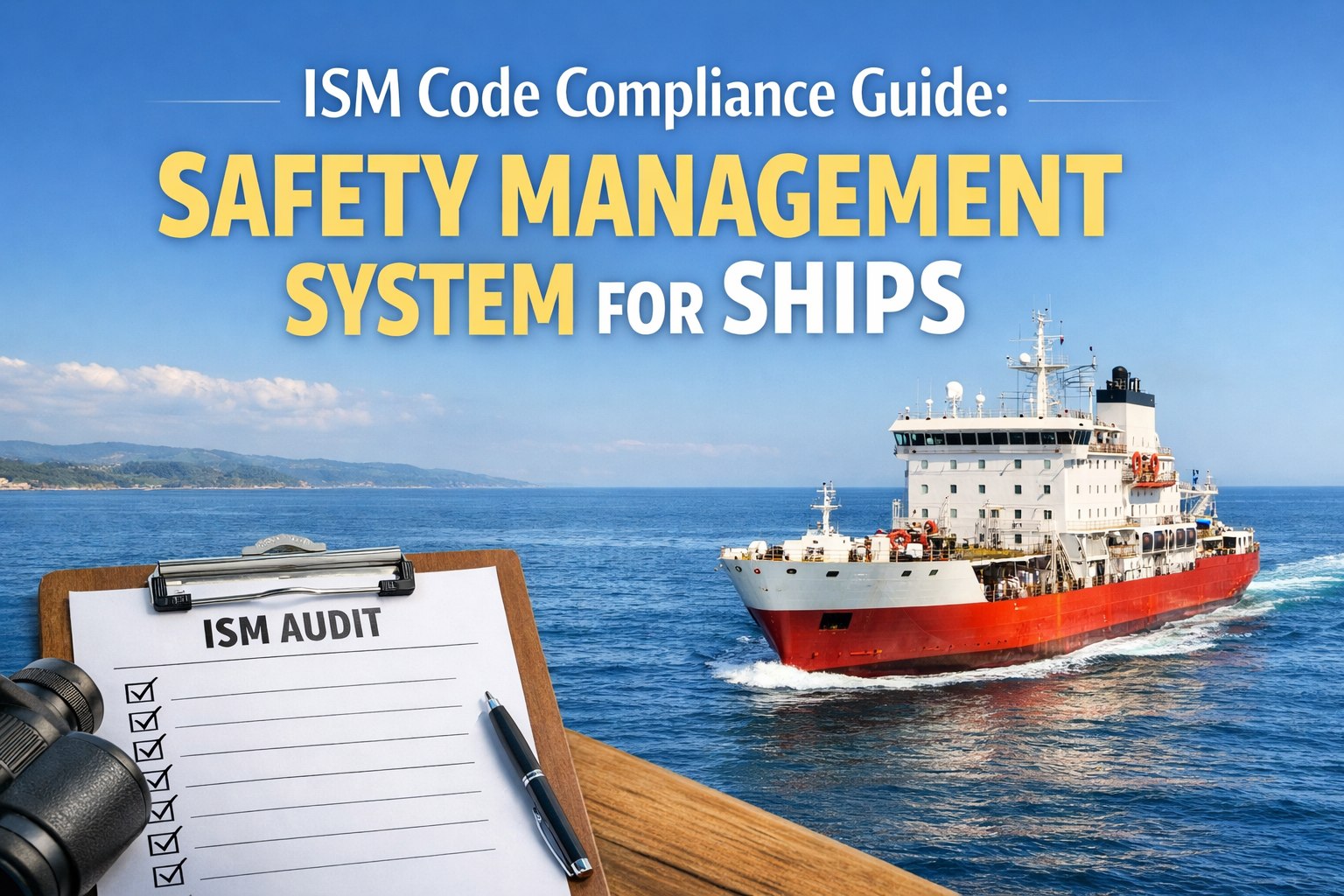
Section 12 is short, and every line of it is audited externally. An internal programme that misses one of these points becomes a finding in its own right. For how the escalation and auditor independence rules work in depth, see our ISM internal audit guide. You can schedule every ship and office audit for free.
Interval
Internal audits on board and ashore at intervals not exceeding 12 months; exceeded by no more than 3 months in exceptional circumstances.
Documented method
Audits and corrective actions carried out to written procedures, not improvised on the day.
Auditor independence
Auditors independent of the area audited, unless the size and nature of the company make that impracticable.
Results communicated
Results brought to the attention of everyone responsible for the area involved.
Corrective action
Management personnel responsible for the area take timely action on deficiencies found.
System effectiveness
The company periodically evaluates the SMS, and audit results feed that review.
The external audit cycle: DOC and SMC verification timeline
External audits follow the certificate, not the calendar the company would prefer. Missing a window is serious: under IACS PR 9 an audit outside its window is itself a major nonconformity, and an unendorsed certificate becomes invalid. The strip below lays one five-year SMC and DOC cycle over the internal audits that should sit inside it. See window alerts set per vessel.
Audit window External audit Internal audit
An initial DOC needs evidence the SMS has run for at least three months, including internal audit records ashore and on board (IACS PR 9). Internal audits come first, not last.
Audit scope compared: what each audit samples
An internal audit can afford to look everywhere. An external audit cannot, so the auditor samples, and the internal audit records are one of the first things sampled. That is why the internal programme decides how the external audit goes. Our ISM audit checklist lists the core elements both audits test; turn it into a live audit for free.
Internal audit looks at
- Every SMS element, every year, on every ship and in every office
- Drills, permits, maintenance, navigation, cargo and crew records in depth
- How well procedures fit how work is really done
- Near misses and trends that never reach an external report
External audit samples
- Records of your internal audits and how findings were closed
- Statutory and class records for at least one ship of each type (DOC)
- Reported nonconformities and how the company investigated them
- Branch offices, each visited during the DOC validity
One file for both audits, ready before the auditor asks
Internal findings, corrective actions and evidence sit next to external windows and reports, ship by ship and office by office.
Audit authority: what an external auditor can do that you cannot
An internal auditor raises findings; an external auditor can stop the ship trading. The difference shows most clearly in how a major nonconformity is handled. For the recovery steps if it happens, read our major nonconformity and DOC withdrawal guide, and see how corrective actions are tracked to closure.
Major NC on board
Must be downgraded before the ship sails, after action removes the serious threat and a plan of up to three months is agreed.
Additional audit
At least one additional on-board audit within that plan’s timeframe.
No endorsement
A DOC or SMC cannot be issued, endorsed or renewed while a major nonconformity exists.
Nonconformity close-out
Corrective action plan agreed, implementation within three months, effectiveness verified by the next audit.
Failure to act
Agreed corrective action not implemented can invalidate the DOC or SMC.
DOC withdrawn
Every SMC that depends on it falls with it, across the whole fleet.
Steps 01–05 from IACS PR 9. Port State Control, vetting and class surveys are inspections, not ISM audits, but their findings are often the trigger for an additional audit. ISM issues were 4.6% of all Paris MoU deficiencies in 2024.
Audit finding grades: observation, nonconformity and major nonconformity
The ISM Code defines the grades, and both audits use them. Grade internal findings honestly by the same definitions; an internal finding that has been graded down is the one the external auditor upgrades.
A statement of fact made during an audit and backed by objective evidence.
Internal: note and monitor. External: no certificate effect.
An observed situation where objective evidence shows a specified requirement is not met.
Internal: root cause and corrective action. External: plan agreed, closed within three months.
A deviation posing a serious threat to people, the ship or the environment needing immediate action, or a lack of effective and systematic implementation of a Code requirement.
Internal: immediate action, DPA involved. External: downgraded before sailing, additional audit.
How internal audits protect your DOC and SMC
A good internal programme behaves like a rehearsal for the external one. These habits are common practice among well-run managers rather than Code requirements, and each one removes a reason for an external finding. Build them into your audit plan free.
Audit ahead of the window
Plan each ship’s internal audit a few months before its external window, leaving time to close findings.
Sample like an outsider
Pick records at random and follow one thread end to end: a defect, its report, the work order, the close-out.
Audit the office too
Shore departments, DPA functions and branch offices are in scope for both audits.
Close with evidence
A finding is closed only when the evidence would satisfy a stranger, because a stranger will check it.
Track repeats
The same finding on three ships points to the system, not the crews, and is what turns into a major NC.
Use PSC as a signal
Feed PSC and vetting findings into the next internal audit; our PSC deficiency codes guide explains how they are coded.
Internal and external audit preparation checklist
Run through these items about a month before an external window opens. Each one maps to something an external auditor will ask to see.
How Marine Inspection connects internal findings to external audit readiness
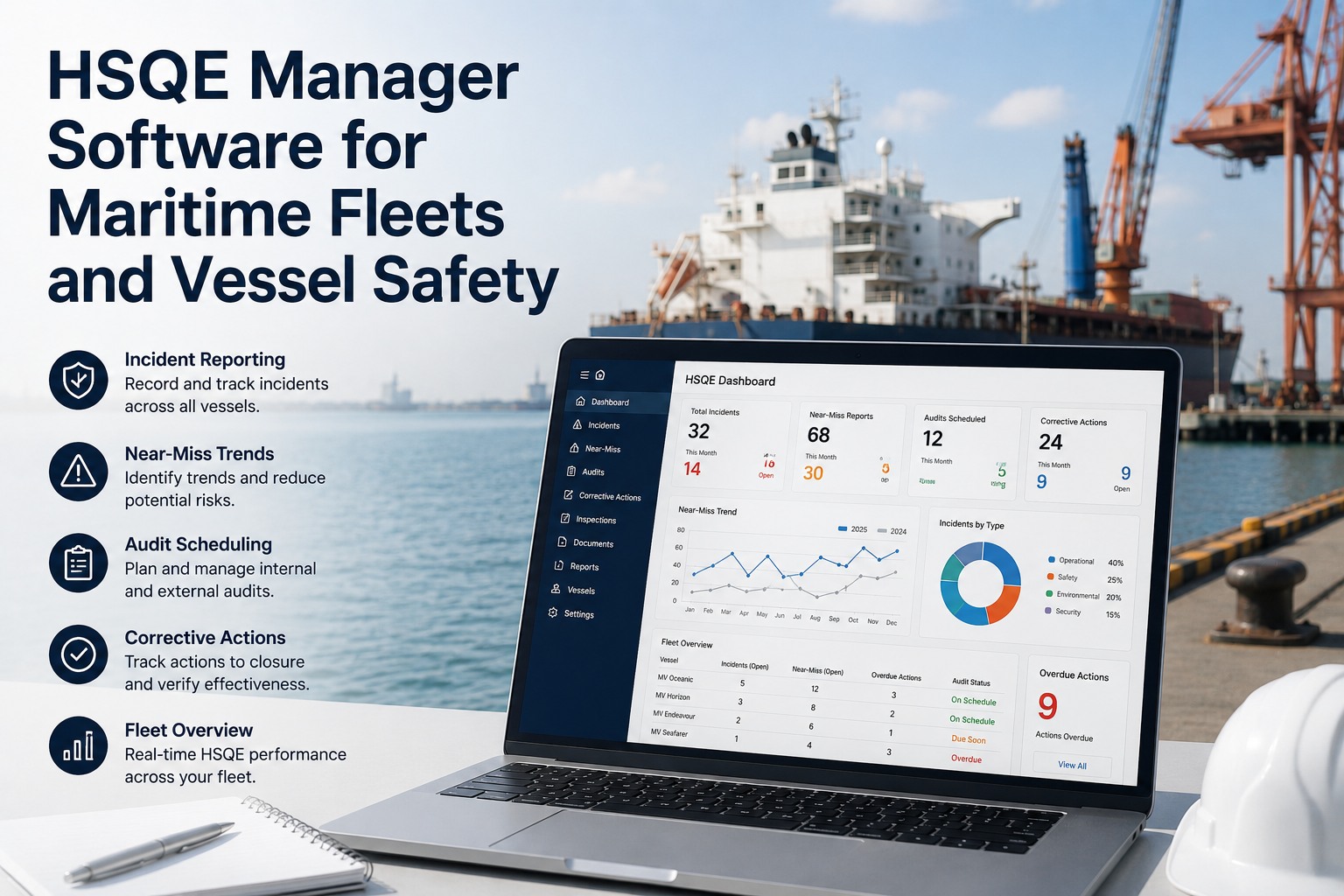
The weak point in most audit programmes is the gap between raising a finding and proving it closed. Marine Inspection moves every internal finding along a visible track, so by the time the external auditor samples it, the evidence is already attached. The board below is an illustrative fleet view.
Raised 3
Root cause 2
Action 2
Verified 4
Internal vs external audit FAQs
What is the main difference between an internal and an external ISM audit?
Authority. An internal audit is the company checking its own system and raising its own corrective actions. An external audit is carried out for the flag State and decides whether the DOC and SMC are issued, endorsed or withdrawn.
How often must internal audits be carried out?
On board and ashore at intervals not exceeding 12 months. In exceptional circumstances the interval can be exceeded by no more than three months, and the reason should be documented.
Can a third party carry out the internal audit?
Yes. A contractor working on the company’s behalf still counts as internal, as long as the auditor is independent of the area audited. It does not replace the external audit, and consultancy and certification must stay separate.
When are DOC and SMC external audits due?
The DOC needs an annual verification within three months either side of each anniversary. The SMC needs one intermediate verification between the second and third anniversary. Both are renewed within five years.
Do external auditors look at internal audit records?
Yes. Internal audit records are objective evidence for initial certification and are routinely sampled at later audits, along with how the findings were closed.
Is a class survey an external audit?
Not in the ISM sense. Class surveys inspect the ship’s condition against class rules. An ISM audit by a recognised organisation verifies the safety management system for the flag. Marine Inspection can track both in one calendar.
Find it internally, so nobody finds it externally
Plan internal audits, close findings with evidence and watch every DOC and SMC window across the fleet.