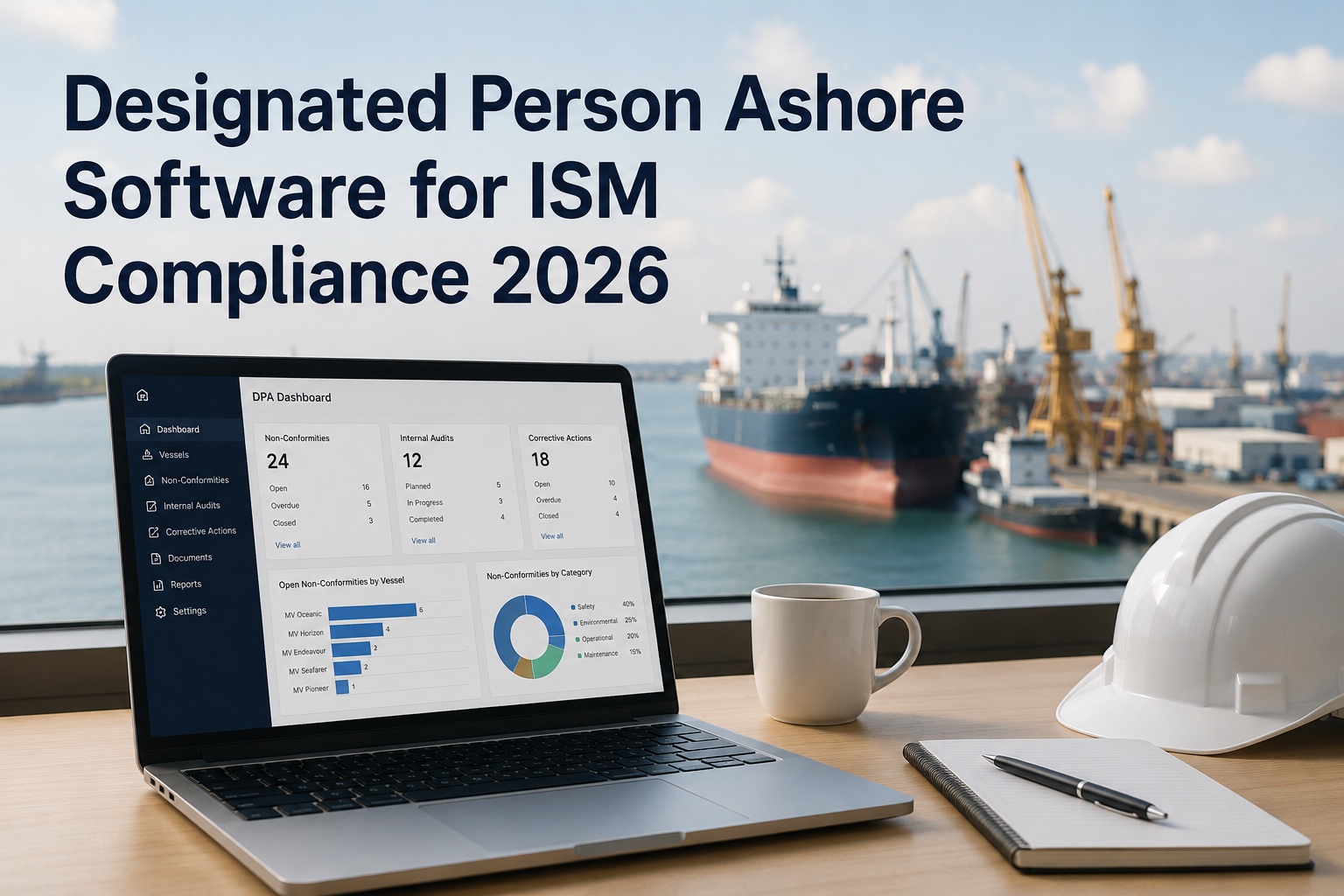
The Designated Person Ashore is the only role in shipping defined by an access right rather than by a task list. Section 4 of the ISM Code does not specify a rank, a certificate or a syllabus. It says the company should designate a person or persons with direct access to the highest level of management who should monitor the safe operation of each ship. That access is the entire architectural purpose of the role — it exists so that a safety concern cannot be filtered, softened or deferred by the commercial chain of command on its way upward. But access on its own achieves nothing, and the Code is unusually candid about what the role actually requires. The Designated Person should have the experience to present ISM matters to the highest level of management and to gain sustained support for safety management system improvements. Sustained support. Not a hearing, not a single approval — continued backing over time, which is won with evidence, repeatedly, and lost the moment you walk upstairs with an impression instead of a pattern. That is the real job, and it determines what a DPA's tools have to do. Start a free trial of Marine Inspection and build the evidence base the argument runs on.
ISM Code, Section 4
The Company should designate a person or persons ashore having direct access to the highest level of management.
Note what is absent. No rank is named. No certificate is required. No minimum sea time is set. The Code defines the function and the authority and deliberately leaves the qualification to flag state guidance, recognised organisation audit practice, company procedures and the complexity of the vessels being managed.
Which means a DPA's standing is not conferred by a document. It is established by performance — by whether the last three things you took upstairs turned out to be right, and whether you could show why at the time.
Six Processes the Code Puts on Your Desk
Section 4 sets out what monitoring must include, as a minimum. Read as a list of six it is a job description; read as a list of six things you must be able to evidence, it is a specification for a system. Book a Marine Inspection demo and check which of the six you could currently demonstrate rather than assert.
01
Policy communication and implementation
Communication and implementation of the safety and environmental protection policy — which means not only that the policy exists and was issued, but that it reached people and that you can show it reached them.
02
Effectiveness of the system
Evaluation and review of the effectiveness of the safety management system. Effectiveness, not existence. This is the hardest of the six to evidence and the one an auditor will press on hardest.
03
Reporting and analysis
Reporting and analysis of non-conformities, accidents and hazardous occurrences. Analysis is the operative word — a register of incidents is not analysis, and a trend nobody extracted is not a finding.
04
Internal audits, and the auditors
Organising and monitoring internal audits, including verification of the independence and training of internal auditors. You are responsible for auditing the audit function itself, which is discussed far less often than it should be.
05
Revisions to the system
Appropriate revisions to the SMS. Appropriate implies judgement and traceability — that a revision followed from something, reached the fleet, and was acknowledged by the people who now have to work to it.
06
Resources and shore support
Ensuring that adequate resources and shore-based support are provided by the Company. This is the one that requires the access right, because it is the only item on the list you cannot deliver yourself.
Item six is the reason section 4 grants direct access to the highest level of management. Five of these are things you monitor. The sixth is something you must obtain from people who control budgets and who will weigh your request against everything else competing for the same money. The Code anticipated that and gave you the door. It did not give you the argument.
What Actually Persuades the Board
The Code requires the DPA to have the experience to present ISM matters to the highest level of management and gain sustained support for improvements. Sustained support is a high bar, and the difference between clearing it and not is almost entirely about what you bring into the room. Sign up for Marine Inspection and arrive at the third tier rather than the first.
Tier one
An impression
Something is not right on that vessel. The master seems stretched. The audit felt thin. All of this may be entirely accurate and none of it survives a question. It gets a sympathetic hearing and no resources, and it costs you a small amount of credibility for the next conversation.
Tier two
An incident
Something happened, and here is the report. This does get attention and resources, because it has to. But it is reactive by definition, it arrives after the cost has been incurred, and it positions the DPA as the person who explains failures rather than the person who prevents them.
Tier three
A pattern, with the evidence attached
The same non-conformity has appeared on four vessels in eleven months. Corrective actions were closed on three of them without verification evidence. The fourth is open past its date. Here are the records, here is what the fix costs, and here is what a repeat finding does to our risk profile at the next external audit. This is what sustained support is built from.
The difference between tier one and tier three is not intelligence, seniority or persuasive skill. It is whether the underlying records were structured enough that a pattern could be extracted from them at all. A DPA working from PDF audit reports and email threads can hold a suspicion. A DPA working from structured findings can hold an argument, and can produce it on the day the meeting happens rather than three weeks later when the budget is set.
Prepared for
The conversation upstairs
Walk in with the pattern, not the impression
Non-conformities held as structured findings rather than as documents, comparable across vessels so a recurrence is visible as a recurrence. Corrective actions with owners, dates and closure evidence. Audit coverage and auditor independence recorded. And the whole picture available on the morning of the meeting rather than assembled in the fortnight before it.
The Clock That Can Take the Operating Licence
Most deadlines in shipping cost money. This one costs the company's ability to trade, and it starts on a date somebody else sets. Schedule a walkthrough and see closure evidence tracked against the date rather than against a memory of it.
Major non-conformity
An identifiable deviation posing a serious threat to the safety of personnel or the ship, or a serious risk to the environment, requiring immediate corrective action. It can lead to suspension of the Document of Compliance or the Safety Management Certificate.
The agreed period
Corrective action within an agreed timeframe, with a maximum of three months. That period is agreed at the audit, in the room, frequently under pressure, and it becomes the hardest date in the DPA's calendar the moment it is set.
If it is not resolved
The Document of Compliance and Safety Management Certificate must be withdrawn. Those two documents are the operating licence for international shipping, and they are held by the company and by every vessel respectively. This is the only compliance deadline on a ship manager's calendar where the failure mode is not a fine but a cessation.
And the minor ones
A minor non-conformity does not pose an immediate serious threat but still requires corrective action within an agreed timeframe, typically within three months. Individually manageable. The exposure is cumulative: a pattern of open minor findings across a fleet is what an external auditor reads as a system that identifies problems and does not close them, which is a finding about the SMS itself rather than about any one vessel.
Auditing the Auditors
Buried in the section 4 monitoring list is an obligation that gets far less attention than it deserves, and it is one an external auditor can test directly. Start a free trial and hold auditor records alongside the audits they conducted.
What the Code requires of you
Organising and monitoring of internal audits, including verification of the independence and training of internal auditors. Two verifications, both yours, both about the people rather than about the ships.
Independence means the auditor should be independent of the area being audited. On a small management team that is genuinely difficult, and the difficulty is not an excuse — it is the thing you have to demonstrate you managed rather than ignored.
Training means auditors must have completed relevant auditor training, and that you can show which training, completed when, by whom, and still current at the date they conducted the audit in question.
The audit cycle behind it
Internal audits at intervals not exceeding twelve months, extendable by a maximum of three months in exceptional and documented circumstances, conducted both onboard and ashore. The word documented in that extension provision is doing real work — an undocumented extension is simply an overdue audit.
Where it typically falls down
Auditor qualifications held in a training folder that is not linked to the audit records, so demonstrating that a given auditor was trained and independent on a given date requires assembling two separate files and hoping the dates align.
What good looks like
The audit record carries the auditor by name, their training status at the time, and their relationship to the area audited — so independence and competence are properties of the record rather than a claim made afterwards.
What the DPA Has to Be Able to Show
The 2026 audit posture is that recognised organisations expect documented evidence rather than asserted compliance. Below is what that means item by item, and where each one usually falls short. Book a walkthrough and test the third column against your own system.
Table 1: Evidence the DPA Is Expected to Produce
Three months, maximum
The major non-conformity clock does not pause because the evidence is hard to assemble
Closure evidence attached to the finding, days remaining visible without being calculated, and the whole chain from identification to verified closure retrievable on the day an auditor asks for it.
Influence Is in the Job Description
The guidance describes the DPA in unusually strong terms: this is the person based ashore whose influence and responsibilities should significantly affect the development and implementation of a safety culture within the company. That is a cultural mandate written into a technical code, and it has practical consequences for how the role is performed. Start a free trial and make the reporting side of that culture easier rather than harder.
Culture is measured by what gets reported
A fleet where near-misses, hazardous occurrences and non-conformities are reported freely is a fleet where you can see problems. A fleet reporting almost nothing is not a safer fleet — it is a quieter one, and the DPA is the person who has to know the difference and say so upstairs.
Reporting is a cost the crew bears
Every report is time taken from a working day that already has none spare, by someone who may reasonably suspect that reporting invites scrutiny. If reporting a hazardous occurrence takes fifteen minutes on a form, the reporting rate is telling you about the form as much as about the hazard.
The DPA owns both sides of that trade
You need the reports, and you are responsible for the system that makes them costly to produce. Reducing the friction of reporting is a safety intervention, not an administrative convenience, and it is one of the few available entirely within your own gift.
And you have to defend the reporters
Sustained reporting depends on people believing a report will produce support rather than blame. The DPA is structurally placed to guarantee that, because the access right exists precisely so that a safety concern does not have to travel through the people it might reflect on.
Evaluating a System as the Designated Person
Most compliance software is sold on breadth of coverage. What a DPA needs is narrower and harder: the ability to produce a defensible answer quickly, under questioning, about something that happened months ago. Schedule a demo and pose the questions an external auditor would.
Table 2: Buyer Questions for a Designated Person Ashore
2026 ISM REALITY
Qualification for the role is not set by a single instrument. There is no universal IMO certificate that automatically qualifies a person to act as Designated Person Ashore. The ISM Code defines the function and the authority, while IMO guidance on qualifications, training and experience sits in MSC-MEPC.7/Circ.6, and the practical standard is set through flag state guidance, recognised organisation audit practice, company procedures and the complexity of the vessels managed. Confirm your own flag's expectations rather than assuming a general standard. Timeframes described here are the common position and should be verified against your own certification arrangements. Corrective action periods, the three-month maximum for major non-conformities and the twelve-month internal audit interval with documented extension are widely applied, and specific agreements are made at audit. The audit posture has hardened. Recognised organisations increasingly expect documented evidence rather than asserted compliance, which shifts the burden from having a system to demonstrating it operates. Scope is set by SOLAS Chapter IX, which makes the ISM Code mandatory for passenger ships and cargo ships of 500 gross tonnage and above on international voyages.
Frequently Asked Questions
What exactly does the ISM Code require of the DPA?
Section 4 requires the company to designate a person or persons ashore having direct access to the highest level of management, who monitor the safe operation of each ship. That monitoring must include at least six internal processes: communication and implementation of the safety and environmental protection policy; evaluation and review of the effectiveness of the safety management system; reporting and analysis of non-conformities, accidents and hazardous occurrences; organising and monitoring of internal audits including verification of the independence and training of internal auditors; appropriate revisions to the SMS; and ensuring that adequate resources and shore-based support are provided by the company.
What qualifications does a DPA need?
There is no single universal IMO certificate that automatically qualifies someone for the role. The Code defines the function and authority but does not prescribe one global training syllabus, sea-time threshold or licence title, and IMO guidance on qualifications, training and experience sits in MSC-MEPC.7/Circ.6. In practice the standard emerges from flag state guidance, recognised organisation audit practice, company SMS procedures and the complexity of the vessels managed. Many DPAs hold chief officer or chief engineer certificates of competency combined with ISM auditor training. The consequence is that credibility is established by performance rather than conferred by a document.
What happens if a major non-conformity is not closed in time?
A major non-conformity is an identifiable deviation posing a serious threat to the safety of personnel or the ship, or a serious risk to the environment, and requires immediate corrective action. It can lead to suspension of the Document of Compliance or the Safety Management Certificate. Where it is not resolved within the agreed period, with a maximum of three months, the DOC and SMC must be withdrawn. Those documents are the company's and the vessel's authorisation to trade internationally, which makes this the only routine compliance deadline in ship management whose failure mode is cessation rather than penalty.
What does verifying auditor independence involve?
The monitoring obligation in section 4 includes verification of the independence and training of internal auditors, which makes the DPA responsible for the audit function as well as for the audits. Independence means the auditor should be independent of the area being audited — genuinely difficult on a small management team, and a difficulty you have to demonstrate you managed rather than ignored. Training means auditors must have completed relevant auditor training, and that you can show which training, completed when, and still current at the date of the audit concerned. The practical fix is holding auditor attributes on the audit record itself rather than in a separate personnel file.
How often must internal audits be conducted?
At intervals not exceeding twelve months, extendable by a maximum of three months in exceptional circumstances which must be documented, and conducted both onboard and ashore. Auditors must have completed relevant auditor training and should be independent of the area being audited. Internal audits sit alongside external audits conducted by the flag state or a recognised organisation for DOC and SMC certification, and both assess the same elements with different emphasis. The word documented in the extension provision carries real weight: an extension that was not documented at the time is indistinguishable, at audit, from an overdue audit.
How should a DPA present a case for resources?
With a pattern rather than an impression, and with the evidence in hand rather than promised. The Code requires the DPA to have the experience to present ISM matters to the highest level of management and gain sustained support for safety management system improvements — sustained being the demanding word, since it implies continued backing across multiple conversations rather than a single approval. In practice that means being able to say that a specific finding has recurred across named vessels over a stated period, that closures were or were not verified, what the remedy costs, and what a repeat finding does to the risk profile at the next external audit. All of which requires the underlying records to have been structured enough for a pattern to be extracted from them.
Designated Person Ashore
The Code Gave You the Door. The Evidence Is What Gets You Heard.
Non-conformities as structured findings comparable across the fleet, so a recurrence looks like a recurrence. Corrective actions that cannot close without evidence. The major non-conformity clock counting down rather than sitting in a calendar. Auditor independence and training held on the audit record itself. SMS revisions acknowledged per vessel. And reporting made cheap enough for crews that the data you depend on keeps arriving.