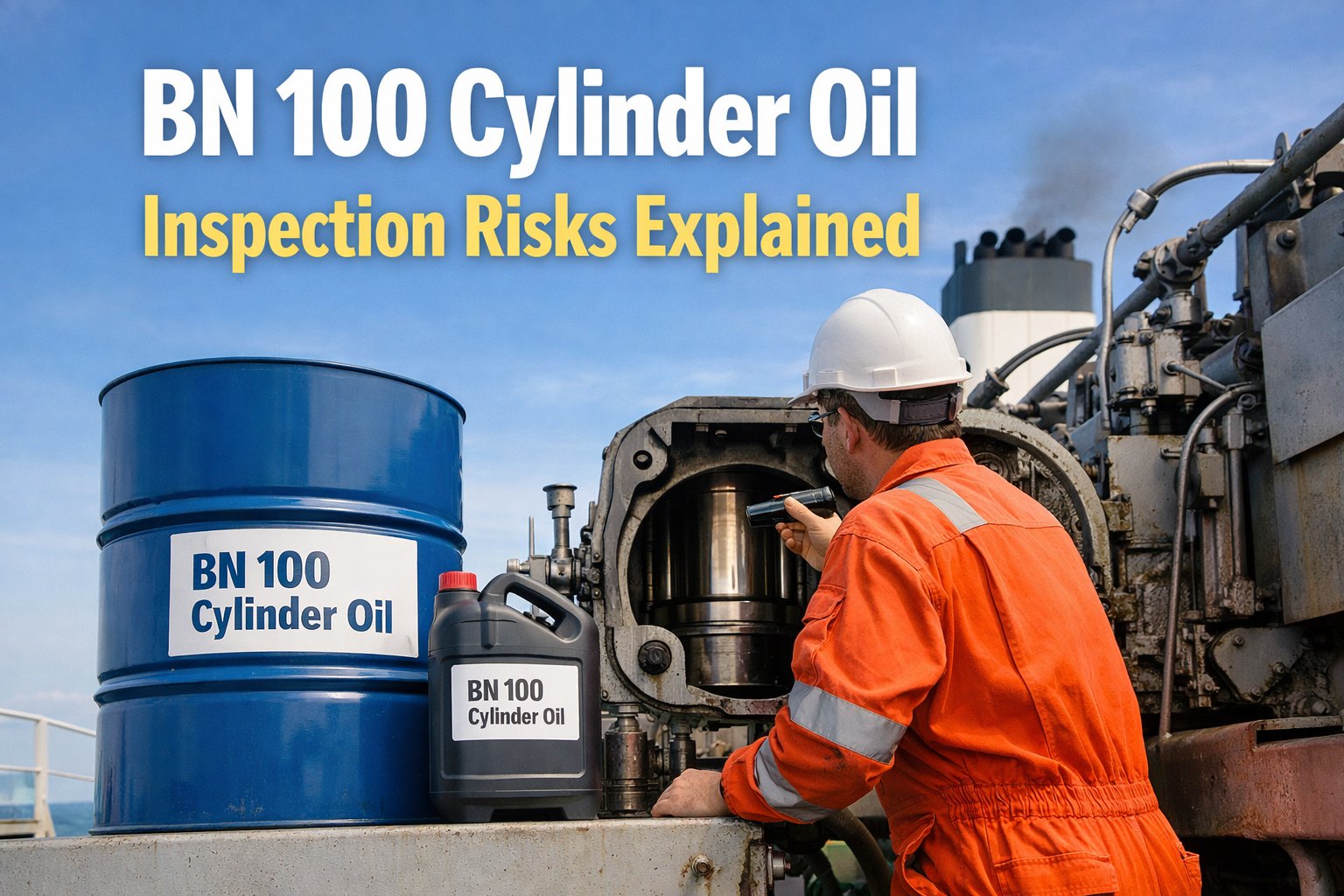
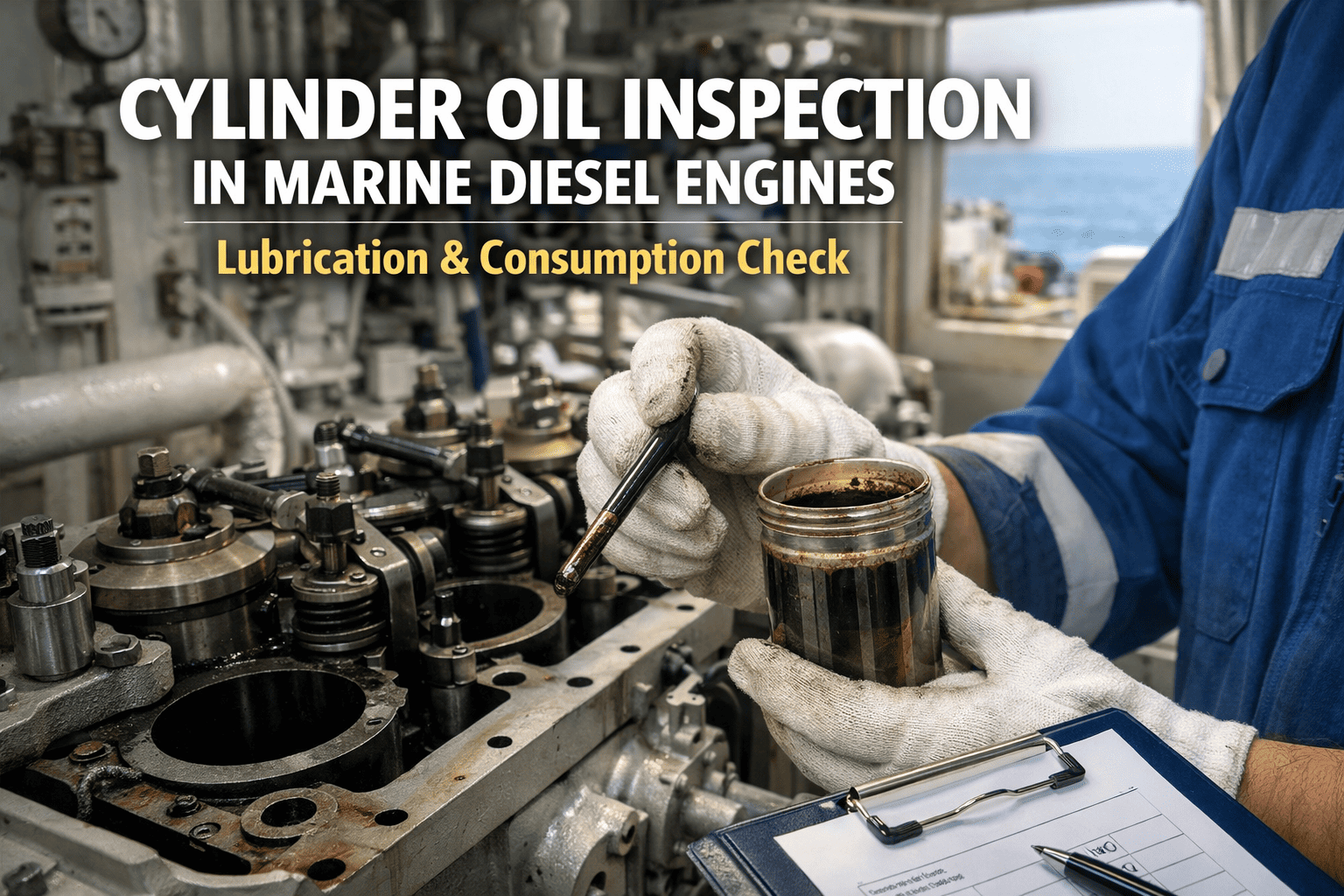
Your vessel runs BN 100 cylinder oil continuously across fuel switchovers without adjusting for 0.5% VLSFO operations. Port State Control inspectors board, discover iron content at 180 ppm—triple acceptable limits—and find hard calcium deposits during piston crown inspection. The vessel receives a detention notice for "inadequate lubrication management creating machinery damage risk." This detention traces to BN 100 cylinder oil misapplication: excessive alkalinity for low-sulfur fuel creating deposit buildup and accelerated liner wear. Marine operators can schedule a software demo to see how Marine Inspection's maintenance platform tracks cylinder oil specifications, fuel sulfur content, and drain oil analysis to prevent these costly detention scenarios.
PSC Detention Risk
High
Excessive wear evidence triggers machinery deficiency findings
Liner Wear Acceleration
2-3x
Normal rate when BN exceeds fuel sulfur neutralization requirements
Deposit Formation
Severe
Calcium carbonate buildup on crowns, rings, and liner surfaces
Scavenge Drain Iron
150-250 ppm
Typical range vs. 60-80 ppm normal when BN matched properly
Understanding BN 100 Cylinder Oil Application Requirements
BN 100 cylinder oil was engineered for high-sulfur fuel operations where sulfuric acid formation requires strong alkaline reserve for neutralization. The "100" designation indicates 100 mg KOH/g alkalinity—sufficient for fuels containing 2.5-3.5% sulfur. When vessels switched to 0.5% VLSFO under IMO 2020, acid production dropped 80-85%, making BN 100's alkalinity excessive. Marine operators continuing BN 100 on low-sulfur fuels discover this mismatch during inspections when PSC officers identify polished liner surfaces, hard white deposits on piston crowns, elevated iron content in scavenge drains, and premature ring wear—all traceable to incorrect cylinder oil specification. Sign up for Marine Inspection to access automated cylinder oil management software that matches BN specifications to bunker fuel and alerts crews when switchovers require lubrication adjustments.
Cylinder Oil BN Selection Matrix for Marine Two-Stroke Engines
0.10% (ECA zones)
BN 25-40
0.6-0.8 g/kWh
Severe over-alkalization, deposit formation, bore polishing
0.50% (VLSFO)
BN 40-70
0.6-0.9 g/kWh
High excess alkalinity, accelerated liner wear, hard deposits
1.5-2.5% (HSFO)
BN 70-100
0.7-1.0 g/kWh
Acceptable with proper feed rate monitoring
3.0-3.5% (HFO)
BN 100-140
0.8-1.2 g/kWh
Optimal application—designed specification match
The Three Critical BN 100 Inspection Risks
BN 100 cylinder oil misapplication creates three distinct inspection risk categories that Port State Control officers identify through physical evidence, operational records, and drain oil analysis.
1
Excessive Liner Wear Evidence
Damage Mechanism:
BN 100 on 0.5% sulfur fuel prevents micro-corrosion that maintains liner honing pattern, leading to bore polishing—smooth surfaces lacking oil retention grooves. This increases metal-to-metal contact, accelerating wear rates 2-3x normal.
PSC Detection Methods:
• Mirror-polished liner surfaces visible during scavenge inspection
• Scavenge drain iron content 150-250 ppm vs. normal 60-80 ppm
• Excessive liner gauge measurements beyond service limits
Officers cite "inadequate machinery maintenance"—detainable deficiencies under SOLAS that prevent sailing until corrective action documented.
2
Hard Deposit Formation
Damage Mechanism:
Excess alkalinity from BN 100 remains unneutralized when acid production is low. Calcium additives react with CO₂ forming calcium carbonate deposits on piston crowns, ring grooves, and liner surfaces, restricting ring movement and creating hot spots.
PSC Detection Methods:
• White/gray calcium deposits on piston crowns during inspection
• Ring groove packing restricting movement
• Elevated calcium content in drain oil analysis
Inspectors require immediate cleaning, oil specification correction, and revised lubrication management protocols before clearance.
3
Oil Record Book Compliance Failures
Documentation Gaps:
BN 100 usage on low-sulfur fuels creates Oil Record Book discrepancies when cylinder oil consumption doesn't match fuel sulfur requirements. PSC officers identify missing changeover records, absence of drain oil analysis, and lack of feed rate adjustments during fuel transitions.
PSC Documentation Review:
• No cylinder oil type changes recorded despite fuel switchovers
• Missing scavenge drain analysis reports for 3+ months
• Cylinder oil specs don't align with bunker delivery notes
Documentation deficiencies trigger ISM Code non-conformities requiring shoreside management involvement and classification society verification before detention release.
Prevent BN Mismatch Inspection Findings
Marine Inspection's digital maintenance software automatically matches cylinder oil specifications to fuel sulfur content, sends alerts for required switchovers, and maintains Oil Record Book documentation that satisfies PSC compliance requirements. Our marine maintenance platform eliminates detention risks from BN misapplication through systematic lubrication tracking software integrated with fuel transition workflows.
BN 100 Changeover Protocol: Preventing Transition Damage
The highest-risk period for BN 100 cylinder oil damage occurs during fuel transitions—ECA boundary crossings, fuel switchovers, and bunkering operations when cylinder oil specifications must adjust to new fuel sulfur levels. Vessels entering low-sulfur operations while continuing BN 100 usage experience immediate bore polishing within 24-48 hours as excess alkalinity eliminates beneficial micro-corrosion. Proper changeover protocols require: monitor fuel sulfur content from bunker analysis, calculate required cylinder oil BN, perform gradual changeover over 4-6 hours, adjust feed rates to manufacturer specifications, conduct scavenge inspections at 8-hour intervals, and collect drain oil samples at 100-hour intervals to verify proper wear rates. Sign up to start tracking with Marine Inspection's maintenance platform that provides step-by-step digital protocols guiding crews through BN adjustments while automatically tracking compliance documentation.
T-24 Hours
Pre-Changeover Preparation
Verify new cylinder oil (BN 40) stock levels sufficient for changeover plus 200 hours operation. Review manufacturer feed rate specifications for target BN. Conduct baseline scavenge inspection documenting current liner/ring condition. Collect drain oil sample for pre-changeover iron content baseline.
T-0 (Fuel Switch)
Fuel Transition Completion
Complete fuel changeover to 0.5% VLSFO. Document fuel switch time and bunker sulfur content in Oil Record Book. Begin cylinder oil changeover simultaneously—do not delay lubrication adjustment.
T+0 to T+6 Hours
Gradual Cylinder Oil Changeover
Implement progressive mixing: Hours 0-2: 75% BN 100 / 25% BN 40. Hours 2-4: 50% BN 100 / 50% BN 40. Hours 4-6: 25% BN 100 / 75% BN 40. Hour 6+: 100% BN 40. Avoid abrupt changeover—gradual transition prevents deposit shock and maintains oil film stability.
T+6 to T+24 Hours
Feed Rate Optimization
Adjust cylinder oil feed rate to manufacturer specification for BN 40 (typically 0.6-0.7 g/kWh for 0.5% sulfur). Monitor cylinder lubricator operation every 4 hours verifying proper distribution. Document feed rate changes in Oil Record Book with justification referencing fuel sulfur content.
T+24 Hours
First Post-Changeover Inspection
Conduct scavenge port inspection comparing liner condition to T-24 baseline. Document any changes in surface appearance, deposit formation, or oil distribution patterns. Photograph representative cylinders for inspection records.
T+100 Hours
Drain Oil Analysis Verification
Collect scavenge drain oil samples from all units. Submit for laboratory analysis: iron content (target 60-80 ppm), residual BN (target 30-50% of fresh oil), calcium levels (verify no excess deposit precursors). Compare results to pre-changeover baseline confirming wear rates normalized.
Expert Assessment: BN 100 Compliance Violations
"Port State Control detentions from cylinder oil mismanagement have increased 40% since IMO 2020 implementation. The most common finding: vessels continuing BN 100 usage on low-sulfur fuels, presenting with bore polishing and elevated wear rates. Officers now specifically request scavenge drain analysis reports and cylinder oil specifications during initial documentation review. Vessels demonstrating systematic cylinder oil management through documented changeover procedures and Oil Record Book entries matching fuel sulfur content consistently avoid detention even when minor wear evidence exists. Compliance now requires demonstrated lubrication system management through digital maintenance software, not just basic oil consumption records. Marine operators adopting inspection and maintenance software platforms show significantly better PSC outcomes."
Senior Marine Surveyor
Classification Society Engine Department | 15+ Years PSC Coordination
From Detention Risk to Compliance: Systematic BN Management
Eliminating BN 100 inspection risks requires integrated digital cylinder oil management software connecting fuel specifications, lubrication parameters, condition monitoring, and compliance documentation. Successful operators implement three core software capabilities: automated BN matching algorithms that select cylinder oil specifications based on fuel sulfur content from bunker analysis, scheduled changeover protocols triggered by ECA transits with step-by-step digital crew guidance, and continuous drain oil tracking comparing iron content and residual BN against acceptable ranges. Schedule your demo today to see how Marine Inspection's maintenance software platform connects bunker fuel data, cylinder oil inventory, lubricator settings, and scavenge drain analysis into automated workflows. Vessels maintain optimal liner conditions, eliminate detention risks, and reduce overhaul costs 30-40% through proper BN selection guided by marine maintenance software.
Implement Digital Cylinder Oil Compliance Software
Marine Inspection's marine maintenance software platform prevents BN 100 misapplication through automated fuel-to-cylinder-oil matching algorithms, guided digital changeover protocols, and Oil Record Book documentation that satisfies Port State Control requirements. Marine operators eliminate detention risks while reducing overhaul costs through our comprehensive inspection and maintenance software that maintains optimal cylinder conditions across all fuel transitions.
Frequently Asked Questions
Why does BN 100 cylinder oil cause problems on low-sulfur fuels when it worked fine on high-sulfur fuels?
BN 100 contains alkaline additives designed to neutralize sulfuric acid from high-sulfur fuel combustion. When fuel sulfur drops from 3.5% to 0.5%, acid production decreases 85%, leaving excess unneutralized alkalinity. This excess prevents beneficial micro-corrosion that maintains liner honing patterns—the tiny grooves that retain oil films. Without these, liners polish to mirror-smooth surfaces causing oil film breakdown and accelerated wear. Additionally, unneutralized calcium reacts with CO₂ forming hard calcium carbonate deposits on piston crowns and ring grooves.
How do Port State Control officers detect BN 100 misapplication during inspections?
PSC officers use three detection methods: (1) Physical evidence—mirror-polished liner surfaces, white calcium deposits on piston crowns, and hard deposit buildup in ring grooves during scavenge inspection. (2) Scavenge drain oil analysis—iron content above 100 ppm when normal is 60-80 ppm indicates accelerated wear, elevated calcium confirms deposit precursors. (3) Documentation review—Oil Record Book entries showing continuous BN 100 usage despite bunker delivery notes indicating 0.5% sulfur fuel. Officers compare cylinder oil specifications to fuel sulfur content across ECA transits to identify systematic mismanagement.
What is the correct cylinder oil BN for 0.5% VLSFO operations?
For 0.5% sulfur VLSFO, optimal cylinder oil BN ranges from 40-70 depending on engine manufacturer specifications and operating profile. Most modern two-stroke engines achieve best results with BN 40-50 cylinder oils at 0.6-0.8 g/kWh feed rates—this provides sufficient alkalinity to neutralize acids while avoiding excess that causes deposits. Select BN based on fuel sulfur content and manufacturer guidance rather than continuing historical practice. MAN Energy Solutions recommends BN 40 for 0-0.5% sulfur on Mark 9+ engines. Always consult manufacturer documentation and adjust based on scavenge drain oil analysis.
How quickly does liner damage occur when using incorrect BN cylinder oil?
Bore polishing from BN 100 misapplication on low-sulfur fuel begins within 24-48 hours as excess alkalinity prevents micro-corrosion. Visible polishing appears after 100-200 running hours, with liner gauge measurements showing accelerated wear within 500-800 hours—typically 2-3x normal wear progression. Hard calcium deposits form after 300-500 hours of continuous BN 100 usage on 0.5% sulfur fuel. Correcting BN specification immediately upon fuel switchover prevents damage initiation, while delaying even 48 hours allows bore polishing to begin. Once polishing initiates, restoration requires intensive honing during overhauls—damage cannot be reversed through correct oil selection alone.
Can we continue using BN 100 if we reduce the feed rate when burning low-sulfur fuel?
No. Reducing feed rate with BN 100 on low-sulfur fuel creates worse outcomes: (1) Lower feed rates decrease oil film thickness and increase metal-to-metal contact—amplifying bore polishing. (2) The alkalinity problem persists—even reduced quantities provide excess alkalinity for low-sulfur fuel. The ratio remains unbalanced regardless of feed rate. (3) Detergency suffers when feed rates drop too low—insufficient oil cannot clean combustion residues. Engine manufacturers explicitly warn against this practice—MAN states "reducing feed rate will not address issues caused by excessive BN." The correct approach: switch to appropriate BN (40-70 for VLSFO) and maintain manufacturer-specified feed rates of 0.6-0.9 g/kWh.