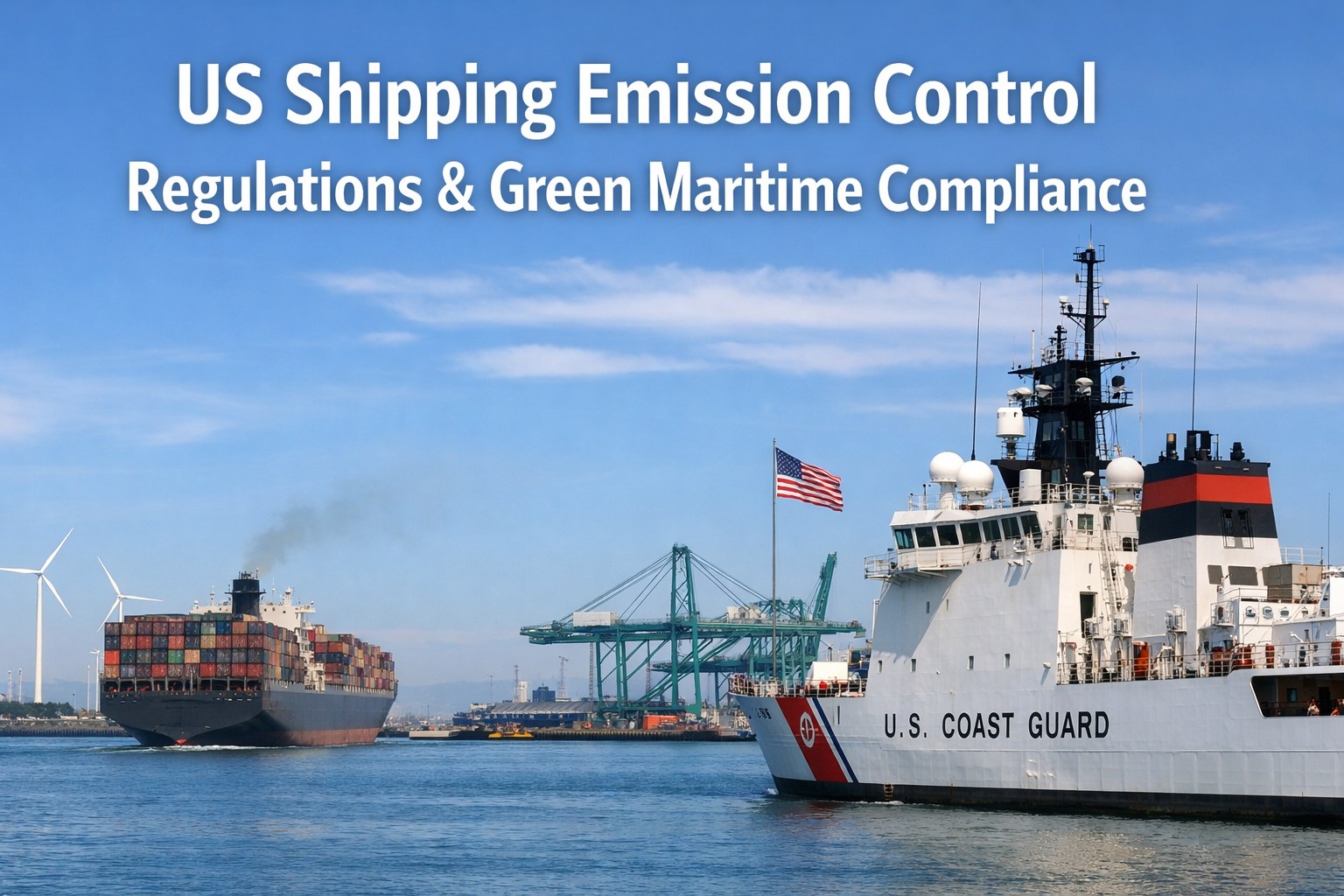
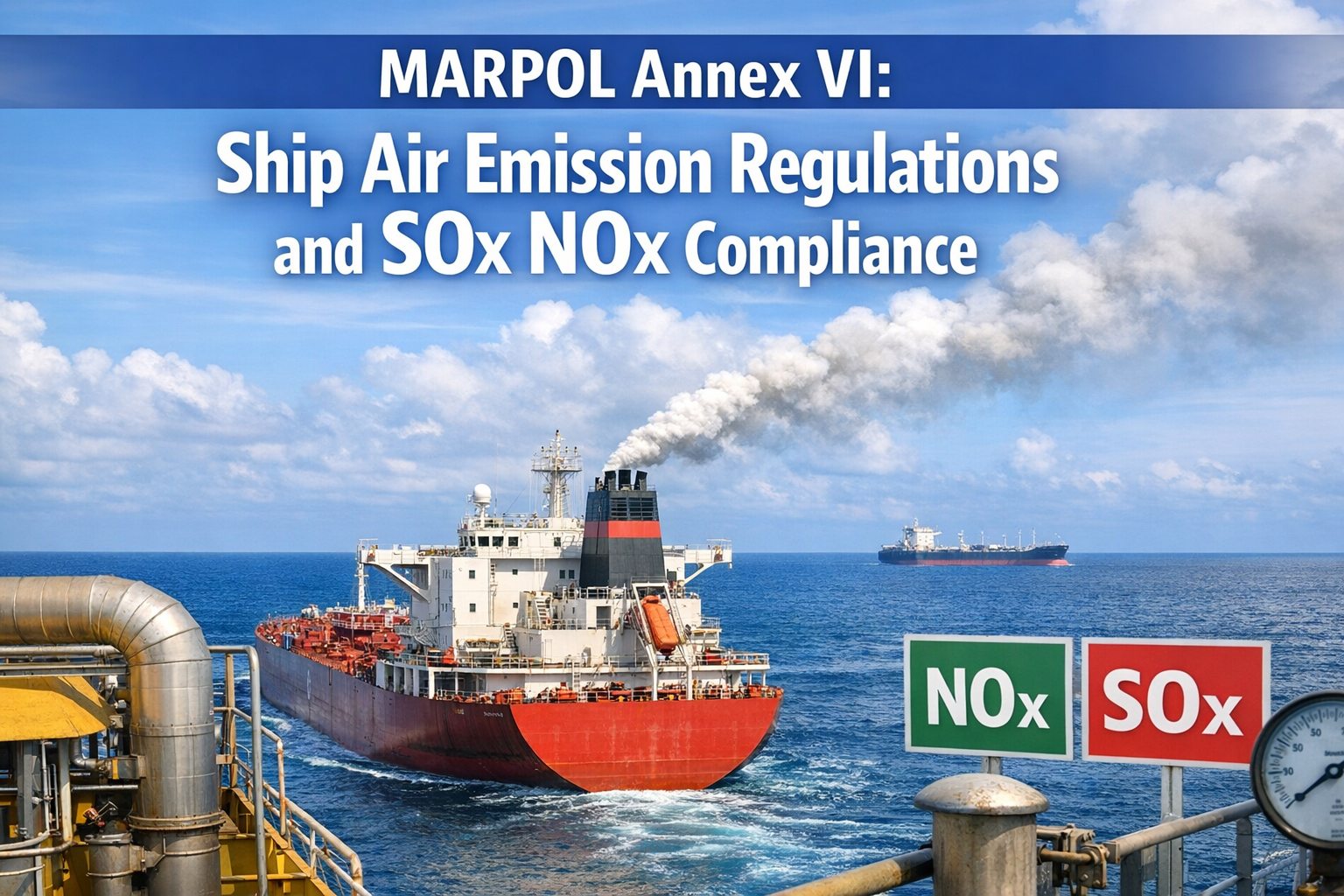
Ships entering US waters face the world's most layered emission compliance framework. Within the North American Emission Control Area — extending 200 nautical miles from every US coastline — fuel sulfur must not exceed 0.10% and engines on vessels built after 2016 must meet IMO Tier III NOx standards, roughly 80% stricter than open-ocean requirements. Overlaying the ECA are global mandates: the CII reduction target reaches 11% by 2026, SEEMP Part III implementation plans must be revised for 2026-2028, and the IMO Net-Zero Framework approved in April 2025 introduces a global fuel standard and carbon pricing mechanism targeting formal adoption in October 2025 with 2027 entry into force. For US-flagged vessels and foreign ships calling at American ports, non-compliance carries USCG detention, loss of QUALSHIP 21 eligibility, and port access restrictions. Operators ready to centralise emission tracking with maintenance planning can sign up for Marine Inspection's emission compliance platform and monitor every regulatory layer from a single dashboard.
0.10%
ECA Sulfur Cap
Within 200 nm of US coasts
11%
CII Reduction Target
Required by 2026 vs. 2019 baseline
462
E-Zero Ships (2024)
USCG environmental excellence award
2027
IMO Net-Zero Entry
Global fuel standard + carbon pricing
Regulatory Timeline: What US Operators Must Track
The emission compliance landscape for US shipping is not a single regulation but a stack of overlapping deadlines from IMO, EPA, USCG, and increasingly the EU for vessels on transatlantic routes. Missing one deadline can cascade into non-compliance across multiple frameworks. Operators who schedule a demo of Marine Inspection's regulatory tracking can visualise every deadline against their fleet's survey and maintenance cycles.
Emission Regulation Milestones: 2023 – 2027
Three Compliance Layers for US Waters
A vessel approaching a US port navigates three distinct regulatory layers simultaneously — each with different enforcement authorities, reporting requirements, and penalty structures.
Layer 1
North American ECA Requirements
Enforcement: USCG + EPA
Fuel sulfur cap: 0.10% within 200 nm (or approved scrubber)
Tier III NOx for engines on ships built after 1 Jan 2016
EIAPP certificate for every regulated engine (EPA-issued for US-flagged)
IAPP certificate (USCG-issued) verifying Annex VI compliance
Fuel changeover procedures documented with time/position logging
Layer 2
IMO Global Measures (EEXI / CII / SEEMP)
Enforcement: Flag state + USCG PSC verification
EEXI: one-time technical efficiency certification (ships 400 GT+)
CII: annual operational rating A-E (ships 5,000 GT+), 11% reduction by 2026
SEEMP Part III revised for 2026-2028 period by 31 Dec 2025
D-rating for 3 years or E-rating for 1 year requires corrective action plan
IMO DCS fuel consumption data reported annually
Layer 3
EU ETS / FuelEU (Transatlantic Routes)
Enforcement: EU member state + port state
100% emission coverage from 2026 (up from 70% in 2025)
CH4 and N2O included in GHG scope from 2026 (previously CO2 only)
FuelEU: Well-to-Wake GHG intensity limits on energy used onboard
Applies to 50% of emissions on EU-calling voyages from US ports
Surrender allowances or face penalties per tonne of CO2eq
Track Every Emission Regulation Across Your Fleet
Marine Inspection monitors ECA compliance, CII ratings, SEEMP deadlines, and EU ETS exposure from one platform — connecting emission data directly to maintenance actions and fuel management.
Expert Review: Navigating the 2026 Compliance Pressure Points
The 2026 compliance landscape creates three specific pressure points for US operators. First, the CII 11% reduction target means ships that were borderline C-rated in 2024-2025 may slip to D in 2026 as the threshold tightens — triggering corrective action plans and potentially affecting charter competitiveness. Clarksons Research estimates that roughly 50% of the global fleet would fall to D or E ratings by 2026 without operational modifications, primarily speed reduction. For US operators, slow steaming to improve CII adds 5-10% to voyage times, directly impacting Jones Act and cabotage route economics.
Second, the SEEMP Part III revision deadline has already passed (31 December 2025), but vessels that missed it face flag state enforcement and PSC deficiencies. The revised plan must include a three-year implementation roadmap for 2026-2028 with specific CII improvement measures. Operators who schedule a platform walkthrough to see CII tracking can model improvement scenarios against actual fuel consumption data and identify the lowest-cost path to maintaining C-rating or above.
Third, the IMO Net-Zero Framework approved at MEPC 83 in April 2025 introduces a Global Fuel Standard and carbon pricing mechanism for ships 5,000 GT and above. While formal adoption is expected October 2025 with 2027 entry into force, the signal is clear: lifecycle fuel emissions will be regulated globally. MEPC 84 in Spring 2026 will approve detailed implementation guidelines. US operators investing in fleet upgrades or newbuilds now must factor in these incoming requirements to avoid stranded assets.
CII Improvement: Compliance Pathways for US Fleets
Maintaining a C-rating or above requires a combination of technical and operational measures. The right approach depends on vessel type, trade route, and remaining service life. Operators exploring which measures deliver the best CII improvement per dollar invested can sign up for Marine Inspection's free trial to model scenarios against actual operational data.
The USCG's E-Zero programme — 462 ships awarded by end of 2024 — provides an additional incentive. Vessels in QUALSHIP 21 for three consecutive years with zero environmental deficiencies earn this designation, signalling environmental leadership to charterers and port authorities. Operators building toward E-Zero eligibility can sign up for Marine Inspection to track environmental deficiency records across their fleet.
Build a Data-Driven Decarbonisation Strategy
Marine Inspection connects emission monitoring, CII modelling, maintenance planning, and regulatory tracking into one platform — helping US operators maintain compliance while reducing fuel costs.
Frequently Asked Questions
What emission limits apply within the North American ECA?
The North American ECA extends 200 nautical miles from US coasts and enforces fuel sulfur content of 0.10% maximum (or equivalent scrubber exhaust cleaning). Engines on ships built after January 1, 2016 must meet Tier III NOx standards, which are approximately 80% stricter than Tier I open-ocean requirements. The USCG and EPA jointly enforce these requirements. Every regulated diesel engine on US-flagged vessels must carry an EIAPP certificate from EPA, and all applicable vessels must hold an IAPP certificate from USCG.
What is the CII and what happens if my vessel gets a D or E rating?
The Carbon Intensity Indicator measures a vessel's annual operational CO2 emissions relative to cargo capacity and distance travelled. Ships 5,000 GT and above receive an A through E rating annually. The required reduction reaches 11% by 2026 compared to 2019 baseline. A vessel rated D for three consecutive years or E for one year must submit a corrective action plan demonstrating how it will achieve C-rating or above. Beyond IMO requirements, poor CII ratings increasingly affect charter competitiveness, port fee structures, and access to green financing.
How does the IMO Net-Zero Framework affect US operators?
Approved at MEPC 83 in April 2025, the IMO Net-Zero Framework introduces a Global Fuel Standard and carbon pricing mechanism for all ships 5,000 GT and above on international voyages. Formal adoption is expected October 2025 with 2027 entry into force. Detailed implementation guidelines will be approved at MEPC 84 in Spring 2026. This will mandate lifecycle GHG intensity limits on marine fuels and impose financial penalties for non-compliance, creating a global carbon pricing mechanism that affects every vessel calling at US ports on international routes.
Do EU ETS and FuelEU Maritime affect vessels operating from US ports?
Yes, for vessels on transatlantic routes calling at EU ports. From 2026, EU ETS covers 100% of emissions (up from 70% in 2025) and expands to include methane and nitrous oxide alongside CO2. FuelEU Maritime sets Well-to-Wake GHG intensity limits on energy used onboard. Both apply to 50% of emissions from voyages between EU and non-EU ports, meaning a Houston-to-Rotterdam voyage has half its emissions covered. US operators on transatlantic trades must factor EU compliance costs into fuel and operational planning.
What is the USCG E-Zero programme and how does it relate to emission compliance?
E-Zero is a USCG designation recognising vessels with exceptional environmental compliance records. To qualify, a vessel must be enrolled in QUALSHIP 21 for at least three consecutive years with zero environmental deficiencies during that period. As of end-2024, 462 ships held E-Zero designation. The programme provides recognition on USCG websites and EQUASIS, signalling environmental leadership to charterers. While E-Zero doesn't directly affect CII or ECA compliance, it demonstrates the operational discipline that correlates with strong emission performance across all frameworks.