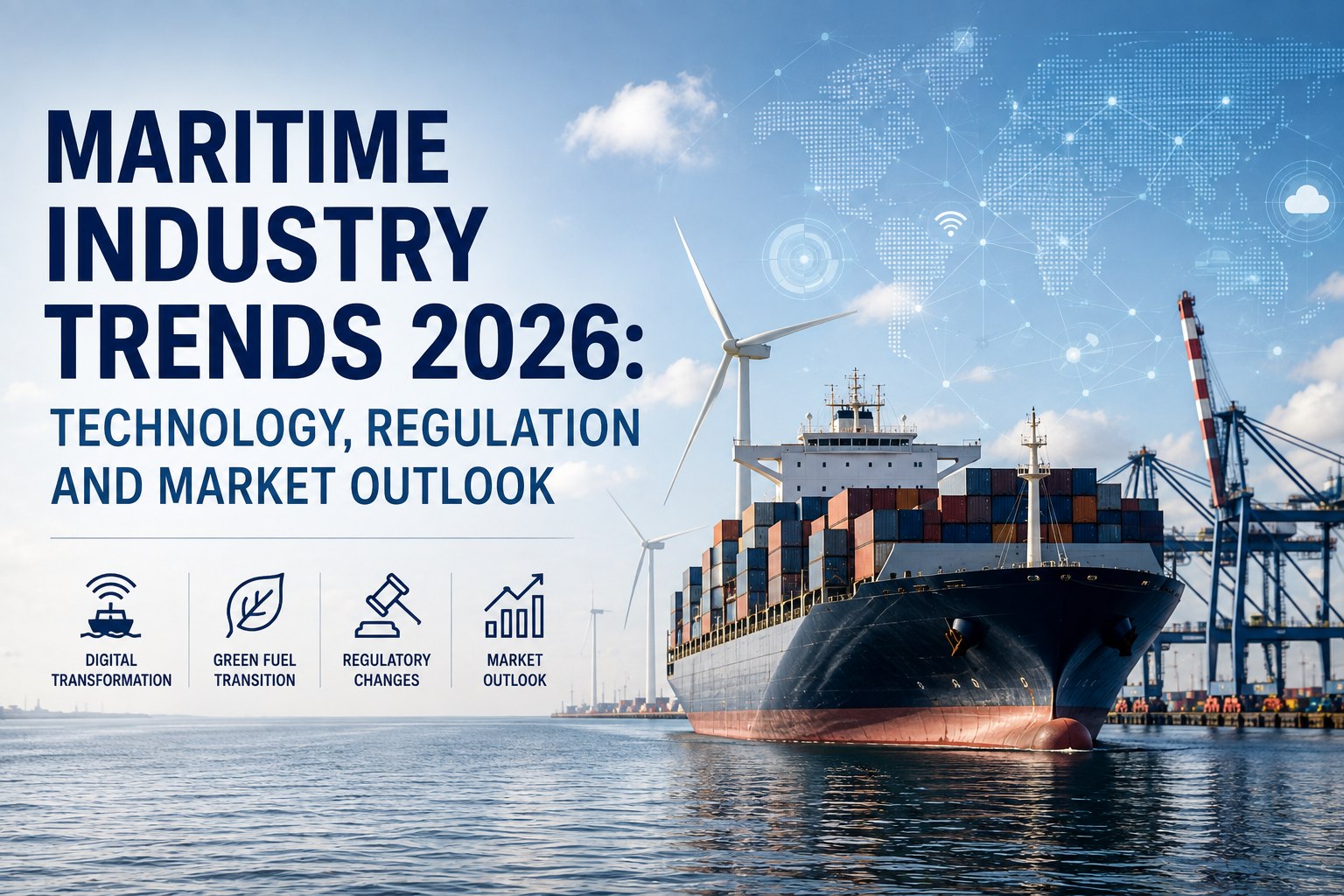
The maritime industry enters 2026 at a genuine inflection point, where three forces — a tightening but suddenly less certain climate rulebook, a fast-accelerating wave of digital and autonomous technology, and a volatile geopolitical and market backdrop — are converging to reshape how ships are designed, fuelled, crewed and operated. This is not a year of incremental change. The IMO has adopted the first global safety code for autonomous ships and approved interim guidelines for hydrogen and ammonia as marine fuels, even as its headline Net-Zero Framework slipped by a year and left owners navigating a patchwork of regional rules instead of one clear global signal. Alternative-fuel orderbooks have swelled into the thousands, wind-assist and air-lubrication technologies have moved from novelty to specification, and a persistent shortage of qualified officers is pushing both automation and a rethink of how the industry attracts and retains people. For the industry leaders and fleet managers who have to make capital decisions against this backdrop, the defining challenge of 2026 is making twenty-to-thirty-year investments in a world where the rules and the technology are moving faster than any single decision cycle. This guide maps the trends that matter — the decarbonisation and fuel transition, the regulatory shifts, the digital and autonomous leap, the market outlook by segment, and the workforce and resilience pressures — and draws out the strategic thread running through all of them. To manage inspections, compliance evidence and fleet condition data through a period of rapid change, and keep the record class and charterers increasingly demand organised, start a free trial or book a demo.
Decarbonisation Becomes a Question of Flexibility
Decarbonisation has shifted from a long-term aspiration to an urgent strategic imperative, but 2026's defining feature is not a single winning fuel — it is the primacy of flexibility. The alternative-fuel orderbook has grown to nearly two thousand ships, led by LNG with well over a thousand vessels, followed by methanol, LPG, and smaller but real numbers of hydrogen, ammonia, ethane and biofuel-capable ships. No single fuel dominates, and that is precisely the point: with the global rulebook not fully aligned, fuel supply chains immature, and pricing volatile, committing a twenty-five-year asset to one fuel is a bet few owners want to make.
The industry's answer is optionality. Fuel-flexible dual- and tri-fuel engines that can run on diesel or LNG today and drop in bioLNG, methanol or ammonia as economics allow are becoming the default for newbuilds, letting owners defer the fuel bet while keeping the vessel relevant across its life. This is paired with a suite of energy-saving technologies delivering immediate, scalable emissions cuts in parallel with fuel switching: wind-assisted propulsion, now supported by classification notations that took effect in January 2026, and air lubrication systems, which an estimated ninety-two per cent of the global fleet by vessel count is not yet equipped with, leaving enormous headroom for retrofit. The strategic message running through 2026 is to build flexibility in from the vessel design phase and buy optionality — through fuel-flexible engines, selective biofuel use, LNG where allowed, hybrid systems, and relentless operational efficiency — rather than making an irreversible fuel commitment in an unsettled market.
The Regulatory Landscape Tightens and Fragments
2026's regulatory story is one of tightening pressure and, paradoxically, reduced certainty. The one-year delay to the IMO Net-Zero Framework was a real setback for owners seeking a clear global signal, but the direction of travel is unchanged and, in the vacuum, regional and customer pressures are driving the transition instead. The EU Emissions Trading System and FuelEU Maritime already reach fifteen to twenty per cent of global shipping, putting a direct price on emissions for a growing slice of the fleet, and a key open question is whether the significant revenues these schemes collect flow back into fuel supply and retrofits — building confidence — or become a permanent cost burden.
Alongside the climate rules, the safety and technology framework advanced markedly. The timeline below captures the milestones that make 2026 a pivotal regulatory year.
Cybersecurity has also hardened from good practice into obligation, with the IMO cybersecurity code and amendments to the ISM Code making robust cyber measures a strategic requirement for every operator. The net effect is a regulatory environment that is simultaneously more demanding and less uniform — more rules, from more sources, not yet fully harmonised — which is itself a planning challenge. To keep compliance evidence, survey records and certificates organised as requirements multiply, start a free trial or book a demo.
The Autonomous and Digital Leap
2026 is the year autonomous shipping crossed from pilot projects into a regulated reality. The adoption of the MASS Code gives the commercial use of remotely operated and autonomous cargo ships its first global safety framework, and while fully unmanned deep-sea voyages remain years away, semi-autonomous vessels are entering commercial service in controlled environments and remote operation centres are emerging, letting a single shore-based operator oversee multiple vessels. The near-term model is assisted autonomy — vessels with sophisticated AI decision-support optimising routing and fuel use and reducing human error — rather than empty bridges, with the master's accountability explicitly preserved even when operating remotely.
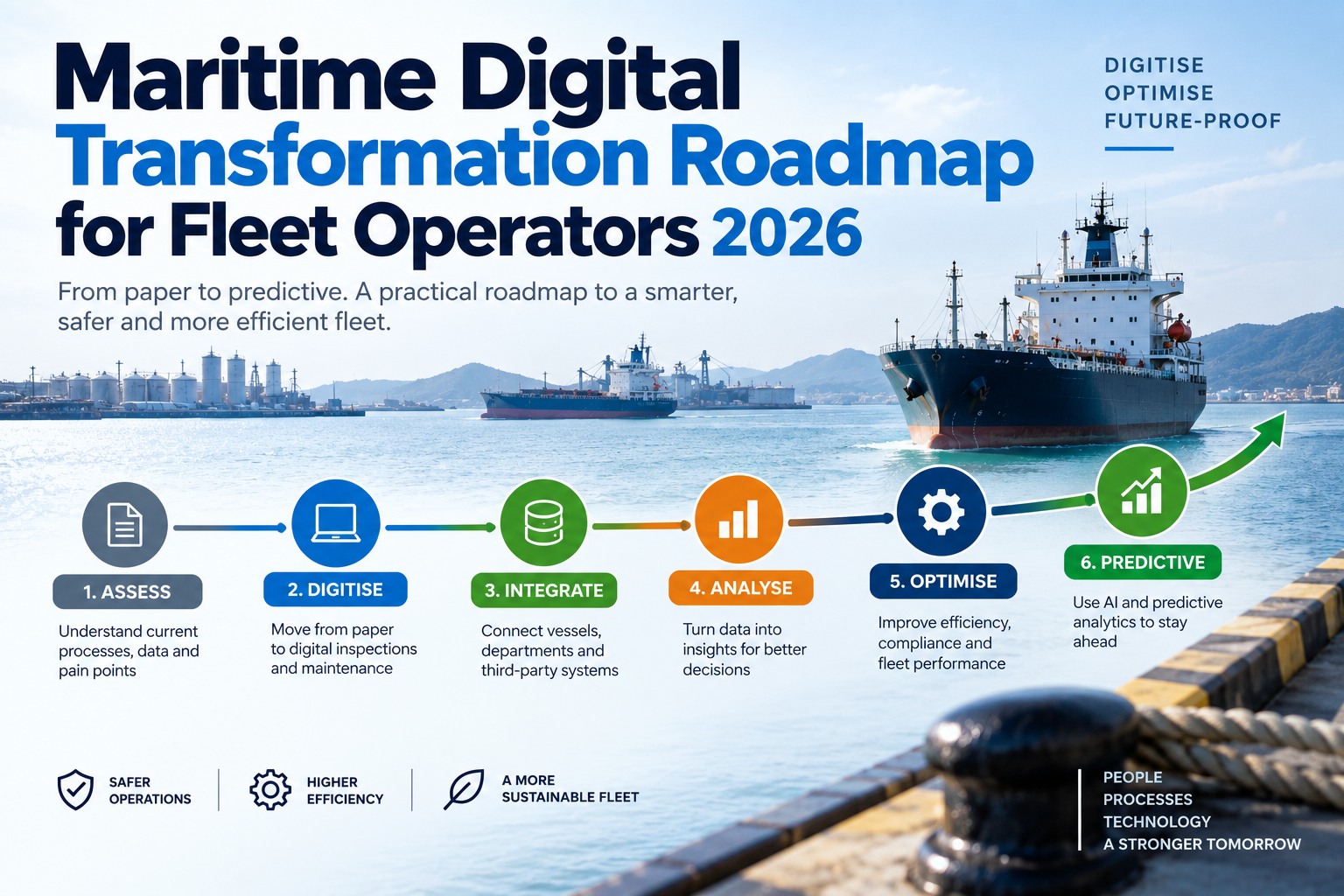
Underneath the autonomy headlines, the deeper shift is pervasive digitalisation. Digital twins have delivered striking operational gains, with turnaround-time improvements of around forty per cent reported, and AI-driven predictive maintenance is catching equipment problems before they become failures, cutting downtime and cost. Fleet-wide digital optimisation reveals efficiency opportunities across whole fleets rather than single ships, satellite connectivity and improving onboard bandwidth enable real-time data sharing, and simulation modelling lets owners test how upgrades affect total cost of ownership before committing. The common thread is that data has become the operating system of the modern fleet — the basis on which fuel, maintenance, routing and compliance decisions are increasingly made.
The Market Outlook Splits by Segment
The commercial outlook for 2026 is best understood not as a single number but as a set of diverging segment stories, with overall global demand growth modest but regional hubs in Asia-Pacific and the Middle East seeing more robust activity. Freight outcomes split by what drives each trade, and macro factors — inflation, oil prices, sanctions and geopolitical risk around chokepoints — shape rates and routing more than any industry-wide trend.
Cutting across the segments is a changing view of fleet renewal and recycling. The traditional focus on vessel age is giving way to a lifecycle view in which a well-maintained older ship with strategic upgrades — energy-saving devices, coatings, engine tuning, alternative-fuel readiness — can outperform a neglected younger vessel, and retrofits offer faster, cheaper gains than waiting for a newbuild. Recycling acts as the pressure valve: if rates stay weak and compliance costs rise, older ships exit sooner, with the Hong Kong Convention pushing safer, better-documented recycling that in turn affects end-of-life timing and resale values.
The Workforce and Resilience Squeeze
Beneath the technology and regulation sits a human constraint that shapes both: the industry does not have enough qualified people. A projected shortfall of tens of thousands of officers, with demand outstripping supply by roughly ten per cent, is one of the quieter but more consequential pressures of 2026, and it is driving change on two fronts at once. It is part of the economic logic for automation and assisted autonomy, which aim to reduce routine crew workload, and it is forcing a serious focus on attracting and retaining people through better connectivity at sea, mental health and telehealth support, and modern training.
The skills the workforce needs are shifting in step with the technology. Familiarity with electronic logbooks, remote monitoring and digital tools is becoming baseline, cybersecurity awareness is now essential as automation widens the digital attack surface, and VR and AR simulation-based training is spreading as a safe, realistic way to build complex skills. At the same time, resilience has become a strategic priority in its own right — supply-chain robustness, cybersecurity and the ability to absorb geopolitical shocks around key chokepoints are now board-level concerns rather than operational footnotes. The through-line is that the human and organisational side of shipping is being reshaped as profoundly as the hardware, and the operators who thrive will be those that invest in people and resilience alongside fuel and technology.
The Strategic Thread — Managing Twenty-Year Assets in a Fast-Moving World
Pull the trends together and a single strategic challenge emerges: how to make sound long-lived decisions when the fuel, the technology, the rules and the market are all moving faster than the assets they govern. A ship ordered in 2026 will trade into the 2050s, through fuel transitions, regulatory tightening and technological change that no one can fully forecast, and the recurring answer across every trend is the same — build in flexibility, preserve optionality, and let data rather than guesswork drive the decisions.
That principle applies from the drawing board to daily operations. In design, it means fuel-flexible engines, space reserved for future technology, and hybrid-ready systems. In fleet strategy, it means valuing lifecycle performance over raw vessel age, favouring retrofits that deliver fast returns, and keeping a clear-eyed view of when recycling makes more sense than continued trading. In operations, it means using digital optimisation, predictive maintenance and continuous emissions monitoring to squeeze efficiency from the existing fleet while the bigger fuel bets mature. And underpinning all of it, it means treating data and documentation as strategic assets — because in a world of multiplying regulations, tightening survey regimes and rising cyber and compliance expectations, the operators who can find, trust and act on their own fleet data will move faster and more confidently than those who cannot. The winners of 2026 and the years beyond will not be the ones who guessed the single right fuel or technology; they will be the ones who stayed flexible, invested in their people, and built the operational and data discipline to adapt as the picture keeps changing. To bring inspection, compliance and condition data into one organised, trustworthy record as the industry transforms around you, start a free trial or book a demo.