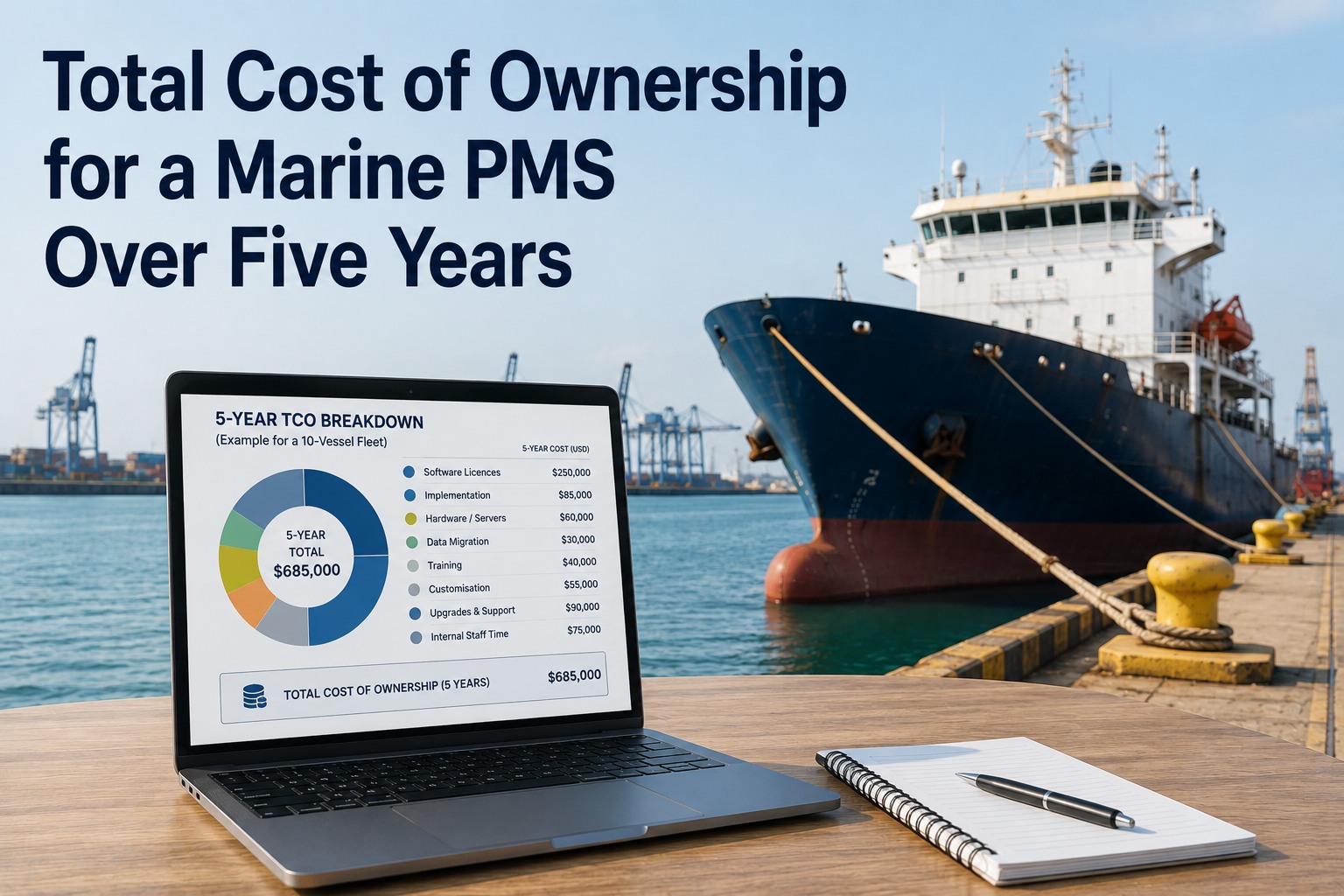
Enterprise suites and mobile-first platforms are usually compared on what they can do, which is the least useful question available. Capability is not what separates them in practice. Gartner forecasts that more than 70 percent of recently implemented ERP initiatives will fail to fully meet their original business case goals by 2027, and the causes it names are behavioural rather than technical: absent executive commitment, no real investment in change management, and old processes automated rather than fixed. Panorama Consulting's 2025 research puts the overall failure rate at 68 percent, with poor change management, bad data migration and inexperienced teams at the top of the list, and a mid-size implementation averaging 17.4 months and running over budget 55 percent of the time. None of that is a criticism of enterprise software, which is genuinely powerful and genuinely necessary for some fleets. It is a description of what the model demands from the organisation buying it. The real question is not which platform is better. It is whether your fleet has the capacity to absorb the change the broader model requires, because a system half the crew routes around produces worse data than the one it replaced. Start a free trial of Marine Inspection and test the narrower model against your own vessels.
Delivered Value Has Two Terms, and Only One Gets Evaluated
Capability
multiplied by
Adoption
equals
Delivered Value
Broad platform, partial adoption
Wide capability across many functions, used as the primary way of working by part of the organisation while the rest falls back on spreadsheets, email or the legacy system.
Two versions of the truth, and worse data than before the project started
Narrow platform, full adoption
Deliberately limited scope covering maintenance, inspection and compliance evidence, used by every crew member as the only place work is recorded.
One version of the truth, complete within its boundary, and trustworthy
What Each Model Is Betting On
Both models are internally coherent. They simply place the risk in different places, and the right choice depends on which risk your organisation is better equipped to carry. Book a Marine Inspection demo and see what the narrower bet looks like in operation.
The Enterprise Suite Bet
Wagers thatIntegration across technical, procurement, crewing, safety and finance is worth a multi-quarter change programme, because reconciliation between separate systems costs more than the programme does.
Pays off whenSeveral departments genuinely move onto one data model and stay there, an executive sponsor owns the change, and the organisation has a named person whose job for a year is making it land.
Fails whenTwo of four departments keep their existing tools, which means paying for a shared source of truth that is not shared, and carrying the training and configuration burden anyway.
The Mobile-First Bet
Wagers thatAdoption is the binding constraint on delivered value, so narrow scope is a price worth paying to get every crew member recording work at the machine rather than reconstructing it afterwards.
Pays off whenThe failing workflow sits inside the technical department, the record is currently a reconstruction, and nobody has capacity to run a programme across four functions.
Fails whenYou genuinely needed the breadth. Chartering, payroll and finance stay in separate systems, and the reconciliation cost the enterprise model exists to remove remains yours to pay.
What the Failure Data Actually Says
Enterprise implementation research is unusually consistent across sources, and the pattern in it is more useful than any single number. Every one of these findings points at organisational capacity rather than software quality. Sign up for Marine Inspection and remove most of these variables from the equation.
70%
Will not fully meet their business case
Gartner forecasts that more than 70 percent of recently implemented ERP initiatives will fail to fully meet their original business case goals by 2027, and identifies the causes as behavioural rather than technical.
68%
Overall failure rate
Panorama Consulting's 2025 research, with published estimates ranging from 55 to 75 percent failing to meet original objectives. Top causes cited: poor change management, bad data migration and inexperienced teams.
82%
Cite resistance to change as a barrier
Ahead of insufficient sponsorship at 72 percent, unrealistic expectations at 65 percent and ineffective project management at 54 percent. Not one of the top four is a software capability problem.
62%
Name data migration as the number one challenge
And Gartner separately identifies poor data quality flowing into the system as the leading failure reason. For a fleet, that means inconsistent component naming across vessels is a project risk rather than a tidying task.
17.4
Months for a mid-size implementation
Running over budget 55 percent of the time. In maritime specifically, enterprise deployments commonly run six to fifteen months, against six to twelve weeks for a focused cloud platform.
Def
What adoption actually means
The degree to which the people meant to use a system use it as their primary way of working, rather than falling back on spreadsheets, email or the legacy system. Measured that way, a perfectly configured platform that half the team routes around produces worse data than the one it replaced, because now there are two versions of the truth.
Comparing the Two Models
Read this as a description of two different bargains rather than a scorecard. The final column is what to establish about your own organisation, not about the vendor. Schedule a walkthrough and work down it with your technical team present.
Table 1: Enterprise Suite and Mobile-First Platform Compared
2026 EVALUATION REALITY
Enterprise software is not the problem in this data. Cloud ERP adoption reached 64 percent in 2024, up from 44 percent in 2020, and 95 percent of companies above a billion dollars in revenue run an ERP. These platforms work, at scale, every day. What the failure statistics measure is the gap between what organisations buy and what they resource. Adoption is the most tracked success metric for a reason. Change management research consistently finds user adoption to be the indicator practitioners monitor most closely in these programmes, because it is where the business case is won or lost. The regulatory floor is identical either way. ISM Code Element 10 requires a documented maintenance system, SOLAS Chapter IX makes ISM mandatory for SOLAS-certified ships, and class approves the owner's system regardless of which model delivers it. Vendor-reported outcome figures are not audited. Savings, time-reduction and adoption percentages published by any platform in this market, including ours, come from supplier data rather than independent study — ask for a named reference of comparable fleet size and verify directly.
Which term are you short of?
Capability, or adoption
If capability is the gap, the enterprise model is the honest answer and this page will not argue otherwise. If adoption is the gap — engineers working around the system, records written up after the watch, a report only one person can produce — then more capability makes it worse, not better. Marine Inspection puts every core workflow on the device the crew already carries.
Assess Your Own Change Capacity
Since the failure causes are behavioural, the decisive assessment is of your organisation rather than of any vendor. Score yourself honestly against five statements. This takes ten minutes and is worth more than a month of feature comparison. Start a free trial if you land in the lower half.
Five Statements. Count How Many Are True Today.
01
An executive outside the technical department is personally accountable for this project succeeding
Insufficient sponsorship is cited as a barrier by 72 percent of organisations. A steering committee is not a sponsor. A named person who will be asked about it in board meetings is.
02
We can name the person whose main job for the next year is making this land
Not a coordinator with a day job. If the answer is that several people will contribute alongside existing duties, that is the profile of the projects in the 68 percent.
03
Our component naming is consistent across every vessel in the fleet
Data migration is the number one challenge for 62 percent of organisations and poor data quality is the leading failure cause. The same bearing under a different name on each ship is a project risk, not a housekeeping item.
04
We intend to fix processes rather than automate the ones we have
Gartner names old processes automated rather than redesigned among its behavioural failure causes. Recreating today's workflow inside new software buys the cost without the benefit.
05
Every department in scope has agreed to stop using its current tool on a fixed date
Agreed, in writing, with a date. Resistance to change is the most cited barrier at 82 percent, and a legacy system left running is where that resistance goes to live.
Four or five trueYou have the capacity for the enterprise model, and the breadth will probably pay for itself. Choose on scope and integration rather than on adoption risk.
Three or fewerThe enterprise model is a bet against your own data. Deploy narrow first, get clean structured records inside a quarter, and revisit breadth from a stronger position.
You Do Not Have to Choose Once
The models are usually presented as a fork. In practice they sequence, and sequencing removes most of the risk the failure data describes. Book a walkthrough and cost the sequenced route against the single-step one.
Table 2: Three Routes and What Each Actually Requires
Frequently Asked Questions
Is an enterprise suite the wrong choice for a fleet?
No, and any page claiming otherwise is selling something. Enterprise platforms deliver genuine value where several departments move onto one data model and stay there, and cloud ERP adoption has risen sharply precisely because that value is real. The failure statistics do not measure software quality; they measure the gap between what organisations buy and what they resource. Gartner attributes the causes to absent executive commitment, insufficient investment in change management and old processes automated rather than fixed. If your organisation can supply those three things, the enterprise model is a sound choice. If it cannot, no vendor can supply them for you.
Why does adoption matter more than capability?
Because delivered value is capability multiplied by adoption, and only the first term gets evaluated during procurement. Adoption means the degree to which people use the system as their primary way of working rather than falling back on spreadsheets, email or the legacy system. Where adoption is partial, the organisation ends up with two versions of the truth, which is a worse position than before the project, because at least the old system was internally consistent. For a fleet this is sharper still, since the data generated at the machine is the evidence class and Port State Control assess. A record nobody creates is not a smaller record; it is an absent one.
What makes a mobile-first platform adopt more easily?
Three structural things rather than better design instincts. The work and the record happen in the same place, so nobody has to remember something and re-enter it later at a desk. The scope is narrow enough that a new joiner can complete a first job without classroom training, which matters when crews rotate every few months. And it functions offline by default, so the moment an engineer is most able to record properly — at the machine, mid-passage, with no connection — is the moment the tool works rather than the moment it stalls. None of that makes it better software. It makes it software whose adoption curve does not depend on a change programme.
Can we run both models together?
Yes, and it is a common and sensible configuration. An enterprise suite handles procurement, crewing, finance and commercial workflows ashore, while a mobile-first layer handles crew execution and inspection evidence at sea, connected by one integration. Establish which system holds the master equipment record, how running hours and defect status flow between them, and what a consolidated fleet report looks like across both. Cost the pair as a single figure rather than each in isolation. This route is particularly worth considering where the suite is working well for shore functions and the failure is specifically that crews record on paper.
If we deploy narrow now, do we lose the option of breadth later?
Only if you fail to protect it contractually. Agree open-format export rights covering the equipment hierarchy, maintenance history, spares positions and inspection records at the start, and the option stays open. Sequencing actually improves the later position, because the single largest cause of enterprise failure is data quality, and a year on a focused platform produces a validated hierarchy, consistent component naming across vessels and structured completion records. Entering an enterprise programme with that in hand rather than with a decade of spreadsheets removes the risk the statistics keep pointing at.
Capability
x
Adoption
Buy for the Term You Are Actually Short Of
Most fleets evaluating software have plenty of the first term and a shortage of the second. Marine Inspection is built so the second term takes care of itself — every core workflow on the device your engineers already carry, offline by default, with a new joiner productive on their first job and no change programme required to get there.

.png)
.png)