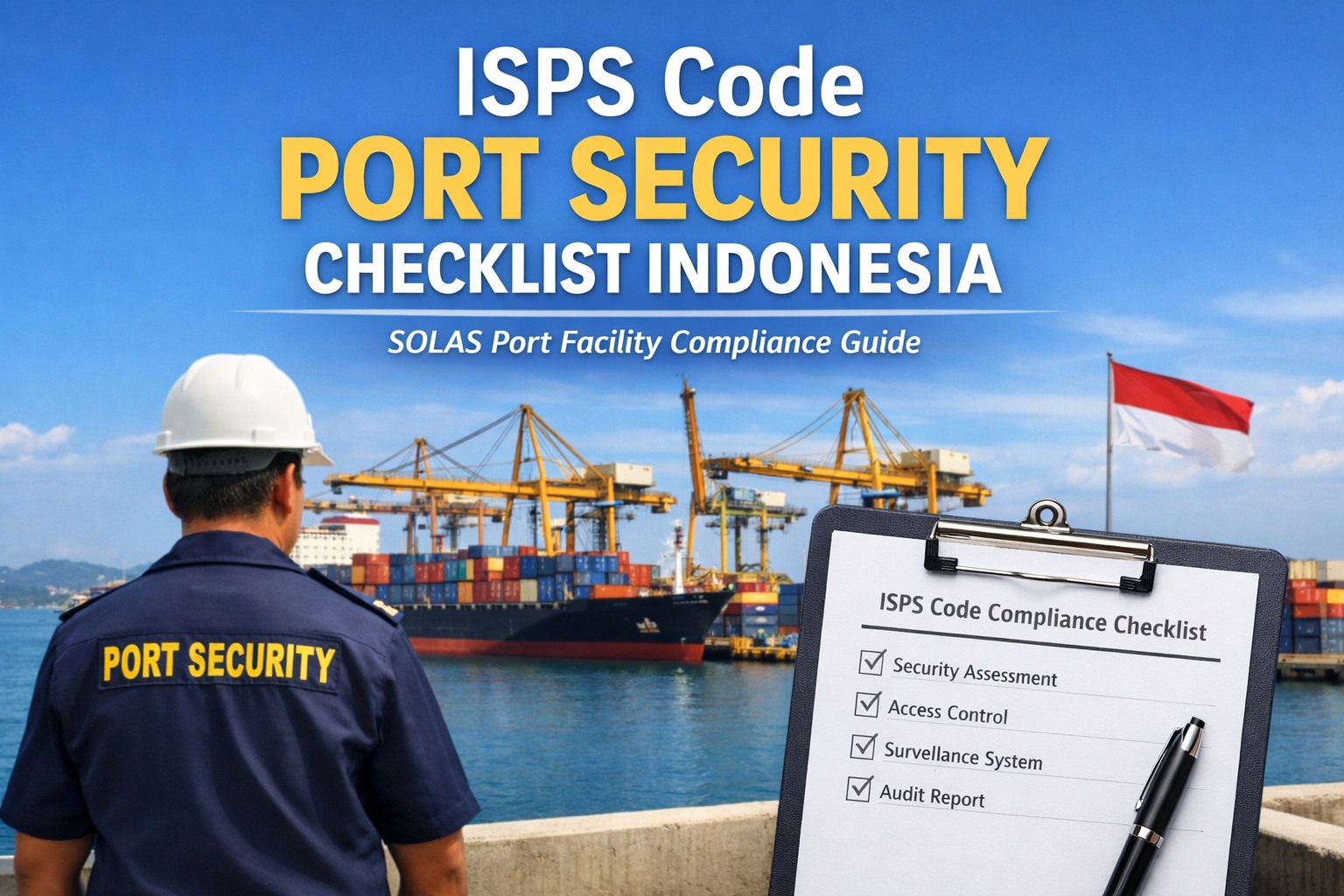
Ensuring comprehensive ISPS Code port security compliance is essential for SOLAS adherence, facility protection, and regulatory readiness across Indonesian port operations. Systematic verification of PFSA and PFSP documentation, SoCPF certification, port security committee appointments, PFSO certification and training, security level escalation procedures, landside and waterside access control, cargo and dangerous goods screening, Declaration of Security processes, vessel access control, CCTV and surveillance systems, incident reporting, training and drill programmes, ship security certificate verification, Inaportnet and KSOP interface, TERSUS and TUKS special terminal compliance, dangerous goods and weapon detection, cybersecurity and data protection, internal audit and NCR closeout, and SoCPF renewal procedures helps maintain port security standards and supports effective facility security management throughout Indonesia. Start your free ISPS Code port security inspection trial
Marine Inspection Checklist Software for Port Security Compliance
ISPS Code Port Security Checklist Indonesia (SOLAS Port Facility Compliance Guide 2026)
Importance of ISPS Code Port Security Compliance in Indonesia
PFSA, PFSP & SoCPF Readiness
- Systematic maintenance of Port Facility Security Assessments, PFSP documentation approved by DJPL, and valid SoCPF certification ensures Indonesian port facilities meet SOLAS Chapter XI-2 and ISPS Code requirements, preventing costly non-compliance findings during KPLP and KSOP verification visits.
Access Control & Surveillance
- Comprehensive verification of landside perimeter security, waterside patrol procedures, CCTV coverage, gangway access controls, and cargo screening systems ensures port facilities maintain effective threat detection and access management across all security levels as required under PM 134/2016.
Audit, NCR Closeout & Continuous Improvement
- Systematic internal ISPS audits aligned with PM 134/2016, tracked NCR corrective actions, KPLP external verification records, and SoCPF renewal procedures ensure Indonesian port facilities demonstrate continuous security improvement and maintain uninterrupted operational certification.
Training, Drills & Incident Response
- Regular security drills conducted quarterly, annual full-scale exercises, ship/port interface drills, Level 2 escalation exercises, and documented incident reporting procedures coordinated with KSOP, Polri KP3, Bakamla, and TNI-AL ensure Indonesian port facilities can respond effectively to security threats at all three ISPS security levels.
Ready to enhance ISPS Code port security compliance in Indonesia? Schedule a personalised demo to see automated port security inspection tracking, or start your free trial today.
1. PFSA & PFSP Documentation Validity and Review
PFSA & PFSP Documentation Validity and Review inspection requirements:
2. SoCPF Certification, DJPL Verification & IMO GISIS
SoCPF Certification, DJPL Verification & IMO GISIS inspection requirements:
3. Port Security Committee & PSO/PFSO Appointments
Port Security Committee & PSO/PFSO Appointments inspection requirements:
4. PFSO & Security Personnel Certification & Training
PFSO & Security Personnel Certification & Training inspection requirements:
5. Security Level Declaration & Escalation Procedures
Security Level Declaration & Escalation Procedures inspection requirements:
✓ Transform ISPS Code Port Security Compliance in Indonesia: With 200 comprehensive verification points across 20 critical security areas—maintaining SOLAS and DJPL readiness for Indonesian port facility operations requires systematic tracking and documentation. Schedule your demo now to discover automated port security inspection tracking and compliance reporting.
6. Port Facility Access Control – Landside Perimeter
Port Facility Access Control – Landside Perimeter inspection requirements:
7. Port Facility Access Control – Waterside & Anchorage
Port Facility Access Control – Waterside & Anchorage inspection requirements:
8. Cargo, Vehicles & Dangerous Goods Screening
Cargo, Vehicles & Dangerous Goods Screening inspection requirements:
9. Ship/Port Interface – Declaration of Security (DoS)
Ship/Port Interface – Declaration of Security (DoS) inspection requirements:
10. Vessel Access Control, Gangway & Restricted Areas
Vessel Access Control, Gangway & Restricted Areas inspection requirements:
✓ Streamline ISPS Audit Tracking & NCR Closeout for Indonesian Port Facilities: Systematic digital security inspection across CCTV systems, incident reporting, drill records, DoS documentation, and SoCPF renewal reduces non-compliance risk and ensures continuous DJPL certification readiness. Schedule your demo now to see how digital tools simplify ISPS Code compliance in Indonesia.
11. CCTV, Surveillance, Lighting & Security Equipment
CCTV, Surveillance, Lighting & Security Equipment inspection requirements:
12. Incident Reporting, Breach Response & Investigation
Incident Reporting, Breach Response & Investigation inspection requirements:
Why Use Digital Management for ISPS Code Port Security Compliance in Indonesia?
Marine Inspection App Benefits for ISPS Code Port Security Management in Indonesia:
- ✓ Automate ISPS Code port security inspections with mobile checklists covering PFSA, PFSP, SoCPF, and all DJPL regulatory requirements
- ✓ Maintain complete digital records for SoCPF certification, PFSO training, drill logs, DoS documentation, and incident reports
- ✓ Track SoCPF renewal timelines, PFSO certificate expiry, quarterly drill schedules, and KPLP audit due dates
- ✓ Monitor NCR corrective actions, security incident investigations, and audit finding closeout status
- ✓ Generate comprehensive ISPS compliance reports for DJPL, KSOP, KPLP, and port authority verification visits
- ✓ Set automated alerts for SoCPF renewal deadlines, PFSO recertification, drill schedules, and internal audit timelines
Join leading port facility operators who trust digital security management for Indonesian ISPS Code compliance. Schedule your demo or sign up for free to experience automated ISPS Code port security inspection tracking.
Frequently Asked Questions About ISPS Code Port Security Compliance in Indonesia
1. What areas are covered in the ISPS Code port security checklist for Indonesia?
The checklist covers twenty critical security areas: PFSA & PFSP Documentation, SoCPF Certification & DJPL Verification, Port Security Committee & PSO/PFSO Appointments, PFSO & Security Personnel Certification, Security Level Declaration & Escalation, Port Facility Access Control (Landside and Waterside), Cargo & Dangerous Goods Screening, Declaration of Security, Vessel Access Control & Gangway, CCTV & Surveillance, Incident Reporting & Breach Response, Training, Drill & Exercise Programme, Ship Security Certificate (ISSC) Verification, Inaportnet & KSOP Interface, TERSUS & TUKS Special Terminal Compliance, Dangerous Goods & Weapon Detection, Cybersecurity & PFSP Data Protection, Internal Audit & NCR Closeout, and SoCPF Renewal & Continuous Improvement—totalling 200 verification points.
2. What certificates and documentation must Indonesian port facilities maintain for ISPS compliance?
Indonesian port facilities must maintain a valid SoCPF issued by DJPL within the 5-year period, with the IMO GISIS record matching the certificate. The PFSA must be reviewed within 5 years, the PFSP approved by DJPL with a current amendment log, and the PFSO must hold a valid certificate per PM 134/2016, renewed within the 3-year period. RSO assessment reports, DJPL verification visit records, and internal audit documentation must all be retained on file. Sign up to manage all certificate validity dates digitally.
3. What training and drill requirements apply to Indonesian port facility security under PM 134/2016?
Under PM 134/2016, Indonesian port facilities must conduct security drills quarterly, complete an annual full-scale exercise, and maintain drill records accessible for KPLP audit. Required drills include ship/port interface drills, Level 2 escalation drills, and communication drills with DJPL. Drill schedules must be posted for the next 12 months, debrief and lessons learned must be recorded, and the TDE programme must be reviewed annually.
4. What ISPS Code requirements apply to TERSUS and TUKS special terminals in Indonesia?
TERSUS terminals must have their ISPS status confirmed, a PFSP covering special operations, a secured and patrolled perimeter, a secured DG handling area, and a maintained security log. TUKS operators must hold a valid SoCPF, have certified security personnel, confirmed CCTV coverage, and a confirmed PFSO contact. Joint drills between TUKS and the main facility must be completed and documented. Schedule a demo to see how digital tools manage special terminal compliance tracking.
5. How can digital management improve ISPS Code port security compliance in Indonesia?
Digital management provides mobile security inspection checklists covering all 200 points, automated SoCPF and PFSO renewal reminders, real-time incident reporting with evidence tracking, NCR corrective action management, drill schedule tracking, and comprehensive compliance reports for DJPL, KSOP, and KPLP verification visits. Cybersecurity compliance items including BSSN guidelines and cyber incident reporting can also be tracked within the same platform. Start your free trial to experience automated ISPS Code port security management.
Take Action: Implement Comprehensive ISPS Code Port Security Management
Download our FREE ISPS Code Port Security Checklist for Indonesia and start implementing systematic SOLAS and DJPL compliance verification. Integrating digital security management ensures consistent inspection standards, comprehensive audit documentation, and proactive SoCPF renewal management across all Indonesian port facilities.
Get Started Today: Start your free trial for instant access to automated ISPS Code port security inspection tracking and compliance tools, or schedule a personalised demo to see how we help port operators, PFSOs, and maritime organisations maintain security excellence and ensure full compliance with ISPS Code, PM 134/2016, DJPL, KSOP, and KPLP requirements.
Start Managing ISPS Code Port Security Compliance in Indonesia
200 verification points across PFSA, PFSP, SoCPF, access control, CCTV, incident reporting, TDE drills, TERSUS and TUKS terminals, cybersecurity, and SoCPF renewal—tracked automatically for full DJPL and SOLAS compliance.