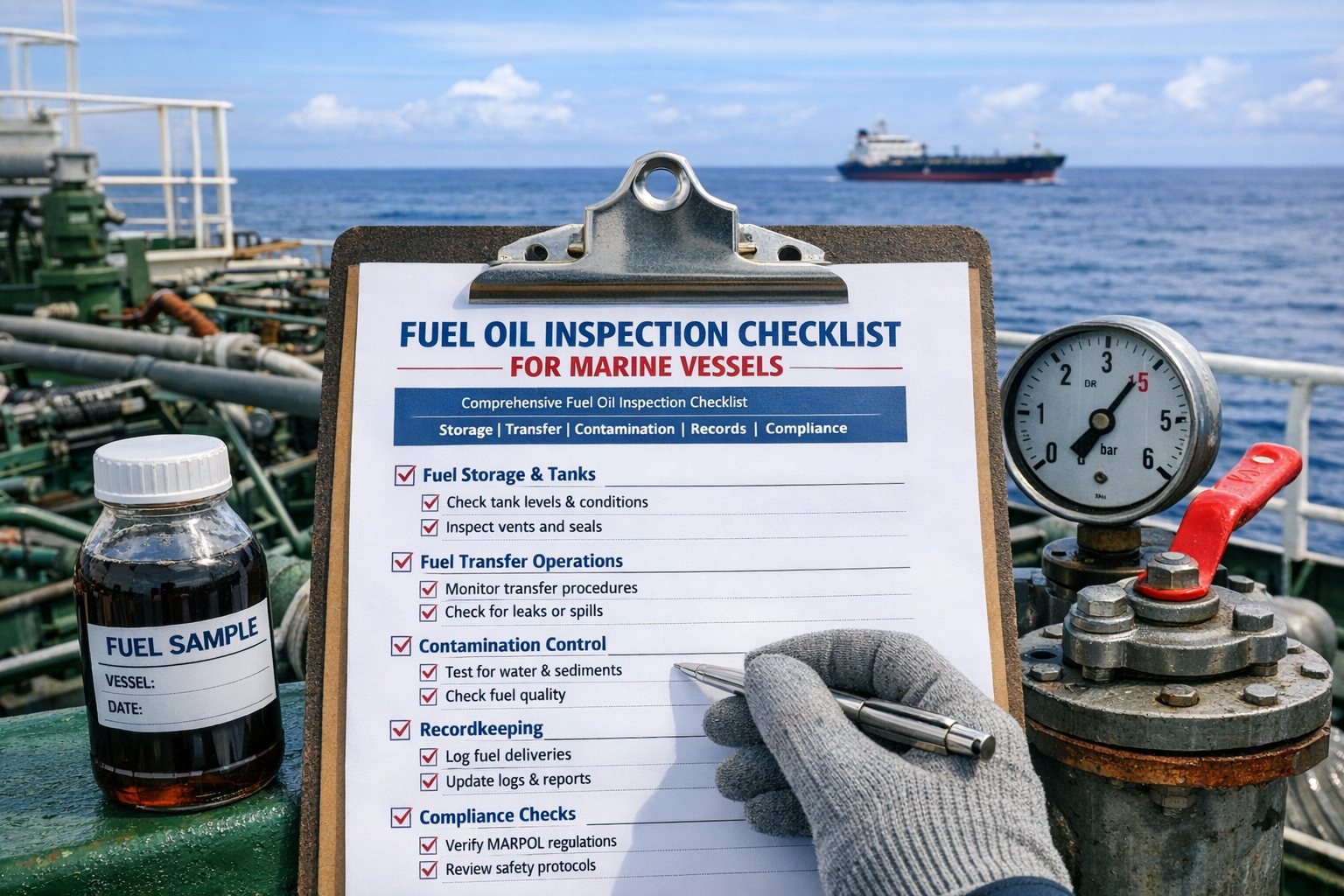
Fuel oil inspection is critical for marine vessel safety, regulatory compliance, and operational efficiency. Proper fuel management prevents contamination, ensures MARPOL compliance, and protects expensive engine systems from damage caused by poor fuel quality or improper handling procedures.
Implement digital fuel inspection tracking with automatic alerts, photo documentation, and compliance reporting.
Fuel Oil Inspection Impact
Fuel Inspection Workflow
Critical Inspection Areas
Pre-Bunkering Inspection
During Fuel Transfer Operations
Post-Bunkering Quality Verification
Viscosity: Match engine specifications
Flash Point: ≥60°C minimum
Water Content: ≤0.5% v/v
Sulfur Content: Per ECA requirements
MDO/MGO: 12-24 hours minimum
LSMGO: 6-12 hours minimum
Before Use: Verify no water/sediment
Temperature: Maintain optimal settling
Duration: 12 months from delivery
Storage: Cool, dark location
Labeling: Complete identification
Access: Available for PSC inspection
Fuel Storage Tank Inspection
Documentation & Compliance
Digitize Fuel Oil Inspection Management
Automated checklists, photo documentation, and compliance tracking
Common Fuel Inspection Issues
Monthly Fuel System Maintenance
Frequently Asked Questions
How long must fuel samples be retained?
MARPOL Annex VI requires representative fuel samples retained for 12 months from delivery date. Samples must be 400ml minimum, properly sealed, labeled with vessel name, date, port, quantity, and supplier. Store in cool, dark location accessible for PSC inspection.
What causes fuel contamination?
Common causes: water ingress through tank vents/seals, cross-contamination between different fuel grades, sediment from storage tanks, microbial growth in stored fuel, contaminated delivery from supplier. Prevention: proper tank maintenance, settling time, regular draining, quality testing.
When should fuel changeover occur for ECA compliance?
Changeover must complete before entering ECA boundaries. Start changeover 2-4 hours before ECA entry allowing complete fuel system flushing. Document exact times in Oil Record Book and fuel changeover log. Maintain low-sulfur fuel throughout ECA transit. Reverse procedure upon exit with proper documentation.
What should I do if fuel appears contaminated?
Immediately stop bunkering operations if contamination suspected during transfer. Segregate contaminated fuel in separate tank. Collect additional samples for independent testing. Document incident thoroughly with photos and written report. Contact supplier and P&I club. Do not use fuel until testing confirms suitability. File non-conformity report.
Streamline Fuel Oil Management
Eliminate manual tracking with automated inspection systems
Digital checklists • Automatic alerts • Photo documentation