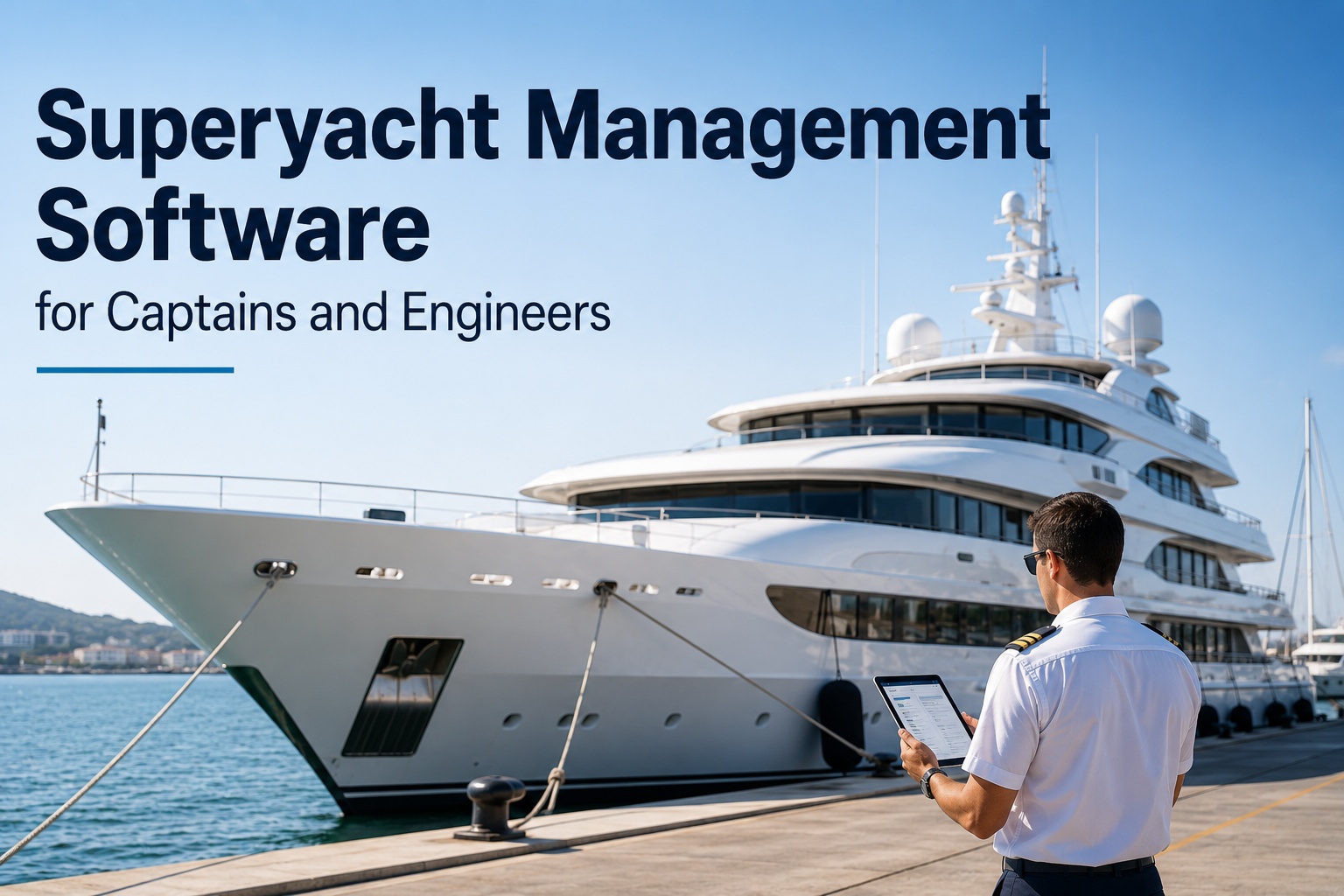
Superyacht compliance is not a gradient. It is a series of cliffs, and a great many owners and captains are less certain than they should be about which side of each one their vessel sits on. The Red Ensign Group Yacht Code came into effect on 1 January 2019, consolidating the Large Yacht Code as Part A and the Passenger Yacht Code as Part B, with the Cayman Islands Shipping Registry taking the secretariat function on behalf of the Group. The first major revision since 2019 was published in early 2024 and came into force in July 2024. Part A applies to yachts of 24 metres and over in load line length in commercial use for sport or pleasure, carrying no cargo and no more than 12 passengers. Part B applies to pleasure yachts of any size, private or in trade, carrying more than 12 but not more than 36 passengers — a count that excludes seafarers. Carry a thirteenth guest and you are in a different Part. Carry a thirty-seventh and you are building to full SOLAS passenger-ship standards. Cross 500 gross tons and the full weight of SOLAS, ISM, ISPS and MLC arrives, the same conventions that govern commercial ships. Each threshold changes the certificate set, the survey regime and the record you have to keep. Start a free trial of Marine Inspection and hold the right one.
Five Thresholds That Change Everything
24 m
Load line length — the Code applies
At 24 metres and over in load line length, a commercially used yacht falls under Part A of the REG Yacht Code, or an equivalent flag state standard. Classification society involvement follows, along with a Certificate of Compliance and a Minimum Safe Manning document.
300 GT
Radio availability arrangements
At and above 300 gross tons, backup arrangements for the radio installation are required in sea areas other than A4, satisfied by duplication of equipment, a shore-based maintenance contract, or at-sea maintenance capability. The method must be indicated on Form R of the Safety Radio Certificate.
500 GT
The full convention weight arrives
SOLAS, ISM, ISPS and MLC apply in full — the same instruments that govern commercial merchant ships. This is the single largest step change in the superyacht regulatory landscape, and it converts a yacht operation into something structurally closer to a small ship management company.
12 / 13
Passengers — Part A becomes Part B
Up to 12 passengers sits under Part A. Thirteen and above moves the yacht to Part B, the former Passenger Yacht Code, which is an IMO-accepted equivalence to SOLAS for up to 36 passengers. The count excludes seafarers, and the decision has to be made at design stage because it drives subdivision, fire protection and life-saving arrangements.
36
Above this, full passenger ship
Beyond 36 passengers the Code no longer provides a route, and the yacht must be built to full SOLAS passenger-ship standards. For any owner contemplating more than twelve guests, the Part B route is usually the only legally viable answer short of a full passenger-ship build.
Part A or Part B, and Why It Is Decided at Design Stage
The guest count is not an operational preference that can be revisited later. It is a structural decision that reaches into the hull. Book a Marine Inspection demo and see the certificate set for each pathway held against the vessel.
Part A
Formerly the Large Yacht Code, LY3
Applies toYachts of 24 metres and over in load line length, in commercial use for sport or pleasure, carrying no cargo and no more than 12 passengers.
Core pillarsSubdivision and damage stability, structural fire protection, scaled life-saving appliances and enhanced manning.
LineageThe first Large Yacht Code was published by the Maritime and Coastguard Agency in 1997, LY2 introduced the Short-Range Yacht, and LY3 took effect in August 2013 before becoming Part A in 2019.
Part B
Formerly the Passenger Yacht Code
Applies toPleasure yachts of any size, in private use or engaged in trade, carrying no cargo and more than 12 but not more than 36 passengers, excluding seafarers.
StatusAn IMO-accepted equivalence to the requirements of international conventions including SOLAS for up to 36 passengers, developed because merchant-ship standards do not transfer cleanly onto yachts.
Design consequenceSubdivision, structural fire protection and life-saving arrangements drive bulkhead positions, deck heights and tender garage geometry. This cannot be retrofitted as a charter preference.
One Code, two separate instruments
Although combined into a single Code, the two Parts remain separate entities, with common annexes produced where requirements overlap between them. The Code was also structured to adapt to the IMO's four-yearly adoption and amendment cycle for the conventions to which it forms equivalences — SOLAS, Load Line and STCW — which is what makes it more responsive to change than its predecessors.
The Five Hundred Ton Cliff
Every other threshold adds requirements. This one changes what kind of organisation you are running. Sign up for Marine Inspection and hold a full convention certificate set without hiring a compliance department to manage it.
500 GT
Below this threshold the Code carries most of the regulatory load and the operation remains recognisably a yacht. A captain, an engineer, an interior team and a management company are enough to run it, and the paperwork sits within what that group can absorb alongside the actual job of operating the vessel.
At and above 500 gross tons, SOLAS, ISM, ISPS and MLC apply in full — the same conventions that govern commercial merchant ships — while the Code and classification society rules continue to apply alongside them rather than being replaced by them. Nothing is subtracted. Three substantial regimes are added.
This is the only threshold in the sector that changes the kind of organisation you are running rather than the list of equipment you carry. It arrives with audit cycles, designated persons, security officers and certification regimes attached, and it arrives on a vessel whose crew list did not change the day it crossed the line.
ISM
A documented safety management system with a Document of Compliance and Safety Management Certificate, internal audits, a designated person ashore, and Element 10's requirement for a documented maintenance system with records that survive external audit.
ISPS
A ship security plan, a ship security officer, security levels, drills and records — an entire parallel regime with its own audit cycle and its own documentation.
MLC
Seafarer employment agreements, hours of work and rest, accommodation standards, medical care and complaint procedures, with inspection and certification attached. Crew administration becomes a regulated function rather than an HR convenience.
The practical effect
A yacht crossing 500 GT acquires the compliance obligations of a small shipping company without acquiring a shipping company's shore infrastructure. The crew is the same size. The captain still runs the vessel. The paperwork triples.
Two rulebooks, one crew
Flag State and Class, Held in One Record
Code compliance items, class survey windows, certificate expiries, life-saving and firefighting equipment held per item, drill records with named participation, planned maintenance on machinery and hotel systems, and refit scope built from the defects that accumulated across the season — captured on a phone by a crew of a dozen rather than a compliance department of ten.
Retrospective Requirements: The Trap for Existing Yachts
The most common misconception in the sector is that a yacht built to a given standard remains fixed at that standard. The Code carries an annex of retrospective requirements specifically because it does not. Schedule a walkthrough and check your own vessel against the retrospective list rather than assuming its build standard still describes it.
Lifejacket provision
Provision must include large persons at 140 kilograms and 1,750 millimetres chest girth, children and infants, and inflatable jackets for rescue boat crew, as per SOLAS.
ActionVerify compliance, and note provision on the Life Saving Appliances Plan and on Form Y, the Record of Safety Equipment.
Recovery of persons from water
Ship-specific plans and procedures for recovery of persons from the water are required, taking account of the guidelines in IMO MSC.1/Circ.1447. This is applied retrospectively and extends the SOLAS requirement to vessels below 500 gross tons.
ActionVerify compliance, and expect the safety management system or mini-SMS to require amendment.
Radio equipment availability
Backup arrangements for the radio installation at 300 gross tons and above, extending the requirement to vessels that previously sat outside it. In sea areas other than A4, availability must be ensured by duplication of equipment, a shore-based maintenance contract, or at-sea maintenance capability.
ActionConfirm the chosen method and ensure Form R of the Safety Radio Certificate indicates it.
The general lesson
Retrospective items reach vessels already in service, sometimes extending requirements downward to smaller tonnage than previously applied. A phrase like "the yacht is LY3" describes a compliance lineage rather than a current position, and a surveyor or manager using that shorthand may mean either.
ActionRun a gap analysis with flag and class early, particularly before scoping a refit, rather than discovering items during survey.
The Certificate and Survey Landscape
A superyacht carries a certificate set that surprises owners coming from smaller vessels, and the set changes at each threshold. The table below is what has to be tracked and where it usually slips. Start a free trial and load your own certificate set with expiry alerting in an afternoon.
Table 1: What a Large Yacht Has to Track
Flag surveys, class windows, certificate expiries and crew endorsements in one view — before the charter is confirmed, not after.
Guest-Ready and Seaworthy Are Two Different Standards
This is the part no regulation describes and every captain lives with. A yacht can be entirely compliant and still fail the only test its owner cares about, which is what a guest sees when they step aboard. Book a walkthrough and see both standards held in the same system rather than one on paper and one in the chief stewardess's head.
Seaworthy
Assessed by surveyors and inspectors
Defined by the Code, class rules and, above 500 gross tons, the conventions
Assessed periodically, on announced dates, against written criteria
Failure produces a finding, a condition, or a certificate that cannot be issued
Evidenced by records, and the records are the deliverable
Guest-ready
Assessed by the owner, the guests and the broker
Defined by expectation rather than by any document, and set higher every year
Assessed continuously and without warning, every time somebody boards
Failure produces a lost charter, a lost season, or a lost captain
Evidenced by nothing, because nobody writes it down
Why they belong in one system
Because they compete for the same crew, the same hours and frequently the same asset. A tender that will not start is both a life-saving appliance question and a guest experience disaster. A stiff head door is a defect and an embarrassment. A generator vibration is a machinery job and a noise complaint in the owner's cabin. Running compliance in one place and guest-ready in another means the crew maintains two lists, reconciles neither, and the item that gets done is whichever one was mentioned most recently. A single defect record with a priority that reflects both dimensions is the practical fix.
Season, Yard Period and the Shape of the Year
Yacht maintenance planning is unlike anything else in this series because the year has two states rather than a continuous cycle, and the transition between them is where most operational failure originates. Start a free trial and let the refit list build itself across the season.
In season
Guests aboard or imminent. Nothing invasive can be started, noise and disruption are unacceptable, and the crew's attention is on service rather than maintenance. Defects are noticed constantly and recorded rarely, because the person who noticed is carrying a tray.
The capture problem: findings arrive faster than anyone can log them
Between charters
Hours or a day or two. Enough for a repair with parts already aboard, not enough for anything requiring a technician, a delivery or a shutdown. The value of this window depends entirely on knowing in advance what fits inside it.
The planning problem: what can be done needs to be known before the window opens
Crossing or repositioning
The most underused window on a yacht. Days at sea with no guests, full crew aboard, machinery running and the vessel entirely at the captain's disposal. Fleets that plan against it convert a delivery leg into a maintenance period.
The opportunity: plan the crossing list before departure, not during it
Yard period and refit
Weeks or months, at very high cost per day, with scope agreed in advance and change orders punishing anything discovered late. The quality of the refit specification is determined entirely by the quality of the defect record built across the preceding season.
The consequence: a thin season record produces an expensive yard period
The refit equation
A yard quotes against a specification. A specification is written from a defect list. A defect list is built from things noticed during the season by crew who were busy. Every item that was noticed and not recorded becomes either an unaddressed defect carried into the next season or a change order at yard rates. The single highest-return habit on a superyacht is capturing a finding in fifteen seconds at the moment it is observed — which is a design requirement for the software rather than a discipline requirement for the crew.
Evaluating a Platform for a Yacht Operation
Most maritime software is built for fleets with shore-side technical departments. A yacht has a captain, an engineer and a chief stewardess. These questions expose the difference. Schedule a demo and insist the captain and the engineer both attend.
Table 2: Buyer Questions Specific to Superyacht Operations
2026 YACHT COMPLIANCE REALITY
Work from the current edition. The REG Yacht Code came into effect on 1 January 2019 and its first major revision since then was published in early 2024, coming into force in July 2024. The Code was also structured to adapt to the IMO's four-yearly adoption and amendment cycle for SOLAS, Load Line and STCW, so further amendment is expected by design. Confirm the applicable edition with your flag administration rather than relying on any summary including this one. Flag matters as much as the Code. The Red Ensign Group comprises the UK and a number of other British registers including the Isle of Man, Gibraltar, the Cayman Islands, Bermuda, the British Virgin Islands and others, and yachts under other flags operate to equivalent national standards which differ in detail. Establish your own administration's position. Class runs in parallel, not underneath. Flag state requirements and classification society rules are two separate rulebooks applying simultaneously, and neither substitutes for the other. Retrospective items apply to existing vessels. Check your yacht against the Code's retrospective requirements rather than assuming its build standard describes its current obligations.
Frequently Asked Questions
What is the REG Yacht Code and what replaced what?
The Red Ensign Group Yacht Code came into effect on 1 January 2019, consolidating two earlier instruments. The Large Yacht Code, LY3, became Part A, and the Passenger Yacht Code became Part B. It was introduced in 2017 to give operators time to familiarise themselves before implementation, with the Cayman Islands Shipping Registry taking the secretariat function on behalf of the Group. Although combined into one Code, the two Parts remain separate entities with common annexes where requirements overlap. The first major revision since 2019 was published in early 2024 and came into force in July 2024.
What is the difference between Part A and Part B?
Guest count, principally. Part A applies to yachts of 24 metres and over in load line length, in commercial use for sport or pleasure, carrying no cargo and no more than 12 passengers. Part B applies to pleasure yachts of any size, in private use or engaged in trade, carrying no cargo and more than 12 but not more than 36 passengers, a count that excludes seafarers. Part B is an IMO-accepted equivalence to SOLAS for up to 36 passengers. Above 36 the Code offers no route and the yacht must be built to full SOLAS passenger-ship standards. Because Part B drives subdivision, structural fire protection and life-saving arrangements, the decision is made at design stage rather than adjusted later.
What changes at 500 gross tons?
The full weight of SOLAS, ISM, ISPS and MLC applies — the same conventions that govern commercial merchant ships — alongside the Code and class rules which continue to apply. In practice that means a documented safety management system with a Document of Compliance and Safety Management Certificate, internal audits and a designated person ashore under ISM; a ship security plan, security officer and drill records under ISPS; and employment agreements, hours of rest, accommodation and medical provisions under MLC. It is the largest single step change in the superyacht regulatory landscape, and it arrives without any corresponding increase in the crew available to administer it.
Does a yacht built to LY3 still comply today?
Not automatically, and this is worth checking rather than assuming. The Code carries an annex of retrospective requirements applying to vessels already in service, including lifejacket provision covering large persons at 140 kilograms and 1,750 millimetres chest girth as well as children and infants; ship-specific plans and procedures for recovery of persons from the water under IMO MSC.1/Circ.1447, extended to vessels below 500 gross tons; and radio installation availability arrangements at 300 gross tons and above. Some of these extend requirements downward to smaller tonnage than previously applied, and several will require the safety management system or mini-SMS to be amended.
How do flag state rules and class rules relate?
They are two parallel rulebooks applying simultaneously, and neither replaces the other. The flag state, through the Code or an equivalent national standard, governs safety, construction, manning and equipment. The classification society governs hull, machinery and systems under its own rules with its own survey cycle. A yacht can satisfy one and have an open item with the other. The practical consequence for planning is that flag and class survey windows need to be visible in a single view, because tracking them separately is how two survey requirements end up colliding in the middle of a charter season.
How should a yacht build its refit specification?
From the defect record accumulated across the preceding season, which means the record has to exist. A yard quotes against a specification, the specification is written from a defect list, and every item noticed during the season but not captured becomes either an unaddressed defect carried forward or a change order at yard rates. The binding constraint is capture speed rather than crew diligence: findings arrive during service, observed by people carrying trays and running tenders. If logging a finding with a photograph takes more than about fifteen seconds, it will not happen, and the refit specification will be written from memory in the autumn.
Superyacht operations
Compliance for a Small Ship, Run by a Crew of a Dozen
Code compliance against the right Part, flag and class survey windows in one view, certificates and crew endorsements with expiry alerting, life-saving and firefighting equipment held per item against the LSA Plan and Form Y, defects carrying both a technical urgency and a guest-impact rating, and a refit specification that assembles itself from the season — captured in seconds, offline, by whoever noticed it.