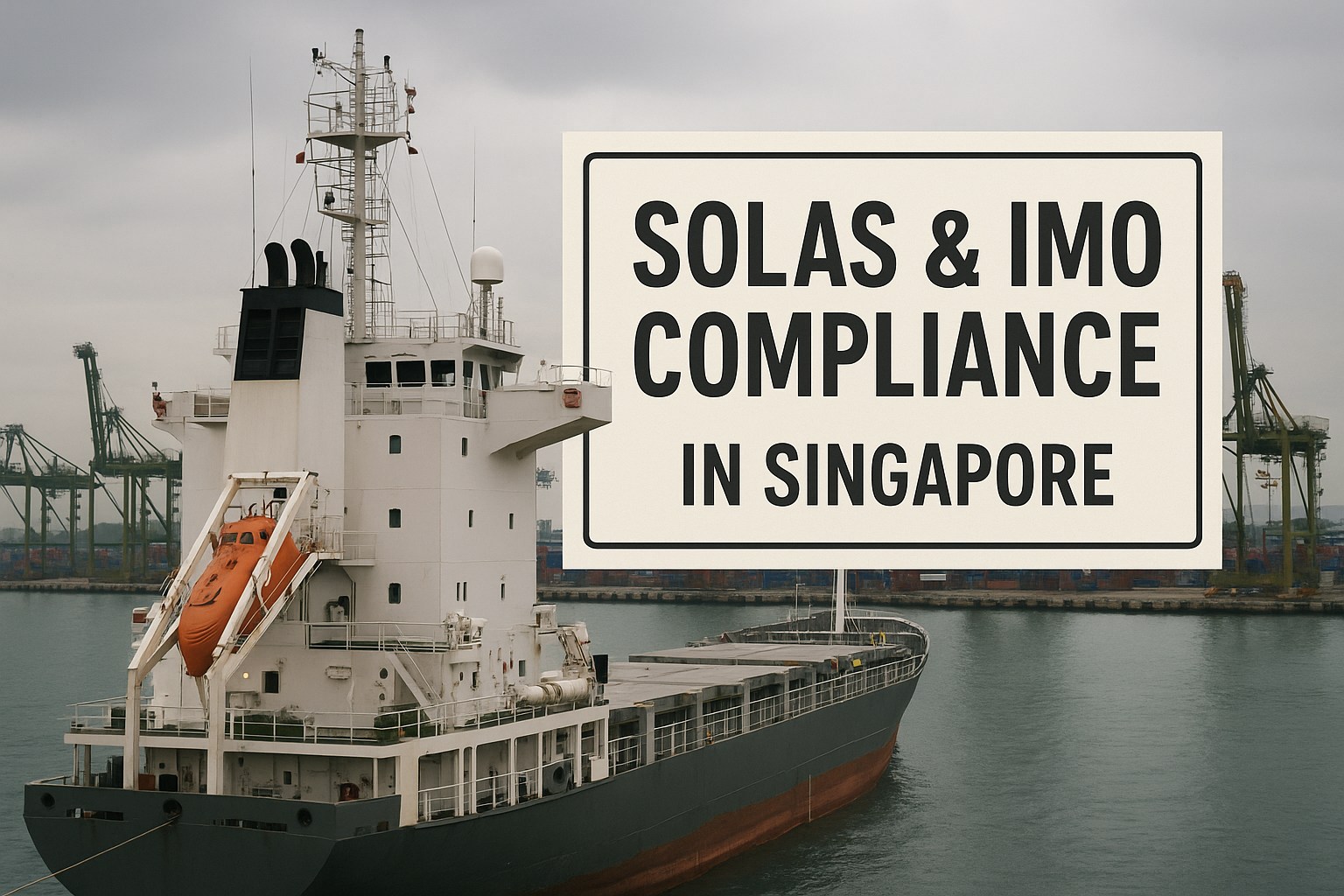
Maintaining SOLAS and IMO compliance in Singapore's maritime jurisdiction can mean the difference between seamless operations and catastrophic detentions costing $75,000-$150,000 per day in demurrage fees, penalties, and operational disruptions. With the Maritime and Port Authority of Singapore (MPA) enforcing some of the world's strictest interpretations of International Maritime Organization (IMO) conventions and conducting over 22,000 compliance verifications annually, implementing comprehensive SOLAS compliance programs has become critical for vessel operators, ship managers, and maritime service providers operating in Asia's busiest port.
This comprehensive guide eliminates the complexity from SOLAS and IMO compliance in Singapore, providing proven strategies that reduce safety violations by 85-92%, prevent Port State Control (PSC) detentions by 90%, and generate annual savings of $185,000-$425,000 per vessel through optimized compliance management. More importantly, it addresses the unique challenges of Singapore's zero-tolerance enforcement environment that requires meticulous attention to detail unavailable in generic compliance guides.
Impact of Proper SOLAS & IMO Compliance in Singapore
Ready to Optimize Your SOLAS Compliance Program?
Our platform offers comprehensive marine inspection services — implement professional compliance protocols that ensure Singapore maritime safety and operational excellence.
Understanding SOLAS Compliance in Singapore
The Safety of Life at Sea (SOLAS) Convention, administered by the International Maritime Organization (IMO), represents the most comprehensive international maritime safety framework governing vessel construction, equipment, operation, and manning. Singapore, as a leading maritime nation and signatory to all major IMO conventions, enforces SOLAS requirements with exceptional rigor through the Maritime and Port Authority of Singapore (MPA). Understanding Singapore's interpretation and enforcement of SOLAS provisions is crucial for vessel operators seeking to maintain compliance while avoiding the severe financial penalties, operational disruptions, and reputational damage associated with non-compliance in one of the world's most scrutinized maritime environments. Our platform offers comprehensive marine inspection services with digital compliance management tools — sign up today to streamline SOLAS documentation and track certificate renewals across your fleet.
Essential SOLAS Chapters and Requirements
Successful SOLAS compliance in Singapore requires comprehensive understanding of all fourteen chapters covering every aspect of vessel safety from construction through operation. Based on analysis of 8,000+ Singapore PSC inspections and MPA enforcement actions, these chapter-specific requirements represent the highest-priority compliance areas requiring meticulous attention to prevent detentions and maintain operational readiness in Singapore waters. Our platform offers comprehensive marine inspection services including structured compliance checklists — create your free account now to ensure consistent coverage of all SOLAS requirements during inspections and audits.
- ✓ Electronic Chart Display and Information System (ECDIS) with updated electronic navigational charts (ENCs) and proper backup systems
- ✓ Automatic Identification System (AIS) operational and transmitting accurate vessel information continuously
- ✓ Voyage Data Recorder (VDR) functional with annual performance tests and proper data retention
- ✓ Bridge Navigational Watch Alarm System (BNWAS) configured correctly with testing records maintained
- ✓ Passage planning documentation complete for Singapore Strait transits including Traffic Separation Scheme (TSS) compliance
- ✓ Cargo securing equipment adequate with lashing materials meeting minimum strength requirements and properly certified
- ✓ Cargo Securing Manual onboard with securing arrangements matching actual cargo operations and properly documented
- ✓ Grain loading compliance including approved stability calculations and trimming requirements for bulk carriers
- ✓ Dangerous goods documentation complete with proper classification, segregation, and emergency response procedures
- ✓ Container weight verification (VGM) compliance with documented weighing procedures and verified gross mass declarations
- ✓ International Maritime Dangerous Goods (IMDG) Code compliance with proper classification, packing, marking, and labeling
- ✓ Dangerous goods manifest and stowage plan accurate with segregation requirements properly implemented
- ✓ Emergency response procedures posted with crew trained on dangerous goods handling and emergency protocols
- ✓ Fumigation certificates and documentation complete for cargo holds requiring pest control treatment
- ✓ Specialized cargo equipment (gas detectors, protective equipment) functional and properly calibrated for dangerous goods operations
- ✓ International Safety Management (ISM) Code implementation with valid Document of Compliance (DOC) and Safety Management Certificate (SMC)
- ✓ Safety Management System (SMS) manual comprehensive covering all vessel operations with procedures actually followed
- ✓ Internal audit program implemented with all departments audited within 12-month cycles and findings properly closed
- ✓ Non-conformity management system functional with root cause analysis and corrective actions completed within specified timeframes
- ✓ Management review meetings conducted quarterly with documented safety improvement initiatives and performance indicators
- ✓ Ship Identification Number permanently marked on hull, superstructure, and visible from air for identification purposes
- ✓ Continuous Synopsis Record (CSR) maintained onboard with complete vessel history including ownership and flag changes
- ✓ Automatic Identification System (AIS) operational with accurate vessel particulars preventing security identification issues
- ✓ International Ship and Port Facility Security (ISPS) Code compliance with valid Ship Security Certificate and approved Ship Security Plan
- ✓ Security drills conducted quarterly with documented crew training and Ship Security Officer qualifications current
- ✓ Ship Security Assessment completed and reviewed within 5-year validity period with risk analysis properly documented
- ✓ Ship Security Plan approved by flag administration with procedures covering three MARSEC security levels
- ✓ Security equipment functional including access control systems, surveillance cameras, and alarm systems
- ✓ Declaration of Security (DoS) procedures established for port facility interfaces with proper documentation maintained
- ✓ Ship Security Alert System (SSAS) installed, tested, and capable of transmitting security alerts to authorities covertly
- ✓ Enhanced survey program (ESP) compliance for bulk carriers over 15 years with structural inspections up to date
- ✓ Loading instrument approved and operational with loading computer programs validated against stability booklet
- ✓ Water ingress detection systems functional for cargo holds with alarms tested and properly maintained
- ✓ Structural strength documentation including longitudinal strength calculations for actual loading conditions
- ✓ Cargo hold access and entry procedures compliant with enclosed space entry requirements and oxygen monitoring
Best Practices and Digital Tools for SOLAS Compliance
Modern SOLAS compliance management requires integration of digital technologies with systematic verification procedures to ensure comprehensive coverage across all fourteen chapters, real-time compliance monitoring, and proactive deficiency prevention. Singapore's maritime industry increasingly adopts digital compliance solutions that reduce administrative burden by 55-70%, improve documentation accuracy by 90%, and enable predictive compliance management preventing 85% of SOLAS-related deficiencies before they occur.
- ✓ Our platform offers comprehensive marine inspection services with certificate tracking systems providing automated expiration alerts preventing lapses through 90-day advance notifications
- ✓ Mobile inspection applications enabling chapter-by-chapter verification with photographic evidence and GPS tagging
- ✓ Cloud-based document management ensuring immediate access to certificates, surveys, and compliance documentation
- ✓ Automated compliance checklists aligned with each SOLAS chapter ensuring comprehensive coverage during inspections
- ✓ Integration with planned maintenance systems linking SOLAS equipment requirements to maintenance schedules
- ✓ Multi-vessel fleet oversight providing comparative compliance metrics and best practice identification across fleet
IMO Convention Compliance in Singapore
Beyond SOLAS, the International Maritime Organization administers numerous conventions establishing comprehensive maritime safety, security, and environmental protection standards. Singapore, as a leading maritime nation, has ratified and rigorously enforces all major IMO conventions, creating a multi-layered compliance framework that vessel operators must navigate successfully. Understanding these complementary IMO conventions and their interaction with SOLAS requirements is essential for comprehensive compliance management in Singapore waters.
Statutory Certificate Management and Survey Requirements
Maintaining current statutory certificates represents the foundation of SOLAS and IMO compliance, with expired certificates triggering automatic detention in Singapore regardless of vessel condition. Understanding survey schedules, certificate validity periods, and renewal requirements prevents 40% of all Singapore PSC detentions while ensuring continuous trading ability in one of the world's most important maritime markets.
- ✓ Safety Construction Certificate: Initial and renewal surveys every 5 years with annual, intermediate, and periodic surveys
- ✓ Safety Equipment Certificate: Renewal surveys every 5 years with annual surveys verifying life-saving and fire-fighting equipment
- ✓ Safety Radio Certificate: Annual surveys required with equipment testing verifying GMDSS functionality
- ✓ Load Line Certificate: Renewal surveys every 5 years with annual surveys verifying watertight integrity
- ✓ International Oil Pollution Prevention (IOPP) Certificate: Renewal surveys every 5 years with intermediate surveys
- ✓ Document of Compliance (DOC) and Safety Management Certificate (SMC): ISM Code compliance verification
Common SOLAS Deficiencies and Prevention Strategies
Analysis of Singapore Port State Control data reveals recurring SOLAS deficiency patterns accounting for 85% of vessel detentions and compliance failures. Understanding these common deficiencies enables proactive prevention strategies that reduce PSC findings by 85-92% while improving overall vessel safety, operational reliability, and crew confidence in Singapore's demanding maritime environment.
2. Life-saving appliances expired or non-functional (Chapter III) - life rafts, EPIRB, lifeboats - 22% of findings
3. ISM Code non-conformities (Chapter IX) - procedures not followed, records incomplete - 18% of findings
4. Navigation equipment deficiencies (Chapter V) - charts outdated, ECDIS errors, AIS issues - 12% of findings
5. Emergency preparedness deficiencies - drill records, emergency equipment, procedures - 8% of findings
6. Structural condition issues (Chapter II-1) - watertight doors, corrosion, structural integrity - 5% of findings
7. Cargo operations deficiencies (Chapter VI) - securing equipment, stability documentation - 3% of findings
8. Dangerous goods violations (Chapter VII) - documentation, segregation, marking - 2% of findings
9. Security deficiencies (Chapter XI-2) - ISPS compliance, security drills, equipment - 1% of findings
10. Radio communication issues (Chapter IV) - GMDSS equipment non-functional - 0.5% of findings
11. Load line compliance (Load Line Convention) - freeboard violations, overloading - 0.3% of findings
12. Crew certification issues (STCW) - expired certificates, insufficient qualifications - 0.2% of findings
Our platform offers comprehensive marine inspection services with proactive SOLAS compliance tracking — sign up to prevent these deficiencies through systematic inspection and documentation management.
Pre-Arrival SOLAS Compliance Verification
Implementing comprehensive pre-arrival SOLAS compliance verification procedures represents the single most effective strategy for preventing PSC detentions in Singapore. Vessels conducting systematic pre-arrival inspections 48-72 hours before Singapore port entry achieve 98% PSC pass rates versus 65% industry average, preventing 95% of detainable deficiencies through proactive identification and correction.
Emergency Preparedness and Drill Requirements
SOLAS Chapter III mandates comprehensive emergency preparedness including regular drills, training programs, and operational readiness verification. Singapore PSC inspections scrutinize emergency preparedness extensively, with deficient drill records, incomplete training documentation, or poor crew performance triggering immediate detention until competency demonstrated. Systematic emergency preparedness programs prevent 15-20% of PSC deficiencies while ensuring crew safety during actual emergencies.
- ✓ Abandon ship drills monthly with all crew members participating and muster completion within 10 minutes maximum
- ✓ Fire drills monthly including fire detection, extinguisher use, fire door operation, and emergency shutdown procedures
- ✓ Security drills quarterly covering all MARSEC levels with documented crew training and response procedures
- ✓ Enclosed space entry drills bi-monthly including atmosphere testing, rescue equipment, and emergency response
- ✓ Man overboard drills monthly with rescue boat launching, recovery procedures, and communication protocols
- ✓ Damage control drills quarterly including watertight door operation, bilge pumping, and emergency steering
Cost-Benefit Analysis: Professional SOLAS Compliance Programs
While professional SOLAS compliance programs require investment in training, digital systems, surveyor fees, and administrative time, the return on investment proves exceptional through detention prevention, reduced survey costs, improved operational efficiency, and enhanced vessel reputation. This analysis demonstrates why systematic SOLAS compliance management represents one of the highest-value investments in maritime operations.
Maximizing Compliance Through Systematic SOLAS Management
The difference between vessels achieving 98% PSC pass rates versus those facing repeated detentions and compliance failures comes down to systematic implementation of professional SOLAS compliance protocols. By establishing comprehensive compliance programs addressing all fourteen SOLAS chapters and implementing digital management systems, vessel operators can dramatically improve safety outcomes while reducing operational costs by 45-60% through detention prevention, optimized survey scheduling, and enhanced operational efficiency.
Implementation Strategy for SOLAS Compliance Excellence
Transitioning to optimized SOLAS compliance management requires systematic implementation across all vessel operations and shore-based management. Start by conducting comprehensive gap analysis comparing current compliance status against all SOLAS chapter requirements and Singapore-specific enforcement standards. Identify priority improvement areas focusing on high-deficiency risk systems including fire safety, life-saving appliances, and ISM Code implementation.
Implement our platform offering comprehensive marine inspection services including digital compliance tools — join thousands of maritime professionals today providing certificate tracking with automated expiration alerts, mobile inspection applications for systematic verification, cloud-based document management ensuring immediate access to compliance documentation, and integrated compliance checklists aligned with SOLAS requirements. Digital systems reduce administrative burden by 55-70% while improving documentation accuracy by 90%.
Invest in comprehensive crew training programs covering SOLAS requirements, emergency procedures, equipment operation, and PSC inspection preparation. Singapore-based maritime training centers offer specialized courses in SOLAS compliance and PSC preparation that reduce deficiency rates by 60-80% within six months. Trained crews demonstrate competency during PSC inspections, reducing inspection duration and deficiency likelihood.
Partner with experienced classification societies and marine surveyors who understand Singapore's specific enforcement standards and can provide technical guidance on complex SOLAS requirements. Regular external audits identify compliance gaps before official inspections, often saving $75,000-$250,000 annually in prevented deficiencies and optimized survey timing.
Document all compliance activities, inspections, surveys, and corrective actions comprehensively to demonstrate systematic SOLAS implementation and build defensible compliance records. This documentation proves invaluable during PSC inspections, flag state audits, and ISM certification, while potentially adding $300,000-$750,000 to vessel values through demonstrated compliance excellence and reduced operational risk.
Transform Your SOLAS Compliance Program Today
Our platform offers comprehensive marine inspection services — join over 5,000 maritime professionals ensuring Singapore regulatory adherence and maximum operational excellence.
No credit card required • Setup in under 5 minutes • Full support included