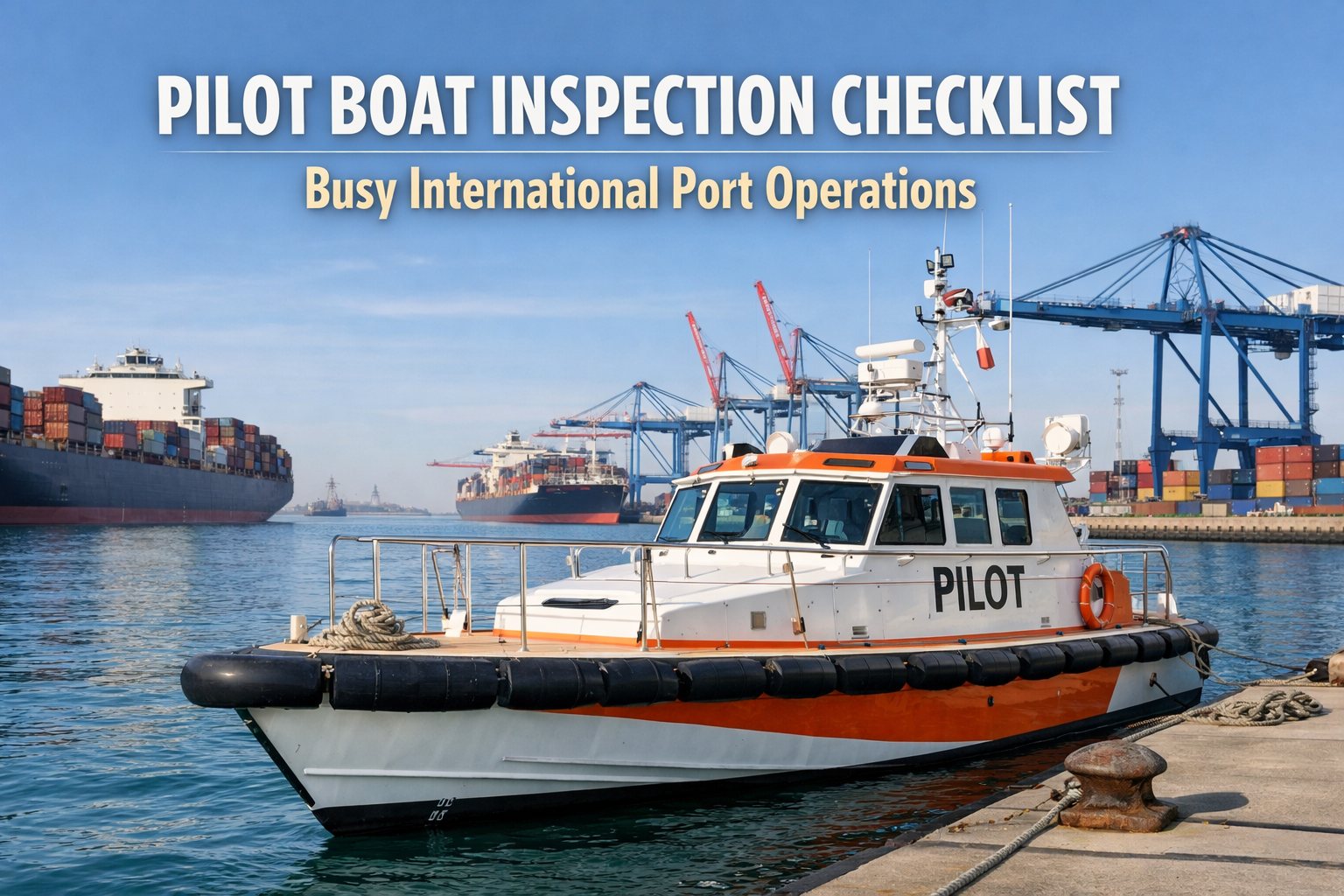
Ensuring comprehensive pilot boat inspection readiness is essential for safe pilot transfer operations, vessel reliability, and regulatory compliance at busy international ports. Systematic verification of vessel documentation and compliance, hull deck and boarding arrangements, propulsion and steering systems, navigation and communication equipment,safety and life-saving equipment, machinery electrical and auxiliary systems, and crew readiness and operational safety helps maintain pilot boat operational capability and supports effective maritime safety management. Start your free pilot boat inspection trial
Pilot Boat Inspection Checklist for Busy International Ports
Comprehensive Pilot Boat Safety & Operational Compliance Checklist
Importance of Pilot Boat Inspections for Busy International Ports
Pilot Transfer Safety
- Regular inspections of pilot ladders, boarding arrangements, fenders, and deck surfaces identify defects before they compromise pilot transfer operations or endanger personnel, ensuring vessel reliability throughout high-frequency port operations.
Vessel Integrity
- Systematic inspections verify hull condition, propulsion responsiveness, steering reliability, and structural security, ensuring pilot boats withstand demanding close-quarter maneuvering alongside large vessels in busy port environments.
Regulatory Compliance
- Proper documentation of inspection results, pilotage authority compliance, crew certifications, and audit records demonstrates adherence to port authority regulations, maritime safety standards, and international requirements.
Operational Reliability
- Systematic verification of machinery, electrical systems, and navigation equipment identifies maintenance needs early, prevents breakdowns during pilot transfers, and ensures continuous vessel availability for round-the-clock port operations.
Ready to enhance pilot boat safety? Schedule a personalized demo to see automated pilot boat inspection tracking, or start your free trial today.
1. Vessel Documentation & Compliance
Vessel Documentation & Compliance inspection requirements:
2. Hull, Deck & Boarding Arrangements
Hull, Deck & Boarding Arrangements inspection requirements:
3. Propulsion & Steering Systems
Propulsion & Steering Systems inspection requirements:
4. Navigation & Communication Equipment
Navigation & Communication Equipment inspection requirements:
✓ Transform Pilot Boat Safety: With 35 comprehensive verification points across 7 critical inspection areas—maintaining pilot boat readiness for busy international ports requires systematic tracking and documentation. Schedule your demo now to discover automated pilot boat inspection tracking and compliance reporting.
5. Safety & Life-Saving Equipment
Safety & Life-Saving Equipment inspection requirements:
6. Machinery, Electrical & Auxiliary Systems
Machinery, Electrical & Auxiliary Systems inspection requirements:
7. Crew Readiness & Operational Safety
Crew Readiness & Operational Safety inspection requirements:
Why Use Digital Fleet Management for Pilot Boat Inspections?
Marine Inspection App Benefits for Pilot Boat Inspection Management:
- ✓ Automate pilot boat inspections with mobile checklists for inspectors and crew
- ✓ Maintain complete digital records for vessel certification and pilotage authority compliance
- ✓ Track inspection schedules, equipment servicing dates, and certification renewal deadlines
- ✓ Monitor deficiencies, corrective actions, and safety equipment functionality
- ✓ Generate comprehensive pilot boat safety reports for regulatory compliance
- ✓ Set automated alerts for inspection due dates, permit expirations, and crew certification renewals
Join leading operators who trust digital pilot boat inspection management for international port compliance. Schedule your demo or sign up for free to experience automated pilot boat inspection tracking.
Frequently Asked Questions About Pilot Boat Inspections
1. What areas are covered in pilot boat inspections?
Pilot boat inspections cover seven critical areas: Vessel Documentation & Compliance, Hull, Deck & Boarding Arrangements, Propulsion & Steering Systems, Navigation & Communication Equipment, Safety & Life-Saving Equipment, Machinery, Electrical & Auxiliary Systems, and Crew Readiness & Operational Safety—totaling 35 verification points ensuring complete vessel readiness for pilot transfer operations.
2. How often should pilot boat inspections be conducted?
Conduct inspections daily before first deployment, weekly for comprehensive safety verification, monthly for detailed hull and boarding equipment assessment, and annually for full certification renewal. Additional inspections are required after any incident or extended idle period. Sign up for automated inspection scheduling to maintain consistent safety verification.
3. What are the most critical items to verify?
Critical items include certificates and permits valid and onboard, pilot ladder and boarding arrangements safe, main engines operational, steering gear responsive, navigation lights operational, lifejackets available for all crew, bilge pumps operational, and crew certified and fit for duty—these directly impact pilot transfer safety and vessel seaworthiness.
4. What documentation is required for pilot boat compliance?
Required documentation includes valid certificates and permits, pilotage authority compliance records, maintained logbooks, inspection and audit records, deficiency closeout reports, crew certification records, equipment servicing logs, and emergency procedure training verification. Schedule a demo to see how digital documentation simplifies compliance reporting.
5. How can digital management improve pilot boat inspection compliance?
Digital management provides mobile inspection checklists, automated scheduling, real-time deficiency reporting with instant notifications, crew certification tracking with expiration alerts, complete vessel inspection history, and comprehensive safety reports for regulatory compliance. Start your free trial to experience automated pilot boat inspection management.
Take Action: Implement Comprehensive Pilot Boat Inspection Management
Download our FREE Pilot Boat Inspection Checklist for Busy International Ports and start implementing systematic vessel safety verification for your pilot transfer operations. Integrating digital fleet management ensures consistent safety standards, comprehensive documentation, and proactive maintenance.
Get Started Today: Start your free trial for instant access to automated inspection tracking and compliance tools, or schedule a personalized demo to see how we help pilotage authorities, port operators, and maritime organizations maintain pilot boat safety excellence and protect crew during pilot transfer operations.
Master Pilot Boat Safety & Port Operations Excellence
Complete pilot boat safety: documentation, hull and boarding arrangements, propulsion and steering, navigation and communications, life-saving equipment, machinery and electrical systems, crew readiness—all tracked automatically for operational safety and regulatory compliance.