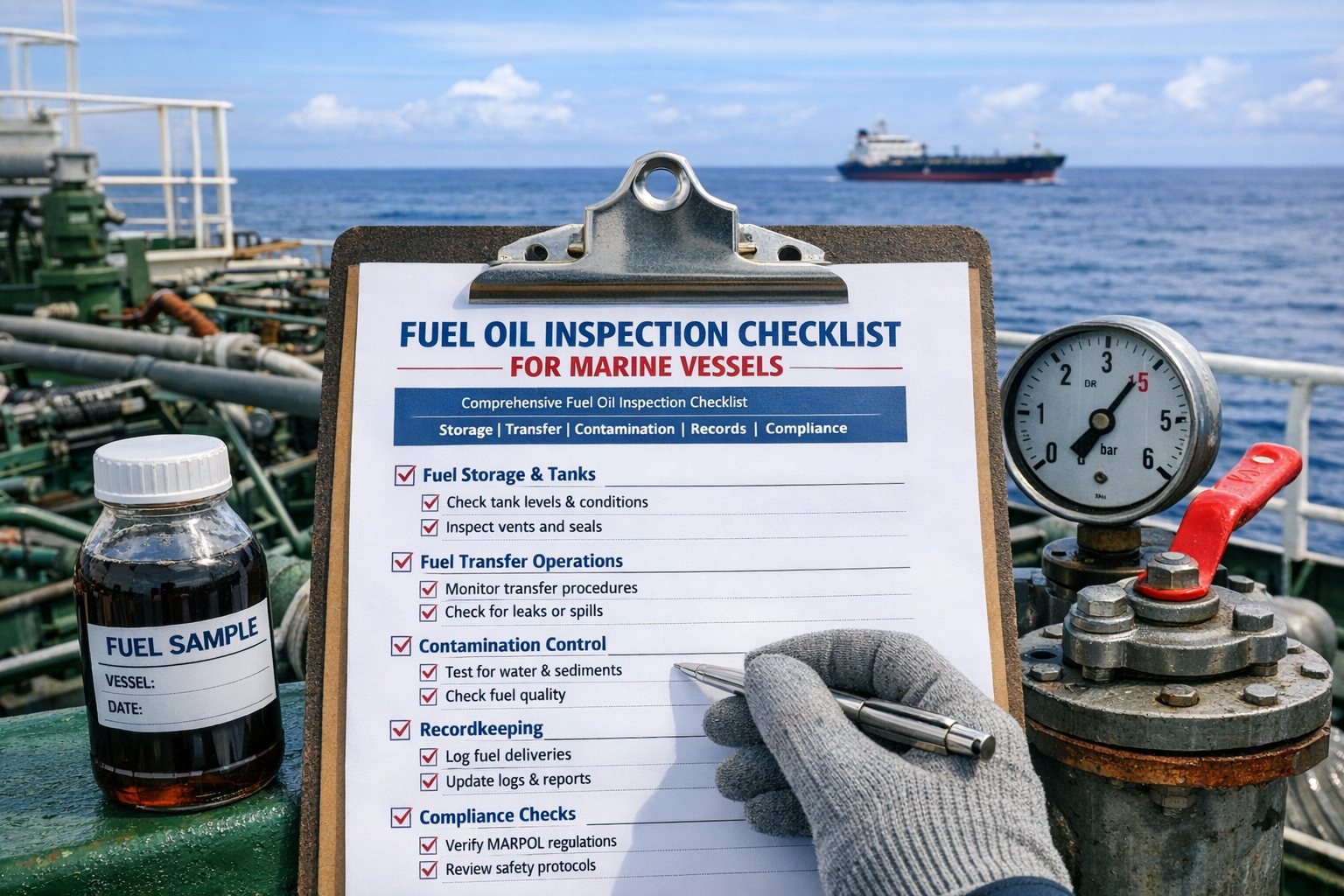
MARPOL record book compliance is mandatory for all vessels to prevent marine pollution and ensure environmental protection in maritime operations. This comprehensive pollution management checklist helps engineers and environmental officers systematically document all bilge water operations, sludge disposal, and waste management activities. Proper MARPOL documentation ensures compliance with IMO regulations while protecting vessels from Port State Control detentions, hefty fines, and criminal prosecution for environmental violations. Start your free digital inspection trial
Importance of MARPOL Record Book Compliance
Environmental Protection
- Proper MARPOL documentation prevents marine pollution, ensures accurate recording of all bilge water operations, sludge disposal, and waste management activities, protects the marine environment, and demonstrates commitment to environmental stewardship in maritime operations.
Regulatory Compliance
- Systematic pollution management ensures IMO MARPOL compliance across all Annexes I through VI, prevents Port State Control detentions, avoids substantial fines and criminal prosecution, maintains valid pollution prevention certificates, and demonstrates proper environmental management systems.
PSC Inspection Readiness
- Accurate MARPOL records withstand Port State Control scrutiny, ensure entries are consistent with signatures present, verify quantities balance correctly, maintain waste disposal receipts, and demonstrate proper operation of pollution prevention equipment including 15 ppm systems.
Operational Excellence
- Following this marpol checklist pdf helps maintain accurate Oil Record Books (ORB), Garbage Record Books, and cargo records as required under MARPOL regulations, ensures bilge discharge report documentation is complete, tracks sludge handling marine operations, and prevents environmental violations through systematic compliance procedures.
Sign up to track MARPOL compliance automatically
Vessel Information
Pro Tips for Effective MARPOL Compliance
- ✓ Oil Record Book Part I: All machinery space operations must be recorded within 24 hours. Entries must include date, operation code, tank identification, and quantities. Never leave blank spaces—draw a line through unused portions.
- ✓ 15 ppm Compliance: Bilge water can only be discharged when the vessel is en route, through approved 15 ppm equipment with alarm and automatic stopping device. The oily-water separator must be operational with valid certificates.
- ✓ Sludge Management: For sludge handling marine compliance, maintain accurate records of sludge generation, storage quantities, and disposal to reception facilities. Retain Waste Disposal Receipts for minimum three years.
- ✓ PSC Inspections: Port State Control officers frequently review MARPOL records. Ensure entries are consistent, signatures are present, and quantities balance correctly. Discrepancies can lead to vessel detention and substantial penalties.
1. BILGE & WASTE MANAGEMENT
Bilge water and waste management inspection requirements:
Bilge Systems (Part 1)
Discharge Controls (Part 2)
Safety Devices (Part 3)
2. SLUDGE DISCHARGE FORM
Sludge management and disposal requirements:
Sludge Quantities (Part 1)
Disposal Records (Part 2)
Documentation (Part 3)
3. OIL RECORD BOOK PART I
Oil Record Book machinery space requirements:
Entry Requirements (Part 1)
Quantity Records (Part 2)
Signatures (Part 3)
4. GARBAGE RECORD BOOK
Garbage management and disposal requirements:
Garbage Categories (Part 1)
Disposal Methods (Part 2)
Compliance (Part 3)
5. OWS EQUIPMENT
Oily water separator equipment requirements:
Equipment Status (Part 1)
Safety Systems (Part 2)
Maintenance (Part 3)
6. INCINERATOR OPERATIONS
Incinerator operation and documentation requirements:
Equipment Approval (Part 1)
Operations (Part 2)
Documentation (Part 3)
7. SEWAGE SYSTEM (ANNEX IV)
Sewage treatment and disposal requirements:
Treatment Plant (Part 1)
Discharge Systems (Part 2)
Equipment (Part 3)
8. AIR EMISSIONS (ANNEX VI)
Air pollution prevention requirements:
Certification (Part 1)
ECA Compliance (Part 2)
ODS & Refrigerants (Part 3)
9. MARPOL DOCUMENTATION
MARPOL record keeping and certificate requirements:
Record Books (Part 1)
Certificates & Plans (Part 2)
Verification (Part 3)
✓ Navigate MARPOL Compliance with Confidence: With 70+ environmental compliance inspection items across 9 critical MARPOL categories—staying compliant requires organized tracking and documentation. See how leading maritime operators maintain environmental compliance and PSC readiness. Schedule your demo now to discover how automated MARPOL tracking, bilge discharge monitoring, and pollution prevention documentation can transform your environmental management.
Compliance Schedule Guidelines
Daily Compliance
- Record all oil operations in ORB
- Log bilge and sludge tank soundings
- Monitor OWS operation if discharging
- Document garbage generation
- Verify fuel sulphur compliance
- Ensure entries signed properly
Weekly Compliance
- Test OWS 15 ppm alarm and auto-stop
- Review ORB entries for accuracy
- Verify garbage segregation correct
- Check incinerator operation
- Review sewage system performance
- Verify sludge generation vs. records
Monthly Compliance
- Complete ORB quantity reconciliation
- Calibrate oil content monitor
- Review Garbage Record Book entries
- Service OWS filter elements
- Verify waste disposal receipts filed
- Master's review and signature
Annual / Survey Compliance Requirements
- ✓ Renew IOPP Certificate (International Oil Pollution Prevention)
- ✓ Complete OWS performance test and certification
- ✓ Survey sewage treatment plant and renew ISPP Certificate
- ✓ Verify incinerator type approval and operation
- ✓ Update SOPEP manual and emergency response procedures
- ✓ Renew IAPP Certificate (International Air Pollution Prevention)
- ✓ Crew MARPOL training refresher and familiarization
- ✓ Comprehensive SMS audit for environmental compliance
Why Use Digital Fleet Management for MARPOL Compliance?
MarineInspection App Benefits for Environmental Compliance:
- ✓ Automate MARPOL record book entries with digital Oil Record Books
- ✓ Maintain complete digital records for all pollution prevention operations
- ✓ Track bilge water discharge operations with automatic logging
- ✓ Monitor sludge tank levels and disposal to reception facilities
- ✓ Generate instant reports for Port State Control inspections
- ✓ Set automated reminders for OWS calibration and certificate renewals
- ✓ Document garbage disposal and waste management activities
- ✓ Store waste disposal receipts and BDNs digitally for 3+ years
Book a demo to see automated MARPOL compliance tracking
Frequently Asked Questions About MARPOL Compliance
1. What are the most common MARPOL deficiencies found during PSC inspections?
The most common MARPOL deficiencies include incomplete Oil Record Book entries with missing signatures or incorrect operation codes, bilge water discharge violations without proper OWS operation, sludge quantity discrepancies between tank soundings and ORB entries, expired or missing IOPP/IAPP certificates, non-functional 15 ppm alarm or automatic stopping devices, missing waste disposal receipts, garbage record book entries not matching actual waste disposal, and fuel sulphur content non-compliance in Emission Control Areas (ECAs). These deficiencies can result in vessel detention, substantial fines, and criminal prosecution.
2. How should bilge water be properly discharged according to MARPOL Annex I?
Bilge water from machinery spaces can only be discharged when the vessel is proceeding en route (not stationary), the oil content monitor shows less than 15 ppm, the oily water separator is operating with alarm and automatic stopping device functional, the vessel is more than 12 nautical miles from nearest land (50 nm for special areas), and an approved oily water separator with valid type approval certificate is used. All discharges must be recorded in the Oil Record Book Part I with operation code, date/time, position, quantity, and tank identification. Improper discharge can result in heavy penalties and environmental damage claims.
3. What records must be retained and for how long under MARPOL regulations?
MARPOL requires vessels to retain Oil Record Books for 3 years from the last entry, Garbage Record Books for 2 years from the last entry, Bunker Delivery Notes (BDN) for 3 years showing fuel sulphur content, waste disposal receipts for 3 years from disposal date, MARPOL fuel samples for 12 months minimum, cargo record books for tankers for 3 years, and previous record books until replaced by new ones. These documents must be readily available for Port State Control inspection and Flag State verification. Failure to maintain proper records is a serious MARPOL violation resulting in significant penalties.
4. What are the requirements for sludge management and disposal?
All vessels must maintain accurate sludge tank soundings recorded daily in the Oil Record Book Part I. Sludge quantities must be consistent with purifier running hours and fuel consumption. Sludge can only be disposed to approved port reception facilities with proper receipts obtained and retained, incinerated in type-approved shipboard incinerators with records maintained, or transferred between vessel tanks (properly documented). The Oil Record Book must record all sludge operations including generation, incineration, and disposal with operation codes, quantities, and signatures. PSC officers verify sludge quantities match expected generation rates based on fuel consumption and purifier operations.
5. What are the consequences of MARPOL violations?
MARPOL violations can result in immediate vessel detention by Port State Control authorities, substantial fines ranging from thousands to millions of dollars depending on severity and jurisdiction, criminal prosecution of ship officers including imprisonment in some countries, suspension or withdrawal of vessel certificates preventing trading, company ISM Code non-conformities affecting entire fleet operations, increased insurance premiums or loss of coverage, reputational damage affecting commercial relationships, and environmental damage claims for pollution incidents. Some violations trigger automatic reporting to IMO and Flag State with mandatory investigations. Repeated violations can result in vessel banning from certain ports or trade routes, making MARPOL compliance absolutely critical for vessel operations.
Take Action: Implement Comprehensive MARPOL Environmental Management
Download our FREE MARPOL Record Book Checklist and start implementing systematic environmental compliance practices for your vessel. Integrating digital fleet management with your pollution prevention routine ensures nothing is overlooked, maintains regulatory compliance, and protects the marine environment. Experience the power of automated compliance tracking to prevent PSC deficiencies, maintain accurate records, and ensure safe, compliant environmental operations throughout your vessel's trading activities.
Ensure Environmental Compliance & PSC Readiness Excellence
Comprehensive MARPOL management: Oil Record Books, bilge systems, sludge disposal, garbage records, OWS equipment, incinerator operations, sewage systems, air emissions—all tracked automatically for optimal compliance with IMO, Flag State, and Port State Control requirements.