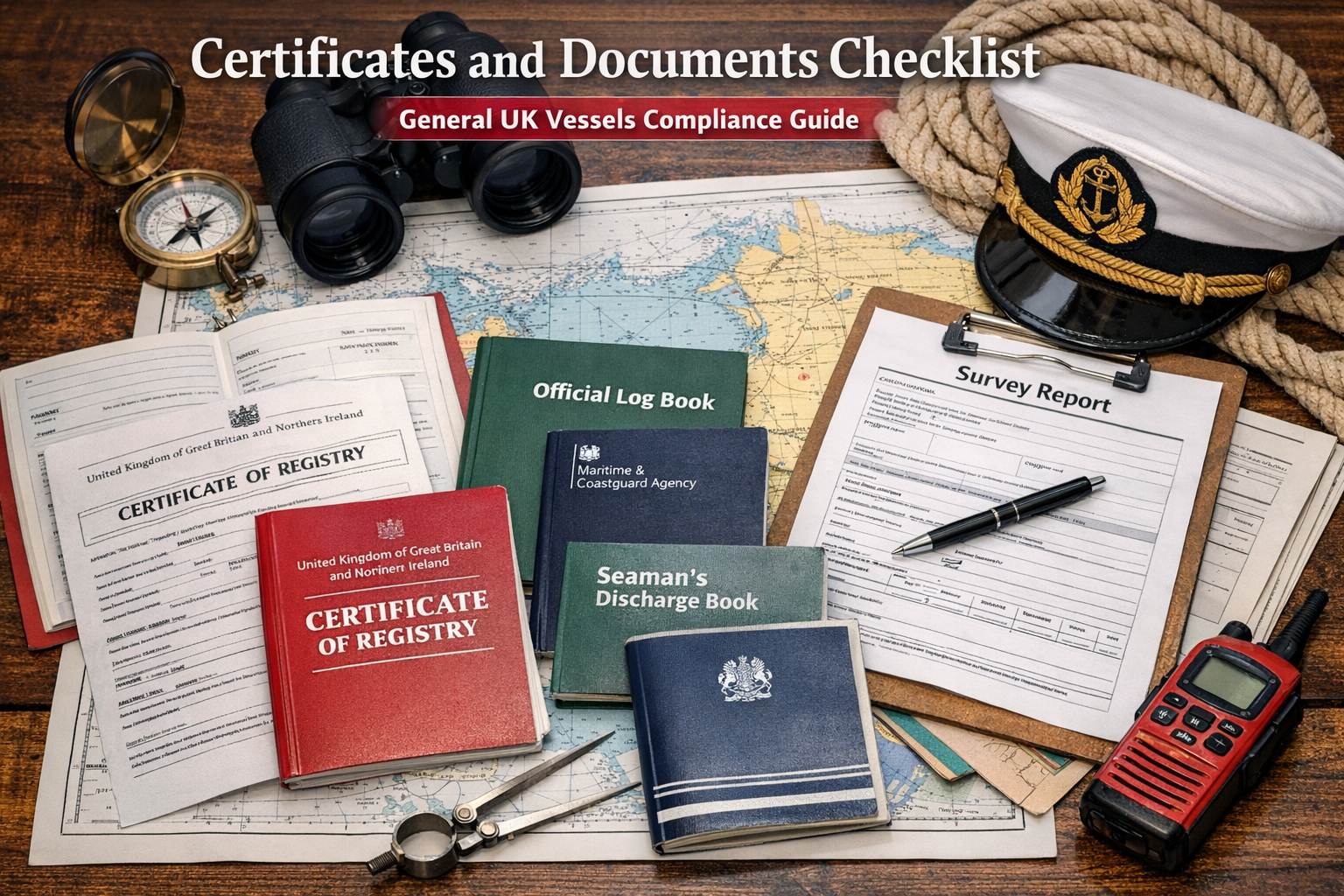
Ensuring proper UK vessel certification is essential for regulatory compliance, flag state requirements, and safe maritime operations. Systematic verification of fishing vessel certificates, merchant ship documentation, and passenger vessel safety certificates helps prevent maritime authority detentions, ensures compliance with UK maritime regulations, and maintains operational readiness. Proper certificate management and tracking are critical for avoiding penalties, maintaining vessel certification, and ensuring compliance with international and domestic maritime standards. Start your free digital inspection trial
UK Vessel Certificates & Documents
Comprehensive UK Maritime Certification & Documentation Checklist
Importance of UK Vessel Certificates & Documents Inspections
UK Maritime Compliance
- Regular verification of UK vessel certificates ensures compliance with Maritime and Coastguard Agency (MCA) requirements, flag state standards, and international conventions, preventing detentions, fines, and operational restrictions for fishing vessels, merchant ships, and passenger vessels.
Vessel-Specific Requirements
- Different vessel types require specific certificates based on tonnage, length, voyage type, and operational area. Understanding fishing vessel requirements versus merchant ship or passenger ship certification ensures appropriate documentation for each vessel class and operational profile.
Regulatory Updates
- UK maritime regulations continuously evolve with international standards and domestic requirements. Systematic certificate tracking ensures vessels maintain current certification status, comply with updated regulations, and avoid penalties from outdated or invalid documentation.
Operational Continuity
- Valid certificates enable uninterrupted vessel operations, smooth port clearances, and compliance with insurance requirements. Proactive certificate management prevents operational delays, maintains trading schedules, and ensures vessels remain legally compliant across UK and international waters.
Sign up to track UK vessel certificates automatically
1. UK Fishing vessels
UK Fishing vessels inspection requirements:
2. UK Merchant ships
UK Merchant ships inspection requirements:
✓ Navigate UK Maritime Certification with Confidence: With 33 different certificate requirements across fishing vessels, merchant ships, and passenger vessels—maintaining UK maritime compliance requires comprehensive tracking and vessel-specific knowledge. See how leading UK vessel operators ensure certification readiness. Schedule your demo now to discover how automated certificate tracking and MCA compliance management can streamline your UK vessel operations.
3. UK Passenger ships
UK Passenger ships inspection requirements:
Why Use Digital Fleet Management for UK Vessel Certificates?
Marine Inspection App Benefits for UK Vessel Certificate Management:
- ✓ Automate certificate tracking for fishing vessels, merchant ships, and passenger vessels
- ✓ Maintain complete digital records for all UK maritime certificates and MCA compliance
- ✓ Track vessel-specific requirements based on tonnage, length, and voyage type
- ✓ Monitor pollution prevention, safety, and security certificate status
- ✓ Generate MCA compliance reports and UK maritime documentation packages
- ✓ Set automated alerts for certificate expiration and renewal deadlines
Book a demo to see automated UK certificate tracking
Frequently Asked Questions About UK Vessel Certificates & Documents
1. What certificates are required for UK fishing vessels?
UK fishing vessels require certificates based on vessel size and operational area. Vessels of 400gt or more need air pollution, anti-fouling, international tonnage, and sewage pollution certificates. Vessels 24 metres or longer require an international fishing vessel certificate, while vessels 15-24 metres need a UK fishing vessel certificate. Small fishing vessels under 15 metres require a small fishing vessel certificate. All fishing vessels need an oil pollution prevention certificate, and anti-fouling declarations apply to vessels under 24 metres and less than 400gt.
2. What certificates are mandatory for UK merchant ships?
UK merchant ships (cargo ships, oil tankers, chemical tankers, and gas carriers) require multiple certificates depending on tonnage and voyage type. Ships over 500gt need cargo ship safety construction and equipment certificates, minimum safe manning documents, and safety management certificates. Ships over 400gt require air pollution, anti-fouling, oil pollution prevention, and sewage pollution certificates. International voyage vessels need cargo ship safety radio certificates, ship security certificates, and dangerous goods certificates. Chemical tankers and gas carriers require certificates of fitness.
3. What certificates do UK passenger ships need?
UK passenger ships require passenger ship safety certificates regardless of size. Ships of 400gt or more need air pollution, anti-fouling, oil pollution prevention, and sewage pollution certificates (for international voyages). Ships of 500gt or more require minimum safe manning documents. Load line certificates are required for ships over 80gt in UK waters or 24 metres length in non-UK waters. International voyage passenger ships need dangerous goods certificates (if built after 1 September 1984), ship security certificates, and safety management certificates.
4. How do certificate requirements differ between domestic and international voyages?
International voyage vessels have additional certificate requirements beyond domestic operations. Cargo ship safety radio certificates, cargo ship safety construction and equipment certificates, sewage pollution certificates, ship security certificates, and dangerous goods certificates are specifically required for international voyages. Domestic voyage vessels still require pollution prevention, safety, and tonnage certificates but may be exempt from certain international convention requirements. The Maritime and Coastguard Agency (MCA) determines specific applicability based on vessel type, size, and trading area.
5. How can digital management improve UK vessel certificate compliance?
Digital certificate management systems streamline UK maritime compliance by providing automated tracking for vessel-specific certificate requirements based on type, tonnage, and voyage area. Systems integrate with MCA databases for compliance verification, provide automated expiration alerts and renewal reminders, maintain centralized document storage accessible to crew and inspectors, generate compliance reports for MCA inspections, and ensure vessels meet all applicable UK and international certificate requirements for their operational profile and trading pattern.
Take Action: Implement Comprehensive UK Vessel Certificate Management
Download our FREE UK Vessel Certificates & Documents Inspection Checklist and start implementing systematic certificate tracking for your fishing vessels, merchant ships, or passenger vessels. Integrating digital fleet management with your UK maritime compliance routine ensures MCA compliance, prevents operational delays, and maintains continuous certification for all vessel types. Experience the power of automated certificate tracking tailored to UK maritime requirements and vessel-specific operational profiles.
Master UK Maritime Certification & Compliance
Complete UK vessel certificate management: fishing vessel certificates, merchant ship documentation, passenger vessel safety certificates—all tracked automatically for MCA compliance and UK maritime regulatory requirements.