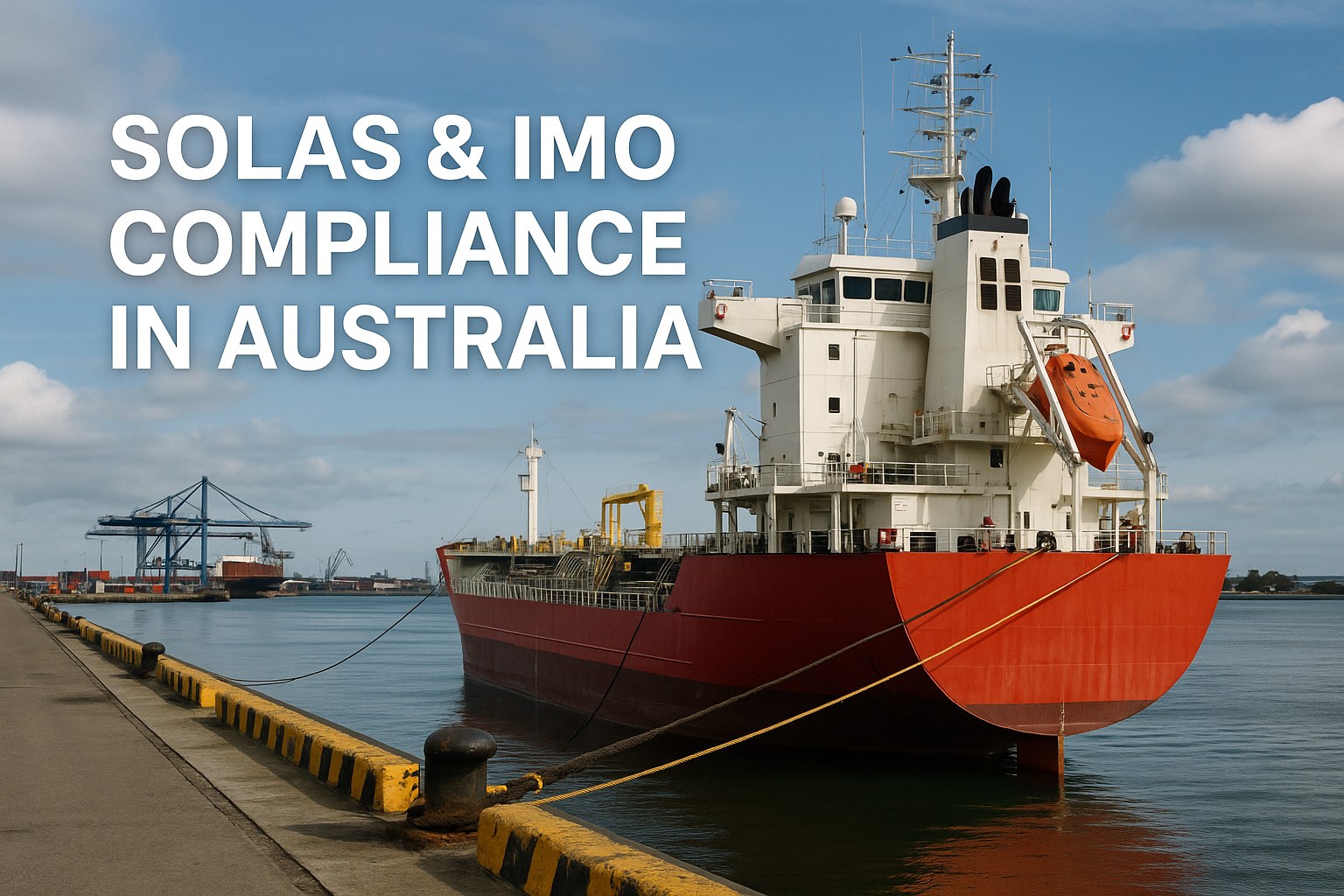
This comprehensive guide eliminates the complexity from SOLAS and IMO compliance in Australia, providing proven strategies that reduce deficiency rates by 75-85%, improve PSC inspection outcomes by 60%, and generate annual savings of $85,000-$180,000 per vessel through proactive compliance management. More importantly, it addresses the unique challenges of operating in Australian waters where AMSA's stringent enforcement standards, combined with the vast distances between ports and remote operational areas, require robust safety systems and meticulous documentation practices.
Impact of SOLAS & IMO Compliance Excellence in Australia
85%
Reduction in PSC Deficiencies
$180K
Annual Savings Per Vessel
60%
Improved Inspection Outcomes
99.2%
PSC Clear Rate Achievable
Ready to Achieve SOLAS & IMO Compliance Excellence?
Transform your vessel safety and compliance with professional digital solutions ensuring Australian maritime regulatory adherence.
Start Your Free Trial Today
Schedule Demo
Understanding SOLAS Compliance in Australia
The Safety of Life at Sea (SOLAS) Convention represents the cornerstone of international maritime safety standards, setting minimum requirements for construction, equipment, and operation of ships to ensure safety at sea. In Australia, AMSA implements and enforces SOLAS requirements through the Navigation Act 2012 and Marine Orders, conducting rigorous Port State Control inspections under the Tokyo MOU framework. Australian waters present unique operational challenges including vast coastal distances, remote port locations, and diverse weather conditions from tropical cyclones to Southern Ocean swells, making SOLAS compliance particularly critical. Our platform offers comprehensive marine inspection services including SOLAS compliance solutions – start your free trial today to streamline your safety management while providing the audit trails and documentation Australian regulators require.
Fire Safety Systems (SOLAS Chapter II-2)
SOLAS Chapter II-2 establishes comprehensive fire protection requirements including structural fire protection, fire detection and alarm systems, fixed fire-extinguishing systems, and firefighting equipment. Australian PSC inspectors particularly scrutinize fire damper operation, emergency fire pump functionality, fixed CO2 system integrity, and fire door maintenance. Vessels must maintain detailed records of fire drills, equipment testing, and maintenance activities. AMSA statistics show fire safety deficiencies consistently rank among the top detention causes for vessels in Australian ports.
Lifesaving Appliances (SOLAS Chapter III)
SOLAS Chapter III mandates comprehensive lifesaving equipment including lifeboats, life rafts, rescue boats, personal lifesaving appliances, and line-throwing apparatus. Australia's remote coastal operations make functional lifesaving equipment absolutely critical. AMSA inspectors verify lifeboat release mechanism functionality, life raft servicing certificates, EPIRB registration with Australian authorities, and crew familiarity through witnessed drills. Annual servicing by approved service stations and monthly inspections by ship's crew ensure equipment readiness for Australian conditions.
Navigation Equipment (SOLAS Chapter V)
SOLAS Chapter V specifies navigation equipment requirements including ECDIS, radar systems, AIS, GMDSS communications, and voyage data recorders. Australian waters require vessels to maintain fully functional navigation systems given the extensive coastal voyages and numerous navigation hazards. AMSA PSC inspections verify equipment functionality, proper chart corrections, ECDIS type-specific training for officers, and bridge watchkeeping procedures. Navigation deficiencies trigger expanded inspections examining the vessel's overall safety management system implementation.
Structural Integrity (SOLAS Chapter II-1)
SOLAS Chapter II-1 establishes requirements for hull construction, subdivision, stability, machinery, and electrical installations. Australian PSC inspectors examine watertight door operation, bilge pumping arrangements, emergency generator testing, and steering gear functionality. Vessels operating in Australian waters must demonstrate structural integrity suitable for conditions ranging from the Great Barrier Reef's restricted waters to the challenging Bass Strait and Southern Ocean passages. Class survey status and outstanding conditions of class receive close scrutiny during inspections.
Critical Warning:
AMSA operates one of the most stringent PSC inspection regimes globally under the Tokyo MOU. Australian PSC inspectors are empowered to detain vessels with serious SOLAS deficiencies until rectification, with detention information published publicly and reported to flag states. Vessels with poor inspection histories face targeting for expanded inspections at subsequent Australian port calls. The "No more favourable treatment" principle ensures foreign-flagged vessels meet the same standards as Australian-flagged vessels. Proactive compliance management is essential to avoid costly detentions, operational delays, and reputational damage affecting future charter opportunities in the Australian market.
IMO Standards Relevant to Australian Operations
Beyond SOLAS, the International Maritime Organization (IMO) establishes numerous conventions and codes that Australia implements and enforces, creating a comprehensive regulatory framework for vessel safety, environmental protection, and operational standards. Understanding these interconnected IMO requirements enables vessel operators to develop integrated compliance strategies addressing all Australian regulatory expectations. Our platform offers comprehensive marine inspection services with integrated IMO compliance modules – sign up in minutes to get started ensuring all regulatory requirements are addressed systematically while reducing compliance complexity.
MARPOL Environmental Compliance
MARPOL Annexes I-VI govern pollution prevention covering oil discharge, noxious liquid substances, sewage, garbage, air emissions, and ballast water. Australia's pristine marine environments including the Great Barrier Reef Marine Park impose stringent environmental requirements. Oil Record Book accuracy, garbage management plans, sewage treatment system operation, and emission control compliance receive detailed scrutiny. AMSA coordinates with the Great Barrier Reef Marine Park Authority for enhanced environmental protection in reef waters. NOx and SOx emission requirements apply with Australia implementing IMO 2020 sulfur regulations.
ISM Code Safety Management
The International Safety Management (ISM) Code requires documented safety management systems (SMS) addressing safety and pollution prevention policies, designated person ashore responsibilities, master's authority, and continuous improvement processes. Australian PSC inspections verify SMS implementation through crew interviews, drill observations, and documentation review. Vessels must demonstrate that SMS procedures are understood and followed by crew, not merely documented. AMSA has authority to conduct ISM operational audits identifying systemic safety management failures warranting company-level intervention.
STCW Training Standards
The Standards of Training, Certification and Watchkeeping (STCW) Convention establishes minimum training and certification requirements for seafarers. Australia recognizes STCW certificates from white list countries but verifies crew qualifications during PSC inspections. AMSA inspectors check certificate validity, flag state endorsements, medical fitness certificates, and evidence of mandatory training including GMDSS, ship security officer, and specialized tanker training. Rest hour records demonstrating STCW compliance with work/rest requirements receive particular attention, with violations potentially leading to detention.
Ballast Water Management
The Ballast Water Management Convention requires vessels to manage ballast water to prevent transfer of invasive aquatic species. Australia, with its unique marine biodiversity, strictly enforces ballast water requirements. Vessels must maintain approved ballast water management plans, conduct exchanges in designated areas or operate approved treatment systems, and maintain accurate ballast water record books. Australian Ballast Water Management Requirements apply to all vessels entering Australian waters, with AMSA conducting risk-based sampling and verification of ballast water compliance.
Best Practices and Digital Tools for SOLAS
Achieving and maintaining SOLAS and IMO compliance in Australian operations requires systematic approaches combining robust procedures, comprehensive training, and modern digital tools that streamline compliance management while creating defensible audit trails. Our platform offers comprehensive marine inspection services designed for maritime professionals – create your free account for instant access to professional digital compliance tools providing the foundation for successful regulatory adherence. Proper implementation reduces compliance workload by 45-60%, eliminates documentation gaps, and provides instant access to records during AMSA inspections.
60%
Reduced Compliance Workload
85%
Fewer PSC Deficiencies
90%
Faster Record Retrieval
99.5%
Documentation Accuracy
Digital Checklists for SOLAS Compliance:
-
✔
Fire safety equipment inspection checklists with photo documentation capturing fire extinguisher condition, fire door operation, and damper functionality
-
✔
Lifesaving appliance verification checklists tracking lifeboat inspections, life raft servicing dates, and EPIRB testing schedules
-
✔
Navigation equipment functionality checklists covering ECDIS updates, radar performance, AIS testing, and GMDSS battery capacity verification
-
✔
Bridge watchkeeping checklists ensuring proper handover procedures, lookout posting, and navigation watch standards compliance
-
✔
Emergency drill documentation with crew participation records, scenario descriptions, and performance assessments for AMSA review
Automated Compliance Reminders:
-
✔
Certificate expiry tracking with advance notifications for class certificates, statutory certificates, and crew qualifications
-
✔
Scheduled maintenance reminders for safety equipment including fire extinguisher servicing, life raft hydrostatic releases, and EPIRB battery replacement
-
✔
Drill scheduling automation ensuring SOLAS-mandated drill frequencies are met with documented completion verification
-
✔
Survey due date tracking coordinating annual, intermediate, and renewal surveys with classification society requirements
-
✔
STCW rest hour monitoring with automatic alerts when work/rest violations approach regulatory thresholds
Marine Inspection Services Integration:
-
✔
Our platform offers comprehensive marine inspection services with pre-arrival inspection protocols – identify and rectify deficiencies before reaching Australian ports
-
✔
Condition assessment modules documenting hull condition, machinery status, and safety equipment readiness with timestamped evidence
-
✔
Deficiency tracking systems linking identified issues to corrective actions with completion verification and close-out documentation
-
✔
PSC preparation checklists aligned with Tokyo MOU concentrated inspection campaigns and AMSA priority areas
-
✔
Fleet-wide compliance dashboards providing management visibility into vessel compliance status across Australian operations
AMSA Enforcement and Port State Control
The Australian Maritime Safety Authority conducts comprehensive Port State Control inspections as part of the Tokyo MOU regional inspection regime, examining vessel compliance with SOLAS, MARPOL, STCW, MLC, and other international conventions. Understanding AMSA's inspection approach, targeting criteria, and enforcement powers enables vessel operators to prepare effectively and avoid costly detentions. AMSA's commitment to maritime safety means inspections are thorough, evidence-based, and consistent with international standards.
Port State Control Inspections
AMSA PSC inspectors conduct initial inspections examining certificates, documentation, and ship condition. Expanded inspections triggered by clear grounds investigate specific areas in detail, potentially including operational testing of equipment, crew competency verification, and ISM effectiveness assessment. Concentrated Inspection Campaigns (CICs) focus annual attention on specific topics such as safety of navigation, MARPOL Annex VI compliance, or lifesaving appliances. AMSA publishes inspection statistics and detention records, enabling benchmarking against industry performance.
Certification Verification
AMSA inspectors verify validity and authenticity of statutory certificates including Safety Equipment Certificate, Safety Radio Certificate, Safety Construction Certificate, International Load Line Certificate, IOPP Certificate, and Document of Compliance. Class certificates, survey status reports, and outstanding conditions of class receive detailed examination. Crew certificates are checked against STCW requirements with verification of flag state endorsements. Any certificate discrepancies or expired documents trigger expanded inspection and potential detention until rectified.
Detention Powers
AMSA has authority to detain vessels where deficiencies pose clear risk to safety, health, or the marine environment. Detainable deficiencies include inoperative fire detection systems, non-functional lifesaving equipment, inadequate stability documentation, serious structural defects, and ISM failures indicating systematic safety management breakdown. Detention continues until deficiencies are rectified to AMSA satisfaction, often requiring class surveyor attendance and certification. Detention costs including berth fees, crew wages, and cargo delays typically exceed $50,000-$150,000 per incident.
Targeting and Risk Assessment
AMSA uses risk-based targeting selecting vessels for inspection based on factors including flag state performance, recognized organization performance, company performance, vessel type and age, and previous inspection history. Vessels with poor inspection records face priority targeting for expanded inspections. New inspection regime (NIR) calculations determine vessel risk profiles affecting inspection frequency. Maintaining clean inspection records across the Tokyo MOU region reduces targeting probability and enables smoother port operations throughout Australia.
Compliance Implementation Roadmap
Achieving sustainable SOLAS and IMO compliance in Australian operations requires systematic implementation progressing through assessment, gap analysis, corrective action, and continuous improvement phases. This roadmap provides structured guidance for vessels seeking to enhance compliance performance and minimize PSC deficiency risk when operating in Australian waters.
Phase 1: Compliance Assessment (2-4 Weeks)
Conduct comprehensive self-assessment against SOLAS requirements, IMO conventions, and AMSA specific requirements. Review previous PSC inspection reports identifying recurring deficiencies and systemic issues. Assess current documentation practices, maintenance systems, and crew training programs. Evaluate SMS effectiveness through internal audits and crew interviews. Benchmark current compliance performance against industry standards and Tokyo MOU detention rates to establish improvement targets.
Phase 2: Gap Analysis and Planning (2-3 Weeks)
Identify gaps between current practices and regulatory requirements, prioritizing by risk level and rectification complexity. Develop corrective action plans with clear responsibilities, timelines, and resource requirements. Plan equipment upgrades, maintenance campaigns, and training programs to address identified gaps. Establish compliance monitoring systems including digital checklists, automated reminders, and management reporting. Budget for implementation costs including equipment, training, and any required classification society involvement.
Phase 3: Implementation (4-8 Weeks)
Execute corrective actions systematically, documenting all improvements with evidence of completion. Implement digital compliance management tools for ongoing monitoring and documentation. Conduct training programs ensuring crew understand updated procedures and can demonstrate competency during PSC inspections. Complete equipment repairs, upgrades, and servicing to ensure all safety systems function correctly. Verify implementation effectiveness through internal inspections replicating PSC examination approaches.
Phase 4: Continuous Improvement (Ongoing)
Establish regular compliance monitoring through scheduled inspections, management reviews, and performance trending. Analyze PSC inspection outcomes identifying improvement opportunities and emerging focus areas. Stay current with regulatory developments including AMSA Marine Notices, Tokyo MOU CIC topics, and IMO amendments. Conduct pre-arrival preparations before each Australian port call ensuring vessel presents well for potential inspection. Share learnings across fleet to prevent recurrence of deficiencies on sister vessels.
Common Compliance Challenges and Solutions
Analysis of AMSA PSC inspection data and industry experience reveals recurring compliance challenges that frequently result in deficiencies or detentions for vessels operating in Australian waters. Understanding these common issues enables proactive mitigation strategies ensuring successful compliance outcomes.
Top 8 Compliance Challenges in Australian Operations:
1. Fire safety system deficiencies – fire door maintenance, fire damper operation, fixed system maintenance often inadequate
2. Lifesaving appliance issues – lifeboat release hook maintenance, life raft servicing, EPIRB registration gaps
3. STCW rest hour violations – inadequate recording systems, poor voyage planning leading to excessive work hours
4. ISM implementation failures – procedures not followed, crew unable to demonstrate SMS understanding
5. Navigation equipment deficiencies – ECDIS chart updates, radar performance, AIS configuration errors
6. Oil Record Book discrepancies – entries not matching sounding records, calculation errors, missing entries
7. MARPOL documentation gaps – garbage record books incomplete, sewage system maintenance records missing
8. Certificate management failures – expired certificates, missing endorsements, invalid class notations
Our platform offers comprehensive marine inspection services trusted by thousands of vessel operators – register today to overcome these compliance challenges with full support included.
Benefits of Proactive Compliance Management
Investing in proactive SOLAS and IMO compliance management delivers substantial returns through reduced deficiency rates, avoided detentions, improved operational efficiency, and enhanced market reputation. This analysis demonstrates why compliance excellence represents a competitive advantage for vessels operating in Australian waters.
$180K
Annual Cost Savings
85%
Reduced Deficiency Rates
Zero
Target Detention Rate
5.2x
Return on Investment
Strategy for SOLAS & IMO Compliance Excellence
Achieving compliance excellence for Australian operations requires commitment to systematic safety management extending beyond minimum regulatory requirements. Start by conducting thorough compliance assessment identifying current gaps and prioritizing improvements based on risk and AMSA enforcement focus areas. Engage crew in compliance initiatives, recognizing that inspector interviews and operational demonstrations reveal whether procedures are genuinely understood and followed.
Implement our platform that offers comprehensive marine inspection services and compliance management solutions – sign up now for immediate access to digital tools designed specifically for maritime regulatory compliance. Automated reminders prevent certificate lapses and missed maintenance, while digital checklists ensure consistent inspection standards and create defensible audit trails. Fleet-wide visibility enables management to identify trends and address systemic issues before they result in PSC deficiencies.
Develop robust pre-arrival preparation procedures for Australian port calls, including self-inspection against likely AMSA focus areas, verification of all certificates and documentation, and crew briefing on inspection procedures. Address any identified deficiencies before arrival rather than risking expanded inspection or detention. Monitor AMSA Marine Notices and Tokyo MOU CIC announcements to anticipate inspection priorities.
Invest in crew training covering not only technical competency but also inspection readiness including effective communication with PSC inspectors, documentation retrieval, and operational demonstrations. Well-trained crews present vessels professionally and can quickly provide requested evidence of compliance. Regular drills conducted realistically prepare crew for emergency situations while creating documentation demonstrating ongoing safety commitment.
Establish continuous improvement culture through regular management review of compliance performance, analysis of industry incident reports, and proactive adoption of best practices. Share learnings across fleet operations and engage with classification societies for guidance on emerging regulatory requirements. Excellence in SOLAS and IMO compliance not only avoids penalties but positions vessels competitively for Australian charterers who increasingly scrutinize safety records when selecting tonnage.
Transform Your Compliance Performance Today
Our platform offers comprehensive marine inspection services – join over 5,000 maritime professionals achieving Australian regulatory compliance and operational excellence.
Create Your Free Account Now
Schedule Demo
Q1: What is SOLAS and why is it important for vessels operating in Australia?
SOLAS (Safety of Life at Sea) is the most important international maritime safety convention, establishing minimum standards for ship construction, equipment, and operation. For vessels operating in Australian waters, SOLAS compliance is critical because AMSA enforces these standards through rigorous Port State Control inspections. Non-compliance can result in vessel detention, substantial fines, operational delays, and reputational damage. SOLAS covers essential safety areas including fire protection, lifesaving appliances, navigation equipment, radio communications, and structural integrity. Australian enforcement is particularly stringent given the vast distances between ports and challenging operational conditions ranging from tropical waters to the Southern Ocean.
Q2: How does AMSA conduct Port State Control inspections?
AMSA conducts PSC inspections following Tokyo MOU procedures, beginning with initial inspections examining certificates, documentation, and overall vessel condition. If inspectors identify clear grounds for concern, expanded inspections investigate specific areas in detail including operational testing of equipment and crew competency verification. AMSA uses risk-based targeting selecting vessels based on flag state performance, company history, vessel age and type, and previous inspection records. Annual Concentrated Inspection Campaigns focus on specific topics across the Tokyo MOU region. Inspectors have authority to detain vessels where deficiencies pose unacceptable safety, health, or environmental risks until issues are rectified to AMSA satisfaction.
Q3: What are the most common SOLAS deficiencies found during Australian PSC inspections?
Analysis of AMSA inspection data reveals recurring deficiency categories including fire safety systems (fire doors, dampers, fixed extinguishing systems), lifesaving appliances (lifeboat maintenance, life raft servicing, EPIRB functionality), navigation equipment (ECDIS updates, radar performance, chart corrections), ISM Code implementation (procedures not followed, inadequate crew familiarity), STCW compliance (rest hour violations, certificate issues), and MARPOL documentation (Oil Record Book accuracy, garbage records). These deficiencies often indicate systemic safety management weaknesses that inspectors investigate through expanded inspections. Proactive compliance management addressing these common issues significantly reduces deficiency risk and detention probability.
Q4: What happens if a vessel is detained by AMSA for SOLAS non-compliance?
AMSA detention requires vessels to remain in port until deficiencies are rectified to inspector satisfaction. Detention typically involves notification to flag state and classification society, requirement for class surveyor attendance for certain deficiencies, completion of corrective actions with evidence of rectification, re-inspection by AMSA confirming compliance, and potential conditions for release requiring follow-up verification. Detention costs include berth fees, crew wages, cargo delays, surveyor fees, and repair costs, typically totaling $50,000-$150,000 or more per incident. Detention records are published publicly and reported to Tokyo MOU, affecting vessel risk profiles and future inspection targeting. Repeated detentions can result in banning from Australian ports.
Q5: How can digital tools help achieve SOLAS and IMO compliance?
Our platform offers comprehensive marine inspection services with digital compliance management tools that streamline regulatory adherence through automated certificate expiry tracking and advance notifications, digital inspection checklists ensuring consistent standards, scheduled maintenance reminders for safety equipment, drill documentation with participation records and assessments, deficiency tracking linking issues to corrective actions, fleet-wide compliance dashboards for management visibility, and instant record retrieval during PSC inspections. Digital systems reduce compliance workload by 45-60%, eliminate documentation gaps, and create defensible audit trails demonstrating systematic safety management to AMSA inspectors.
Q6: What IMO conventions does AMSA enforce besides SOLAS?
AMSA enforces multiple IMO conventions including MARPOL (pollution prevention covering oil, noxious substances, sewage, garbage, air emissions, and ballast water), STCW (seafarer training, certification, and watchkeeping standards), MLC 2006 (Maritime Labour Convention covering seafarer working conditions), ISM Code (safety management systems), ISPS Code (ship security), Ballast Water Management Convention, Anti-Fouling Systems Convention, and Load Lines Convention. Australian enforcement is comprehensive, with inspectors trained to examine compliance across all applicable conventions. Vessels must maintain integrated compliance management addressing all regulatory requirements to avoid deficiencies during inspections.
Q7: How should vessels prepare for Australian port calls to minimize PSC risk?
Effective pre-arrival preparation includes conducting self-inspection against AMSA focus areas and recent CIC topics, verifying all certificates are valid with no upcoming expirations during port stay, ensuring safety equipment is functional and properly maintained, reviewing recent PSC reports and verifying previous deficiencies are closed, preparing documentation for easy retrieval during inspection, briefing crew on inspection procedures and potential questions, testing critical systems including fire safety, lifesaving appliances, and navigation equipment, and verifying STCW rest hour compliance with accurate records. Addressing any issues before arrival prevents expanded inspections and potential detention, enabling smooth port operations.
Q8: What specific environmental requirements apply in Australian waters?
Australian waters impose stringent environmental requirements particularly in sensitive areas like the Great Barrier Reef Marine Park. Key requirements include MARPOL Annex I oil discharge restrictions with zero discharge in special areas, garbage management with strict controls on plastic discharge, sewage treatment requirements in designated areas, ballast water management meeting Australian Biosecurity requirements, air emission controls implementing IMO 2020 sulfur limits, and anti-fouling system compliance. Vessels must maintain accurate environmental records including Oil Record Book, Garbage Record Book, and Ballast Water Record Book. The Great Barrier Reef Marine Park Authority coordinates with AMSA for enhanced environmental protection requirements in reef waters.
Q9: How does ISM Code compliance affect AMSA inspections?
ISM Code compliance is fundamental to AMSA inspection approach. Inspectors assess whether the safety management system is genuinely implemented rather than merely documented. Key areas include crew ability to demonstrate SMS understanding and procedure following, evidence of management commitment through resources and communication, documented risk assessments and safe working procedures, maintenance system implementation with planned maintenance evidence, drill and training records showing ongoing safety preparation, and internal audit and management review evidence. ISM failures indicating systemic breakdown can result in detention and notification to flag state for potential operational audit of the company's Document of Compliance. Effective ISM implementation underpins all other compliance areas.
Q10: What is the return on investment for compliance management systems?
Our platform offers comprehensive marine inspection services including compliance management solutions – join today and typically achieve positive ROI within 6-12 months through avoided detention costs saving $50,000-$150,000 per potential incident, reduced deficiency rates lowering surveyor and repair costs, improved operational efficiency through streamlined documentation, better charter rates from vessels with clean inspection records, reduced insurance premiums from demonstrated safety performance, and management time savings through automated monitoring and reporting. Implementation costs for digital compliance systems typically range $8,000-$25,000 per vessel with annual subscription costs of $2,000-$6,000. Most vessels achieve 4-6x ROI over three years while significantly improving safety performance and regulatory compliance.