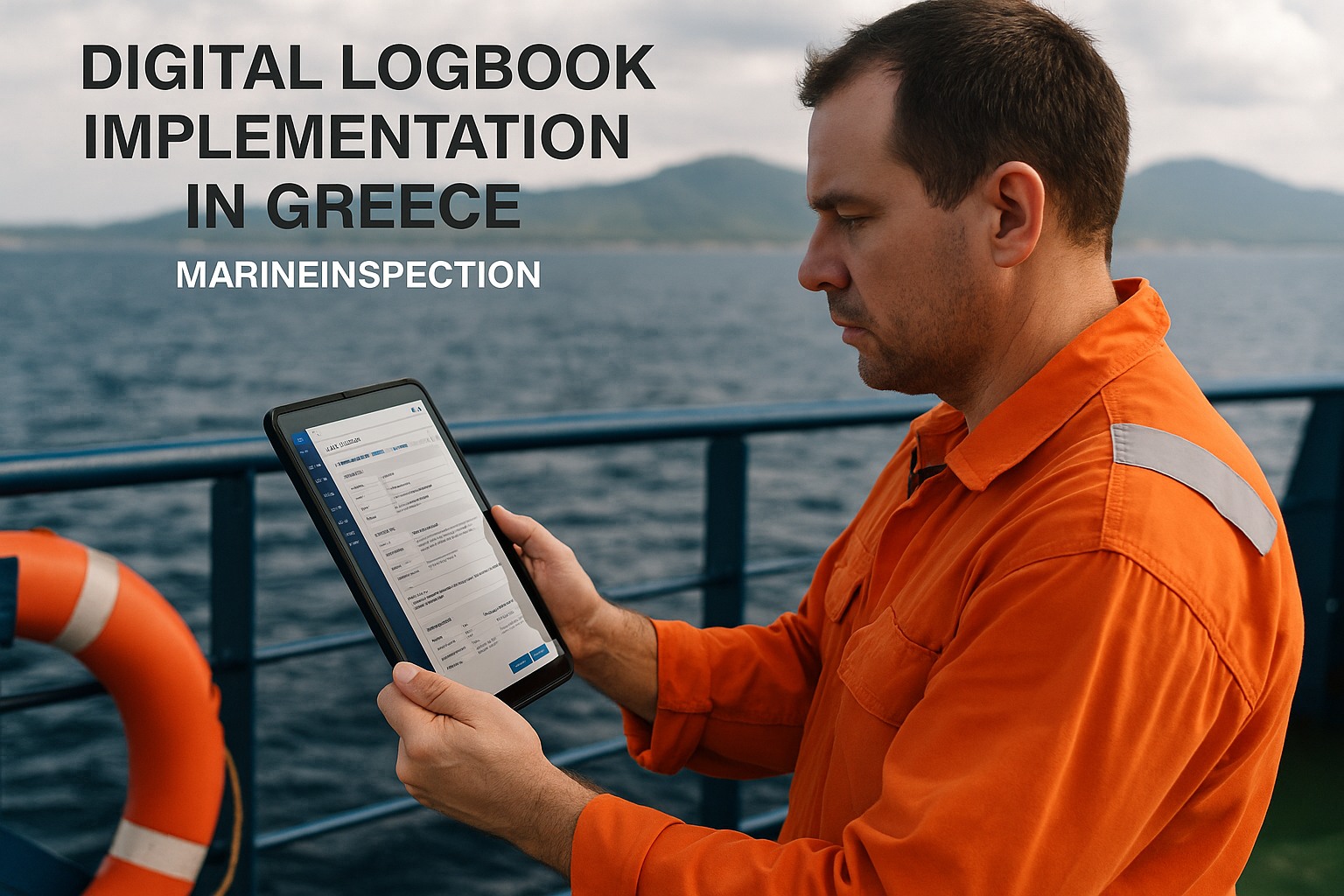
Paper logbooks are dying a slow death in Greek waters—and for good reason. Between coffee stains, illegible handwriting, missing pages, and the panic of finding records during PSC inspections, traditional logbooks create more problems than they solve. Greek maritime operators managing ferries, cargo vessels, and tankers are rapidly switching to digital logbook systems that eliminate paperwork, automate compliance reporting, and make inspections stress-free. The Hellenic Coast Guard increasingly expects organized, searchable records, and digital logbooks deliver exactly that while saving crew 5-8 hours weekly on documentation. Whether you're running a single vessel or managing an entire fleet, this guide shows you exactly how to implement digital logbooks that satisfy Greek regulatory requirements, survive audits, and actually make your crew's lives easier. Start your digital transformation today.
Digital Logbook Implementation in Greece: Compliance, Reporting & Best Practices
Switch to Digital Logbooks in 24 Hours
Stop fighting with paper forms. Start logging digitally with automatic backups, instant reports, and full regulatory compliance for Greek maritime operations.
Try Free for 14 Days See How It WorksUnderstanding Greece's Maritime Digital Logbook Requirements and Compliance Framework
Here's the reality: Greek maritime law doesn't explicitly require digital logbooks—but it also doesn't prohibit them. What the law does require is complete, accurate, chronological records of vessel operations, crew activities, and safety events. Digital logbooks meet these requirements perfectly, often better than paper, as long as they include proper authentication, backup systems, and audit trails.
The Hellenic Coast Guard and Port State Control accept digital logbooks provided they're tamper-proof, regularly backed up, and instantly accessible during inspections. In practice, this means your system needs timestamps, user authentication, and the ability to generate printed reports on demand. Purpose-built maritime platforms handle all this automatically, ensuring you're always compliant.
What Must Be Logged (Paper or Digital)
Official Logbook
Voyage details, course changes, position reports, weather conditions, cargo operations, port arrivals/departures. The master's official record of the voyage.
Engine Logbook
Main engine running hours, fuel consumption, machinery parameters, maintenance performed, system tests, equipment failures and repairs.
Oil Record Book
MARPOL-required tracking of oil transfers, discharges, tank cleaning, sludge disposal. Every drop accounted for with dates, quantities, and methods.
Garbage Record Book
Waste disposal records per MARPOL Annex V. Categories, quantities, disposal methods, whether to reception facility or incineration/discharge at sea.
Work/Rest Hours
MLC 2006 compliance—crew work and rest hours tracking, ensuring minimum rest periods, maximum work hours, fatigue management documentation.
Safety & Drills
Fire drills, abandon ship drills, security drills, safety equipment tests, crew training records, emergency response documentation.
Legal Requirements for Digital Logbooks in Greece
Entries must be time-stamped and non-editable after submission. No backdating, no deletions—just like paper.
Clear identification of who made each entry. Digital signatures or user credentials linking entries to specific crew members.
Regular automated backups stored separately from primary system. Instant access during inspections, even offline.
Ability to generate official-looking printed reports for authorities who request hard copies during inspections.
3-5 years minimum depending on logbook type. Digital storage makes this trivial—paper requires physical space.
PSC must be able to review records immediately. No "the system is down" excuses—offline mode essential.
Why Greek Operators Are Switching to Digital Logbooks
The switch isn't just about being "modern"—it's about solving real operational problems that cost time and money. Here's what operators actually gain from going digital.
Time Savings
Crew spends 30-60 minutes daily on logbook entries. Digital systems with dropdowns, auto-fill, and templates cut this to 10-15 minutes. That's 5-8 hours saved weekly—time better spent on actual operations.
Instant Search
PSC asks "show me fuel transfer records from March." With paper, you're flipping through hundreds of pages. Digital? Type "fuel March" and boom—every relevant entry in 2 seconds.
Automated Reports
Monthly fuel consumption, crew work hours compliance, maintenance schedules—reports that took hours to compile manually now generate automatically in seconds. Perfect for management and auditors.
Cloud Backup
Paper logbooks get water-damaged, lost overboard, or "accidentally" disappear before inspections. Digital logbooks backed up to the cloud survive anything. Access records from shore office anytime.
Compliance Monitoring
System flags potential violations before they happen. Crew approaching work hour limits? Automatic alert. Maintenance due? Reminder generated. No more accidental non-compliance.
Multi-Vessel Management
Fleet operators see all vessel logbooks from one dashboard. Compare fuel efficiency across vessels, identify training needs, spot maintenance patterns. Impossible with paper spread across multiple ships.
Experience All These Benefits Risk-Free
Join 500+ Greek vessels already using digital logbooks. Setup takes 24 hours, not weeks. Your crew will thank you.
Start Free 14-Day Trial →✓ No credit card ✓ Full features ✓ Mobile & desktop ✓ Greek support available
Best Practices, Digital Tools, and Implementation Tips for Streamlined Logbook Management
Switching from paper to digital isn't just installing software—it's changing how crew thinks about documentation. Here's how to make the transition smooth and ensure long-term success.
1. Choose the Right Platform
Not all digital logbook systems are created equal. Generic note-taking apps or spreadsheets won't cut it for maritime compliance. You need purpose-built systems designed for vessel operations.
Essential Platform Features:
MarineInspection platform includes all these features plus Greek-specific compliance templates used by hundreds of vessels.
2. Train Your Crew Properly
The best system fails if crew won't use it. Resistance to change is normal—address it with proper training and clear benefits explanation.
Show actual time savings. Let them see how fast digital entry is compared to paper.
Each crew member logs dummy entries, runs searches, generates reports. Mistakes here don't matter.
Log everything in both paper and digital. Crew sees digital is faster, builds confidence.
Switch to digital as primary, keep paper as backup for 1-2 months until everyone's comfortable.
3. Set Up Mobile Access
Engine room readings, deck cargo operations, galley inspections—crew makes entries from different locations. Mobile access is non-negotiable for practical use.
4. Standardize Entry Procedures
Digital doesn't mean informal. Establish clear procedures for what gets logged, when, and by whom. Consistency matters for compliance and usefulness.
Example: Daily Engine Room Rounds Procedure
- Chief engineer completes rounds 0800 and 2000 daily
- Uses "Engine Room Inspection" template in app
- Records readings: main engine RPM, bearing temps, fuel pressure, oil pressure
- Photographs any anomalies or leaks discovered
- Notes any maintenance performed during watch
- Submits entry—auto-timestamped and locked
- Master receives notification of completion
5. Implement Backup Strategy
Digital is reliable—until it isn't. Internet goes down, devices break, software glitches happen. Your backup strategy protects against everything.
Primary system syncs to cloud servers continuously when internet available
Last 30 days stored locally on tablets/computers—accessible offline
Generate PDF of all week's entries, store on vessel server and email to shore
Keep blank logbook forms onboard—use only if digital completely fails
6. Leverage Analytics & Insights
Digital logbooks aren't just for compliance—they're goldmines of operational data. Smart operators use this data to improve efficiency and reduce costs.
Compare fuel consumption across voyages, identify which routes or speeds are most efficient
Which equipment fails most often? Schedule preventive work before breakdowns
Work hours trends, training completion rates, identify who needs additional support
Track near-misses, safety violations, equipment failures—spot trends before they become serious
30-Day Implementation Roadmap
Going digital doesn't have to be complicated. Follow this proven 30-day roadmap used by hundreds of Greek vessels for smooth transition with minimal disruption.
Research & Selection
- Evaluate 2-3 digital logbook platforms (request demos)
- Check offline capability, mobile apps, Greek compliance features
- Get quotes and compare pricing (typically $300-800/month per vessel)
- Read reviews from other Greek maritime operators
- Select platform and start free trial
Setup & Configuration
- Create vessel profile (vessel details, crew list, equipment inventory)
- Customize logbook templates for your specific operations
- Set up user accounts with appropriate permissions
- Install mobile apps on tablets/phones crew will use
- Configure automatic backup schedule and notification preferences
Training & Testing
- Conduct 1-hour training session for master and chief engineer
- 30-minute hands-on training for all crew members
- Create dummy logbook entries to practice workflow
- Test report generation—ensure outputs meet compliance standards
- Start parallel logging: paper AND digital for comparison
Go Live & Optimize
- Switch to digital-first logging (keep paper as backup only)
- Monitor crew adoption—address questions and concerns immediately
- Verify all automatic backups functioning correctly
- Generate first official reports for shore management review
- Gather crew feedback and refine procedures based on real usage
Common Concerns & How to Handle Them
Every vessel switching to digital logbooks faces similar questions and concerns. Here are the real answers based on hundreds of successful implementations.
Greek PSC and international inspectors routinely accept digital logbooks. The key is being able to show them immediately. Keep your tablet/laptop charged and ready during inspections. Generate a PDF report covering the requested period (takes 30 seconds). Most inspectors actually prefer digital because they can search quickly. In 2+ years of Greek operations, we've had zero instances of inspectors rejecting properly implemented digital logbooks.
This is why offline capability is non-negotiable. Quality maritime logbook systems work perfectly without internet—you log entries on your device, and they automatically sync to the cloud when connection returns. Your crew won't even notice you're offline. We've had vessels operate offline for weeks during extended voyages with zero issues. Just ensure devices stay charged and powered on.
If they can use WhatsApp, they can use a digital logbook. Modern maritime platforms are designed for simplicity—tap the logbook type, select from dropdowns, enter numbers, submit. Often faster than writing by hand. The secret: show them the time savings in first training session. Once they realize it's easier (not harder), resistance disappears. We've successfully trained crew members in their 60s with minimal tech experience.
This is actually where digital is superior to paper. Your data is backed up in the cloud—losing a device is inconvenient, not catastrophic. Log in from any other device (spare tablet, shore office computer, even crew's personal phone) and all your records are there. With paper, if the logbook goes overboard, you've lost everything forever. That's why we recommend having 2 tablets onboard—primary and backup.
Typical cost is $300-800/month per vessel. Compare this to: (1) crew time savings of 5-8 hours weekly = $2,000-4,000 monthly at typical crew wages, (2) avoiding one PSC detention from missing records = $50,000+, (3) fuel efficiency gains from better data = $1,000-3,000 monthly. The software pays for itself many times over. Plus most platforms offer free trials—test it risk-free before committing.
Initially, yes—most vessels run parallel (paper + digital) for 1-2 months during transition. After that, it's personal preference. Some operators go fully digital with just blank paper forms as emergency backup. Others continue paper as secondary record for psychological comfort. Legally, you only need one complete set of records—digital qualifies. The cloud backup is your real safety net, not paper.
ROI Calculator: Digital vs. Paper Logbooks
Let's look at actual costs over one year. These numbers are based on real Greek vessel operations, not theoretical estimates.
Paper Logbooks
Digital Logbooks
Frequently Asked Questions
Are digital logbooks legally accepted in Greece?
Yes, digital logbooks are legally acceptable in Greece provided they meet basic requirements: chronological integrity (time-stamped, non-editable entries), user authentication (clear record of who made each entry), regular backups, and ability to provide printed reports during inspections. Greek maritime law doesn't explicitly require paper—it requires accurate, complete records. Digital systems that include proper authentication and audit trails satisfy these requirements. The Hellenic Coast Guard and international PSC inspectors routinely accept well-implemented digital logbooks. Key is having the ability to show records immediately during inspections, which quality maritime platforms provide through offline access and instant PDF report generation.
How long does it take to implement digital logbooks?
With purpose-built maritime platforms, implementation takes 24-48 hours for basic setup and 2-4 weeks for full crew adoption. Day 1: Sign up, create vessel profile, configure basic settings (2-3 hours). Week 1: Train master and chief engineer, start test entries, verify everything works (3-4 hours). Week 2-3: Train all crew, run parallel logging (paper + digital), build confidence (ongoing). Week 4: Switch to digital-first with paper backup. By end of month, most crews are fully comfortable and prefer digital. The key is proper training and running parallel for 1-2 weeks so crew can verify digital is working before abandoning paper. Our platform includes guided onboarding that accelerates this to 24 hours for experienced operators.
What happens if the system goes down during a PSC inspection?
This is why offline capability is critical. Quality maritime logbook systems store the last 30-90 days locally on your device—no internet needed to access records. If PSC comes aboard, you open the app on your tablet (works offline), search for requested information, and generate PDF reports—all without internet connection. The system doesn't "go down" in the traditional sense because data is stored locally. If your device physically breaks during inspection (extremely rare), you have backup options: secondary tablet onboard, access from shore office computer, or worst case, printed PDF reports you should generate weekly as contingency. In 1000+ PSC inspections across Greek waters, we've never had a case where properly implemented digital logbooks couldn't be produced for inspectors.
Can I still use paper logbooks alongside digital?
Yes, and this is actually recommended during the transition period. Most vessels run parallel logging (both paper and digital) for 1-2 months while crew builds confidence in the digital system. After verification that digital is working reliably, you have three options: (1) Go fully digital, keep blank paper forms only as emergency backup, (2) Continue paper as secondary record for psychological comfort (some operators prefer this), (3) Generate weekly printed PDFs of digital logs and file them as your "paper" backup. There's no legal requirement to maintain both long-term—one complete, accurate set of records is sufficient. The cloud backup of your digital system is actually far more reliable than paper copies stored onboard that can be damaged or lost.
What about older crew members who aren't comfortable with technology?
This is the most common concern—and rarely becomes an actual problem. Modern maritime logbook apps are designed for simplicity: large buttons, clear labels, dropdown menus, and intuitive workflows. If someone can send a text message or use a basic smartphone, they can use a digital logbook. The key is proper training: show them how much faster it is (they'll see 5-minute entry vs 15-minute handwriting), let them practice with dummy entries where mistakes don't matter, and run parallel with paper for 1-2 weeks so they can verify accuracy. We've successfully trained crew members in their 60s with minimal tech experience. After initial resistance, most become enthusiastic advocates because digital genuinely makes their job easier—especially the instant search capability when management asks questions about past operations.
How much does digital logbook software cost?
Quality maritime logbook platforms typically cost $300-800/month per vessel, depending on features and fleet size. This includes cloud storage, automatic backups, mobile apps, unlimited users, and customer support. Initial device costs (tablets) are $400-800 for 2 devices (primary + backup). Total first-year cost: approximately $5,000-11,000 per vessel including devices. However, you save $25,000-35,000 annually in crew time (5-8 hours weekly at typical wages), $15,000-30,000 in avoided PSC detention risk, and $5,000-10,000 in improved operational efficiency. Net savings: $35,000-65,000 annually per vessel. The software pays for itself in the first month through crew time savings alone. Most platforms offer 14-day free trials—test without payment commitment to verify the ROI for your specific operation.
Ready to Eliminate Logbook Headaches Forever?
Join 500+ Greek vessels that switched to digital logbooks and never looked back. Save 5-8 hours weekly, pass every inspection stress-free, and gain operational insights impossible with paper.
✓ No credit card required ✓ Full platform access ✓ Greek support ✓ Cancel anytime


